Abdul El-Sayed Wins Michigan Senate Race
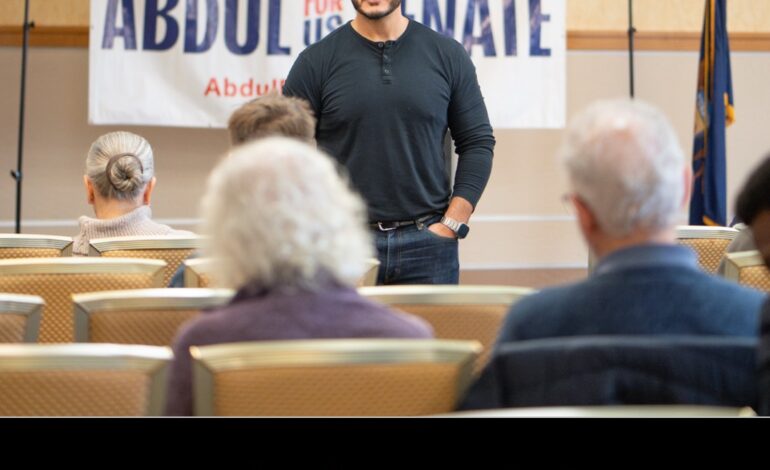

Abdul El-Sayed coverage shows the central development clearly. Abdul El-Sayed defeated Mike Rogers in Michigan’s open Senate race, according to AP and CBS reporting. El-Sayed is set to become the first Muslim elected to the U.S. Senate. The outcome joins a close national contest for control of Congress with a distinct state campaign about candidate background, policy positions and the direction of the Democratic Party.
Abdul El-Sayed: the reported facts
Democrat Abdul El-Sayed defeated Republican Mike Rogers in Michigan’s Nov. 3 Senate election, according to AP and CBS. El-Sayed became the first Muslim elected to the U.S. Senate, according to AP and CBS.
The seat was open after Democratic Sen. Gary Peters chose not to seek reelection. El-Sayed, 42, previously served as a Michigan public-health official, CBS reported.
Context around Abdul El-Sayed
The seat became open after Democratic Sen. Gary Peters decided not to seek reelection. El-Sayed had to win the Democratic primary before facing Rogers in November. AP reported that he defeated a more moderate opponent in that primary, while CBS described the general election as one of the most contentious contests of the midterms.
El-Sayed previously served as a Michigan public-health official, CBS reported. AP described him as a progressive candidate and said the result could strengthen arguments that left-leaning candidates can win in a major swing state. That is an interpretation of the outcome’s significance, not a guarantee that future candidates with similar platforms will have the same result.
The race featured sharp disagreement over national and international issues. CBS reported that Rogers criticized El-Sayed’s views and associations, including his positions on Israel and Iran, according to CBS. El-Sayed portrayed Rogers as a supporter of President Donald Trump, while Rogers tried to distance himself from the White House before Election Day.
El-Sayed won the Democratic primary against a more moderate opponent, AP reported. The campaign included debate about El-Sayed’s positions on Israel and Iran and Rogers’ relationship with President Donald Trump.
Rogers criticized El-Sayed’s views and associations, while El-Sayed portrayed Rogers as aligned with Trump, CBS reported. Republicans faced an unfavorable environment in Michigan that included voter concerns about the Iran war and high gas prices, according to CBS.
AP described the outcome as a breakthrough win for the Democratic Party’s left wing in a major swing state. El-Sayed’s election gives Michigan two Democratic senators after the seat was previously held by Peters.
El-Sayed is 42 and previously served as a Michigan public-health official, CBS reported. El-Sayed defeated a more moderate opponent in the Democratic primary after Sen. Gary Peters decided not to seek reelection, AP reported.
The campaign included disputes over El-Sayed’s positions on Israel and Iran and his association with Hasan Piker, CBS reported. El-Sayed portrayed Rogers as aligned with Trump, while Rogers tried to distance himself from the White House before Election Day, CBS reported.
AP described the result as a breakthrough for the Democratic Party’s left wing in a major swing state.
What the reporting does and does not establish
CBS also described the environment facing Republicans in Michigan, including opposition to the war with Iran and high gas prices. These details provide context for the candidates’ campaign arguments. They do not prove that every voter made a decision for those reasons, or that one issue alone determined the statewide result.
The race mattered to party leaders because the Democratic primary outcome tested questions about electability in a competitive state. AP said the result gave the party’s left wing a breakthrough win. The election answers the question of who won this seat, while broader claims about the party’s future remain predictions that the sources do not establish.
What happens next
The reporting also keeps the candidates’ arguments attributed. Rogers’ criticisms of El-Sayed and El-Sayed’s description of Rogers as aligned with Trump are campaign positions reported by CBS. They are not independent findings about either candidate. A neutral account can describe what each side said while distinguishing those statements from verifiable election results.
The next step is the Senate transition after the election. The factsheet establishes the result and the seat’s prior status, but does not set out the exact legislative agenda El-Sayed will pursue once he takes office. His campaign platform and public positions may inform that work, but the reporting reviewed here does not make future votes or outcomes certain.
The election result and the campaign’s political meaning should be reported separately. El-Sayed won the open seat, according to AP and CBS, and is set to be the first Muslim elected to the Senate. AP described the outcome as a breakthrough for the party’s left wing. That interpretation is attributed to the outlet; the result alone does not guarantee future success for similar candidates.
The race developed after Peters chose not to seek reelection. El-Sayed first had to win the Democratic primary, where he defeated a more moderate opponent. This sequence matters because the general election was not simply a contest between two candidates selected by party leaders; voters in the primary decided who would represent Democrats on the November ballot.
The campaigns offered sharply different pictures of the candidates. Rogers criticized El-Sayed on issues including Israel and Iran and his association with Hasan Piker. El-Sayed portrayed Rogers as aligned with Trump, while Rogers tried to distance himself from the White House. These are reported campaign arguments and should be attributed to the candidates rather than treated as neutral assessments.
CBS described economic and foreign-policy concerns as part of the political environment in Michigan. High gas prices and opposition to the Iran war were reported as challenges for Republicans. The coverage gives context for the campaign but does not establish a single reason for the result or show that every voter ranked those issues in the same way.
El-Sayed’s prior work in Michigan public health is part of his biography, while his platform describes what he proposed during the campaign. The election determined who won the seat. It did not enact a health-care plan or settle national party debates over ideology. Those questions will depend on later actions by the senator and the chamber.
Sources
Byline: MatterDigest Editorial Team
Last updated:
Correction note: We correct factual errors transparently and update this article when verified information changes.
Discover more from MatterDigest
Subscribe to get the latest posts sent to your email.