Justice Department Resignations Follow Midterms
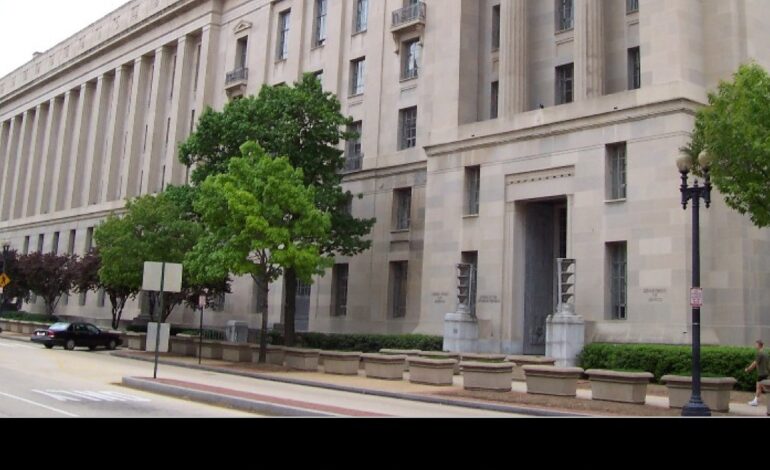

Justice Department resignations coverage shows the central development clearly. Two senior Justice Department officials resigned on November 6, days after Republicans lost control of Congress in the midterm elections. John Eisenberg, who led the National Security Division, and Jason Reding Quiñones, the U.S. attorney for the Southern District of Florida, left their posts. Their departures followed the resignation of Harmeet Dhillon, who led the Civil Rights Division.
Justice Department resignations: the reported facts
John Eisenberg, who led the Justice Department’s National Security Division, and Jason Reding Quiñones, the U.S. attorney for the Southern District of Florida, resigned on Nov. 6. Their departures followed the Nov. 5 resignation of Harmeet Dhillon, who led the department’s Civil Rights Division.
The resignations came after Republicans lost control of Congress in the Nov. 3 midterm elections. The Justice Department did not publicly state why Eisenberg or Quiñones resigned, according to Reuters.
Context around Justice Department resignations
The sequence is clear in the reporting, but the reason for the resignations is not. Reuters said the department did not explain why Eisenberg or Quiñones left. CBS reported that Attorney General Todd Blanche praised them but did not give a reason for Eisenberg’s departure. The timing after the election is part of the story; it does not prove the election caused the decisions.
Quiñones’ office had been involved in a politically sensitive inquiry into earlier investigations of Trump. Reuters described the work as an effort to examine criminal cases involving Trump’s handling of classified documents after leaving office and his campaign’s contacts with Russia during the 2016 election. These are descriptions of the office’s assignment, not findings that the earlier investigations were improper.
Officials referred to the later inquiry as the grand conspiracy investigation. Reuters reported that it sought to establish that Trump had been the target of a long-running criminal conspiracy, but had struggled to bring charges. The factsheet preserves that attribution and avoids presenting the theory under investigation as an established fact.
Quiñones’ office had been involved in an investigation into past investigations of Trump, which officials called the grand conspiracy probe. Reuters reported that the probe sought to establish that Trump was the victim of a long-running criminal conspiracy and had struggled to bring charges.
The Washington Post reported Quiñones’ office had been leading the investigation into several of Trump’s political opponents. CBS reported Attorney General Todd Blanche praised the officials but gave no reason for Eisenberg’s departure.
Reuters said the department was left without leaders for two initiatives: revisiting prior investigations and targeting higher education. Senior officials commonly leave government after elections, but the reports did not establish that the election result caused the individual resignations.
Eisenberg led the Justice Department’s National Security Division, and Quiñones served as U.S. attorney for the Southern District of Florida. Quiñones’ office was involved in examining earlier criminal investigations of Trump, including the classified-documents case and the 2016 campaign’s contacts with Russia, Reuters reported.
The investigation was referred to by officials as the grand conspiracy probe and had not brought criminal charges by the time of the Reuters report. The department was left without leaders for initiatives involving prior investigations and higher education, Reuters reported.
Attorney General Todd Blanche praised Eisenberg and Quiñones but did not publicly explain their decisions to resign, according to CBS and Reuters.
What the reporting does and does not establish
The departures also left vacancies in initiatives the department had been pursuing. Reuters reported the DOJ was without leaders for efforts involving prior investigations and higher education. The reporting does not describe what permanent replacements will be named or how the programs will change under new leadership.
The officials held distinct roles. Eisenberg led a national security division; Quiñones served as the chief federal prosecutor in South Florida; Dhillon led the department’s civil rights work. Their departures involve different parts of the department, and the available reporting does not say they resigned for the same reason.
What happens next
The post-election timing drew attention because the party that will control Congress is preparing investigations of the administration. Reuters reported Democrats planned investigations into Trump’s administration and business dealings. That context may help explain why the departures became a national story, but it should not be used to fill in a reason the department has not publicly stated.
The next questions concern who will take over the vacant posts, whether the department’s initiatives continue, and whether officials provide reasons for leaving. The reports reviewed for this article do not resolve those questions. What they establish is a series of senior departures, the officials’ roles, the stated status of one investigation and the lack of a public explanation for two resignations.
A sequence of resignations is not the same as proof that the officials left for the same reason. Reuters said it was unclear why Eisenberg and Quiñones resigned, while CBS reported Blanche gave no reason for Eisenberg’s departure. The election preceded the resignations, but the reporting does not establish that it caused them.
The officials’ positions show how broad the departures were. Eisenberg led national security work, Quiñones served as a federal prosecutor in South Florida, and Dhillon led civil-rights enforcement. The reporting says two of the department’s initiatives were left without leaders. It does not say that the programs were canceled or identify permanent replacements.
The inquiry connected to Quiñones’ office must be described with careful attribution. Reuters said the investigation sought to establish a long-running conspiracy against Trump and had struggled to bring charges. This article reports the description of the investigation, not the truth of the theory it examined. It also does not imply that the earlier investigations of Trump were unlawful.
The timing after the midterms drew political attention because Democrats had announced plans for oversight once they control Congress. That context is supported in the reporting, but it cannot substitute for an explanation from the officials who resigned. The article keeps the chronology and the stated absence of a public reason separate.
The next details to watch are whether the department names successors and whether it provides further information about the departures or the work left behind. The sources reviewed do not answer those questions. For now, the substantiated account is limited to who resigned, the offices they held, the sequence of departures and the publicly described status of the investigation.
Sources
Byline: MatterDigest Editorial Team
Last updated:
Correction note: We correct factual errors transparently and update this article when verified information changes.
Discover more from MatterDigest
Subscribe to get the latest posts sent to your email.