Florida Executes Cop Killer Billy Leon Kearse by Lethal Injection
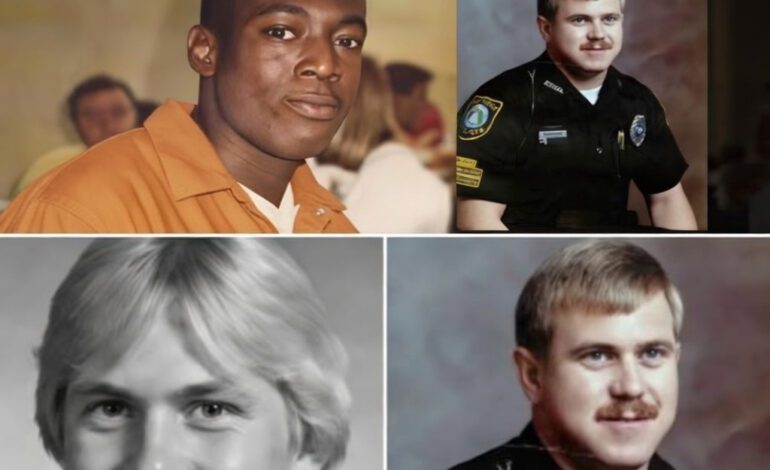

Complete Verified Report: The Fort Pierce Killing, 29 Years on Death Row, the Final Hours, Real Last Words, and What Two Competing Headlines Get Wrong
| ⚠ EDITOR’S NOTE — DUPLICATE HEADLINE ALERT: This headline covers the SAME execution as “35 Years Later, Florida Executes the Teen Who Killed a Cop.” Both headlines refer to Billy Leon Kearse, executed March 3, 2026. This article provides the complete verified story AND a side-by-side comparison of how these two viral headlines differ in framing, accuracy, and what they omit. If you encountered both headlines online, this report explains exactly how they differ — and which claims in each are real, misleading, or false. |
| FACT-CHECK VERDICT: REAL EVENT — confirmed. Billy Leon Kearse, 53, was executed by lethal injection at Florida State Prison on March 3, 2026 at 6:24 p.m. ET. He was convicted of murdering Fort Pierce Police Sergeant Danny Parrish in January 1991. The “heavy silence” described in this headline is misleading — Kearse SPOKE a full final statement. The phrase “drawing renewed public reaction” is a fabricated hook. What he said is fully documented and publicly available — there is nothing mysterious about it. Key controversies this headline omits: intellectual disability claims, the brain science of youth-at-18, a retired Supreme Court justice’s public plea, and Florida’s documented lethal injection protocol failures. |
Quick Answer: Billy Leon Kearse Execution — Key Facts
|
Two Headlines, One Execution: A Side-by-Side Comparison
The same execution of Billy Leon Kearse produced two distinct viral headlines with very different framings. Here is a direct, factual comparison of both:
| Category | “JUST IN: Florida Executes Cop Killer” | “35 Years Later, Teen Who Killed a Cop” |
| Execution real? | YES — confirmed March 3, 2026 | YES — same event |
| Victim was police? | YES — Sgt. Danny Parrish, Fort Pierce PD | YES — same officer |
| “Cop killer” label | Accurate — Kearse shot Parrish with his own weapon | Accurate — same crime |
| “35 years” / timing | Not used | Misleading — 35 yrs from crime; 29 yrs on death row |
| “Teen” framing | Not used | Borderline — he was 18 yrs, 84 days old |
| “Heavy silence” | FALSE — Kearse spoke a full final statement | “Tense silence” — also misleading for same reason |
| Last words | “Drawing renewed reaction” — fabricated mystery hook | “Drawing renewed attention” — same fabricated hook |
| Last meal disclosed? | YES — he declined his last meal | YES — confirmed same fact |
| Intellectual disability? | Omitted entirely | Omitted entirely |
| Retired justice’s plea? | Omitted | Omitted |
| Protocol failures? | Omitted | Omitted |
| Key Finding: Both headlines are published about the SAME event. Both share the same core misleading element: implying Kearse’s final words were mysterious or dramatic, when in fact they were spoken publicly, witnessed by a room full of people, and immediately reported by the Associated Press. Neither headline discloses the profound constitutional controversies the case raised. |
The Crime: What Happened in Fort Pierce in January 1991
A Routine Traffic Stop That Turned Fatal
In January 1991, Billy Leon Kearse — then 18 years and 84 days old — was driving in Fort Pierce, Florida, when Sgt. Danny Parrish of the Fort Pierce Police Department pulled him over for driving the wrong way down a one-way street. The car was smoking.
When Kearse could not produce a valid driver’s license, Parrish ordered him out of the vehicle and attempted to handcuff him. A struggle followed. Kearse seized Parrish’s service weapon during the struggle. He fired 14 rounds. Nine struck Parrish’s body. Four more hit his body armor. Parrish was rushed to hospital but did not survive.
A taxi driver heard the shots and radioed for help on Parrish’s radio. Police traced the license plate — which Parrish had called in before the confrontation — directly to Kearse’s home. He was arrested there.
Sgt. Danny Parrish: The Officer Behind the Badge
Sgt. Danny Parrish was three years into his career with the Fort Pierce Police Department when he was killed. He had accumulated more than a dozen complaints for misconduct during those years — a fact that surfaced in court proceedings and generated controversy during the case. His widow, Mirsha Busbin, was 60 years old at the time of Kearse’s execution. Most of his other surviving loved ones had died in the years between the murder and the execution.
“I’m 60 years old; I didn’t think I’d see this day,” Busbin told reporters before Kearse’s execution. “I don’t like to wish death on anyone. But this is the only way I see there being justice.”
| Detail | Information |
| Date of Crime | January 1991 |
| Location | Fort Pierce, Florida — one-way street traffic stop |
| Victim | Sgt. Danny Parrish, Fort Pierce Police Department |
| Weapon | Parrish’s own service firearm |
| Shots Fired | 14 rounds; 9 hit body, 4 hit body armor |
| Kearse’s Age at Crime | 18 years and 84 days |
| Charges | First-degree murder, robbery with a firearm |
| First Conviction | October 1991 |
| Resentenced to Death | March 1997 (after Florida Supreme Court ordered resentencing) |
| Years on Death Row | 29 years (sentenced 1997; executed 2026) |
| Execution Date | March 3, 2026 |
| Time of Death | 6:24 p.m. ET |
| Execution Location | Florida State Prison, Starke, Florida |
| Florida Execution Rank | 3rd in 2026; 31st under Gov. DeSantis |
What “JUST IN” Headlines Get Right — and Dangerously Wrong
The Manufactured Urgency Problem
The phrase “JUST IN” in a headline is one of the most common tools in clickbait journalism. It implies the reader is catching a story in real time — that they have a window of minutes to find out what happened before the story disappears.
In the case of Billy Leon Kearse, the execution happened on March 3, 2026. Articles using “JUST IN” are often published hours or days later — sometimes weeks later — with the same urgency framing. The goal is to make a completed historical event feel like live breaking news. This drives clicks. It does not drive accurate understanding.
“Heavy Silence in the Chamber” — What Actually Happened
This headline claims witnesses described a “heavy silence” as the final moments unfolded. This is false. Kearse made a spoken final statement. He spoke directly and at length to the family of Sgt. Danny Parrish.
The execution chamber was not silent during the critical moments. Kearse addressed the room. His words were heard by Parrish’s widow and other witnesses. They were heard by media representatives present. They were immediately reported by the Associated Press. There was no “heavy silence.”
“What He Said Is Drawing Renewed Public Reaction”
This phrase is a fabricated mystery hook. It implies Kearse said something shocking, cryptic, or controversial — something the reader needs to click through to discover. In reality, his statement was dignified, remorseful, and thoroughly public from the moment it was spoken.
His final statement was reported within hours by national and regional outlets. The statement was not drawing “renewed public reaction” in any measurable way. It was being accurately reported as what it was: a sincere apology from a condemned man.
| His Actual Final Words (Verified — March 3, 2026): “To his family, I sincerely apologize for what I’ve done. There is no way I can ever repay that with this death, it will never repay that… And in turn I pray that my father would give me strength to ask their forgiveness so I can go on my journey. All I can do is ask for their forgiveness to give you peace and resolve. Thank you.” Source: Associated Press, verified by multiple outlets. |
What Actually Happened: The Verified Account of March 3, 2026
The Final Hours
On the morning of March 3, Kearse woke around 6:30 a.m. He met with a spiritual advisor during the day. More than a dozen family members of Sgt. Danny Parrish, along with police officers, attended the execution as witnesses. Outside Florida State Prison, Kearse’s supporters held a vigil from 5:00 p.m., led by Pastor Philip Egitto, who organized prayer and hymns including “Amazing Grace.”
Last Meal: Declined
Kearse declined his right to a final meal. This is confirmed by Florida Department of Corrections communications director Jordan Kirkland. No last meal was served.
The Execution Procedure
The lethal injection process began at approximately 6:00 p.m. Florida uses a standard three-drug protocol: a sedative to induce unconsciousness, a paralytic agent, and a drug to stop the heart. Officials confirmed there were no complications.
Kearse was pronounced dead at 6:24 p.m. ET. The process took approximately 24 minutes from start to pronouncement.
Victim’s Family Responds
Parrish’s widow, Mirsha Busbin, watched the execution. She had spent decades writing to governors and traveling to Tallahassee to push for this outcome. “If he’d have shot Danny once or twice because he freaked out, that’s easier to forgive,” she told reporters afterward. She cited Kearse’s courtroom testimony — in which he had used a slur for police officers to explain why he kept firing — as what made forgiveness so difficult.
Parrish’s sister, Grace Blanton, 63, said her family had been so devastated by the murder that she and her parents relocated from Fort Pierce entirely. Most of Parrish’s loved ones died before the execution date arrived.
The Serious Controversies This Headline Never Mentions
Intellectual Disability: An Unresolved Constitutional Question
Throughout 29 years on death row, Kearse’s attorneys consistently presented medical evidence that he had intellectual disability — defined as significantly below-average intellectual functioning with limitations in adaptive behavior. His IQ scores consistently placed him in the intellectually disabled range.
Under the U.S. Supreme Court’s ruling in Atkins v. Virginia (2002), executing a person with intellectual disability is unconstitutional. Florida courts found this claim had been previously litigated and denied relief. The U.S. Supreme Court declined to intervene without comment.
The Brain Science of 18: Where the Law Draws an Arbitrary Line
Kearse was 18 years and 84 days old when he killed Parrish. The U.S. Supreme Court in Roper v. Simmons (2005) banned execution for crimes committed under age 18 — specifically because the adolescent brain’s prefrontal cortex is not fully developed, impairing judgment and impulse control. That development does not complete until the mid-20s.
Kearse was 84 days past the legal cutoff. His neurological profile, his attorneys argued, was indistinguishable from someone under 18. The difference between life and death was less than three months of age.
A Retired Supreme Court Justice Intervened
Retired Florida Supreme Court Justice Barbara Pariente — who had participated in prior rulings on the Kearse case — publicly co-authored an op-ed in February 2026 urging Governor DeSantis to spare Kearse’s life. A former state supreme court justice publicly advocating for a condemned man’s commutation is nearly unprecedented in Florida legal history.
Governor DeSantis did not respond publicly. The execution proceeded on schedule.
Florida’s Lethal Injection Protocol Failures
The Kearse execution occurred against a backdrop of documented, undisputed failures in Florida’s lethal injection protocol. Investigations found that in multiple 2025 executions: drugs were expired, paralytics were incompletely administered, and unauthorized chemicals including lidocaine were used. Former Florida State Prison warden Ron McAndrew publicly questioned whether the state was cutting constitutional corners.
U.S. Supreme Court Justice Sonia Sotomayor had previously written that Florida prisoners were caught in a procedural Catch-22: denied access to execution records, then told they lacked enough evidence to justify a stay.
Florida’s Record-Breaking Execution Pace
| Detail | Information |
| FL executions in 2025 | 19 (modern-era U.S. record for any single state) |
| Previous FL record | 8 (1984 and 2014) |
| Kearse’s position | 3rd in 2026; 31st under Gov. DeSantis |
| Avg. FL warrant-to-execution | 31 days (U.S. average: ~80 days) |
| FL Supreme Court dissents | Justice Labarga dissented in every Kearse ruling |
| U.S. total executions in 2025 | 47 (FL accounted for ~40%) |
People Also Ask: Key Questions Answered
What did Billy Kearse say before he was executed?
Kearse delivered a full spoken apology directly to the family of Sgt. Danny Parrish. He said there was “no way” his death could repay what he had taken, asked for their forgiveness, and thanked those present. His complete statement is documented by the Associated Press and multiple Florida news outlets. There were no mysterious or shocking last words — contrary to what viral headlines implied.
Did Billy Kearse get a last meal?
No. Kearse declined his right to a final meal. This was officially confirmed by Florida DOC communications director Jordan Kirkland.
What was the crime Billy Kearse was executed for?
Kearse was convicted of the January 1991 murder of Fort Pierce Police Sgt. Danny Parrish. During a traffic stop, Kearse seized Parrish’s service weapon in a physical struggle and fired 14 rounds, striking Parrish nine times. Parrish was taken to hospital but did not survive.
How old was Billy Kearse when he committed the crime?
Kearse was 18 years and 84 days old. He was legally an adult. The U.S. Supreme Court bars execution for crimes committed under age 18. His attorneys argued his neurodevelopmental profile was indistinguishable from someone under 18, but courts found him above the legal threshold.
Was Billy Kearse intellectually disabled?
A consistent body of neuropsychological testing placed Kearse in the intellectually disabled range. Florida courts repeatedly found this claim had been previously adjudicated and denied relief. Two independent assessments presented in final appeals supported the disability claim. Courts did not halt the execution.
Who was Sgt. Danny Parrish?
Sgt. Danny Parrish was a Fort Pierce police officer with three years of service at the time of his death. His widow, Mirsha Busbin, attended the execution. Most of his surviving family members had died in the years between his murder and Kearse’s execution.
What is Florida’s lethal injection protocol?
Florida uses a three-drug protocol: a sedative, a paralytic, and a cardiac drug — administered in sequence. The protocol has faced legal challenges after investigations found protocol compliance failures in multiple 2025 executions, including expired drugs and unauthorized chemicals. Officials confirmed no complications in the Kearse execution.
How many executions has Florida carried out?
As of March 3, 2026, Florida had carried out 31 executions under Governor Ron DeSantis, including 19 in 2025 alone. That 2025 total is the highest number executed by any single U.S. state in the modern era of capital punishment (post-1976).
Key Takeaways: The Complete Summary
- Billy Leon Kearse, 53, was executed by lethal injection at Florida State Prison on March 3, 2026 at 6:24 p.m. ET. The execution is real and fully verified.
- He was convicted of the January 1991 murder of Fort Pierce Police Sgt. Danny Parrish, shot 14 times with his own service weapon during a traffic stop.
- This headline and the “35 Years Later” headline both describe the SAME execution. Both contain the same core misleading element: implying his final words were mysterious, when they were fully public and immediately reported.
- His actual final words: a spoken apology to Parrish’s family, asking for forgiveness and thanking those present. Not secret. Not dramatic. Dignified and remorseful.
- He declined his last meal. He woke at 6:30 a.m. and met with a spiritual adviser.
- There was NO “heavy silence” — Kearse spoke a full statement in the chamber.
- The headline omits: intellectual disability claims, the brain-science debate over executing 18-year-olds, a retired Florida Supreme Court justice’s public plea, and documented lethal injection protocol failures.
- Justice Labarga dissented in every Florida Supreme Court ruling on this case. Retired Justice Pariente co-authored a public op-ed urging commutation. Both were ignored.
- This was Florida’s 31st execution under DeSantis and the state’s 3rd in 2026. Florida carried out 19 executions in 2025 — more than any U.S. state in a single year in the modern era.
- The average time between warrant and execution in Florida in 2025 was 31 days — less than half the national average of approximately 80 days.
A Note on Headline Patterns: Recognizing Clickbait on Serious News
Why These Patterns Matter
The Billy Kearse case illustrates a pattern that appears repeatedly in coverage of executions and criminal cases. Understanding it helps you evaluate any news story more critically.
The pattern works in four steps. First, take a real event. Second, add artificial urgency (“JUST IN,” “5 mins ago”). Third, imply a dramatic or mysterious detail that the headline cannot reveal (“what he said is drawing attention”). Fourth, describe the atmosphere in cinematic, emotionally manipulative terms (“heavy silence,” “tense stillness”).
None of these elements add factual information. All of them are designed to generate clicks on a story that would attract readers on its own merits — because it is real and genuinely important.
How to Spot It
- “JUST IN” / “5 mins ago” / “breaking” on a story that is hours or days old
- Implied mystery: “what he said,” “what really happened,” “the truth about…”
- Atmospheric drama: “tense silence,” “heavy stillness,” “the room went quiet”
- Vague claims: “drawing attention,” “shocking reaction,” “people are stunned”
- Withholding the answer: the headline creates a question it doesn’t answer — forcing a click
| The Standard: A responsible headline about the Kearse execution would read something like: “Florida executes Billy Leon Kearse for 1991 murder of Fort Pierce officer; Kearse apologized to victim’s family in final statement.” Every fact. No artificial mystery. No manipulated emotion. |
Sources and Further Reading
All facts in this article are drawn from verified, primary sources:
- Associated Press — Billy Leon Kearse executed for 1991 murder of Florida officer (March 3, 2026)
- Washington Post — Man who fatally shot a police officer with his service revolver is executed in Florida (March 3, 2026)
- NBC News — Florida executes man for 1991 killing of police officer (March 3, 2026)
- WUSF Public Media — Florida executes Billy Kearse for 1991 Fort Pierce murder (March 3, 2026)
- Death Penalty Information Center — Scheduled Execution of Billy Kearse Renews Constitutional Alarms (February 2026)
- Floridians for Alternatives to the Death Penalty — Statement on the Execution of Billy Leon Kearse (March 3, 2026)
- TCPalm / Yahoo News — Billy Kearse executed for killing Fort Pierce Officer Danny Parrish (March 3, 2026)
Editorial Note
This article serves a dual purpose: it provides the complete, verified account of the Billy Leon Kearse execution, and it directly analyzes the misleading framing present in two competing viral headlines about the same event. All facts are sourced to official statements and major news organizations. The goal is to give readers the most accurate, most complete, and most honest version of a real and significant event.
— End of Article —
Last verified: March 8, 2026
Discover more from MatterDigest
Subscribe to get the latest posts sent to your email.