Iran War Powers Resolution Fails 48-51

By MatterDigest Editorial Team
Last updated
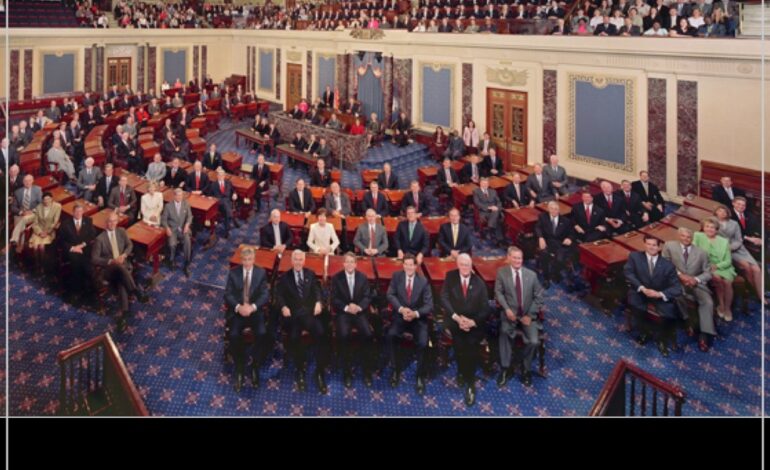
The Iran war powers resolution failed in the Senate on November 19, 2026, when senators voted 48-51 against House Concurrent Resolution 93. One senator did not vote. The measure would have directed President Donald Trump to remove U.S. forces from hostilities with Iran under the War Powers Resolution. Its defeat means this vote did not issue that direction, leaving the Senate divided over congressional authority and the conflict.
What the Iran war powers resolution proposed
H.Con.Res. 93 invoked section 5(c) of the War Powers Resolution. In practical terms, the concurrent resolution would have directed the president to remove U.S. armed forces from hostilities with Iran. The House had adopted the measure in September, before the Senate considered it. The November Senate vote was the first time either chamber had weighed in on the Iran war since the November 3 midterm elections.
The measure’s form is important. A concurrent resolution is not a bill that goes to the president for signature, and the measure was described in congressional coverage as symbolic. It would not itself change the law. The proposed direction nevertheless put senators on record about whether Congress should call for U.S. forces to leave hostilities with Iran under the existing War Powers framework.
Because the proposal failed, the Senate did not direct the president to withdraw U.S. forces through this resolution. That describes the result of the vote; it does not answer every question about what military actions continue, what authority the administration claims or what Congress might do in another measure. The factsheet records the Senate’s rejection and the text of H.Con.Res. 93, not a broader legal conclusion about the conflict.
The official roll call recorded 48 votes in favor and 51 against, with one senator not voting. The named senators’ positions show the cross-party nature of the vote. Republican Sens. Susan Collins, Lisa Murkowski and Rand Paul supported the resolution, while Democratic Sen. John Fetterman opposed it. Those individual votes help explain why the total did not follow a simple party-line split.
The vote followed a longer series of Iran war debates
The November vote was not the first effort to use war-powers resolutions in the dispute. The Senate had approved a similar measure in June, but Republican senators reversed course the next day after Trump criticized them at a closed-door lunch. Coverage also described more than a dozen Senate votes seeking to end the Iran war, most of which failed. Taken together, those events show repeated attempts to force a congressional decision, alongside repeated difficulty assembling enough votes.
The earlier June vote provides a contrast with November. The June approval was followed by a reversal the next day; the November measure failed in the Senate on its own recorded tally. The available reporting ties the earlier reversal to Trump’s criticism at a private lunch, but it does not establish what every senator was thinking or what drove each November vote. The public record is the official roll call and the accounts of the debate around it.
The House’s September action also set up the Senate decision. The measure had already passed one chamber, but the chambers did not reach the same outcome. The Senate’s rejection prevented the concurrent resolution from moving forward as a congressional statement. It did not create a new law, and it did not send a bill to Trump for approval.
Before the Senate vote, Sen. Tim Kaine argued that the war was unpopular and that voters’ choices in the midterms had sent a message about it. That was Kaine’s stated case for congressional action. The AP Voter Poll found about six in ten voters said the United States had made the wrong decision in taking military action against Iran. The poll result describes voters’ views; it does not establish that public opinion alone determined how senators voted.
What the margin says about Congress
The roll call shows support for the measure did not reach a majority of senators voting. The official tally supplies a precise count, while the policy arguments show why the resolution became contentious. Supporters sought a directive to remove forces from hostilities under the War Powers Resolution. Opponents prevented the Senate from adopting that direction. The vote was a decision about this measure, not a general vote on every future approach to Iran.
The bipartisan support from Collins, Murkowski and Paul, along with Fetterman’s vote against the measure, illustrates why party labels alone do not describe the entire Senate debate. It would be inaccurate to infer that every Republican opposed congressional limits or that every Democrat supported this resolution. The names and totals in the official record make the cross-party exceptions clear, but do not explain each senator’s reasoning beyond what was attributed in reporting.
There is also a difference between the policy outcome and the political signal. The resolution did not become law, and its defeat did not compel a change in military operations. Yet the vote documented where senators stood on a proposal to direct a withdrawal. It followed the midterm election and a House vote, placing the issue back before Congress without resolving the conflict or the broader dispute over the president’s war powers.
That distinction keeps the result in proportion. The measure was symbolic in the sense that it would not itself change the law, but the roll call was still an official statement from senators on a consequential question. The vote record can be examined by name, and future resolutions could bring the issue back before Congress. The current result alone does not indicate whether another measure will be introduced or what its chances would be.
What happens next
The available facts establish no later Senate action on this measure. H.Con.Res. 93 was rejected 48-51, with one senator not voting. The House had adopted it in September, but the Senate did not agree. The sources do not identify a scheduled follow-up vote or establish what other legislative steps will be taken next.
For readers tracking the issue, the clearest reference points are the Senate roll call and the text of the concurrent resolution. The roll call shows the vote each senator cast; the measure explains the proposed direction to the president. Together they make the outcome clear without overstating it: the Senate declined to adopt this call for withdrawal, and the vote did not itself change the law.
Sources
Discover more from MatterDigest
Subscribe to get the latest posts sent to your email.