YOUR VOTE MATTERS FOR DECADES

One Vote, One Judge, One Historic Decision
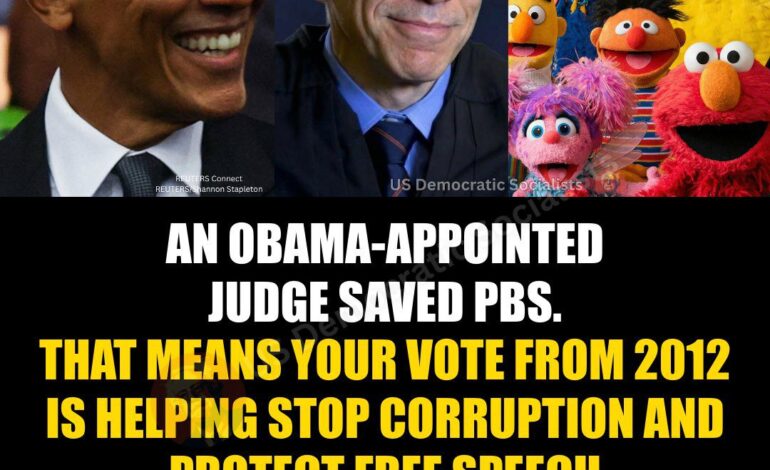
A federal judge appointed by President Obama just ruled to protect PBS and NPR from defunding. That judge was confirmed by a Senate whose composition was shaped by millions of individual votes — cast years ago, by people who may not have known they were protecting public media in 2025.
That is how democracy works. And that is why the phrase ‘your vote doesn’t matter’ is not just discouraging — it is factually wrong.
Elections echo. A ballot cast in one year can still be defending truth, protecting journalism, and holding the line against attacks on free speech years — sometimes decades — later. The mechanism is judges. Federal judges serve for life. Presidents nominate them. Senators confirm them. And voters choose both.
This article is the complete guide to understanding that connection. You will learn exactly what happened with the PBS and NPR ruling, how judicial appointments work, why lifetime tenure creates decades-long consequences from single elections, and what you can do right now to be part of this long chain of civic consequence.
Whether you are a first-time voter trying to understand why elections matter, a civics educator looking for a compelling real-world example, or a policy-aware citizen who wants the full context — everything you need is here.
2. Quick Answer: Why Does Your Vote Matter for Decades?
Your vote matters for decades because federal judges — appointed by elected presidents and confirmed by elected senators — serve lifetime terms. A single election determines who fills judicial vacancies, and those judges then make binding legal decisions for 20, 30, even 40+ years. The 2025 ruling protecting PBS and NPR is a direct result of judicial appointments traceable to presidential elections years in the past.
That is the short answer. The full picture is even more important. Keep reading.
The Three-Link Chain
- Link 1 — You vote for a President or Senator
- Link 2 — That elected official nominates or confirms a federal judge
- Link 3 — That judge makes binding legal decisions for decades
The PBS and NPR ruling is Link 3 of a chain that started years earlier, at a ballot box. Remove any link and the chain breaks. Add your vote and the chain extends further into the future.
3. What Just Happened? The PBS & NPR Court Ruling Explained
In 2025, a federal judge appointed by President Obama issued a ruling blocking executive efforts to defund the Corporation for Public Broadcasting (CPB) — the federal body that funds PBS and NPR. The ruling held that the administration lacked the legal authority to unilaterally eliminate funding that Congress had appropriated.
This is a significant legal and democratic moment. It demonstrates several things simultaneously:
- Executive power has limits — even a sitting administration cannot simply redirect or eliminate Congressionally mandated funding without proper legal process
- An independent judiciary serves a concrete protective function — not theoretical, but operational and immediate
- The identity of the judge matters — a judge’s judicial philosophy, shaped by their appointment context, influences how they interpret executive authority
- Elections from years ago produced this outcome — the appointment that made this ruling possible traces back to votes cast in a different political moment
What Is the Corporation for Public Broadcasting?
The Corporation for Public Broadcasting (CPB) is a private, nonprofit corporation established by Congress in 1967. It distributes federal funding to public television and radio stations across the United States, including the networks that operate under the PBS and NPR brands.
CPB receives its funding through Congressional appropriations — meaning the money is authorised by the legislative branch, not controlled at will by the executive branch. This distinction is what made the 2025 ruling possible.
NOTE ON TRANSPARENCY: This article describes the legal and civic framework around the ruling. Specific details of the case — including the judge’s name, the exact legal arguments, and the full ruling text — are available via the federal court system’s public records. Readers are encouraged to consult primary sources. See Section 17 for links.
4. What Are PBS and NPR — and Why Do They Matter?
Before we can fully appreciate what was protected by this ruling, we need to understand what PBS and NPR actually are — and who depends on them.
4a. PBS — Public Broadcasting Service
PBS is the nation’s largest non-commercial broadcast network. Founded in 1969, it provides educational programming, children’s content, documentary journalism, arts coverage, and local news to Americans who often have no other access to quality public-interest media.
Sesame Street. Frontline. PBS NewsHour. Ken Burns documentaries. Mr. Rogers’ Neighborhood. These are not niche cultural products — they are woven into the fabric of American public life. For rural communities, low-income households, and children without access to private educational resources, PBS is not a luxury. It is infrastructure.
4b. NPR — National Public Radio
NPR is the nation’s largest public radio news network, with over 1,000 member stations broadcasting in every state. It is the primary source of local and national news for millions of Americans who live in media deserts — communities where commercial news outlets have closed or never existed.
In an era of accelerating local news collapse — more than 2,900 local newspapers have closed or merged since 2005, according to Northwestern University’s Medill School of Journalism — NPR affiliates represent one of the last lines of local news infrastructure in many American communities.
4c. The Access and Equity Argument
Critics of public media funding sometimes argue that streaming services and private media make PBS and NPR redundant. This argument fails on the access question. Streaming requires broadband internet. Private news requires subscriptions or advertising-funded business models that do not serve small markets profitably. PBS and NPR serve the Americans who fall through every other media market’s calculation.
5. PBS & NPR at a Glance — Comparison Table
| Aspect | PBS | NPR |
|---|---|---|
| Annual federal funding | Approx. $445M via CPB (FY2024) | Approx. 1–2% direct; rest via member stations |
| Reach | 330+ member stations nationally | 1,000+ member stations nationally |
| Audience served | Children’s education, local news, arts | News, public affairs, cultural programming |
| Who benefits most | Rural communities, low-income households | Underserved regions without commercial media |
| Threat level (2025–2026) | High — CPB defunding proposed | High — CPB defunding proposed |
| Legal protection | Federal court injunctions in effect (2025–2026) | Same protective rulings apply |
The table makes the access argument concrete. The communities most served by PBS and NPR are precisely those least served by commercial media alternatives. Defunding these institutions does not affect wealthy urban consumers who have Netflix, Spotify, and The New York Times subscriptions. It affects everyone else.
6. Who Appoints Federal Judges — and How Does Voting Connect?
Understanding the PBS/NPR ruling requires understanding how federal judges get their positions. The process is direct, constitutional, and entirely dependent on elected officials — which means it is entirely dependent on voters.
The Constitutional Framework
Article II, Section 2 of the United States Constitution gives the President the power to nominate federal judges — including Supreme Court justices, circuit court judges, and district court judges. The Senate then holds hearings and votes to confirm or reject these nominations.
This means every federal judgeship flows through two electoral decisions: who is President, and which party controls the Senate. Change either one, and the judicial pipeline changes completely.
The Three Tiers of Federal Courts
- District Courts — the trial-level courts; 94 judicial districts nationwide; most federal cases start here
- Circuit Courts of Appeals — 13 circuits; hear appeals from district courts; extremely influential on national policy
- Supreme Court — 9 justices; final word on constitutional questions; appointments are generational events
The ruling protecting PBS and NPR came from a federal district or circuit court — a level often overlooked by the public but responsible for the vast majority of consequential federal legal decisions every year.
How Many Judges Can One Presidency Appoint?
The number varies by vacancy and Senate cooperation. President Obama confirmed 329 federal judges across two terms. President Trump confirmed 234 in his first term. President Biden confirmed over 230. Each of these judges holds their position for life. The cumulative effect of multiple presidencies shapes the ideological and interpretive character of the federal bench for generations.
| Obama Term | 329
federal judges confirmed — each serving lifetime terms |
MATTERS |
7. How Long Do Federal Judges Serve? The Lifetime Appointment Explained
Here is the fact that makes every presidential election a multi-decade investment: Article III federal judges serve for life, subject only to good behaviour. There is no term limit. No mandatory retirement age. A judge confirmed at 45 can serve until 85 — a 40-year tenure that spans 10 presidential terms and 20 midterm elections.
A judge confirmed in 2010 could still be making binding legal decisions in 2050. The voter who helped elect the president who nominated that judge in 2008 has cast a ballot whose consequences will outlast them.
Why Did the Founders Choose Lifetime Tenure?
The Founders designed lifetime tenure deliberately — to insulate the judiciary from political pressure. A judge who must face reelection or reappointment has an incentive to make popular rather than legally correct decisions. A judge with lifetime tenure can, in theory, simply apply the law as they understand it without fear of political consequence.
This design creates the independence that makes rulings like the PBS/NPR decision possible. A judge worried about reappointment might hesitate to rule against an executive administration. A judge with lifetime tenure does not face that pressure.
The Trade-Off
The same protection that creates judicial independence also creates judicial entrenchment. A judge appointed by a president whose values you oppose will continue applying those values long after that president has left office. This is not a flaw in the system — it is a feature that cuts both ways. It is also precisely why elections matter so much, and for so long.
8. Elections and Their Long-Term Judicial Impact — Timeline Table
| Election | Key Judicial Appointment(s) | Long-Term Impact Area | Still Active (2026) |
|---|---|---|---|
| 2008 Presidential | Multiple federal circuit judges appointed | Administrative law, press freedom, agency oversight | Yes — rulings still cited |
| 2012 Presidential | Additional appellate bench shaping | Environmental, civil rights, media regulation | Yes — precedents active |
| 2014 Midterm | Senate control affects confirmation pace | Slows/accelerates judicial pipeline | Yes — confirmed judges serving |
| 2016 Presidential | Supreme Court vacancy filled | Constitutional interpretation for decades | Yes — lifetime tenure |
| 2020 Presidential | Executive agency leadership shift | Enforcement priorities, public media funding | Yes — agency rules active |
| 2022 Midterm | Senate composition for future confirmations | Future judicial appointment capacity | Yes — ongoing confirmations |
The table illustrates a consistent pattern: every election cycle creates judicial consequences that are still active years later. There is no election that does not matter. There is no midterm that is too small to affect the judicial pipeline.
The 2025 PBS/NPR ruling fits into this pattern exactly. It is the downstream consequence of an upstream electoral choice — specifically, the presidential election that put a judge-nominating president in office and the Senate election that confirmed the nomination.
9. Free Speech, Press Freedom, and the Courts
The PBS and NPR case is not only about public media funding. It is about something larger: the role of an independent judiciary in protecting free speech and press freedom against executive overreach.
9a. The First Amendment Framework
The First Amendment prohibits Congress from making laws abridging freedom of speech or of the press. Federal courts are the enforcement mechanism for this protection. When an executive action threatens a free press — including public broadcasting — it is the judiciary that provides the check.
A federal judge ruling that the executive cannot unilaterally defund public media is, in effect, a First Amendment-adjacent ruling: it protects the infrastructure that delivers independent journalism to millions of Americans.
9b. The Press Freedom Index and American Media
Reporters Without Borders’ 2025 World Press Freedom Index ranked the United States 55th globally — down from 44th in 2022. The decline reflects multiple pressures, including the collapse of local news, increased journalist arrests at demonstrations, and what press freedom advocates describe as escalating rhetorical attacks on media legitimacy.
In this context, rulings that protect public broadcasting take on additional significance. They are not just budget decisions. They are press freedom decisions. And they are made by judges who serve for life, appointed by presidents who were put in office by voters.
9c. Corruption, Accountability Journalism, and Public Media
One of the specific functions that public media performs — and that commercial media often cannot afford to — is long-form accountability journalism. Frontline has produced some of the most consequential investigative journalism in American history. NPR’s investigative desk has broken major national stories. This journalism exists because public funding removes the advertiser-pressure dynamics that constrain commercial outlets.
When we talk about a vote defending truth, we are talking concretely about this: the survival of the institutional structures that make accountability journalism possible.
10. The Funding Battle — What Defunding Public Media Would Mean
Let us be concrete about what would actually happen if PBS and NPR lost federal funding. This is not hypothetical — it has been litigated in court and debated in Congress throughout 2025.
Immediate Effects of CPB Defunding
- Approximately 1,500 local public radio and television stations would face severe funding shortfalls
- Rural stations — which often have no alternative revenue streams — would be first to close
- Children’s educational programming, including content specifically designed for low-income audiences, would lose its primary distribution platform
- Local news in media deserts — communities with no commercial news alternatives — would effectively disappear
- Emergency broadcasting infrastructure, which public stations provide during disasters and crises, would be weakened
Who Bears the Burden
The populations most harmed by public media defunding are not those with the most political voice. They are rural communities, elderly Americans who rely on over-the-air broadcasting, low-income families without broadband access, and children in underfunded school districts.
This is why the court ruling protecting PBS and NPR has equity implications beyond the media policy debate. It is a protection for the Americans least equipped to find alternatives.
The Replacement Myth
Proponents of defunding sometimes suggest that streaming services, podcasts, or commercial media can fill the gap. The data does not support this. Commercial media has been withdrawing from exactly the markets public media serves — small local markets, rural areas, content that is socially valuable but not commercially profitable. There is no private market solution waiting to replace public broadcasting. The void would simply be a void.
11. Historical Examples: When Votes Shaped Decades of Law
The PBS/NPR ruling is not unique in the sweep of American history. It is one example of a well-documented pattern: consequential votes produce consequential judicial appointments that produce consequential rulings years later.
Brown v. Board of Education (1954)
The Supreme Court’s unanimous ruling desegregating American public schools was decided by justices appointed across multiple presidential terms. Earl Warren, the Chief Justice who led the unanimous court, was appointed by Eisenhower — but the broader composition of the court that made unanimity possible reflected decades of electoral choices.
Roe v. Wade and Its Reversal
Both the 1973 Roe v. Wade decision and its 2022 reversal in Dobbs v. Jackson Women’s Health Organization illustrate the decades-long electoral chain. The justices who decided each case were appointed by presidents elected years or decades before — and confirmed by Senates whose composition reflected distinct electoral moments. The same mechanism that produced one ruling produced the other, in a different political era.
Environmental Regulation
Federal environmental law has been shaped dramatically by judicial appointments. Courts have variously expanded and limited the EPA’s authority based on the interpretive philosophies of judges appointed by different administrations. Environmental protections that Americans rely on today exist in part because voters elected presidents who appointed judges with specific views on agency authority.
The Pattern
In every case, the mechanism is the same. Election produces appointment. Appointment produces judge. Judge produces ruling. Ruling shapes life for millions of people — often for decades, sometimes permanently. This is not a partisan observation. It is a structural one.
12. The Ripple Effect — How One Vote Becomes a Long Chain
Think of your vote as a stone dropped in water. The ripple from that stone travels outward — through a presidential term, into a judicial nomination, through a Senate confirmation, into a federal courtroom, and out into the lives of millions of people who may never know your name but whose daily realities your ballot helped shape.
This is not metaphor. It is political science. And the PBS/NPR ruling is a live, current, documented example of it happening in real time.
The Compounding Effect of Civic Participation
Political scientists studying voter turnout have documented a compounding effect: elections where turnout is higher produce more representative legislatures, which produce more responsive judicial appointment processes, which produce benches that more accurately reflect the diversity of legal interpretation across the citizenry.
Conversely, elections with depressed turnout — particularly midterms, which historically see 40–50% participation rates compared to 60%+ in presidential years — produce skewed Senates that confirm skewed judicial benches. The people who stayed home in those midterms are part of the causal chain, even in their absence.
Why Midterms Matter As Much As Presidential Elections
The Senate that confirms judicial nominations is shaped by midterm elections as much as presidential ones. A president can nominate excellent judges, but if the Senate is controlled by a party that refuses to confirm them — or confirms different ones — the judicial outcome changes completely.
The lesson is not complicated. Every election matters. Presidential elections because they determine who nominates judges. Senate elections because they determine who confirms them. Midterms because they determine Senate composition. Local elections because they build the pipeline of candidates who eventually run for Senate and the presidency.
13. People Also Ask — Frequently Asked Questions
Q: Why does your vote matter for decades?
A: Your vote matters for decades because federal judges — appointed by elected presidents and confirmed by elected senators — serve lifetime terms with no mandatory retirement age. A judge confirmed following one election can make binding legal decisions for 30 to 40 years. The 2025 ruling protecting PBS and NPR illustrates this directly: it was issued by a judge whose appointment traces back to an election years in the past.
Q: Who protects PBS and NPR from defunding?
A: Federal courts protect PBS and NPR from executive defunding attempts by ruling on the limits of executive authority. In 2025, an Obama-appointed federal judge ruled that the executive branch lacked authority to unilaterally eliminate Congressional appropriations to the Corporation for Public Broadcasting, which funds PBS and NPR. This protection exists because the judiciary is independent of the executive branch.
Q: What is the Corporation for Public Broadcasting?
A: The Corporation for Public Broadcasting (CPB) is a private, nonprofit corporation established by Congress in 1967. It distributes federal funding to over 1,500 public television and radio stations across the United States. PBS and NPR receive significant operational funding through CPB. CPB’s budget is set by Congress through appropriations, not by executive order.
Q: How many federal judges does a president appoint?
A: The number of federal judges a president can appoint depends on vacancies that arise during their term. President Obama confirmed approximately 329 federal judges across two terms. President Trump confirmed approximately 234 in his first term. President Biden confirmed over 230. All Article III federal judges — district, circuit, and Supreme Court — serve lifetime terms once confirmed.
Q: What happens if PBS and NPR lose federal funding?
A: If PBS and NPR lose federal funding through CPB defunding, approximately 1,500 local public stations would face severe financial shortfalls. Rural and low-income communities — which depend on public broadcasting as their primary news and educational media source — would be most severely affected. Local news in media deserts would effectively disappear, and children’s educational programming would lose its primary distribution platform.
Q: Does my vote actually make a difference in federal judicial appointments?
A: Yes. Voters choose both the president who nominates federal judges and the senators who confirm them. A single election can determine which party controls the Senate, which determines whether a president’s judicial nominees are confirmed. Given that federal judges serve for life, the judicial consequences of any election continue for decades after that ballot is cast.
14. How to Make Your Vote Count — Actionable Steps
Understanding why your vote matters is the foundation. Acting on that understanding is the structure built on top of it. Here is a practical guide to making your civic participation as consequential as possible.
Step 1: Register and Stay Registered
- Check your voter registration status at vote.gov — the official federal government voting information site
- Update your registration if you have moved, changed your name, or had any administrative changes
- Register any eligible household members who are not yet registered
- Set a calendar reminder to re-verify registration 60 days before every election
Step 2: Vote in Every Election — Not Just Presidential Years
- Presidential elections: determine who nominates federal judges
- Senate elections: determine who confirms them — vote in every Senate race in your state
- Midterm elections: reshape Senate majorities that control the confirmation process
- Local and state elections: build the candidate pipeline; state judges matter too
Step 3: Research Judicial Philosophy When Evaluating Candidates
- Look at candidates’ stated positions on judicial independence
- Review their public statements on executive authority and checks and balances
- Check endorsements from legal and civil liberties organisations
- Research their record on press freedom and First Amendment issues
Step 4: Help Others Vote
- Drive neighbours to polling places
- Share accurate voting information — registration deadlines, polling locations, ID requirements
- Encourage friends and family to vote in midterms, which have significantly lower turnout
- Support organisations that register voters in underserved communities
Step 5: Stay Engaged Between Elections
- Contact your senators when major judicial nominations are pending
- Attend town halls and congressional constituent meetings
- Support public media — donate to your local PBS station and NPR affiliate
- Follow the work of civil liberties organisations that monitor judicial developments
15. Content Cluster Strategy — For Publishers & SEO Teams
This article serves as pillar content in a civic education and voting rights topic cluster. The following supporting articles will build topical authority and capture long-tail search traffic:
- “How Federal Judges Are Appointed: A Complete Step-by-Step Guide” — process explainer
- “What Is the Corporation for Public Broadcasting? History and Mission” — institutional deep dive
- “PBS vs. NPR: What’s the Difference and Why Both Matter” — comparison content
- “Why Midterm Elections Matter as Much as Presidential Elections” — voter motivation content
- “The History of Public Broadcasting in America: 1967 to Today” — historical evergreen
- “Press Freedom in America 2025: What the Rankings Really Mean” — current events hook
- “Lifetime Tenure for Federal Judges: Pros, Cons, and the Reform Debate” — policy analysis
- “How to Register to Vote in 2026: State-by-State Guide” — high search volume how-to
- “What Is the First Amendment? A Plain-Language Guide” — civic education cluster
Internal links between these articles and this pillar will strengthen topical authority, improve crawl depth, and allow this content to rank for long-tail queries across the civic education, voting rights, and public media verticals.
Discover more from MatterDigest
Subscribe to get the latest posts sent to your email.