What’s Really Hiding in Your Bathroom Cabinet
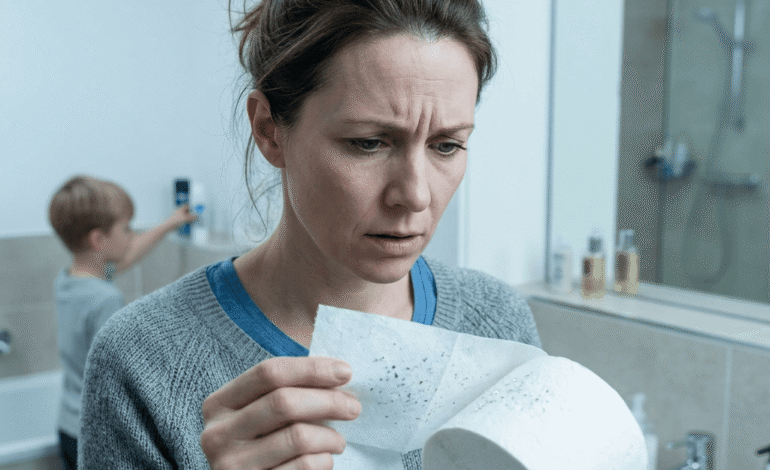

The Secret Life of Toilet Paper: What’s Really Hiding in Your Bathroom Cabinet
There’s an object sitting in your bathroom right now that you’ve never once thought twice about. It’s not your medicine cabinet full of expired prescriptions. It’s not the cleaning spray under the sink. It’s the humble roll of toilet paper — so ordinary, so utterly unremarkable, that the idea of it becoming the subject of a scientific investigation seems almost absurd.
And yet, here we are.
Because buried inside peer-reviewed research, environmental lab reports, and wastewater analysis studies is a story that most people haven’t heard yet — one that begins not in a hospital, not in a factory, but in a sewage treatment plant, where scientists noticed something that didn’t quite add up.
A Discovery Made in the Most Unlikely of Places
Picture a team of environmental scientists doing what scientists do — poring over wastewater samples, tracing chemical signatures through layers of filtration, trying to map where certain pollutants are coming from. This wasn’t dramatic work. It was methodical, quiet, the kind of science that rarely makes headlines.
But then something strange showed up.
Specific types of PFAS — per- and polyfluoroalkyl substances, a class of synthetic chemicals that bond with almost nothing in nature and therefore break down into almost nothing — were turning up in sewage in amounts that didn’t match the usual suspects. Cookware. Food packaging. Stain-resistant clothing. These are the PFAS sources most people have heard of. But the math wasn’t adding up. Something else was contributing to the load.
When researchers from the University of Florida set out to trace the source in 2023, they tested rolls of toilet paper collected from North America, Europe, and Africa. The results were eye-opening. Fluorinated compounds — chemical cousins of PFAS — showed up across multiple samples from multiple continents. And suddenly, the invisible object in your bathroom wasn’t quite so invisible anymore.
What Are PFAS, and Why Should You Care?
To understand why this matters, you have to understand what PFAS actually are — and why scientists react the way they do when they find them somewhere new.
PFAS is an umbrella term for a family of over 10,000 synthetic chemicals. They were invented in the mid-20th century because they are extraordinarily useful. They repel water. They resist heat. They don’t break down when exposed to oil, grease, or most chemicals. For manufacturers, they were a dream material.
For the environment, they turned out to be something closer to a nightmare.
The problem is precisely what makes them so useful: they don’t break down. Not in water. Not in soil. Not in the human body. Scientists sometimes call them “forever chemicals” because that’s essentially what they are — once they exist, they exist indefinitely, accumulating in ecosystems, food chains, and biological tissue over decades.
The health picture with PFAS is still developing, but what researchers have found so far isn’t reassuring. Certain PFAS — particularly older ones like PFOA and PFOS — are associated with increased risks of kidney cancer, testicular cancer, thyroid disruption, immune suppression, and developmental problems in children. The U.S. Environmental Protection Agency has classified some PFAS as having no safe level of exposure in drinking water.
Six broad categories of PFAS have been flagged in consumer product research as particularly worth monitoring: PFOA (perfluorooctanoic acid), PFOS (perfluorooctane sulfonic acid), PFNA, PFHxS, PFDA, and GenX chemicals — a newer class developed as supposedly “safer” replacements for the old ones, though the science on that claim is still being written.
Now here’s where it gets interesting — and a little complicated.
The Toilet Paper Paradox: Not What You Think
If you’re reading this and assuming the danger is in the paper itself touching your skin, the science actually pushes back on that assumption.
Skin absorption of PFAS is, by most toxicologists’ assessments, quite low. Your skin is a remarkable barrier, and the brief contact you have with toilet paper is nowhere near the exposure pathway that drinking water or certain food packaging creates. The researchers studying this aren’t raising alarms about what happens during the two seconds of direct use.
The real concern is what happens the moment you flush.
Unlike a non-stick pan that sits in your kitchen for five years before being thrown away, or a waterproof jacket that might hold its PFAS coating for a decade, toilet paper is designed to be discarded immediately. Every single use sends the paper — and whatever chemicals are in it — directly into the water system.
Multiply that by millions of households. Every day. For years.
Wastewater treatment plants are remarkable pieces of engineering. They can filter out bacteria, neutralize certain toxins, and process biological waste with impressive efficiency. But they were not built with PFAS in mind. These molecules are too small, too chemically stable, and too unlike the biological waste that treatment systems were designed to process. So they pass through.
They end up in what’s called “biosolids” — the treated sludge that comes out the other end of sewage treatment. And biosolids, in a twist that would feel almost darkly comic if it weren’t true, are commonly spread on agricultural fields as fertilizer.
So the chemicals travel from the paper to the water, from the water to the sludge, from the sludge to the soil, and from the soil to the crops. It’s a slow-motion cycle that turns an everyday household product into a small but persistent contributor to a much larger environmental problem.
How Did These Chemicals Get There in the First Place?
Here’s what makes this story genuinely surprising: in most cases, manufacturers aren’t intentionally adding PFAS to toilet paper. These aren’t secret ingredients. They’re accidental ones.
The fluorinated compounds found in toilet paper samples appear to arrive through several routes. Industrial machinery used in paper manufacturing is often lubricated with PFAS-containing compounds — some of which transfer to the paper during production. Certain processing agents used to soften or treat paper may also introduce trace fluorination. And then there’s the recycled pulp problem, which deserves its own explanation.
The Recycled Paper Trap
Many consumers, trying to make environmentally responsible choices, reach for recycled or bamboo toilet paper. The logic is sound — recycled paper reduces deforestation, bamboo grows faster than trees, both options feel like a step in the right direction. And in terms of carbon footprint and resource consumption, they often are.
But chemical purity? That’s a different story entirely.
Think about what actually ends up in the recycling stream. Thermal receipt paper, which is loaded with BPA and sometimes PFAS to create its heat-sensitive printing surface. Glossy magazines treated with water-resistant coatings. Shipping labels designed to adhere under wet conditions. Pizza boxes with grease-resistant linings.
When all of this goes into the recycling bin and gets pulped together, the chemicals don’t magically disappear. They become part of the pulp. And unless a manufacturer has invested in highly sophisticated filtration and contamination-testing protocols — which many haven’t — they can end up in the finished rolls.
A 2023 investigation by Mamavation, conducted in partnership with Environmental Health News and an EPA-certified laboratory, tested 17 different toilet paper products for total fluorine — a reliable marker for the presence of PFAS compounds. Four products showed detectable levels. Among them were Charmin Ultra Soft (a conventional brand), Seventh Generation 100% Recycled (a product explicitly marketed to environmentally conscious buyers), and two bamboo-based options — Tushy and Who Gives a Crap.
The detected levels ranged from roughly 10 to 35 parts per million, which the researchers described as consistent with accidental contamination rather than intentional addition. But the fact that even “eco-friendly” brands showed up on the list was a wake-up call. Doing right by the planet doesn’t automatically mean doing right by chemical purity, at least not yet.
To its credit, Who Gives a Crap responded to the findings with unusual transparency, acknowledging on their website that trace amounts of organic fluorine had been detected in their testing and committing to investigating the source of the contamination. That kind of honesty from a consumer brand is rare and worth noting.
The Bamboo Question
Bamboo deserves special attention because it’s become something of a cultural symbol for sustainable alternatives. The plant itself really is remarkable — it grows extraordinarily fast, requires minimal water, absorbs carbon efficiently, and doesn’t need to be replanted after harvesting. If you were designing a crop from scratch to replace trees in paper manufacturing, you’d probably end up with something a lot like bamboo.
But here’s the thing: bamboo is a grass, not a tree, and its fibers are tough, coarse, and difficult to convert into the soft, white sheets consumers expect. Getting there requires processing.
And that processing is where things can go wrong.
Some manufacturers use harsh chemical solvents or chlorine-based bleaching agents to break down bamboo fibers and whiten the finished product. These processes don’t just risk introducing PFAS — chlorine bleaching, in particular, has been linked to the creation of dioxins, a class of toxic byproducts that the World Health Organization considers among the most persistent environmental pollutants known to science.
The bamboo brands that live up to their environmental promise are the ones that have invested in what’s called “closed-loop” manufacturing — systems that use mechanical processing over chemical processing, minimize solvent use, and treat water before releasing it back into the environment. The difference between a bamboo product that’s genuinely better and one that’s just wearing sustainable branding often comes down to what happens inside the factory, and most consumers have no way of knowing.
Reading the Label Like a Scientist
So what’s a person supposed to do when they’re standing in the paper goods aisle, staring at forty-seven nearly identical options?
Start with what you can see on the package.
The term you’re looking for is “TCF,” which stands for Totally Chlorine Free. This processing standard eliminates the chlorine bleaching step that can produce dioxins and may introduce other contaminants. It’s not a guarantee of perfection, but it’s a meaningful signal that the manufacturer has made choices to minimize chemical risk during production.
Avoid anything with added fragrances or moisturizing agents. These might seem harmless — even pleasant — but they represent unnecessary chemical additions to a product that, by design, should be as simple as possible. The 2025 Green Seal GS-1 Standard, an independent certification for sanitary paper products, explicitly prohibits these additives for exactly this reason.
Pay attention to what a brand says — and what it doesn’t say. Companies that are genuinely committed to chemical safety tend to talk about it. They publish testing results. They explain their sourcing. They acknowledge when they’ve found issues and describe what they’re doing about them. Companies that respond to questions about contamination control with vague promises or marketing language are, at best, not yet where they need to be.
The simplest rule of thumb: the fewer the ingredients, the fewer the opportunities for something to go wrong. Basic, unscented, TCF-certified products with minimal processing are currently the strongest choice for anyone who wants to reduce their contribution to the PFAS cycle.
The Bigger Picture You Can’t Ignore
It would be easy to walk away from this article feeling like the world is just one more invisible hazard after another. Cookware. Water bottles. Food packaging. And now toilet paper. The list of ordinary objects that carry complicated chemical footnotes keeps growing, and the fatigue that comes with knowing all of it is real.
But here’s the more important truth: toilet paper’s contribution to global PFAS contamination is genuinely small in the grand scheme of things. Industrial discharge, agricultural runoff, and food packaging are far larger vectors of exposure. Changing your toilet paper brand will not solve the PFAS crisis.
What it might do — if enough people do it — is something more subtle and ultimately more powerful. Consumer purchasing behavior shapes manufacturing incentives. When millions of households start gravitating toward simpler, cleaner products, companies notice. When investors and insurers start asking hard questions about chemical liability, manufacturers change their supply chains. When researchers keep publishing findings like these and journalists keep writing about them, regulators eventually act.
The story of PFAS in toilet paper isn’t really a story about toilet paper. It’s a story about the remarkable invisibility of modern chemistry in modern life — about how the synthetic compounds woven into manufacturing processes we never see end up in places we never expected, and how long it takes for any of us to notice.
What to Do Right Now
If you want to act on this information — and there’s no pressure to, but if you do — here’s what it looks like in practice:
Look for products certified as Totally Chlorine Free. Seek out brands that publish third-party lab testing results or environmental transparency reports. Avoid premium options loaded with scents, lotions, or texture-enhancing treatments. If you use recycled paper products, research whether the manufacturer has invested in contamination filtration from incoming recycled pulp.
And then — perhaps most importantly — don’t stop there. The toilet paper in your bathroom is the smallest piece of the PFAS puzzle. Support policies that require disclosure of PFAS in manufacturing processes. Back regulations that restrict PFAS in biosolids used as fertilizer. Ask questions of the brands you buy from, because companies that get those questions start paying attention.
The Flush Heard Round the Water System
There’s something quietly profound about the idea that one of humanity’s most private, mundane moments — the daily ritual so ordinary we never discuss it — has become connected to one of the most complex environmental chemistry problems of the modern era.
We built a world on the promise that synthetic chemicals would make life cleaner, easier, and more comfortable. And in many ways, they did. But we didn’t yet understand, when we started making these materials, that “doesn’t break down” would turn out to mean “stays everywhere, forever.” We didn’t understand that sewage treatment plants would be powerless against them, or that fertilizing fields with treated sludge would send them back into the food chain.
We’re understanding it now.
The question isn’t whether PFAS in toilet paper will directly harm you. The evidence suggests the risk at the individual level is low. The question is something bigger and slower: what kind of world do we want to build from this moment forward, now that we know what we know?
A small, boring choice — the brand of toilet paper on your bathroom shelf — is one tiny thread in a much larger fabric. And sometimes, that’s exactly where meaningful change begins.
Not in a laboratory. Not in a legislature. But in the quiet moment before you push the handle.
Discover more from MatterDigest
Subscribe to get the latest posts sent to your email.