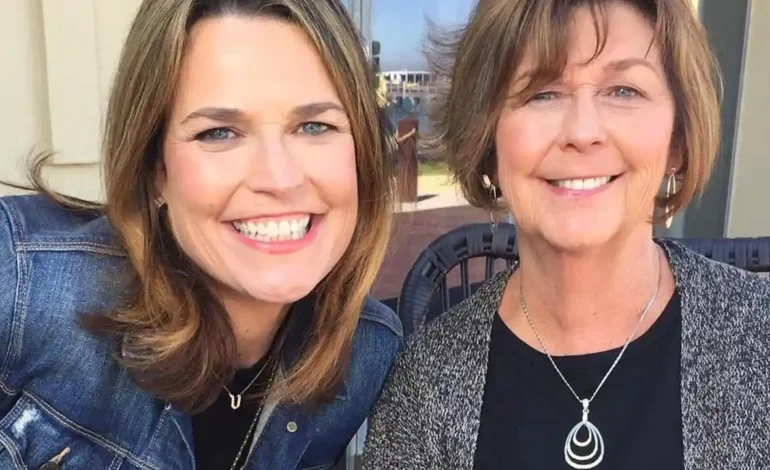

Nancy Guthrie Missing Two Months: Everything We Know About Savannah Guthrie’s Mother and Why the Case Has No Answers
Two months ago, an 84-year-old woman named Nancy Guthrie walked into her Tucson, Arizona home after a quiet Saturday evening with family. Her garage door closed at 9:50 p.m. It was the last time anyone saw her. Since then, hundreds of FBI agents and local law enforcement officers have worked around the clock. A $1 million reward has been posted. Surveillance footage has been analyzed frame by frame. DNA evidence has been collected, processed, and tested. And still — after 60 days, dozens of leads, and an investigation that has drawn national attention — Nancy Guthrie has not been found.
Nancy is the 84-year-old mother of Savannah Guthrie, the co-anchor of NBC’s Today show. Her disappearance from the Catalina Foothills neighborhood of Tucson — an upscale, quiet suburb perched above the lights of the city — has become one of the most closely watched missing persons cases in recent American history. It has tested the FBI. It has put a county sheriff under intense public scrutiny. It has raised hard questions about surveillance technology, DNA forensics, ransom negotiations, and the limits of modern investigative tools.
And for Savannah Guthrie and her family, it has produced two months of anguish without resolution — a waking nightmare that the Today anchor has described publicly in terms that have moved millions of Americans who have followed the case.
“We cannot grieve. We can only ache and wonder.” — Guthrie family statement, March 21, 2026
What Happened the Night Nancy Guthrie Disappeared?
The evening of January 31, 2026 was unremarkable by any measure. Nancy Guthrie, 84, had spent her Saturday the way she spent many Saturdays — with family, at home, in the neighborhood she had lived in for decades. She had dinner and played games with her daughter Annie Guthrie at a home nearby in the same Catalina Foothills community where she had raised her three children.
At 9:48 p.m., Annie’s husband, Tommaso Cioni, drove Nancy back to her own home. He waited outside until she was safely inside before driving away. Her garage door closed two minutes later, at 9:50 p.m. It was a quiet end to a quiet evening — nothing unusual, nothing alarming, nothing that would suggest what was about to happen.
When Nancy did not appear for her Sunday morning ritual — gathering with friends to watch an online church service — the alarm was raised. Friends called family. Annie went to the house shortly before noon. Nancy was not there. Her phone was still in the house. Her purse was still there. Her medication — which she needed every day — had not been taken. Her car was in the driveway. A doorbell camera that had been mounted at the front of the house was missing. And there was blood on the Spanish tile of the front porch.
The Pima County Sheriff’s Department arrived at 12:15 p.m. Within hours, the working theory was clear: Nancy Guthrie had not wandered off. She had not left voluntarily. She had been taken from her own home, in her pajamas, without shoes, in the middle of the night.
This was not a silver alert. This was an abduction.
Who Is Nancy Guthrie and What Was Her Life Like Before She Went Missing?
To understand why this case has gripped so many people so deeply, it helps to understand who Nancy Guthrie is — not as the mother of a famous television anchor, but as a person in her own right.
Nancy grew up in northern Kentucky and studied journalism in college. She built a life in Tucson after her husband Charles, a mining engineer, brought the family to Arizona in 1973. They settled in the Catalina Foothills, where Nancy raised three children: Camron, Annie, and Savannah. After her husband died of a sudden heart attack — an event that Savannah has described as one of the defining tragedies of her childhood — Nancy became a single mother and went back to work, eventually taking a position at the University of Arizona where she worked for many years.
She was embedded in her community. She was a regular at St. Andrew’s Presbyterian Church. She played tennis. She hiked the desert trails around her home before her health made that difficult. She was a regular at El Charro Café, Tucson’s beloved Mexican restaurant, where she had become friends with executive chef Carlotta Flores. In November 2025 — just two months before her disappearance — she had appeared on the Today show with Savannah and Annie for a segment about Tucson, sharing lunch and laughing on camera.
She was also managing real health challenges. She had a pacemaker. She relied on daily medication. A bad back left her in frequent pain. On a good day, she could walk to her mailbox. Despite all of that, people who knew her described her as mentally sharp, full of faith, and possessed of what Savannah called a mischievous sense of humor.
She was not a woman who posed an obvious risk to anyone. She was not involved in anything controversial. She had no known enemies. She was, by every account, exactly what she appeared to be: a devoted grandmother living quietly in the desert community she had called home for more than 50 years.
What Does the Timeline of the Abduction Tell Investigators?
The timeline reconstructed by investigators reveals a crime that appears to have been carefully planned and precisely executed. The details that have emerged publicly are both specific and disturbing.
A doorbell camera at a neighboring property captured footage of a figure on Nancy’s front porch at 1:47 a.m. — nearly four hours after she went inside for the night. The figure is described by FBI analysts as a man with a mustache, approximately five feet nine to five feet ten inches tall, wearing a zip jacket and carrying a 25-liter Ozark Trail backpack sold by Walmart. He wore gloves. He appeared to have a gun holster at his waist.
Forty-one minutes after the doorbell camera was triggered, at approximately 2:28 a.m., Nancy’s pacemaker monitoring app disconnected. The device — which transmits health data wirelessly and requires a stable internet connection to do so — went offline. Investigators have been examining whether a Wi-Fi jammer was used to interrupt the home’s internet service that night, which would explain the simultaneous loss of connectivity.
The front doorbell camera that Nancy had installed at her own door was missing when investigators arrived. It had been removed — either by the intruder during the abduction or prior to it. The blood found on the front porch tiles was later confirmed through forensic testing to be Nancy’s.
Taken together, the timeline suggests a perpetrator who knew the house, knew Nancy’s routine, knew her medical situation, and came prepared with equipment specifically designed to avoid leaving a digital trail. The removal of the doorbell camera, the apparent use of a signal jammer, the precise timing relative to the pacemaker disconnect — none of these things are consistent with a random or opportunistic crime.
Investigators have stated publicly that they believe the crime was targeted. On March 12, Pima County Sheriff Chris Nanos told NBC: “We believe we know why he did this, and we believe it was targeted.” He declined to say more.
What Happened With the Ransom Notes and Are They Real?
Within 48 hours of Nancy’s disappearance becoming public news, ransom demands began arriving. The first came through an anonymous tipline at Tucson’s KOLD-TV news station on Monday morning, February 2. A station anchor described it as something that immediately stood out — it contained a specific dollar amount, a deadline, and information that she said seemed like it could only come from someone who actually had Nancy.
That information reportedly included the location of an Apple Watch and details about a light fixture inside the home — specifics that had not been publicly disclosed and that would be difficult for a fraudster to know.
More notes followed. They arrived at other television stations and at celebrity tabloid TMZ. At least one was quickly proven to be fake — on February 5, the FBI arrested a California man who had sent a fraudulent ransom demand to the Guthrie family shortly after they made their public plea for Nancy’s safe return.
Former FBI agents who reviewed the legitimate-seeming notes publicly described them as unusual in their construction. Ransom demands typically go directly to the family, not to media outlets. They usually include explicit proof of life. They typically provide a clear mechanism for how to pay and how to secure the release of the person being held. The notes in the Guthrie case did not follow this pattern — a fact that investigators found both notable and difficult to interpret.
Ransom deadlines came and went. February 7. February 9. Neither produced proof of life or further contact. The Guthrie family posted publicly that they would pay. In a March 26 interview on Today, Savannah said she tends to believe the two notes the family responded to were real — but acknowledged that certainty is impossible.
What Has the Investigation Uncovered and Why Has It Stalled?
The investigation into Nancy Guthrie’s disappearance has been one of the largest missing persons operations in Arizona history. At its peak, nearly 400 officers were assigned to the case, including FBI agents from the Phoenix field office who established a 24-hour command post. The reward for information leading to her rescue or recovery has grown to more than $1 million.
Despite that scale, the investigation has faced setback after setback. The most significant early blow was the discovery that Nancy did not have an active subscription for her doorbell camera — meaning that even though the camera existed, it was not saving footage to the cloud. There was no recording of the actual abduction.
DNA evidence was recovered from the scene, including a pair of black gloves found in desert brush about two miles from Nancy’s home that were similar to those worn by the figure in the porch surveillance video. The gloves were sent to a private lab in Florida for analysis. On February 17, preliminary results came back: the DNA from the gloves did not match any entry in the FBI’s CODIS database — the Combined DNA Index System that contains genetic profiles from individuals previously processed in criminal cases.
It was later revealed that some of the gloves collected near the scene actually belonged to volunteer searchers who had discarded them during neighborhood canvassing. Others came from an employee at a restaurant across the street. The forensic picture that had seemed like a potential breakthrough became significantly more complicated.
Investigators have pursued dozens of other leads. They followed a delivery driver in Rio Rico, Arizona. They removed a 37-year-old man and his mother from a home two miles from Nancy’s house for a search. Both proved to be dead ends. They have analyzed footage from traffic cameras, business cameras, and neighboring home systems. They have worked with software companies to try to recover cloud video data that might have been partially saved before the home’s internet connection was interrupted.
None of it has produced a named suspect. None of it has produced Nancy.
Why Has Pima County Sheriff Chris Nanos Faced Such Intense Criticism?
As the investigation has stretched into its second month without resolution, Pima County Sheriff Chris Nanos has become a lightning rod for public frustration — some of it fair, some of it complicated by the inherent difficulty of the case itself.
The first major criticism centered on his handling of the crime scene in the early hours of the investigation. Nanos made the decision to return the house to the family relatively quickly after the initial processing. Crime scene tape was later put back up, but critics — including former law enforcement officials — argued that the gap allowed members of the public onto the porch, potentially contaminating evidence that would need to be reexamined as the investigation developed.
A second controversy arose when an anonymous FBI source told Reuters that Nanos had blocked federal agents from sending DNA samples to the FBI’s laboratory at Quantico, insisting instead on using a private lab in Florida. The source told Reuters that the decision risked slowing a case that was growing more urgent by the day. Nanos denied both the rift with the FBI and any mishandling of evidence.
He was also publicly criticized for attending an Arizona Wildcats basketball game on the same evening that the Guthrie family was filming their video appeal to the potential kidnapper — a decision that struck many observers as tone-deaf given the circumstances.
Former Pima County Deputy Sheriff and U.S. Surgeon General Richard Carmona published a column in the Arizona Daily Star alleging a series of avoidable missteps in messaging, coordination, and leadership from the Sheriff’s Department. A Tucson Republican began collecting signatures for a potential recall. A deputies’ union held a no-confidence vote following reporting that found discrepancies in the sheriff’s posted professional history.
Nanos has defended himself. He has continued to say publicly that the investigation is active and that leads are being pursued. But he has not held a formal press conference since February 5 — nearly two months ago — and his limited public communications have done little to reassure a community that is watching and waiting for answers.
What Has Savannah Guthrie Said Publicly and What Does Her Return to Today Mean?
Savannah Guthrie has handled one of the most painful situations imaginable in an extraordinarily public way. As a co-anchor of one of the most-watched morning programs in America, she has had to navigate her private grief in a very public space — and she has done so with a candor and emotional honesty that has moved millions of viewers.
In her first major interview since the disappearance, she sat down with Today colleague Hoda Kotb and spoke from the heart. She described finding out her mother was missing. She described the guilt she has carried — a guilt rooted in the fear that her own celebrity may have made her mother a target. She described waking up in the middle of the night, every night, imagining her mother’s terror.
Her brother Camron’s confirmation of that fear — when she asked him directly whether Nancy’s disappearance might be connected to her fame and he replied that yes, maybe, it was — has been one of the most discussed moments of the case. Online reaction to Camron’s candor was sharp, with many viewers expressing anger at what they saw as a callous and unhelpful response to his sister’s anguish. Others defended him as someone with a military background being direct about a reality that needed to be acknowledged.
Savannah has now announced her return to Today. Retired FBI special agent Steve Moore, speaking on NewsNation’s Brian Entin Investigates, described the announcement as a meaningful moment — not an indication that the investigation has stalled, but a signal that Savannah is trying to find a way to move forward with her life while the wait continues. Moore noted that the return could also have an investigative dimension: someone watching Savannah back on television, perhaps feeling that the heat has dissipated, might become careless. Might talk. Might eventually do the right thing.
“Someone needs to do the right thing. We are in agony. It is unbearable.” — Savannah Guthrie, March 26, 2026
What Do Retired FBI Agents Say About Where the Investigation Stands Now?
Several former FBI agents have spoken publicly about the Nancy Guthrie case as it approaches the two-month mark, offering assessments that are sobering but not without hope.
The shift in the family’s public communications — from direct appeals to a possible kidnapper to broader calls for public information — has been noted by multiple former agents as a significant signal. When families stop addressing a kidnapper directly and start asking for any information at all, it typically reflects a change in investigators’ assessment of the most likely scenario. It does not necessarily mean Nancy is confirmed dead. But it suggests that the hope of a straightforward ransom negotiation has faded.
Former FBI agent Eric O’Neill described the family’s March 21 statement — in which they said they wanted to celebrate Nancy’s life but could not do so until she was brought to a final place of rest — as reflecting a family preparing for the possibility that closure, when it comes, may not be the closure they were hoping for.
Former FBI agent Lance Leising offered a more specific assessment of how the case is most likely to break. He does not believe DNA or video evidence alone will solve it at this point. The most probable path to resolution, in his view, is human: someone who knows something eventually talks. The reward is substantial. The public attention remains high. And people who commit crimes sometimes become careless when they believe the pressure has eased.
Retired FBI agent Steve Moore compared the obsession of agents working cases like this one to Captain Ahab pursuing the white whale. They do not let go. They work it in their sleep. They wake up in the middle of the night thinking about what they might have missed. The reduction in publicly visible investigative activity does not mean the case has been deprioritized. It may simply mean that investigators are working quietly on a path they cannot yet discuss publicly.
Key Takeaways: Nancy Guthrie Missing — Two Months of Questions Without Answers
Nancy Guthrie, 84-year-old mother of Today anchor Savannah Guthrie, was abducted from her Tucson, Arizona home on the night of January 31, 2026. Her garage door closed at 9:50 p.m. She has not been seen since.
Evidence at the scene — blood on the front porch, a missing doorbell camera, pacemaker disconnect at 2:28 a.m., and surveillance footage of a masked, armed figure — points to a carefully planned, targeted abduction rather than a random or opportunistic crime.
Multiple ransom notes have arrived at media outlets and the family, though no confirmed proof of life has been received. At least one was a fraud. The family has stated they will pay. Deadlines have passed without contact.
DNA from black gloves found near the scene did not match any entry in the FBI’s CODIS database. No suspect has been named. No arrest has been made.
Pima County Sheriff Chris Nanos has faced significant public and professional criticism over his handling of the investigation, including controversy over the crime scene, DNA processing decisions, and limited public communication.
Savannah Guthrie has announced her return to Today. The $1 million reward for information remains available. Law enforcement continues to ask anyone with information to contact 1-800-CALL-FBI or tips.fbi.gov, or call the Pima County Sheriff’s Department at 520-351-4900.
© 2026 Matter News. All rights reserved.
Discover more from MatterDigest
Subscribe to get the latest posts sent to your email.