Epstein Jail Guard Under Fire: Untold Details of Suspicious Activity Emerge as Congress Demands Answers

At 5:42 a.m., she opens the prison computer. Her fingers hover over the keys, then type a simple search: “Latest on Epstein in jail.”
Ten minutes later, she types it again.
She is a federal correctional officer, on duty in the federal facility where Jeffrey Epstein, the most-watched prisoner in the United States, is held. Her official responsibility: to monitor him at all times, ensuring both his safety and the security of the facility.
Yet in the early hours of that day, she was focused elsewhere.
Less than an hour after that second search, Jeffrey Epstein was found dead.
What followed has remained shrouded in secrecy for years, leaving unanswered questions that continue to haunt investigators, lawmakers, and the public alike.
The Mysterious Cash Deposits
While Epstein’s death dominated headlines, the attention soon shifted to a series of events that had been buried in government files for years. Ten days before Epstein’s death, $5,000 in cash appeared in the officer’s personal bank account.
The deposit was not ignored. Her bank, adhering to federal reporting requirements, flagged the transaction as suspicious and filed a Suspicious Activity Report (SAR) with the FBI.
But it wasn’t a one-time occurrence. Bank records reveal twelve separate cash deposits over several months, totaling over $11,000. Despite the apparent pattern, when the FBI interviewed the officer in 2021—more than a year after Epstein’s death—they never asked her a single question about the money. Not once.
The implications are staggering: an officer assigned to the country’s most high-profile prisoner, with millions of dollars and critical testimony on the line, receives unexplained cash deposits—yet investigators fail to pursue this lead.
Inconsistencies in Her Story
In interviews with the FBI, the officer reportedly claimed she did not recognize Epstein’s name when assigned to guard him in the summer of 2019. This assertion raised eyebrows among former law enforcement personnel.
Epstein’s face, they note, was plastered across national media, discussed in every major outlet, and a subject of intense public scrutiny. That a federal correctional officer could claim ignorance of his identity strains credibility.
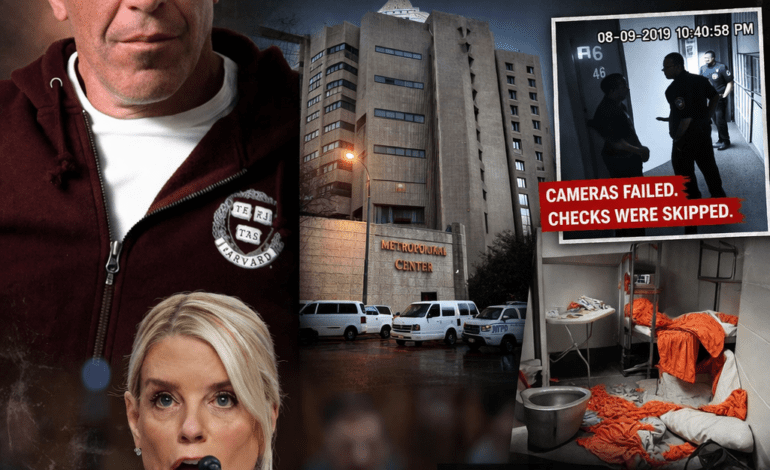
Moreover, surveillance records from the night of Epstein’s death show a figure carrying an object toward Epstein’s cell at 10:40 p.m. This object matches the description of items later found at the scene where his body was discovered—materials crucial to understanding how the death occurred.
Criminal Charges Filed and Dismissed
Despite the suspicious bank deposits, inconsistencies in her statements, and the unresolved questions surrounding surveillance footage, criminal charges were filed against the officer in late 2020. However, by January 2022, those charges were quietly dismissed.
No trial took place. No public testimony. No courtroom cross-examination. The Department of Justice provided no explanation for the sudden dismissal, leaving both legal analysts and the public frustrated.
Essentially, the officer walked away.
The Files Stayed Sealed—Until Last Year
For years, the details of Epstein’s final hours, the officer’s financial activity, and surveillance records remained under lock and key. The files were sealed, inaccessible to journalists, Congress, and most investigators outside the FBI and Department of Justice.
Then, in a wave of compelled disclosures, the government released millions of pages of Epstein-related documents last year. Hidden within them were the elements that had gone largely unnoticed:
- The officer’s exact computer search terms, timestamped down to the minute
- The bank’s flagged report, which had never been followed up on
- A detailed surveillance analysis showing activity near Epstein’s cell the night before his death
The documents paint a picture of extraordinary lapses, leaving critical questions unanswered.
The Congressional Hearing
On March 26, 2026, the officer was called before Congress. For the first time in six years, she would testify under oath and on the record.
Lawmakers were prepared with the newly released documents. Every search, every timestamp, every bank deposit had been meticulously documented, giving Congress a level of detail unavailable to previous investigators.
One question, in particular, stood out—a question that no investigator had ever asked her directly, despite it being clearly documented in the files. Sources who have reviewed the materials suggest that this single question could fundamentally change the shape of the Epstein case.
Why the Timing Matters
The timing of the suspicious cash deposits is crucial. Ten days before Epstein died, $5,000 appeared in her account. Over months, a total of $11,000 arrived in cash.
Investigators, however, delayed reviewing the bank’s report, which reached the FBI three months after Epstein’s death. Critics argue that if the deposits had been investigated immediately, the chain of events surrounding Epstein’s death might have been illuminated far earlier.
Instead, the timeline appears troubling:
- Epstein is in federal custody, the subject of immense scrutiny.
- The assigned officer searches the internet for updates on him while on duty.
- Significant cash deposits appear in her account, flagged by the bank.
- FBI fails to investigate those deposits or their potential connection to Epstein’s death.
- Charges filed against the officer are quietly dismissed.
- Files remain sealed for years.
Each step raises questions about procedural failure and accountability.
Patterns of Oversight Failure
Legal experts point to this case as an example of systemic lapses in oversight within the federal prison system.
- Monitoring Failure: Epstein’s custody was supposed to include constant observation. Yet, surveillance analysis and the officer’s computer searches suggest periods of inattention.
- Investigation Gaps: The FBI failed to follow up on clearly documented cash deposits, leaving potential leads unexplored.
- Lack of Transparency: Sealed files and quietly dismissed charges have prevented public and congressional oversight, limiting accountability.
The combination of these failures contributes to persistent conspiracy theories and public skepticism about the circumstances of Epstein’s death.
Questions Raised by the Documents
The newly released files allow for a detailed reconstruction of events and generate critical questions, including:
- Why did the officer conduct multiple searches about Epstein while on duty?
- What was the source of the $11,000 in cash deposited into her account over several months?
- Did surveillance records identify all individuals who had access to Epstein’s cell in the days leading up to his death?
- Why did the FBI fail to investigate suspicious financial activity despite a SAR filed by her bank?
- What led the DOJ to dismiss criminal charges without trial, explanation, or public record?
Answers to these questions could reveal significant insights into the management of high-profile federal inmates and potential misconduct by prison staff.
Public and Media Reactions
News of the officer’s congressional testimony has triggered a torrent of public interest. Social media platforms and major news outlets are reporting widespread outrage and disbelief. Many commentators have labeled the case as “one of the most mysterious and consequential failures in federal prison oversight.”
Analysts highlight the public’s growing concern over:
- Institutional accountability – How federal prisons handle high-profile prisoners.
- Financial transparency – The significance of unexplained cash deposits into the accounts of individuals connected to federal inmates.
- Media access and secrecy – The consequences of years-long sealed files for public trust.
Public interest in Epstein’s case continues to generate intense scrutiny, particularly because of the high-profile figures potentially implicated by the documents.
Why This Case Still Matters
Even six years after Epstein’s death, the events surrounding the officer, her financial activity, and the federal investigation remain highly relevant. Experts cite several reasons:
- Historical Record: The documentation provides a granular account of prison operations, potential misconduct, and oversight failures.
- Legal Precedent: Congressional testimony could influence future policies regarding federal correctional officers, inmate safety, and procedural oversight.
- Ethical Accountability: The case underscores the importance of transparency and ethical behavior in the criminal justice system.
Many legal scholars argue that this case highlights how gaps in investigative rigor and oversight can leave critical questions unanswered, even in matters of national attention.
The Significance of the Congressional Hearing
The March 26 hearing represents more than an inquiry into one officer’s actions. It reflects broader concerns about institutional integrity:
- Can high-profile inmates be safely and securely monitored?
- Are suspicious financial transactions properly investigated?
- How can oversight mechanisms prevent lapses that may jeopardize justice?
For lawmakers, the hearing is an opportunity to demand clarity, accountability, and reform, ensuring that future high-profile prisoners are managed with integrity and diligence.
What Comes Next
Following the testimony, several developments are anticipated:
- Further Congressional Investigation: Oversight committees may expand their inquiry to include additional staff, supervisors, and administrative records.
- Public Pressure for Transparency: Media outlets are likely to push for additional document releases and explanations for previously sealed files.
- Policy and Procedural Reforms: The Justice Department and Bureau of Prisons may implement new guidelines to prevent similar lapses in custody and investigation.
The case may also have broader implications for how federal investigations handle financial red flags, surveillance records, and the accountability of staff responsible for high-risk inmates.
Conclusion
The officer assigned to guard Jeffrey Epstein remains at the center of one of the most perplexing and controversial chapters of modern American criminal justice. From her early-morning searches on prison computers to the mysterious cash deposits and the delayed FBI inquiry, her actions—and the system’s response—have left lingering questions about accountability, transparency, and justice.
For six years, files remained sealed, charges were quietly dismissed, and investigators missed opportunities to address key financial evidence. Now, under Congressional scrutiny, the nation has its first chance to confront the unanswered questions directly.
As lawmakers probe the events leading up to Epstein’s death, the new testimony promises to shed light on institutional failures, potential misconduct, and the ethical responsibilities of those charged with protecting some of the most high-profile inmates in the world.
The story is far from over. With millions of documents released and the officer finally answering questions under oath, the full implications of the Epstein case are only beginning to come into focus. One question, long ignored but documented in the released files, may hold the key to understanding what truly happened that fateful night—and what lessons must be learned to prevent such failures in the future.
Discover more from MatterDigest
Subscribe to get the latest posts sent to your email.