UNDER THE SHADOW OF INFAMY: The Cry of a Divided Nation

| FACT-CHECKED NEWS ANALYSIS | MARCH 15, 2026 | INTERNATIONAL AFFAIRS |
SOCIAL VERDICT! Thousands of Citizens Claim Donald Trump’s Administration Has Turned the U.S. into a “War Criminal State”
| Published: March 15, 2026 | Updated: March 15, 2026 | Category: International Law | U.S. Foreign Policy | Fact-Check |
| ⚠️ VERDICT: The headline’s core claim — that the U.S. UN Security Council formally declared Trump a ‘war criminal’ — is FALSE. However, the broader story it draws from involves real, serious, and actively debated international law concerns. This article separates confirmed facts from viral misinformation. |
FAKE NEWS EXPOSED: What the Viral Claim Actually Said
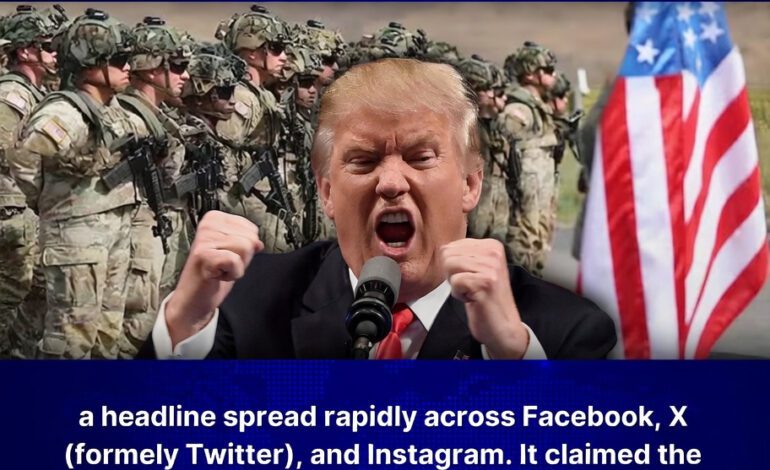
In early March 2026, a headline spread rapidly across Facebook, X (formerly Twitter), and Instagram. It claimed the United Nations Security Council had officially declared U.S. President Donald Trump a “wanted international war criminal” following joint U.S.-Israeli strikes on Iran on February 28, 2026. The post was shared hundreds of thousands of times.
It was not true.
What Fact-Checkers Found
Snopes, one of the oldest and most authoritative fact-checking organizations, investigated the claim directly. Here is what their research confirmed:
- The UN Security Council did hold an emergency meeting after the February 28 strikes on Iran — that part is real.
- Iran’s UN ambassador called the strikes a ‘war crime’ during his speech. He did not specifically call Trump a ‘war criminal.’
- The Security Council issued no resolution, presidential statement, or formal declaration labeling Trump a war criminal.
- The United States, as a permanent member of the Security Council, holds veto power — making any binding resolution against it structurally impossible.
| 📌 KEY FACT: Article 27 of the UN Charter grants all five permanent members — the U.S., China, France, Russia, and the UK — veto power over all non-procedural Security Council decisions. No binding resolution can pass against the U.S. without its own consent. |
Why Did This Misinformation Spread?
The fake claim spread because it was built on a foundation of real events. Joint U.S.-Israeli airstrikes on Iran genuinely occurred on February 28, 2026. Iran’s supreme leader was killed. An emergency UN Security Council session was held. Global leaders condemned the action. In that charged atmosphere, a misleading headline gained traction by mixing real events with a false institutional verdict.
This is a classic pattern in modern misinformation: anchor a false claim to a real crisis, strip away the legal nuance, and package it in outrage-triggering language.
THE REAL NEWS: What Actually Happened — A Full Factual Account
The February 28, 2026 U.S.-Israeli Strikes on Iran
In the early hours of Saturday, February 28, 2026, the United States and Israel launched a massive coordinated military operation — code-named “Operation Epic Fury” — targeting multiple sites across Iran, including Tehran and at least eight other cities.
- S. President Trump announced a “major combat operation” aimed at eliminating Iran’s nuclear and missile programs, destroying its navy, and triggering regime change.
- Iran’s Supreme Leader Ayatollah Ali Khamenei was killed in the strikes. Iranian state media confirmed his death on March 1, 2026.
- Iran’s Defense Minister Aziz Nasirzadeh and IRGC commander Mohammad Pakpour were also killed.
- Iran’s Health Ministry reported at least 1,444 people killed and 18,551 injured as a result of U.S.-Israeli strikes as of mid-March 2026.
- The U.S. struck more than 5,000 targets in Iran since the operation began, according to U.S. CENTCOM.
Iran’s Retaliation
Iran responded with a wave of retaliatory missile and drone strikes across nine countries in the Middle East. Targets included U.S. military bases in Qatar, Kuwait, the UAE, Bahrain, and Saudi Arabia. At least 15 Israelis were killed and over 3,100 injured in Iranian counterstrikes. 27 people were killed in Iraq. The U.S. military confirmed 13 fatalities from Iranian attacks, plus six crew members killed when a U.S. refuelling aircraft crashed in western Iraq on March 13.
| CASUALTIES AT A GLANCE (as of March 15, 2026): Iran: 1,444+ killed, 18,551+ injured (U.S.-Israeli strikes) | Israel: 15 killed, 3,100+ injured (Iranian strikes) | U.S. military: 19+ confirmed fatalities | 9 countries targeted by Iranian retaliatory strikes |
The Diplomatic Context Preceding the Strikes
Here is what makes the timing especially controversial. Just 24 hours before the strikes began, Oman’s Foreign Minister Badr Al-Busaidi publicly stated that a diplomatic “breakthrough” had been reached. He said Iran had agreed to never stockpile enriched uranium and to full IAEA verification. Peace, he said, was “within reach.”
Nuclear talks were scheduled to resume on March 2. The strikes came on February 28.
U.S. Middle East envoy Steve Witkoff offered a different account: Iran had insisted on its “inalienable right” to enrich uranium and rejected zero enrichment. The IAEA also noted it could not confirm Iran’s nuclear program was exclusively peaceful. The Trump administration cited these concerns as justification.
Critics, however, pointed out that the president himself had said the previous year that he had “obliterated” Iran’s nuclear capacity. The strikes were launched without Congressional authorization.
THE LEGAL DEBATE: Are These Acts Violations of International Law?
This is where the conversation gets genuinely complex — and where public discourse has repeatedly conflated accurate legal claims with false ones.
What Experts Are Actually Saying
A range of credible legal scholars and international law institutions have raised serious concerns. Here is a structured look at the key legal arguments:
| Legal Issue | Expert Consensus |
| Crime of Aggression | Multiple legal scholars, including veteran war crimes prosecutor Reed Brody, argue Trump has ‘presumptively committed the international crime of aggression’ by launching attacks without Security Council authorization or genuine self-defense justification. |
| War Crimes (Boat Strikes) | Human Rights Watch and Lawfare conclude the Caribbean/Pacific drug boat strikes (Sept-Dec 2025) were unlawful extrajudicial killings — but technically NOT ‘war crimes,’ since no recognized armed conflict exists. |
| Crimes Against Humanity (Boat Strikes) | Lawfare analysts argue the boat strikes may meet the threshold for crimes against humanity based on ICC precedent set by the Duterte Philippines case. |
| Perfidy | CNN and legal scholars noted that use of a civilian-appearing aircraft for a military strike may constitute ‘perfidy’ — a specific prohibited deception under the laws of armed conflict. |
| ICC Jurisdiction | The U.S. is not an ICC member. However, under customary international law, President Trump would not have head-of-state immunity before the ICC for the duration of his term. |
The War Crimes vs. Extrajudicial Killings Distinction — Why It Matters
One of the most important — and most misunderstood — points in this entire debate is the difference between “war crimes” and “extrajudicial killings.”
War crimes, by definition under international humanitarian law, can only occur in the context of an armed conflict. Human Rights Watch explicitly warned that calling the drug boat strikes “war crimes” actually plays into the Trump administration’s preferred framing — because it accepts the premise that the U.S. is “at war” with drug traffickers, which grants greater legal latitude for lethal force.
What experts actually called these killings: extrajudicial executions. Unlawful killings committed by the state without legal process. Put more plainly: murder, in the words of two legal scholars quoted by CNN. That is a more serious accusation, not a lesser one.
| ⚖️ LEGAL CLARITY: Calling something a ‘war crime’ when it isn’t one doesn’t make the accusation stronger — it can actually weaken it. The drug boat strikes may be crimes against humanity. The Iran strikes may constitute the crime of aggression. Both are serious. Neither is accurately simplified as just ‘war crimes.’ |
THE ICC STANDOFF: Sanctions, Threats, and What It All Means
Trump’s Executive Order Against the ICC
On February 6, 2025, Trump signed an executive order authorizing asset freezes and entry bans against ICC officials. The order explicitly stated that the ICC had engaged in “illegitimate and baseless actions targeting America and our close ally Israel.”
Human Rights Watch’s international justice director Liz Evenson responded that the order “effectively puts the United States on the side of war criminals at the expense of victims.”
The Pressure to Rewrite the Rome Statute
By December 2025, Reuters reported something even more extraordinary: the Trump administration was pressuring the ICC to amend its founding document — the Rome Statute — to carve out permanent immunity for Trump and his top officials. An unnamed U.S. official told Reuters there was “growing concern that in 2029, the ICC will turn its attention to the president, the vice president, the secretary of war, and others.”
The demands included:
- Dropping the ICC investigation into Israeli PM Netanyahu and former Defense Minister Gallant over Gaza charges.
- Dropping the probe into potential U.S. war crimes in Afghanistan.
- Amending the Rome Statute itself to permanently shield U.S. officials.
The Human Cost of ICC Sanctions
The sanctions have had real-world effects on court personnel. Canadian ICC judge Kimberly Prost told Al Jazeera she lost access to all credit cards and bank accounts due to U.S. financial restrictions. “How do you order an Uber? How do you get a hotel? How do you do basic transactions?” she asked.
International banks, even outside the U.S., have chosen to comply with sanctions out of caution — effectively cutting off targeted judges from normal financial life.
| 🔍 CONTEXT NOTE: The U.S. has never ratified the Rome Statute and is not an ICC member. However, actions taken to obstruct an international court — including sanctioning judges — are widely viewed by legal experts as damaging to the global rule of law, regardless of membership status. |
GLOBAL REACTION: How the World Has Responded
International Condemnation of the Iran Strikes
The February 28 strikes triggered the widest international backlash against a U.S. military action in recent memory. Here is what major global actors said:
- China: Foreign Minister Wang Yi called the attack “unacceptable” and said it violated international law and the basic norms of international relations. He expressed concern the Middle East was being pushed “into a dangerous abyss.”
- Norway: Foreign Minister Espen Barth stated that a preventive strike “is not in line with international law” because it requires an immediately imminent threat — which was not demonstrated.
- UK: Prime Minister Keir Starmer said he did “not believe in regime change from the skies” and condemned Iranian counter-strikes. The UK did not participate militarily.
- Oman (mediator): Foreign Minister Badr Albusaidi expressed dismay, saying the conflict would not serve U.S. interests or global peace, and urged Washington “not to get sucked in” further.
- Russia: President Putin called the killing of Iran’s supreme leader a “cynical murder.”
- Red Cross: ICRC President Mirjana Spoljaric warned of “a dangerous chain reaction” with potentially devastating civilian consequences and called on all parties to respect the rules of war.
Domestic Reaction in the United States
Inside the U.S., the response was deeply divided. Protests broke out in multiple cities. Images from Houston showed demonstrators holding signs reading “No New U.S. War in the Middle East.” In Los Angeles, counterdemonstrators supported the strikes.
The Stimson Center’s analysts were blunt: “President Trump has initiated a war against Iran without Congressional approval, without a serious public debate, and in the face of overwhelming public opposition. In short, this war is unconstitutional, unwise, and a betrayal of his promise to put the interests of the American people first.”
The White House defended the strikes as falling within the president’s Article II executive authority, citing Iran’s ongoing nuclear and ballistic missile programs as a threat to U.S. interests.
FREQUENTLY ASKED QUESTIONS
Q: Has the UN Security Council formally declared Trump a war criminal?
No. This claim is false. The Security Council held an emergency session after the Iran strikes, but issued no such declaration. Iran’s ambassador called the strikes a war crime during his speech; the Council as a body passed no resolution. As a permanent member, the U.S. can veto any binding Council action against itself.
Q: Has Trump actually committed war crimes?
No formal international tribunal has issued charges or convictions. However, multiple credible legal scholars argue that specific actions — including the Iran strikes and the Caribbean drug boat strikes — may constitute the crime of aggression and crimes against humanity respectively under international law. These are serious legal claims, but they remain allegations, not findings.
Q: What is the crime of aggression?
The crime of aggression is using military force against another state without UN Security Council authorization and without a genuine claim of self-defense. It was called “the supreme international crime” at the Nuremberg Trials. Legal scholars argue the Iran strikes fit this definition because no imminent threat was demonstrated and Congress did not declare war.
Q: Why isn’t the ICC charging Trump?
The ICC said it had not received requests to investigate the U.S. over the boat strike campaign as of December 2025. More broadly, the court requires that either a state refers a case or the UN Security Council does so. The U.S. would veto any Security Council referral. However, the ICC’s prosecutor could potentially open a preliminary examination in some circumstances.
Q: What were the Caribbean drug boat strikes?
Between September and December 2025, U.S. military forces carried out 25+ strikes on boats in the Caribbean and Pacific that the administration said were carrying narco-traffickers. As of December 15, 2025, 95 people had been killed. The U.S. government did not publicly identify any of the people killed. Human Rights Watch called these extrajudicial executions. Legal scholars at Lawfare argued they may constitute crimes against humanity.
A NATION DIVIDED: The Polarization Behind the Headlines
The viral “war criminal state” phrase captures something real even if the specific claim that launched it was false. The United States is genuinely, deeply divided on questions of executive war powers, international law obligations, and the moral legitimacy of the Trump administration’s military decisions.
Those who support the administration’s actions point to Iran’s long record of destabilizing the region, its alleged nuclear weapons program, its killing of thousands of its own protesters in January 2026, and the threat it posed to U.S. allies. They argue the president acted decisively to eliminate a clear and present danger.
Critics point to the timing — strikes launched while diplomatic talks were described as near breakthrough — and the absence of Congressional authorization. They cite the U.S. Constitution’s explicit grant of war-declaration power to Congress, not the president. And they argue that the precedent set — that a single leader can launch a war unilaterally — is one that will be cited by authoritarian governments for decades.
Both sides are having a real argument. That argument deserves real information — not viral misinformation on one side or defensive dismissal on the other.
CONCLUSION: What We Know, What Remains Contested, and What You Should Do
| ✅ CONFIRMED FACTS: The U.S. and Israel launched major strikes on Iran on February 28, 2026. Iran’s supreme leader was killed. 1,444+ Iranians died. No Congressional authorization was obtained. Multiple legal scholars argue this constitutes the crime of aggression. The UN Security Council held an emergency session but passed no resolution against the U.S. The claim that the UN declared Trump a ‘war criminal’ is false. |
| ❌ CONFIRMED FALSE: The UN Security Council did NOT label Trump a ‘wanted international war criminal.’ No such resolution, statement, or declaration was issued. Iran’s ambassador used that language in his speech; the Council as a body did not. |
| ⚠️ GENUINELY CONTESTED: Whether the Iran strikes constitute the crime of aggression under international law. Whether the drug boat strikes qualify as crimes against humanity. Whether presidential war powers extend this far under the U.S. Constitution. These are real debates among real experts — and they matter. |
What You Can Do
- Verify viral claims before sharing them — even when the underlying issue is real.
- Follow primary legal sources: Human Rights Watch (hrw.org), Lawfare (lawfaremedia.org), and the ICC (icc-cpi.int).
- Read the UN Charter’s Article 51 on self-defense and Article 27 on veto powers to understand the structural limits of international law.
- Contact your elected representative about War Powers Act oversight — a bipartisan concern.
- Support independent fact-checking organizations that do this work without partisan framing.
SOURCES AND FURTHER READING
The following authoritative sources were used in the research and fact-checking of this article:
- com — ‘Did UN Security Council label Trump a war criminal after Iran strikes?’ (March 2026)
- Human Rights Watch — ‘Q&A: US Military Operations in the Caribbean, Pacific’ (December 16, 2025)
- Lawfare Media — ‘The Administration’s Drug Boat Strikes Are Crimes Against Humanity’ (December 16, 2025)
- Foreign Policy — ‘Trump’s Pressure Campaign Against the ICC Reaches New Heights’ (December 10, 2025)
- Al Jazeera — ‘World reacts to US, Israel attack on Iran’ (February 28, 2026)
- CNN — ‘February 28, 2026: US-Israeli strikes on Iran live coverage’
- Democracy Now! — Interview with Reed Brody, war crimes prosecutor (March 2, 2026)
- Stimson Center — ‘Experts React: What the Epic Fury Iran Strikes Signal to the World’ (February 28, 2026)
- Council on Foreign Relations — Global Conflict Tracker: Iran-U.S. Conflict
- House of Commons Library — ‘US-Israel strikes on Iran: February/March 2026’ Research Briefing
| ABOUT THIS ARTICLE
This article was produced as a fact-checked news analysis using primary reporting from credible international sources including Snopes, Human Rights Watch, Lawfare, Foreign Policy, the Council on Foreign Relations, CNN, Al Jazeera, and the UK House of Commons Library. All legal claims attributed to named experts and institutions. No claims are made as to final legal determinations — formal charges and convictions, where referenced, are clearly distinguished from expert legal opinion. The author is not a lawyer; this article does not constitute legal advice. |
Discover more from MatterDigest
Subscribe to get the latest posts sent to your email.