U.S. Allies Just Said NO—What’s Happening in the Strait of Hormuz Has Experts Worried
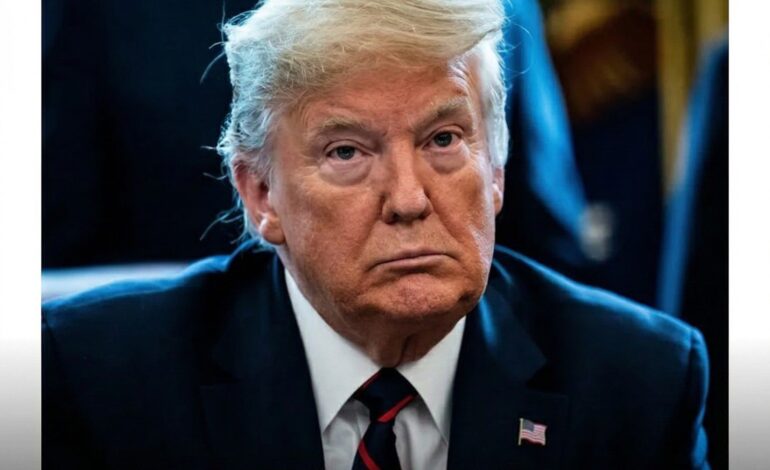

US Allies Refuse to Send Warships to the Strait of Hormuz: What It Means for Global Security
The Strategic Standoff That Could Reshape Global Alliances
Imagine 20% of the world’s oil supply suddenly stuck — unable to move. Ships sitting idle. Energy prices spiking. Economies rattled from Tokyo to Berlin.
That’s exactly the scenario playing out in real time around the Strait of Hormuz, the narrow waterway between Iran and the Arabian Peninsula through which roughly one-fifth of global petroleum flows every single day.
President Trump asked some of America’s closest allies — the United Kingdom, France, Japan, China, and South Korea — to contribute warships and help reopen this critical chokepoint amid the ongoing Iran conflict. The results have been, to put it diplomatically, underwhelming.
France reportedly declined. Japan described the bar for involvement as “extremely high.” No country has publicly committed naval forces. And Trump’s frustration is now spilling into warnings about the future of NATO itself.
This article breaks down everything you need to know: what’s being asked, why allies are hesitating, what the economic stakes really are, and what this moment tells us about the health — or fracture — of the post-World War II alliance system.
Quick Answer: As of March 2026, no US ally has committed warships to the Strait of Hormuz despite Trump’s request. France declined outright, Japan set a near-impossible threshold for involvement, and discussions with the UK, China, and South Korea remain unresolved. Trump has warned of consequences for NATO if allies continue to hold back.
Why the Strait of Hormuz Matters So Much
First, some geography. The Strait of Hormuz is a narrow channel — just 21 miles wide at its narrowest point — sitting between Iran to the north and Oman and the UAE to the south. It connects the Persian Gulf to the Gulf of Oman and, ultimately, to the wider world.
Its strategic importance is almost impossible to overstate. According to the US Energy Information Administration (EIA), roughly 21 million barrels of oil pass through the strait every single day. That’s about 20-21% of global petroleum liquids consumption. Saudi Arabia, Iraq, the UAE, Kuwait, and Bahrain — some of the world’s largest oil producers — all rely on this single waterway to export their product.
Liquefied natural gas (LNG) flows through here too. Qatar, the world’s top LNG exporter, ships the vast majority of its product via the strait. Japan and South Korea, both energy-dependent nations, get a huge portion of their LNG imports through this bottleneck.
The “World’s Most Important Oil Chokepoint”
Energy analysts routinely call the Strait of Hormuz the world’s most important oil chokepoint — and for good reason. There’s no easy alternative. The only significant bypass routes are the Petroline pipeline across Saudi Arabia (capacity: 5 million barrels per day) and the Habshan-Fujairah pipeline in the UAE. Neither comes close to handling the full volume.
A full closure would trigger an energy shock not seen since the 1970s OPEC embargo. Prices would skyrocket. Inflation would spike. And the global economy — already navigating a fragile post-COVID recovery — could take a serious hit.
This is why the US, and multiple allies, have long maintained naval presence in the region. It’s not altruism. It’s self-interest dressed in uniform.
What Trump Asked For — and Who Said No
With tensions escalating between the US and Iran, President Trump reached out to key allied nations asking for something specific: warships. Naval vessels to join a coalition force, help maintain freedom of navigation, and signal collective resolve against any Iranian attempt to close or disrupt the strait.
The ask isn’t unprecedented. In 2019, the US formed Operation Sentinel, later called the International Maritime Security Construct (IMSC), which brought together a coalition of countries to patrol Gulf waters after a series of tanker attacks attributed to Iran. Several allies joined that mission.
But this time, the response has been markedly cooler.
Key Fact: Trump reportedly asked the UK, France, Japan, China, and South Korea to send warships. As of late March 2026, none has publicly committed forces.
France: A Firm No
France reportedly declined Trump’s request. This is particularly striking given that France is both a NATO member and a permanent UN Security Council member — two roles that carry significant security obligations. French officials have not given a detailed public explanation, but the response fits a broader pattern of French reluctance to follow US military leadership, a tradition dating back to Charles de Gaulle’s era.
France has its own independent foreign and defense policy, codified in its doctrine of “strategic autonomy.” That doctrine often puts French interests at odds with Washington’s preferences, even when the two are technically on the same team.
Japan: The Bar Is Extremely High
Japan’s response was more nuanced — and more revealing. Japanese officials described the threshold for committing naval forces as “extremely high.” This isn’t a flat no. It’s a careful diplomatic way of saying: the conditions required for Japan to say yes don’t currently exist.
This matters because Japan has a direct and massive economic stake in the strait. More than 90% of Japan’s oil imports travel through the Strait of Hormuz. Any disruption would hit Japan harder than almost any other developed economy.
So why won’t Japan commit? The answer lies in Japan’s constitution, specifically Article 9, which renounces war and places tight restrictions on the use of force abroad. While Japan has been gradually reinterpreting and loosening those restrictions since 2015, deploying warships into an active conflict zone remains politically explosive at home.
UK, China, and South Korea: Talks Continue
No official commitment has come from the United Kingdom, China, or South Korea either, though discussions are reportedly ongoing. Each country faces its own complex calculus.
The UK — historically America’s closest military ally — is navigating its own domestic political pressures and a defense budget under strain. China, for its part, has significant trade relationships with Iran and would be diplomatically compromised by joining a US-led naval mission against it. South Korea shares Japan’s energy vulnerability but also Japan’s constitutional and political hesitance.
Why Are Allies Hesitating?
The allied hesitation isn’t simply cowardice or disloyalty, though Trump’s frustration suggests he sees it that way. The reasons are actually quite layered — and understanding them matters for anyone trying to make sense of where global alliances are headed.
1. Fear of Escalation
Many allied governments believe that deploying warships into the Gulf during an active US-Iran standoff could escalate the conflict rather than deter it. Iran has repeatedly warned that foreign naval presence in the region constitutes a provocation. Allies worry that joining the US could make them targets — and drag their countries into a war their publics don’t want.
This is the core tension in alliance politics: the same mutual defense commitments that provide security also create the risk of being pulled into someone else’s conflict.
2. Domestic Political Constraints
Every allied government answers to its own voters. In Europe, public support for military engagement in the Middle East has been historically low since the Iraq War. In Japan, pacifism is baked into the national psyche and constitution. In South Korea, any military deployment requires careful political management domestically.
A prime minister who sends warships to the Gulf and things go wrong faces an extremely difficult political situation at home. The calculus of risk is different for allies than it is for the country leading the mission.
3. Divergent Interests in Iran
Unlike the US, many allies have significant trade and diplomatic relationships with Iran. China is one of Iran’s largest trading partners. European nations spent years negotiating the 2015 JCPOA nuclear deal with Tehran and have tried to preserve that diplomatic track even as US policy hardened.
Joining a US naval mission against Iran could damage those relationships permanently. For countries that don’t share the US’s confrontational posture toward Tehran, the cost-benefit calculation simply looks different.
4. Strategic Autonomy — Europe’s Growing Doctrine
France has long championed the idea of European “strategic autonomy” — the ability for Europe to act independently in defense matters without American direction. The hesitation from France and others reflects this doctrine in action. If Europe always follows Washington’s lead, it never develops its own strategic agency.
This is a long-running tension in the transatlantic relationship, and the Hormuz standoff is just the latest expression of it.
The NATO Warning: Real Threat or Negotiating Tactic?
Trump’s warning that NATO could face “serious challenges” if allies don’t respond is perhaps the most consequential element of this standoff. Is he serious? And what would it actually mean?
Trump has a history of using NATO as leverage. During his first term, he repeatedly threatened to withdraw US support from the alliance unless members increased defense spending. Some did. The tactic worked, at least partially.
But threatening NATO’s future over a Gulf naval mission is a different kind of escalation. The Strait of Hormuz is not technically in NATO’s area of operations. Asking NATO allies to commit forces there is asking them to go beyond the alliance’s formal mandate — which is collective defense of member states, primarily in Europe and the North Atlantic.
“If NATO allies do not step up when their interests are directly at stake, then the question of what NATO is actually for becomes very pointed.”— Senior defense analyst, cited in multiple outlets, March 2026
Supporters of Trump’s position argue that free navigation in the Strait of Hormuz IS a NATO-relevant interest, because many NATO members depend on that energy supply. If Iran shuts the strait, European economies suffer. Under this logic, defending the strait is indirectly defending the alliance.
Critics counter that expanding NATO’s mandate without formal consensus to include Middle East naval operations could fracture the alliance more than allied hesitation already has.
The honest answer: whether Trump’s warning is a real threat or a negotiating tactic, the allies are taking it seriously enough that talks are continuing. Which means the pressure is working — at least partially.
Country-by-Country Breakdown: Who’s In, Who’s Out
| Country | Response | Key Reason for Hesitation | Hormuz Energy Exposure |
| France | Declined | Strategic autonomy doctrine; domestic politics | Moderate — diversified energy supply |
| Japan | “Extremely high” threshold | Article 9 constitution; domestic pacifism | Very High — 90%+ of oil imports |
| United Kingdom | Talks ongoing | Defense budget constraints; post-Brexit positioning | Moderate |
| China | Talks ongoing | Deep trade ties with Iran; geopolitical rivalry with US | High — major oil importer |
| South Korea | Talks ongoing | Constitutional constraints; energy vulnerability | Very High — heavy LNG imports |
Table: Allied responses to US request for naval support at the Strait of Hormuz, March 2026
Historical Context: How Alliances Have Responded Before
To understand just how unusual this moment is, it helps to look at precedent.
Operation Earnest Will (1987-1988)
During the Iran-Iraq War, the US Navy escorted Kuwaiti tankers through the strait under Operation Earnest Will. Several European allies, including Belgium, the Netherlands, Italy, and France, sent their own naval vessels — not under US command, but operating in parallel. The result was a de facto multinational naval presence that helped keep the strait open. It worked.
Operation Sentinel / IMSC (2019)
After a string of tanker attacks in 2019 attributed to Iran, the Trump administration (first term) formed Operation Sentinel. The UK, Australia, Saudi Arabia, Bahrain, Albania, Lithuania, and others eventually joined. Notably, France and Germany declined that mission too, preferring a separate EU-led mission called AGENOR. The precedent for allied hesitation is not new.
The Iraq War Divide (2003)
Perhaps the most instructive precedent is the Iraq War. When the US sought allied support for the 2003 invasion, France and Germany publicly refused — causing a rift in NATO that took years to repair. Secretary of Defense Rumsfeld famously dismissed them as “Old Europe.” The split was real and lasting.
The current moment rhymes with 2003. A US administration is asking for military support in the Middle East. European allies are declining based on their own strategic judgment. And Washington is frustrated.
The difference this time: the stakes are arguably higher, because the Strait of Hormuz doesn’t just affect regional security. It affects the global economy.
What the Experts Are Saying
Defense analysts and foreign policy experts have been watching this standoff closely. Their assessments break into roughly two camps.
Camp 1: Allied Hesitation Is Rational Caution
Many analysts argue that the refusal to send warships reflects reasonable caution, not disloyalty. Deploying naval forces alongside a US that is actively in conflict with Iran carries real risks: Iranian missile attacks, naval mines, drone strikes, or proxy attacks on allied assets.
For countries with no direct dispute with Iran, the risk-reward calculation doesn’t favor involvement. This view holds that allies are not abandoning the US — they are simply declining to join a specific operation that they believe serves US interests more than their own.
Camp 2: Allied Hesitation Reveals a Deeper Crisis
Other analysts see the hesitation as symptomatic of a deeper erosion of the post-World War II alliance architecture. If allies won’t contribute to protecting a waterway that directly benefits their own economies, what exactly are these alliances for?
This camp argues that free-riding on American military power has become too comfortable. Allies benefit from US deterrence, US logistics, and US guarantees — but increasingly resist contributing when called upon. Over time, this asymmetry becomes politically unsustainable in Washington.
“There has to be a point at which the US asks: if we provide the security umbrella and they take the economic benefit without contributing to costs, is this still a partnership worth maintaining?”— Defense policy analyst, March 2026
Economic Stakes: What Happens If the Strait Closes?
The military and diplomatic drama is important. But the economic stakes are what make this truly global.
Oil and Gas Markets
A full or partial closure of the Strait of Hormuz would immediately trigger oil price spikes. Historical models suggest oil could jump to $150-200 per barrel within days of a serious disruption — though the actual level would depend on how long the closure lasted and how quickly strategic reserves could be deployed.
The US holds the Strategic Petroleum Reserve (SPR), which can release up to one million barrels per day. But that covers only a fraction of what flows through Hormuz daily.
Global Inflation
Higher oil prices feed directly into inflation. Fuel costs affect transportation, manufacturing, food production, and heating. A sustained Hormuz closure could push inflation significantly higher in Europe, Asia, and the US — potentially derailing central bank efforts to stabilize economies.
Asia’s Unique Vulnerability
Japan and South Korea import more than 80% of their oil from Middle Eastern suppliers. For them, a Hormuz closure isn’t just expensive — it’s existential in economic terms. This is precisely why their hesitation to commit forces is so fascinating: they have more to lose from inaction than perhaps any other allied nation, yet constitutional and political constraints keep them on the sidelines.
China’s Double Bind
China faces a particularly awkward position. As a massive oil importer, China needs the strait open. But as Iran’s trade partner and geopolitical rival of the US, China can’t easily join a US-led naval mission against Tehran. This contradiction helps explain why talks with Beijing are ongoing but unresolved.
People Also Ask: Key Questions Answered
Why won’t US allies send warships to the Strait of Hormuz?
Allies are hesitating for several reasons: fear of escalation with Iran, domestic political constraints (especially Japan’s constitutional restrictions), divergent interests in Tehran, and a broader European doctrine of strategic autonomy. It’s not one reason — it’s a combination of all these factors working together.
What is the Strait of Hormuz and why is it important?
The Strait of Hormuz is a narrow waterway between Iran and Oman connecting the Persian Gulf to the global ocean. Roughly 21 million barrels of oil and significant volumes of LNG pass through it daily — about 20% of global petroleum consumption. A closure would trigger immediate global energy disruption.
What did Trump warn about NATO over the Hormuz standoff?
Trump warned that NATO could face serious challenges if allies fail to respond to US requests for naval support at the strait. He suggested broader diplomatic consequences for countries that stay on the sidelines. Whether this is a real ultimatum or negotiating pressure remains a matter of debate among analysts.
Has the US ever secured allied naval support at Hormuz before?
Yes. In 1987-88 during Operation Earnest Will, several European allies sent parallel naval forces. In 2019, Operation Sentinel brought together the UK, Australia, and others, though France and Germany declined even then in favor of a separate EU mission. Allied participation has always been partial.
What happens if the Strait of Hormuz closes?
A full closure would immediately spike oil prices — possibly to $150-200 per barrel — trigger global inflation, and seriously damage the economies of Japan, South Korea, and Europe, which all depend heavily on Gulf energy exports. There are no alternative routes capable of handling the full volume.
Why is Japan particularly reluctant to send warships?
Japan’s Article 9 constitution renounces war and limits the use of force abroad. While Japan has been gradually loosening these restrictions since 2015, deploying warships into an active conflict zone remains politically explosive at home. Despite having enormous economic exposure to the strait, Japan faces near-insurmountable domestic barriers to military involvement.
Discover more from MatterDigest
Subscribe to get the latest posts sent to your email.