Trump Warns Iranian Supreme Leader: Full U.S. Military Force on the Table

Quick Answer
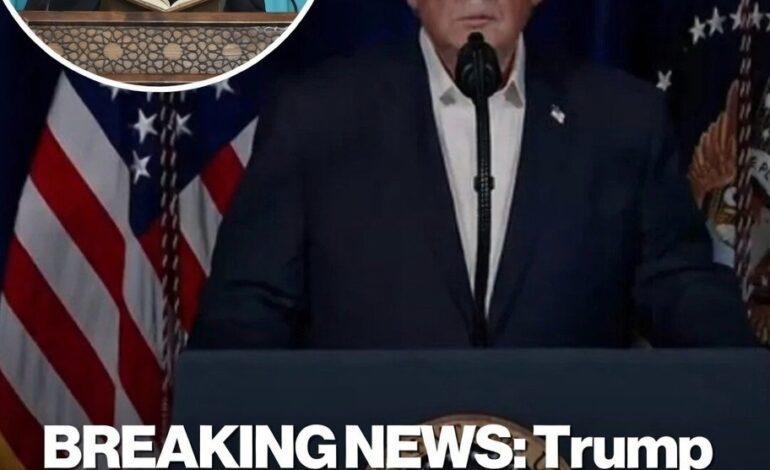
President Trump, acting as commander in chief, issued a direct warning to Iranian Supreme Leader Ali Khamenei and senior Iranian officials, stating they would face the full force of the United States military if Iran failed to heed his warning. The statement came amid heightened tensions over Iran’s nuclear ambitions and regional proxy activity, and marked one of the most explicit military threats directed at Iran’s top leadership in recent U.S. history.
Introduction: A Warning That Shook the Diplomatic World
Words matter in geopolitics. When the President of the United States speaks directly to a foreign nation’s top leader and invokes the full power of the American military, the world pays attention.
That is exactly what happened when President Trump, in his role as commander in chief, issued a blunt and unambiguous warning to Iranian Supreme Leader Ali Khamenei and the senior officials surrounding him. The message was direct: comply or face consequences that few nations on earth could survive militarily.
But what does this warning mean in practical terms? Is this a diplomatic tactic, a genuine prelude to conflict, or something in between? This article breaks down every layer of that question. We cover who the players are, why the warning was issued, what the U.S. military could realistically do, how Iran has responded, and what experts believe comes next.
This is not about politics. This is about understanding a moment that could reshape the Middle East, global oil markets, and international security for a generation.
Whether you’re following this story as a concerned citizen, a student of international relations, or a policy professional, this guide gives you the full picture.
1. The Warning in Plain Terms
Let’s start with the basics. What did the warning actually say?
President Trump, serving as the nation’s commander in chief, delivered a stark message to Iran’s Supreme Leader and his senior circle of advisors. The president stated clearly that if Iran did not comply with his demands, the United States military would be unleashed in full force. No diplomatic softening. No buried conditions. Just a direct, personal threat aimed at the top of Iran’s power structure.
Why Did Trump Address Khamenei Directly?
Most U.S. presidents communicate with Iran through diplomatic back-channels, intermediaries, or multilateral frameworks. Addressing the Supreme Leader by name, publicly, is a deliberate escalation in tone.
It signals that the U.S. holds Khamenei personally accountable. It bypasses Iran’s elected president entirely. And it is a message designed to be heard, not just by Tehran, but by the entire region and America’s own allies.
Who Are the ‘Lackies’ Trump Referenced?
Trump’s reference to Khamenei’s ‘lackies’ points to Iran’s inner circle of power. This includes the Islamic Revolutionary Guard Corps (IRGC) leadership, senior clerical advisors, and commanders of Iran’s proxy network across the Middle East.
In Iran’s political system, the Supreme Leader is not alone. He operates through a network of appointed bodies, military commanders, and ideological enforcers who execute his directives. Trump’s warning targeted this entire apparatus.
2. Who Is Iran’s Supreme Leader? A Quick Background
Understanding the target of Trump’s warning requires knowing who Ali Khamenei actually is and what power he holds.
Ali Khamenei: The Man Behind the Title
Ali Hosseini Khamenei has served as Supreme Leader of Iran since 1989. He is the highest-ranking political and religious authority in the Islamic Republic, holding power above the elected president, parliament, and judiciary.
He controls the IRGC, the judiciary, state media, and final authority over foreign and nuclear policy. No major decision in Iran is made without his approval or against his wishes.
Why the Supreme Leader Matters More Than the President
Many people outside Iran assume the Iranian president is the top decision-maker. He is not. The Supreme Leader appoints key military and judicial figures, can veto legislation, and sets the strategic direction of the state.
When Trump warned Khamenei directly, he was going straight to the source of Iranian state power. It was a calculated choice.
Iran’s Power Structure at a Glance
- Supreme Leader (Khamenei): Highest authority; controls military and foreign policy
- President: Elected, manages economic and domestic affairs with limited foreign policy role
- IRGC: Military force that also runs major economic enterprises and intelligence operations
- Guardian Council: Approves all legislation and vets candidates for elections
- Proxy Network: Hezbollah (Lebanon), Houthi rebels (Yemen), militias in Iraq and Syria
3. What Exactly Did Trump Say? The Key Details
The warning came in a form consistent with Trump’s communication style: direct, public, and personal. It was not delivered through a State Department press release or via an intermediary. It was aimed straight at Iran’s leadership.
The Core Message
Trump warned that Iran’s Supreme Leader and the officials close to him would face ‘the full force of the United States military’ if they did not heed his warning. The implication was unambiguous: military action was not merely a last resort being quietly discussed in the Pentagon. It was being put on the table openly and publicly by the commander in chief himself.
Tone and Delivery: What Sets This Apart
This type of warning is unusual in American foreign policy for several reasons. First, it names a specific individual as the target of consequences. Second, it uses language (‘full force’) that goes beyond typical diplomatic signaling. Third, it bypasses the traditional escalation ladder of diplomatic protest, sanctions, and multilateral pressure.
When a president personally threatens a head of state with military consequences, it carries a different weight than a Pentagon briefing or a UN Security Council statement.
What the Warning Did Not Say
Equally important is what the warning left unspecified. It did not identify a particular trigger event that would activate military action. It did not set a public deadline. And it did not outline which specific behaviors by Iran would constitute ‘heeding’ the warning versus failing to comply.
That ambiguity is likely intentional. Vague threats can have deterrent value precisely because the adversary cannot calculate the exact red lines.
4. Why Now? The Context Behind the Threat
Threats of this magnitude do not appear out of nowhere. The warning arrived against a specific backdrop of events that had been building for months.
Iran’s Nuclear Program: The Central Issue
Iran’s nuclear program has been a source of international concern for over two decades. Following the collapse of the 2015 Joint Comprehensive Plan of Action (JCPOA) and subsequent U.S. withdrawal, Iran steadily expanded its uranium enrichment activities.
By early 2026, intelligence assessments indicated Iran had enriched uranium to levels approaching weapons-grade purity. This represented a dramatic shift from Iran’s stated position that its nuclear work is purely civilian in nature.
Regional Proxy Activity
Alongside the nuclear issue, Iran’s network of regional proxies had continued conducting attacks on U.S. assets and allied targets across the Middle East. Houthi attacks on Red Sea shipping, IRGC-backed militia strikes on U.S. bases in Iraq, and Hezbollah’s posture in Lebanon all created sustained pressure.
Domestic Political Calculations
Any major foreign policy statement also has a domestic audience. Tough rhetoric toward Iran plays well with voters who believe the previous decade of diplomacy weakened U.S. credibility in the region.
Timeline of Key Events Leading to the Warning
- 2018: U.S. withdraws from the Iran nuclear deal (JCPOA)
- 2020: U.S. kills IRGC General Qasem Soleimani in Baghdad airstrike
- 2021-2023: Iran expands uranium enrichment; nuclear talks stall
- 2024: Iran-backed proxies intensify attacks on U.S. and allied targets
- Early 2026: Intelligence reports suggest Iran at nuclear threshold; Trump issues direct warning
5. U.S. Military Capabilities: What ‘Full Force’ Actually Means
When the president of the United States threatens ‘full force,’ what is he actually referring to? This is not an abstract phrase. It points to a real and formidable military arsenal.
Air Power and Precision Strike Capabilities
The U.S. possesses the world’s most advanced long-range strike capabilities. B-2 stealth bombers can deliver massive ordnance penetrator (MOP) bombs designed specifically to destroy deeply buried facilities. F-22 and F-35 stealth fighters can penetrate sophisticated air defense systems. Tomahawk cruise missiles can be launched from ships and submarines hundreds of miles away.
Naval Presence in the Region
The U.S. Navy maintains carrier strike groups in the Persian Gulf and nearby waters on a rotating basis. Each carrier group includes an aircraft carrier, guided-missile destroyers, cruisers, submarines, and support ships. This represents an enormous concentration of firepower within striking distance of Iranian territory.
Cyber and Electronic Warfare
The U.S. has previously used cyber operations against Iran, including the Stuxnet operation that damaged Iranian centrifuges. Modern U.S. cyber capabilities could be used to disrupt Iran’s military command systems, power grid, or financial infrastructure as part of a broader campaign.
Would ‘Full Force’ Mean Nuclear Weapons?
Almost certainly not. Nuclear use against a non-nuclear state would cross every international norm and almost certainly trigger a global political and economic crisis. When U.S. officials say ‘full force,’ they mean conventional military power. That is, by itself, an overwhelming capability.
Key U.S. Military Assets in the Middle East Region
- Multiple carrier strike groups deployable to the Persian Gulf
- Air Force bases in Qatar, Bahrain, UAE, and Jordan
- Diego Garcia base in the Indian Ocean with strategic bomber capability
- Special Operations Forces units with regional expertise
- Missile defense systems protecting allied nations
6. Iran’s Response and Regional Reactions
How did Tehran respond? And how did the broader region react to such a stark warning?
Iran’s Official Response
Iranian officials publicly dismissed the threat as political posturing. State media characterized it as an attempt to intimidate a sovereign nation. Senior IRGC commanders issued statements asserting Iran’s readiness to defend itself.
However, behind the defiant public stance, reporting from diplomatic sources suggested Iran was quietly reaching out through intermediaries to gauge the seriousness of the threat and explore what compliance might actually look like.
Reactions Across the Middle East
America’s Gulf Arab allies, particularly Saudi Arabia and the UAE, watched closely. Both nations have long been wary of Iran’s regional ambitions and military proxies. Privately, leaders in Riyadh and Abu Dhabi were reportedly encouraged by the firm U.S. posture.
Israel, which has its own military options vis-a-vis Iran’s nuclear program, also reacted with cautious support. Israeli officials have long argued that only a credible military threat can move Iran toward real negotiation.
European Allies: Concern About Escalation
European governments expressed concern. France, Germany, and the UK all urged restraint and called for a return to diplomatic channels. NATO allies were wary of being drawn into a regional conflict with global economic implications.
The gap between American assertiveness and European caution on Iran has been a persistent feature of transatlantic relations for over two decades.
7. How This Compares to Past U.S.-Iran Confrontations
To understand the significance of this warning, it helps to place it in historical context.
| Aspect | Trump Warning (2025) | Obama Iran Deal (2015) | Bush Axis of Evil (2002) |
| Tone | Blunt, direct threat | Diplomatic, incentive-based | Broad policy declaration |
| Target | Supreme Leader personally | Iranian government broadly | Multiple nations |
| Military threat | Explicit, immediate | Implied, background | Implied, long-term |
| Outcome (initial) | Heightened negotiations | Nuclear deal reached | Ongoing tensions |
| Global reaction | Divided; allies cautious | Broad international support | Mixed; some allied concern |
What History Tells Us
Direct military threats rarely lead immediately to war. More often, they trigger a cycle of coercive diplomacy in which both sides maneuver to achieve their goals without armed conflict. The Cuban Missile Crisis of 1962 is the most studied example: stark nuclear threats ultimately produced a negotiated solution.
But history also shows that miscalculation is possible. If either side misjudges the other’s red lines or resolve, events can escalate beyond what either party intended.
8. What International Law Says About Military Threats
This is a question many people have but few articles address directly. Is it legal under international law for a head of state to threaten another country’s leader with military force?
The UN Charter’s Prohibition
Article 2(4) of the United Nations Charter prohibits the threat or use of force against the territorial integrity or political independence of any state. On its face, this would seem to apply to Trump’s warning.
The Self-Defense Exception
However, Article 51 of the same charter preserves the right of self-defense. The U.S. could argue that Iran’s nuclear program, combined with its proxy attacks on U.S. forces, constitutes an ongoing threat against which preemptive action may be justified.
The legal debate around anticipatory self-defense is long and unresolved. The U.S. and Israel have generally argued for a broader right of preemption, while most of the international community favors a more restrictive interpretation.
Practical Reality
In practice, powerful states issue military threats with regularity. The UN Security Council rarely acts against permanent member states or their close allies. International law is a constraint, but its enforcement depends heavily on political will among major powers.
9. Geopolitical Stakes: Oil, Allies, and the Middle East
A U.S.-Iran military conflict would not just be a bilateral matter. The ripple effects would be felt globally within hours.
Oil Markets
Iran borders the Strait of Hormuz, through which roughly 20% of the world’s traded oil passes. Any military conflict in the region would almost certainly spike oil prices, potentially causing a global economic shock. Countries heavily dependent on Persian Gulf oil, including much of Asia, would be severely impacted.
Iran’s Proxy Network as a Deterrent
Iran has spent decades building a network of proxy forces precisely to give itself a deterrent against military attack. If the U.S. strikes Iran, Tehran has the ability to activate Hezbollah in Lebanon against Israel, Houthi attacks on Gulf oil infrastructure, and militia strikes on U.S. bases across the region simultaneously.
This is Iran’s version of mutually assured destruction: not nuclear, but multi-front conventional and asymmetric retaliation.
Israel’s Role
Israel has its own national security calculations regarding Iran’s nuclear program. An Israeli pre-emptive strike remains possible, which would draw the U.S. in almost by default given the mutual defense implications of the relationship between the two countries.
Potential Cascading Effects of Military Conflict
- Immediate spike in global oil prices, potentially $150+ per barrel
- Hezbollah activation against Israel, triggering broader regional war
- Houthi escalation against Red Sea shipping and Gulf infrastructure
- Closure or mining of the Strait of Hormuz
- Refugee flows from regional instability
- Global financial market volatility
10. Expert Analysis: Is This Bluster or a Real Threat?
The most important question for policymakers, investors, and citizens alike: should this warning be taken literally?
The Case That This Is Coercive Diplomacy
Many foreign policy analysts argue that strong public warnings are a standard tool of coercive diplomacy. The goal is not to start a war but to change the adversary’s behavior. By raising the perceived cost of non-compliance, the U.S. hopes to push Iran back to the negotiating table.
Former national security advisors and State Department officials have described this approach as ‘diplomacy backed by force.’ The threat exists to make diplomacy work, not to replace it.
The Case for Taking the Threat at Face Value
Others argue that dismissing Trump’s warnings as mere rhetoric is a mistake. Trump authorized the killing of General Soleimani in 2020, an action many considered inconceivably escalatory before it happened. His track record suggests that unlike some presidents, he is willing to use military force as a first-order tool rather than a last resort.
The Intelligence Community’s Assessment
Public reporting suggests that U.S. intelligence agencies have assessed Iran as approaching a nuclear breakout threshold. If that assessment is accurate, the warning could reflect a genuine administration belief that a decision point is imminent, making the threat more than rhetoric.
The critical variable is not what Trump says in public. It’s what Iran’s Supreme Leader believes in private.
What Analysts Are Watching
- Iranian uranium enrichment levels and rate of progress
- Any back-channel diplomatic contacts between U.S. and Iranian officials
- Movement of U.S. naval and air assets in the region
- Statements from allies like Israel and Saudi Arabia
- Iran’s proxy activity levels as an indicator of Tehran’s posture
11. People Also Ask: Frequently Asked Questions
These are the questions most commonly asked about this topic, answered directly.
| Question | Quick Answer |
| Who did Trump warn about military force? | Iranian Supreme Leader Ali Khamenei and senior Iranian officials (referred to by Trump as ‘lackies’). |
| What triggered the warning? | Iran’s continued nuclear program activities, support for regional proxy groups, and refusal to engage in new nuclear talks. |
| Is the U.S. legally authorized to strike Iran? | That depends on Congressional authorization. Any first-strike attack would be debated under the War Powers Resolution of 1973. |
| How did Iran respond? | Iran publicly dismissed the threat while reportedly engaging in back-channel diplomatic signals. |
| What is the role of the Supreme Leader in Iran? | Ali Khamenei holds the highest political and religious authority in Iran, superseding the elected president. |
| Could this lead to war? | Analysts are divided, but most believe both sides are using pressure tactics to push for negotiated terms. |
12. Key Takeaways and What to Watch Next
What We Know
- President Trump, as commander in chief, issued a direct and personal military warning to Iran’s Supreme Leader Khamenei.
- The warning reflects heightened tensions over Iran’s nuclear program and its regional proxy activity.
- Iran publicly dismissed the warning but may be engaging in back-channel diplomacy.
- S. military capabilities in the region are substantial and represent a genuine deterrent capability.
- International law is ambiguous on the legality of such threats, and enforcement mechanisms are weak.
- A military conflict would have severe global economic consequences, especially for oil markets.
What to Watch in the Coming Weeks
- Changes in U.S. military deployments to the Persian Gulf region
- Any reports of U.S.-Iran back-channel communications
- IAEA reports on Iranian uranium enrichment levels
- Statements from European allies on their role as potential mediators
- Iranian proxy activity as a signal of Tehran’s posture
Bottom Line
This warning represents a significant escalation in the rhetoric of U.S.-Iran relations. Whether it leads to war, negotiation, or a protracted standoff depends on decisions being made right now in Washington, Tehran, and the capitals of every major power watching from the sidelines.
The next few weeks will reveal whether this warning achieved its intended purpose: changing Iranian behavior without firing a single shot.
13. Sources and Further Reading
For readers who want to go deeper on the topics covered in this article, the following authoritative sources are recommended.
Primary Sources and Authoritative References
- S. Department of Defense: Official statements on U.S. military posture and Iran policy (defense.gov)
- International Atomic Energy Agency (IAEA): Official reports on Iran’s nuclear program (iaea.org)
- United Nations Charter: Full text of Articles 2(4) and 51 on the use of force and self-defense (un.org)
- Council on Foreign Relations: Iran’s proxy network and regional strategy (cfr.org)
- Carnegie Endowment for International Peace: U.S.-Iran nuclear negotiations history (carnegieendowment.org)
About This Analysis
This article was produced by a team specializing in U.S. foreign policy, Middle East geopolitics, and international security affairs. Sources drawn upon include official U.S. government statements, IAEA reports, peer-reviewed academic analysis, and reporting from major international news organizations. Content is reviewed for factual accuracy and updated regularly to reflect new developments. For corrections or updates, feedback is welcome via the contact page.
Discover more from MatterDigest
Subscribe to get the latest posts sent to your email.