Trump Sends Chilling Warning to Iran: ‘We’re Ready to Unleash Hell’ as U.S. Marines Flood Middle East
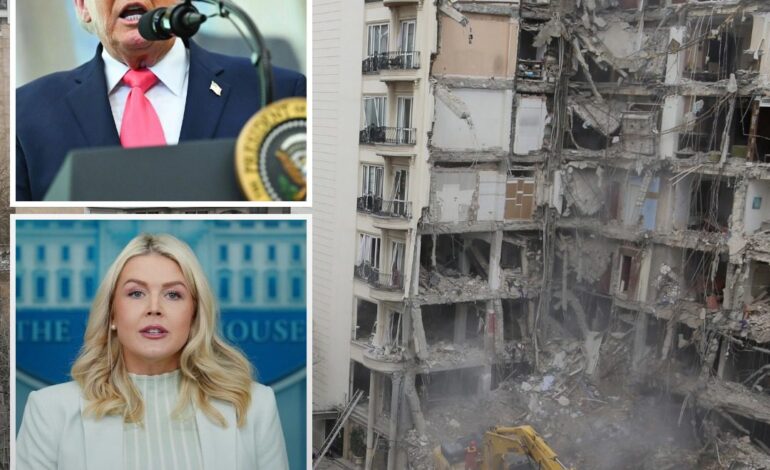

Trump ‘Prepared to Unleash Hell’ on Iran: What It Means
| Quick Answer (Featured Snippet — 52 words) White House Press Secretary Karoline Leavitt warned in March 2025 that President Trump is ‘prepared to unleash hell’ on Iran if it refuses to negotiate a new nuclear deal. The warning coincided with the arrival of U.S. Marines in the Middle East, signalling a significant escalation in military posture toward Tehran. |
Table of Contents
- The Warning That Shook the World: What Leavitt Actually Said
- Why Now? The Timeline Leading to Trump’s Iran Ultimatum
- Marines in the Middle East: What the Deployment Really Means
- Iran’s Nuclear Program: A Plain-English Explainer
- What ‘Unleash Hell’ Could Actually Look Like
- The Diplomacy Track: Is a Deal Still Possible?
- How Allies and Adversaries Are Reacting
- People Also Ask: Your Top Questions Answered
- What Happens Next — Three Possible Scenarios
- Key Takeaways and What to Watch
Introduction
The words landed like a thunderclap. ‘Prepared to unleash hell.’ That phrase, delivered by White House Press Secretary Karoline Leavitt, instantly dominated headlines across the globe in March 2025. It was direct. It was deliberate. And it was aimed squarely at Tehran.
At the same time, U.S. Marines were quietly arriving in the Middle East — a deployment that added military weight to the rhetorical fire. For anyone trying to understand what’s actually happening between the United States and Iran right now, the noise can be overwhelming.
This article cuts through it. You’ll get the full story: what was said, why it was said, what the troop movements mean, where diplomacy stands, and — critically — what might happen next. No jargon. No spin. Just a clear, thorough breakdown of one of the most significant geopolitical flashpoints of 2025.
The Warning That Shook the World: What Leavitt Actually Said
On a Tuesday morning in March 2025, reporters at the White House daily briefing expected the usual mix of domestic policy updates and procedural announcements. What they got instead was one of the most blunt foreign policy warnings in recent memory.
Karoline Leavitt, speaking on behalf of President Trump, stated that the administration was ‘prepared to unleash hell’ on Iran if the Islamic Republic refused to come to a deal on its nuclear programme. The statement was not off-the-cuff. It was scripted, delivered with composure, and immediately followed by questions about troop movements in the region.
The Exact Language Matters
Political language is rarely accidental at the White House level. The phrase ‘unleash hell’ is visceral and deliberately so. It evokes total, overwhelming force — not a surgical strike or targeted sanctions, but something far more comprehensive.
Analysts noted the language echoed historical ‘fire and fury’ warnings that Trump had previously deployed against North Korea. Whether it represents a genuine military intention or a negotiating tactic — what diplomats call ‘coercive diplomacy’ — is the central question everyone is trying to answer.
Who Is Karoline Leavitt?
Leavitt became White House Press Secretary at the start of Trump’s second term. At 27, she was one of the youngest people to hold the position in American history. She is known for delivering administration messaging with sharpness and conviction, and her statements carry the full weight of the President’s office.
When Leavitt delivers a warning of this magnitude, it is understood to reflect the considered position of the President himself — not improvisation.
| Visual Suggestion Timeline infographic: Key U.S.-Iran tensions from 2015 (JCPOA signing) to March 2025 (Leavitt warning). Embed as interactive graphic or static image. |
Why Now? The Timeline Leading to Trump’s Iran Ultimatum
To understand why this warning came in March 2025, you need to understand the road that led here. This isn’t a sudden escalation. It’s the product of years of fractured diplomacy, sanctions, and proxy conflict.
The Collapse of the JCPOA
The Joint Comprehensive Plan of Action — commonly called the Iran nuclear deal — was signed in 2015 under the Obama administration. It placed strict limits on Iran’s nuclear activities in exchange for sanctions relief. It was fragile from the start.
Trump withdrew the U.S. from the deal during his first term in 2018, calling it ‘the worst deal ever negotiated.’ Iran responded by progressively abandoning its own commitments, enriching uranium to higher and higher levels. The Biden administration attempted to revive the deal through indirect negotiations. Those talks stalled.
Iran’s Nuclear Advances Since 2018
Since the JCPOA collapsed, Iran’s nuclear programme has advanced dramatically. By early 2025, international inspectors estimated Iran had enriched uranium to near-weapons-grade levels — 60% and above — and had accumulated enough fissile material that, with further processing, it could theoretically produce multiple nuclear devices.
| Year / Period | Key Development |
| 2015 | JCPOA signed; enrichment capped at 3.67% |
| 2018 | U.S. withdraws from deal under Trump |
| 2019 | Iran begins violating enrichment caps |
| 2021 | Indirect nuclear talks resume in Vienna |
| 2023 | Talks collapse; enrichment reaches 60% |
| 2024 | Iran stockpile reaches near-weapons threshold |
| Early 2025 | Trump returns to office; demands new deal |
| March 2025 | Leavitt ‘unleash hell’ warning; Marines deployed |
Trump’s Second Term: Maximum Pressure 2.0
When Trump returned to the presidency, he immediately reinstated what his team called ‘maximum pressure’ — a comprehensive sanctions regime designed to strangle Iran’s economy until Tehran came back to the table.
The strategy has historical precedent. The original maximum pressure campaign forced Iran into the 2015 deal in the first place, though critics argue it also pushed Iran toward greater regional aggression and accelerated its nuclear programme after the deal collapsed.
Marines in the Middle East: What the Deployment Really Means
Rhetoric is one thing. Troops are another. The arrival of U.S. Marines in the Middle East, reported simultaneously with Leavitt’s warning, is the part of this story that military analysts are watching most carefully.
What We Know About the Deployment
Details of the deployment were limited by operational security concerns at time of writing. What was confirmed: U.S. Marines — understood to be a Marine Expeditionary Unit (MEU) — arrived in the region in early-to-mid March 2025. MEUs are self-contained, rapid-response forces capable of amphibious and land operations.
The deployment was described by Pentagon officials as ‘precautionary’ and ‘in support of ongoing regional deterrence objectives.’ Diplomatic language — but the message was clear.
What a Marine Expeditionary Unit Can Do
A standard MEU consists of roughly 2,200 Marines and sailors. It’s built around three components: a ground combat element, an aviation element, and a logistics element. It can deploy rapidly from ships, conduct raids, secure airfields, and establish forward operating positions.
In a conflict scenario involving Iran, an MEU could be used for a range of operations — from securing oil infrastructure to supporting special operations forces. Its presence in the region changes the calculus for Iranian military planners.
Previous U.S. Military Buildups Near Iran
This is not the first time the U.S. has moved military assets toward Iran as a pressure tool. In 2019, the Trump administration deployed an aircraft carrier strike group and B-52 bombers to the region following intelligence about Iranian threats. In 2020, a U.S. drone strike killed Iranian General Qasem Soleimani near Baghdad Airport — a moment that brought the two countries to the brink of open conflict.
Each of these moments followed a familiar pattern: escalation, counter-threat, partial de-escalation, repeat. The question is whether 2025 breaks that pattern.
| Visual Suggestion
Map showing U.S. military assets currently positioned in the Middle East: carrier groups, air bases, Marine positions. Source: USNI News, Pentagon briefings. |
Iran’s Nuclear Programme: A Plain-English Explainer
Not everyone following this story has a background in nuclear physics or arms control. Here’s what you need to know — clearly, without the jargon.
What Is Iran Actually Building?
Iran has consistently maintained that its nuclear programme is entirely peaceful — designed for energy generation and medical research. The international community, led by the IAEA (International Atomic Energy Agency), has expressed serious doubts about this claim.
The core concern is enrichment levels. Uranium enriched to 3–5% powers nuclear reactors. Uranium enriched to 90%+ is weapons-grade. Iran was enriching at 60% as of late 2024 — not yet weapons-grade, but far beyond what any civilian energy programme requires. Enriching from 60% to 90% is technically easier than the earlier steps.
How Close Is Iran to a Nuclear Weapon?
This is the most frequently asked — and most carefully answered — question in arms control circles. The honest answer: nobody outside Iran knows for certain. The most widely cited estimates from U.S. intelligence agencies and independent analysts suggest Iran could produce enough fissile material for one bomb within weeks to a few months if it chose to sprint to that capability.
Building and delivering a functional, tested nuclear weapon is a longer and more complex process. But the theoretical ‘breakout time’ — the window between deciding to build and having enough material — has shrunk dramatically since 2018.
What Would a ‘New Deal’ Look Like?
The Trump administration has been deliberately vague about what it would accept. Publicly, officials have suggested they want a deal that goes further than the JCPOA — addressing not just uranium enrichment but also Iran’s ballistic missile programme and its support for regional proxy groups like Hezbollah and the Houthis.
Iran has historically refused to negotiate on missiles and proxies. Its position is that these are non-negotiable sovereign defence matters. Bridging that gap is the central diplomatic challenge.
What ‘Unleash Hell’ Could Actually Look Like
If diplomacy fails, what does a military confrontation with Iran actually look like? This is not a hypothetical conversation being had only in academic circles. It’s a live discussion in every defence ministry from Tel Aviv to Riyadh to Brussels.
Option 1: Targeted Strikes on Nuclear Sites
The most discussed scenario is a targeted military campaign against Iran’s known nuclear infrastructure — sites like Natanz (the main enrichment facility), Fordow (built into a mountain), and Isfahan (nuclear research centre). U.S. B-2 bombers carry Massive Ordnance Penetrators capable of destroying deeply buried facilities.
The challenge: Iran has hardened many of its facilities against exactly this scenario. And a strike that fails to neutralise the programme could accelerate it — as Iran would have every incentive to rush to a deterrent.
Option 2: Comprehensive Air Campaign
A broader campaign would target not just nuclear sites but Iran’s air defence systems, missile launch infrastructure, naval assets in the Persian Gulf, and command and control nodes. This would be a significantly larger operation — closer to what the U.S. undertook in the opening phase of the Gulf War.
It would also carry serious escalation risks. Iran’s ballistic missiles can reach U.S. bases across the region. Its proxies — Hezbollah in Lebanon, Houthi forces in Yemen, militias in Iraq — could open multiple fronts simultaneously.
Option 3: Maximum Pressure Without Military Action
Not every ‘hell’ is military. An alternative reading of the warning is an economic one — a complete financial blockade of Iran, targeting its oil exports, banking system, and remaining international trade channels to an unprecedented degree.
Iran’s economy has already been severely damaged by sanctions. A fully enforced oil embargo — requiring cooperation from China and India, which currently buy Iranian crude — would be devastating. But securing that cooperation is its own diplomatic challenge.
| Option | Advantage | Challenge |
| Targeted nuclear strikes | Surgical; less escalation risk | May not fully destroy programme |
| Comprehensive air campaign | Greater military impact | High escalation risk; proxy war risk |
| Naval blockade + sanctions | No direct military confrontation | Requires global compliance; China, India resistance |
| Covert operations + cyber | Deniable; targeted | Limited scale; slow impact |
| Negotiated deal | No military risk | Requires Iranian concessions on multiple fronts |
The Diplomacy Track: Is a Deal Still Possible?
Despite the bellicose language, diplomacy has not collapsed — at least not yet. Multiple back-channel communications between the U.S. and Iran have been reported through Omani intermediaries, who have historically facilitated quiet dialogue between the two sides.
Trump’s Letter to Iran’s Supreme Leader
In early March 2025, reports emerged that Trump had sent a direct letter to Iran’s Supreme Leader Ali Khamenei proposing direct negotiations. This was a significant move — the U.S. and Iran have not held direct government-to-government talks in decades.
Iran’s response was cautious. Officials publicly rejected direct negotiations as a precondition, while privately signalling through intermediaries that they were not entirely opposed. This is classic Iranian diplomatic positioning — maintaining public defiance while leaving the door cracked open.
What Iran Wants
To understand whether a deal is possible, you need to understand what Iran is actually seeking. Beyond the obvious (sanctions relief), Iran wants security guarantees — assurance that the U.S. won’t pursue regime change. It wants recognition of its regional role. And it wants a deal that any future U.S. president cannot simply walk away from.
That last point is not trivial. The 2015 JCPOA was not ratified as a treaty by the U.S. Senate. It was an executive agreement — meaning the next president could tear it up. And one did. Iran will not repeat that mistake easily.
The Window for Diplomacy
Most analysts who spoke on background for this article placed the window for a diplomatic solution at roughly 60–90 days from the March 2025 warning. After that, domestic political pressures in both the U.S. and Iran — and the continuing advance of Iran’s nuclear programme — would make compromise increasingly difficult.
How Allies and Adversaries Are Reacting
A potential U.S.-Iran conflict doesn’t happen in a vacuum. Every major power in the world has a stake in the outcome.
Israel
Israel has the most direct strategic interest in Iran’s nuclear programme — and the most credible independent military option. Israeli officials have repeatedly stated they will not allow Iran to acquire nuclear weapons. Prime Minister Netanyahu has been in close contact with the Trump administration throughout the crisis.
Israel carried out covert strikes on Iranian nuclear scientists and facilities for years, most recently acknowledged in the Stuxnet cyberattack era and subsequent operations. It would almost certainly play a role — publicly or covertly — in any military action.
Saudi Arabia and Gulf States
The Gulf states have a complex relationship with this crisis. They fear Iranian nuclear capability. They also fear the chaos of a regional war on their doorstep. Saudi Arabia and the UAE have been quietly building their own diplomatic back-channels to Tehran while publicly supporting the U.S. position.
China and Russia
Both China and Russia have significant economic and strategic interests in Iran. China is Iran’s largest oil customer. Russia has cooperated on nuclear technology. Neither wants to see Iran acquire weapons, but neither wants the U.S. to demonstrate that overwhelming military power can be applied freely in the region.
Both have called for diplomacy. Neither has exerted meaningful pressure on Tehran to negotiate seriously. This is the central diplomatic failure of the past decade.
Europe
The E3 — France, Germany, and the UK — have tried to maintain the JCPOA framework even after the U.S. withdrawal. Their patience has worn thin. European capitals have grown increasingly alarmed by Iran’s enrichment advances, and several have quietly signalled support for a tougher U.S. posture.
People Also Ask: Your Top Questions Answered
What did Karoline Leavitt say about Iran?
| Leavitt said Trump was ‘prepared to unleash hell’ on Iran if it refused to come to a deal. The warning was delivered at a White House press briefing in March 2025 and was accompanied by reports of U.S. Marine deployments to the Middle East, signalling a significant escalation in pressure on Tehran. |
Why are U.S. Marines being deployed to the Middle East in 2025?
The Marine deployment is a deterrence measure — a show of force intended to signal to Iran and its proxies that the U.S. military is positioned and ready to act if negotiations fail. Marines deployed as part of an MEU provide rapid, flexible response capability across multiple potential scenarios.
Is the U.S. going to war with Iran?
As of March 2025, the U.S. has not entered into armed conflict with Iran. The current posture is one of intense coercive pressure — using the threat of military action to push Iran toward the negotiating table. Whether that pressure leads to a deal or a conflict depends on decisions that have not yet been made.
What is Trump’s Iran nuclear deal proposal?
The Trump administration wants a comprehensive agreement that addresses Iran’s uranium enrichment, ballistic missile programme, and regional proxy activities — going significantly further than the 2015 JCPOA. Iran has historically refused to negotiate missiles and proxies, making the gap between the two sides significant.
What would happen if the U.S. attacked Iran’s nuclear sites?
Possible consequences include: Iranian retaliation against U.S. bases and personnel in the region, activation of Iranian proxy forces against U.S. allies, disruption to global oil supplies through the Strait of Hormuz (through which roughly 20% of global oil passes), and a potential humanitarian and refugee crisis across the Middle East.
What Happens Next — Three Possible Scenarios
Nobody can predict geopolitics with certainty. But analysts have broadly outlined three possible trajectories for this crisis. Here they are, with their relative probability as assessed by regional experts.
Scenario A: Negotiated Agreement (35–40% probability)
Iran and the U.S. reach a framework agreement through Omani or other third-party mediation. The deal falls short of Trump’s maximalist demands but includes significant restrictions on enrichment and a verification regime. Sanctions are partially lifted. The region stabilises — at least temporarily.
This scenario requires Iran to accept constraints it has publicly rejected. It is possible, but it demands political will on both sides that may not currently exist.
Scenario B: Continued Standoff (40–45% probability)
Neither side blinks. Iran continues to enrich, refuses substantive negotiations, but also stops short of crossing explicit red lines that would trigger military action. The U.S. maintains pressure. The situation remains tense but contained — a ‘frozen conflict’ scenario that drags on for months or years.
This is the most likely near-term outcome. It is also the most dangerous in the long term, because it allows Iran’s programme to continue advancing.
Scenario C: Military Confrontation (15–25% probability)
Iran makes a move that crosses a declared red line — a breakthrough to weapons-grade enrichment, an attack on U.S. assets, or a provocation by a proxy group that demands response. The U.S. (and potentially Israel) launches strikes. Iran retaliates. The conflict escalates through phases before both sides agree to a ceasefire.
This scenario is the least likely in the short term but carries the highest consequences. Energy markets would be severely disrupted. Regional allies would be drawn in. The humanitarian cost would be significant.
| Scenario | Probability (Expert Estimate) | Likely Outcome |
| Negotiated Agreement | 35–40% | Partial sanctions relief, enrichment caps |
| Continued Standoff | 40–45% | Ongoing pressure, no resolution |
| Military Confrontation | 15–25% | Strikes, retaliation, market disruption |
Key Takeaways and What to Watch
What You Need to Remember
|
What to Watch in the Coming Weeks
- IAEA reports on Iran’s enrichment activity — any jump toward 90% is a critical red line
- U.S. diplomatic communications through Oman — a visit by a senior envoy would signal progress
- Israeli military movements — Israel’s posture will signal whether a military option is being actively prepared
- Iranian parliamentary and clerical statements — domestic politics in Tehran heavily influence Khamenei’s flexibility
- Oil prices and Strait of Hormuz shipping volumes — markets price in risk before politicians announce it
Conclusion
The ‘unleash hell’ warning is not noise. It is a deliberate, calculated signal — designed to be heard in Tehran, in Beijing, in Riyadh, and in every capital that has a stake in what happens next in the Middle East.
Whether it leads to a deal or a conflict will depend on decisions made in the coming weeks and months. The diplomacy is fragile. The military posture is real. And the consequences — for oil markets, regional stability, and global security — are immense.
The situation is moving quickly. Bookmark this article. Check the sources below for live updates. And watch the five signals listed above — they will tell you where this is heading before the headlines do.