“Behind the Headlines: What These Three U.S. Governors Are Actually Doing in Office”
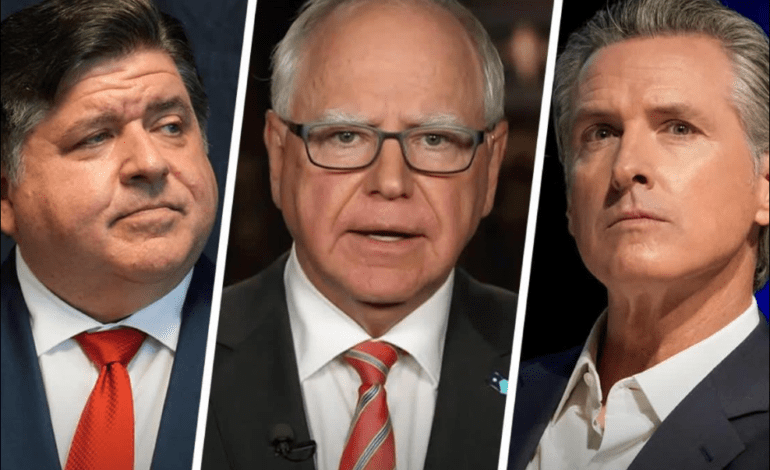

A Critical Look at Leadership: Examining the Policies and Performance of Three Prominent U.S. Governors
Introduction
In recent years, state leadership has become a major focal point in American politics. Governors play a critical role in shaping policies that affect taxation, public safety, economic growth, education, and quality of life. As political divisions deepen across the United States, the performance of high-profile governors is increasingly scrutinized not only within their states but also on the national stage.
Three governors frequently discussed in national political debates are Gavin Newsom, Tim Walz, and JB Pritzker. Supporters credit them with progressive reforms and economic initiatives, while critics argue their policies have contributed to rising costs of living, public safety concerns, and population shifts.
This article provides a critical, policy-focused analysis of their leadership, examining key issues such as crime, taxation, economic trends, and governance decisions.
California Under Gavin Newsom
Economic Growth vs Cost of Living
California remains one of the largest economies in the world, driven by technology, entertainment, and agriculture. Under Governor Gavin Newsom, the state has continued to see economic expansion in sectors like Silicon Valley and renewable energy.
However, critics point to rising living costs as a major issue. California consistently ranks among the most expensive states in the U.S., with high housing prices, taxes, and fuel costs. Gas prices, for example, have often exceeded national averages significantly, driven by state taxes and environmental regulations.
Opponents argue that these policies, while environmentally focused, have increased financial pressure on middle- and lower-income residents.
Homelessness and Urban Challenges
One of the most visible issues in California is homelessness. Major cities such as Los Angeles and San Francisco have faced growing homeless populations despite billions spent on housing initiatives.
Supporters of Newsom argue that the crisis is complex, involving housing shortages, mental health challenges, and income inequality. Critics counter that policy execution has been ineffective, citing slow progress and lack of measurable outcomes.
Public frustration often centers on visible encampments, sanitation concerns, and the perceived lack of urgency in addressing the crisis.
Crime and Public Safety
Crime trends in California have fluctuated in recent years. While violent crime rates remain lower than historical peaks, property crime and retail theft have been widely reported in urban areas.
Critics argue that certain criminal justice reforms, including reduced penalties for some offenses, have contributed to increased lawlessness. Supporters, on the other hand, emphasize data showing long-term crime reductions and argue that reforms aim to reduce incarceration rates and improve fairness.
Minnesota Under Tim Walz
Response to Civil Unrest
Governor Tim Walz faced intense scrutiny during the 2020 civil unrest in Minneapolis following the death of George Floyd. Critics argue that the state response was too slow, allowing significant property damage and unrest.
Supporters counter that the situation was unprecedented and required balancing public safety with constitutional rights such as peaceful protest.
The events in Minneapolis continue to shape perceptions of Walz’s leadership, especially among voters concerned with law enforcement and emergency response.
Social Policy and Education
Minnesota has implemented several progressive policies under Walz, particularly in education and social programs. These include expanded school funding, healthcare initiatives, and policies aimed at inclusivity.
Critics argue that some of these policies reflect ideological priorities rather than practical governance. For example, debates over school policies have sparked national conversations about the role of education systems in addressing social issues.
Supporters, however, view these measures as efforts to create a more inclusive and equitable environment for students.
Economic Performance
Minnesota’s economy has shown stability in employment and growth indicators. The state has maintained relatively low unemployment rates and strong workforce participation.
However, critics point to rising taxes and regulatory burdens as concerns for businesses. Some argue that these factors could discourage long-term investment and economic expansion.
Illinois Under JB Pritzker
Taxation and Fiscal Policy
Illinois has long struggled with budget deficits and pension obligations. Under Governor JB Pritzker, efforts have been made to stabilize finances, including tax adjustments and budget reforms.
Critics argue that Illinois continues to face high tax burdens, which may contribute to residents and businesses relocating to other states. The state has experienced population decline in recent years, which opponents link to economic conditions.
Supporters argue that fiscal challenges predate Pritzker’s administration and that progress has been made in addressing structural issues.
Crime and Public Safety
Crime in cities like Chicago remains a major political issue. While crime rates vary year to year, public perception often centers on safety concerns and high-profile incidents.
Critics argue that policies have not sufficiently addressed crime, while supporters emphasize investment in community programs and long-term solutions.
Economic and Population Trends
Illinois has faced challenges related to population decline, with some residents moving to states with lower taxes and living costs.
Economic growth has been uneven, with strong performance in certain sectors but ongoing concerns about business climate and competitiveness.
Comparing Leadership Approaches
While each state has unique challenges, several common themes emerge:
1. Cost of Living
All three states rank among the more expensive places to live in the U.S., leading to concerns about affordability.
2. Crime and Public Safety
Public safety remains a central issue, with debates over the balance between reform and enforcement.
3. Taxation
Higher taxes in these states are frequently cited as a factor influencing economic decisions and migration patterns.
4. Policy Direction
Each governor has pursued policies aligned with progressive priorities, which supporters praise as forward-thinking and critics argue are impractical.
Political Narratives vs Reality
It is important to distinguish between political narratives and measurable outcomes. Critics often highlight worst-case scenarios, while supporters focus on long-term progress and policy intentions.
For example:
- California remains an economic powerhouse despite high costs.
- Minnesota maintains strong employment figures.
- Illinois continues efforts to stabilize long-term financial challenges.
At the same time:
- Rising living costs are real concerns.
- Public safety debates continue nationwide.
- Migration trends indicate dissatisfaction among some residents.
The Broader National Impact
These governors are not just state leaders — they are influential figures in national political discussions. Their policies often serve as models for broader party platforms and future federal initiatives.
As a result, debates about their leadership extend beyond state borders and contribute to larger conversations about the direction of the country.
Conclusion
Governors Gavin Newsom, Tim Walz, and JB Pritzker represent a particular approach to governance that prioritizes progressive policies, social programs, and regulatory frameworks. Their leadership has produced both measurable achievements and significant criticism.
For voters and observers, the key question is not simply whether these leaders succeed or fail, but how their policies affect everyday life — including affordability, safety, and opportunity.
As political debates continue, evaluating leadership through data, policy outcomes, and real-world impact remains essential. Strong opinions exist on all sides, but informed discussion requires moving beyond rhetoric to focus on facts and results.
Discover more from MatterDigest
Subscribe to get the latest posts sent to your email.