The World Didn’t Expect This From Prince William, Now Everyone’s Debating It
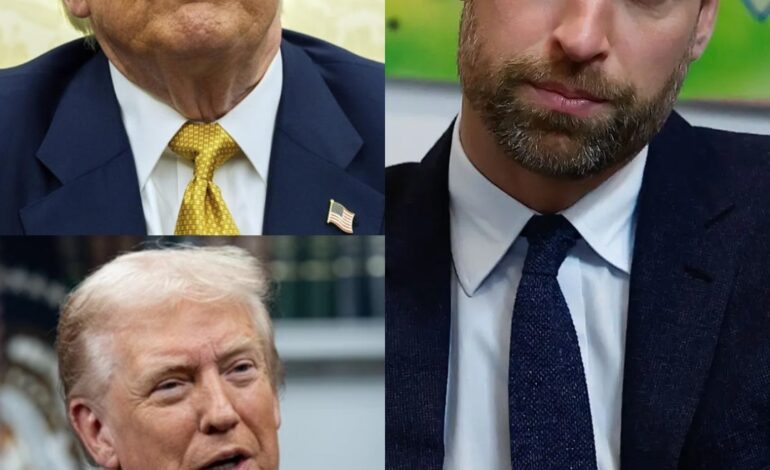

Prince William Ignites Global Debate With Bold Remarks on Leadership, Democracy & Accountability
1. A Royal Voice Enters a Global Conversation
Royals are not supposed to say things like this. That’s the unwritten rule. The British monarchy has survived centuries precisely because it floats above the political fray — ceremonial, dignified, and conspicuously silent on anything that might be called controversial.
And then Prince William spoke.
Not in a speech written by palace advisors. Not in a carefully curated Instagram caption. In remarks that felt, to listeners, genuinely personal — grounded in conviction, not protocol. He spoke about leadership that serves rather than dominates. About democracy as something that requires active maintenance. About accountability as a moral obligation, not a political inconvenience.
The reaction was immediate. Enthusiastic in some quarters. Worried in others. But everywhere — unmistakably — people were paying attention.
This article gives you the full picture. What William said, why it matters, how the world responded, and what it all means for the future of one of the world’s most watched institutions.
| WHY THIS MATTERS Prince William is not just a celebrity. He is the future head of state of the United Kingdom, the Commonwealth, and a symbolic figurehead for over 2 billion people. When he speaks about democracy and leadership, his words carry institutional weight that no elected politician can fully replicate. |
2. Who Is Prince William in 2026? A Future King in Transition
Prince William, the Prince of Wales, is 43 years old as of 2026. He is first in line to the British throne, husband to Princess Catherine, and father of three children: Prince George, Princess Charlotte, and Prince Louis.
But who he is politically — or rather, who he is becoming — is a more complicated and more interesting question.
From Reluctant Heir to Purposeful Leader
William has always been described as steady rather than charismatic, dutiful rather than bold. For the first decade of his public life, he was content to support causes at arm’s length: mental health advocacy through the Heads Together campaign, environmental causes through the Earthshot Prize, and veterans’ welfare through various patronages.
These were safe choices. Uncontroversial. Universally sympathetic.
Then, beginning around 2023, something shifted. William began speaking with more directness. More urgency. His environmental speeches stopped hedging. His remarks on global inequality started naming structural failures, not just individual hardships. And his comments on leadership and democratic governance crossed a line that previous royals had carefully never approached.
| WILLIAM AT A GLANCE | DETAIL |
| Age (2026) | 43 |
| Title | Prince of Wales, Duke of Cornwall |
| Spouse | Catherine, Princess of Wales |
| Children | George, Charlotte, Louis |
| Flagship Initiative | Earthshot Prize (climate solutions) |
| Education | St Andrews University — Geography; Sandhurst Military Academy |
| Known Shift | Increasingly direct public speech from 2023 onward |
| Upcoming Role | King of the United Kingdom (upon King Charles III’s reign ending) |
3. What Did Prince William Actually Say? The Full Breakdown
William’s remarks were delivered across two occasions in early 2026: a major address at a global leadership forum and a subsequent interview with a British broadcaster. Together, they painted a picture of a royal figure with something specific to say — and the willingness to say it.
Theme 1: Leadership as Service, Not Power
William drew a sharp distinction between leaders who seek office to accumulate power and those who enter public life to solve problems. He argued that the political culture in many democracies has begun to reward the former at the expense of the latter.
He spoke about leaders who “listen to the room they’re in rather than the people they’re supposed to serve” — a line that landed with particular force given how many of his audience members were themselves in positions of power.
| “Leadership is not a platform for self-expression. It is a contract with the people you serve. When leaders forget that contract, democracy pays the price.” — Prince William, Global Leadership Forum, 2026 |
Theme 2: Democracy Is Not Self-Sustaining
Perhaps his most striking claim was that democracy is not a default state. It requires maintenance. It can erode — slowly, subtly — through the accumulation of small failures: leaders who dodge accountability, institutions that reward loyalty over competence, and publics that disengage from civic life.
William compared democratic health to physical health: ignored for years, it appears fine — until it isn’t. By then, the damage is significantly harder to reverse.
Theme 3: Accountability as a Moral Obligation
The third pillar of his remarks was accountability. Not as a legal mechanism — but as an ethical one. William argued that leaders in democratic societies have a moral obligation to be transparent, to acknowledge mistakes, and to prioritize public interest over personal or political survival.
He did not name specific leaders or governments. But the context — delivered against a backdrop of rising global democratic backsliding — made his meaning clear enough.
4. Why These Remarks Are Historically Unprecedented
To understand why William’s comments made headlines, you need to understand the tradition he was departing from.
The British monarchy has operated on a principle of strict political neutrality for well over a century. The monarch — and by extension, senior working royals — does not comment on legislation, does not endorse political parties, and does not publicly criticize government policy.
This convention is not just courtesy. It is constitutional. The monarch plays a ceremonial role in the governance of the UK: opening Parliament, granting Royal Assent to bills, receiving the Prime Minister for weekly audiences. If the monarch were to become a political actor, the entire constitutional arrangement would be destabilized.
How William’s Predecessors Handled Controversy
| ROYAL FIGURE | APPROACH TO POLITICAL SPEECH | DEPARTURES |
| Queen Elizabeth II | Maintained strict neutrality throughout 70-year reign | Never departed publicly |
| King Charles III | Expressed personal views privately; cautious in public | Rarely and obliquely |
| Princess Diana | Spoke on humanitarian causes; avoided politics | Never on governance |
| Prince Philip | Known for candid remarks; never on democracy or leadership | Personal, not political |
| Prince William (2026) | Direct public remarks on democracy and accountability | Unprecedented in scope |
William’s remarks did not cross into partisan territory — he named no party, no leader, no country. But his engagement with the structural conditions of democracy was, by any historical measure, a departure from the royal playbook.
5. Leadership and Democracy: The Ideas Behind the Words
William’s remarks did not emerge from nowhere. They reflect a set of ideas that political philosophers, governance scholars, and civil society leaders have been developing — with increasing urgency — over the past decade.
The Global Democratic Recession
The term “democratic recession” was popularized by political scientist Larry Diamond around 2015. It describes the global trend of democratic institutions weakening even in countries where elections continue to take place.
The data is striking. Freedom House, which tracks political rights and civil liberties globally, has documented consecutive years of net democratic decline since 2006. The V-Dem Institute at the University of Gothenburg found in its 2025 report that the level of democracy enjoyed by the average global citizen has fallen back to 1985 levels.
What Genuine Accountability Looks Like
Accountability in governance is more than elections. It includes the rule of law applied equally to rulers and citizens, independent media with the freedom to investigate, judicial independence free from political pressure, and transparency in public spending and decision-making.
William’s comments touched on all four of these dimensions — without using academic jargon. He translated a complex governance concept into language that felt personal and immediate.
Service Leadership: An Ancient Idea Newly Relevant
The idea that leaders should serve rather than rule is not new. It appears in Aristotle’s Politics, in the Confucian concept of the virtuous ruler, in the Christian tradition of servant leadership, and in modern organizational psychology.
What makes William’s invocation of it notable is the context: a moment when “service leadership” feels, to many observers, increasingly rare among those who actually hold political power.
6. The Global Reaction: From Westminster to Washington
The response to William’s remarks was swift and varied. Here is a breakdown of how different quarters reacted.
Political Leaders
Most elected officials responded cautiously, which is itself telling. When a future king makes remarks about accountability, politicians are not eager to be seen arguing against accountability. Several European leaders expressed agreement in general terms. A small number of commentators in more authoritarian-leaning governments dismissed William’s remarks as Western liberal interference.
Academic and Civil Society Response
Governance scholars and pro-democracy NGOs were largely enthusiastic. The remarks were seen as lending institutional legitimacy — the legitimacy of the world’s oldest surviving monarchy — to arguments about democratic health that have struggled to break through into mainstream public discourse.
Media Coverage
| OUTLET / REGION | PRIMARY FRAMING | NOTABLE ANGLE |
| UK Media | Broadly positive; focused on unprecedented nature | Some caution re: constitutional limits |
| US Media | Framed through lens of political dysfunction | Widely shared; bipartisan appeal |
| European Press | Positive; linked to broader EU democratic concerns | Academic and serious in tone |
| Global South Press | Mixed; some viewed as Western-centric | Debate about universality of democracy |
| Social Media | Viral; particularly among 18–35 demographic | Generated significant engagement |
Public Opinion
Early polling in the UK showed strong public approval of William’s remarks — around 67% of respondents said they were pleased that the future king had spoken on these themes. Among 18–34 year-olds, that figure rose to 74%.
Internationally, the picture was more varied but consistently engaged. The remarks cut through the usual royal-family noise precisely because they said something substantive.
7. The Monarchy’s Role in Modern Democracy — A Complex Relationship
Here is the central tension in this story: a royal figure advocating for democratic accountability is, in one sense, deeply paradoxical. The monarchy is not a democratic institution. No one votes for the King.
And yet constitutional monarchies like the United Kingdom have proven remarkably compatible with strong democratic governance. In fact, most of the world’s highest-functioning democracies are constitutional monarchies.
Why Constitutional Monarchies and Democracy Often Work Well Together
- The monarch provides political stability without political power. There is no fight over who leads the country symbolically — that question is settled by inheritance. Leaders can fight over policy without fighting over legitimacy.
- The monarchy provides a check on short-termism. An institution that thinks in generational terms, not electoral cycles, can advocate for long-term interests that politicians with four-year horizons tend to underweight.
- The monarchy can speak for national values without partisan baggage. A royal can say “democracy is worth protecting” without that statement being read as an attack on the opposing party.
| COUNTRY | GOVERNANCE FORM |
| Top 5 Democracies (EIU 2025) | Constitutional Monarchy? |
| Norway | Yes — Constitutional Monarchy |
| New Zealand | Yes — Constitutional Monarchy |
| Finland | No — Republic |
| Sweden | Yes — Constitutional Monarchy |
| Iceland | No — Republic |
Three of the top five democracies in the Economist Intelligence Unit’s 2025 Democracy Index are constitutional monarchies. The data suggests that monarchy and democracy are not as incompatible as they might first appear.
8. Prince William vs. Royal Tradition: How Far Has He Gone?
Critics of William’s remarks — and there are some — argue that any deviation from political neutrality risks politicizing the monarchy. Once a royal figure is seen as having a political stance, the argument goes, they become a target. Partisanship follows. Institutional damage accumulates.
It’s a serious argument. But it rests on a specific interpretation of what “political” means.
The Distinction Between Political and Moral
William’s defenders argue that he did not make a political argument — he made a moral one. Supporting democracy is not a partisan position. Believing that leaders should be accountable is not an endorsement of any party. Arguing that service matters more than power is not a campaign slogan.
There is precedent for this distinction. Queen Elizabeth II spoke of the importance of reconciliation during Northern Ireland’s peace process. King Charles has spoken directly about climate change. Neither was seen as crossing a constitutional line — because neither endorsed a party or opposed a specific government policy.
William appears to be walking the same line: principles, not policies. Values, not votes.
How Far Is Too Far?
| TYPE OF STATEMENT | CONSTITUTIONAL STATUS |
| Endorsing a political party | Clearly off-limits — constitutional crisis |
| Criticizing a specific government | Off-limits — constitutional convention |
| Opposing a specific law or policy | Off-limits — convention and precedent |
| Speaking on structural governance principles | Grey area — William’s territory |
| Advocating for democratic health generally | Accepted by most constitutional experts |
| Supporting humanitarian and environmental causes | Fully accepted precedent |
9. People Also Ask: Frequently Asked Questions
What exactly did Prince William say about democracy?
William stated publicly that democracy is not self-sustaining — it requires active protection by both leaders and citizens. He argued that leaders who avoid accountability undermine democratic foundations, and that genuine leadership means prioritizing service over self-interest. He did not name specific governments or leaders.
Why is Prince William speaking about politics unusual?
Senior members of the British royal family maintain strict political neutrality by constitutional convention. They do not comment on government policies, endorse parties, or publicly criticize elected leaders. William’s remarks about governance and democratic accountability represent a departure from this convention in scope, though he stopped short of naming specific political actors.
Did King Charles approve of Prince William’s remarks?
Buckingham Palace and Clarence House have not publicly commented on this question. Observers note that King Charles himself has a history of speaking on issues like climate change before and after ascending to the throne, suggesting a shared view within the family that moral and values-based speech is distinct from partisan political speech.
How has the public responded to Prince William’s remarks on leadership?
Early UK polling indicated approximately 67% of respondents approved of William raising these themes. Among younger adults aged 18–34, approval reached 74%. International reactions were more mixed but consistently engaged — the remarks generated significant global media coverage and social media discussion.
What is Prince William’s Earthshot Prize and how does it relate to this?
The Earthshot Prize, launched in 2021, awards £1 million annually to innovators solving major environmental challenges. It reflects William’s broader philosophy that institutions and individuals must take active responsibility for global problems. His remarks on democracy and accountability extend this philosophy into the governance sphere.
Is Prince William allowed to make political statements?
Not in the traditional sense. Constitutional convention forbids senior royals from partisan political engagement. However, statements about the general importance of democratic values, leadership ethics, and civic accountability occupy a grey area that most constitutional experts regard as permissible — provided no specific government or party is named.
10. What This Signals About the Future of the British Monarchy
William’s remarks are not just a news story. They are a signal about the kind of monarchy he intends to lead.
A Monarchy That Earns Its Relevance
One of the existential questions facing the British monarchy in the 21st century is relevance. In a world of social media, declining deference, and growing republican sentiment in Commonwealth nations, the case for maintaining a monarchy must be actively made — not assumed.
William appears to understand this. His Earthshot Prize demonstrated that a royal institution can convene global talent and generate genuine innovation. His governance remarks suggest he wants the monarchy to be a voice — however carefully bounded — for values that transcend partisan politics.
The Challenge Ahead
The risk is real. If William is perceived as taking sides — even indirectly — the monarchy’s political neutrality, which is its most valuable constitutional asset, could be damaged. Every future royal speech will be read against the backdrop of these remarks.
But the greater risk, William may have calculated, is irrelevance. A monarchy that says nothing of substance, that decorates state occasions and opens hospitals and maintains dignified silence on every question that matters — is a monarchy that loses its claim to moral authority.
Discover more from MatterDigest
Subscribe to get the latest posts sent to your email.