The Government Just Ruled Trump’s Tariffs Illegal — Then He Created New Ones. Here’s What It Means for Your Money
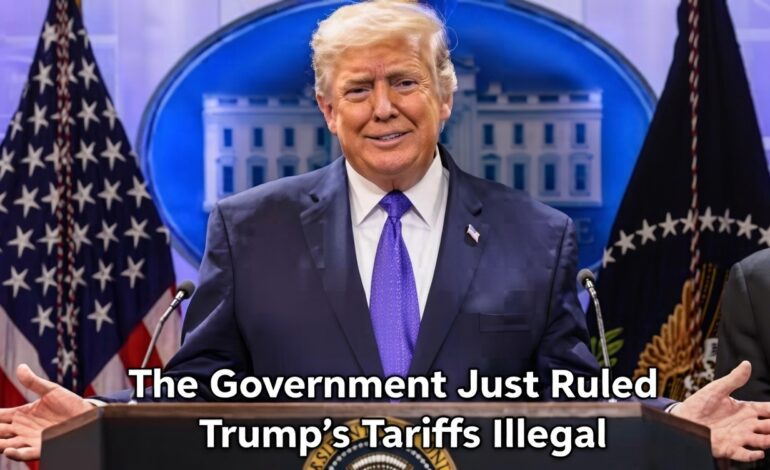

A federal court struck down sweeping tariffs as unconstitutional — but the administration pivoted fast. Here’s what happened, why it matters, and exactly how it could hit your wallet.
Why This Matters to You Right Now
Imagine waking up one morning to news that a court just declared a major government policy illegal. You’d probably think: ‘Great — problem solved.’ But with Trump’s tariffs, it was never that simple.
A federal trade court ruled that a significant portion of the tariffs imposed under the Trump administration exceeded presidential authority. The ink was barely dry on that ruling before the White House announced a new round of tariffs — this time using a different legal justification. The result? More uncertainty, more confusion, and very real consequences for American households.
This article breaks it all down in plain English. You’ll learn what the court actually ruled, why the administration could simply create new tariffs anyway, and — most importantly — what it means for your grocery bills, your 401(k), your next car purchase, and your small business.
|
1. The Court Ruling: What Actually Happened
In early 2026, the U.S. Court of International Trade (CIT) issued a landmark ruling that sent shockwaves through Washington. The court found that the administration’s use of the International Emergency Economic Powers Act (IEEPA) to impose sweeping, across-the-board tariffs went beyond what Congress authorized when it passed that law back in 1977.
Here’s the core of the ruling in simple terms: IEEPA gives the president broad powers to deal with foreign economic threats — but those powers have limits. The court determined that using IEEPA to impose massive, permanent tariff regimes on virtually all imports from multiple countries crossed those limits.
What Is IEEPA and Why Does It Matter?
IEEPA is a 1977 law that lets the president declare a national emergency related to an ‘unusual and extraordinary threat’ from overseas — and then take sweeping economic action. Past presidents used it for targeted financial sanctions, asset freezes, and blocking specific transactions.
What’s new is using it as a blanket tariff authority. Legal scholars and trade attorneys have debated for years whether IEEPA’s language actually covers tariffs at all. The CIT said: no, not like this.
|
Why the Ruling Didn’t End the Tariffs
Courts can rule something illegal, but that doesn’t make it disappear overnight. Here’s why:
- The administration immediately appealed the ruling, pausing its effect
- Existing tariffs collected before the ruling remain collected — refunds are not automatic
- Congress has not moved to codify or block tariffs legislatively
- The administration had backup legal strategies already in place
The bottom line: the ruling was a legal win for tariff opponents, but it did not flip a switch that made everything go back to normal.
2. Why Trump Could Just Make New Tariffs Anyway
This is the part that frustrates a lot of people. If the court said the tariffs were illegal, how can the White House just… make new ones?
The answer lies in the patchwork of laws Congress passed over the past century that give presidents significant trade authority. Here are the main tools the administration can use:
| Legal Authority | Law Passed | What It Allows | Limitation |
| Section 232 | 1962 (Trade Expansion Act) | Tariffs on imports that threaten national security | Requires Commerce Dept. investigation first |
| Section 301 | 1974 (Trade Act) | Tariffs to counter unfair foreign trade practices | Targets specific countries/sectors |
| IEEPA | 1977 | Emergency economic powers (now contested) | Judicial challenge ongoing |
| Section 201 | 1974 (Trade Act) | Tariffs when U.S. industries are seriously injured | Requires ITC investigation and recommendation |
Rather than fight the IEEPA ruling entirely, the administration moved quickly to re-justify existing tariffs under Section 232 and Section 301 — legal frameworks with decades of precedent behind them.
Think of it like this: if one door closes, there are three others already open. The president’s trade authority is remarkably broad by design, because Congress historically wanted to give the executive branch flexibility in international negotiations.
|
3. A Brief History of Tariff Battles in America
Tariffs are as old as the Republic. The very first revenue-raising measure Congress passed after ratifying the Constitution — in 1789 — was a tariff. So this fight is nothing new. What’s new is the legal and political intensity surrounding it.
Key Moments in U.S. Tariff History
- 1930: The Smoot-Hawley Tariff Act raised duties on over 20,000 imported goods. It’s widely blamed for deepening the Great Depression as trading partners retaliated and global trade collapsed.
- 1962: Congress passed the Trade Expansion Act, giving presidents authority to negotiate tariff reductions and impose tariffs for national security (Section 232).
- 1974: The Trade Act created Section 301 and Section 201, giving the president targeted tariff tools.
- 2018–2019 (Trump’s first term): Tariffs on steel, aluminum, and Chinese goods sparked a trade war. Prices rose on washing machines, solar panels, and industrial inputs.
- 2025–2026: Sweeping IEEPA tariffs imposed; court challenge successful; new tariff wave under alternative legal authorities begins.
History’s lesson is consistent: when one major economy raises tariffs, trading partners retaliate, consumers pay more, and supply chains scramble to adjust. We’re watching that playbook run again.
4. The New Tariffs: What’s Covered and How Much
So what exactly are we dealing with now? The new tariff regime, imposed under Section 232 and Section 301, covers a wide range of goods. Below is a simplified overview of the key categories and approximate duty rates as of early 2026.
| Category | Countries Affected | Tariff Rate | Notes |
| Steel and aluminum | Most countries | 25–50% | Original Section 232; expanded |
| Consumer electronics | China, Vietnam, Mexico | 20–35% | Phones, laptops, tablets |
| Electric vehicles | China primarily | 100%+ | Includes batteries and components |
| Agricultural machinery | EU, China | 15–25% | Tractors, harvesters |
| Textiles and apparel | Bangladesh, Cambodia, China | 25–45% | Clothing, shoes |
| Semiconductors | China | 50% | Chips and related components |
| Solar panels | Multiple countries | 50–75% | Continued from prior tariffs |
These are not abstract line items in a trade document. Every one of these categories connects directly to things you buy, use, or depend on every day.
5. Impact on Consumer Prices: What Gets More Expensive
Here’s where things get personal. Tariffs are taxes — and while the government collects them from importers, importers pass the costs along. Ultimately, you pay.
Economists and retail analysts have been tracking price effects closely. Here’s what research and market data suggest as of early 2026:
Groceries and Food
Tariffs on agricultural machinery and food packaging materials have pushed up production costs for American farmers and food processors. Additionally, retaliatory tariffs from trading partners have reduced export markets for U.S. goods like soybeans, pork, and corn — creating a domestic oversupply in some areas even as other food prices rise.
- Processed foods using imported ingredients: up 5–12%
- Fresh produce transported in refrigerated containers: up 3–8%
- Cooking oils and specialty foods from affected countries: up 10–20%
Electronics and Appliances
This is one of the most direct hit categories. Smartphones, laptops, TVs, and home appliances rely heavily on components manufactured in China, Vietnam, and other tariffed countries. Retailers have two choices: absorb the cost (and hurt their margins) or pass it on.
Most are passing it on.
- Smartphones: estimated $50–$200 price increases depending on model
- Laptops: up $80–$300 for mid-range to high-end machines
- Home appliances (washers, dryers, refrigerators): up $100–$400
- Game consoles and accessories: up $30–$100
Cars and Auto Parts
The auto industry is deeply integrated across North American and global supply chains. A single car contains thousands of parts from dozens of countries. Tariffs on steel, aluminum, semiconductors, and specific components from Mexico, Canada, and China are creating cost pressures throughout the manufacturing process.
- New domestic vehicles: up $1,500–$4,500 on average
- New imported vehicles: up $3,000–$8,000
- Auto parts and repairs: up 10–25% for many components
Clothing and Footwear
Most apparel sold in the U.S. is manufactured abroad. Tariffs on textiles, combined with existing duties, mean higher prices on clothes, shoes, and accessories. Budget retailers are hit especially hard because their margins are thin and their customers are price-sensitive.
6. What This Means for Your Investments and Retirement
If you have a 401(k), an IRA, or any stock market exposure, tariffs are affecting your portfolio — whether you realize it or not.
Stock Market Volatility
Markets hate uncertainty. When tariffs change, trade rules shift, and legal battles unfold, corporate earnings become harder to predict. Companies that rely on global supply chains — which is most large publicly traded companies — see their cost structures destabilized.
Since the tariff announcements and court ruling, sectors with the highest tariff exposure have experienced significant volatility:
- Technology stocks: Negative pressure due to China exposure and semiconductor costs
- Retail stocks: Mixed results — some passing costs on, others absorbing them
- Industrial and manufacturing: Volatile; domestic producers gain market share, but input costs rise too
- Agriculture: Significant pressure from retaliatory tariffs cutting into export revenues
- Clean energy: Solar and EV manufacturers facing cost headwinds
Your 401(k): What to Consider
Should you make major changes to your retirement portfolio because of tariffs? Most financial advisors say no — not because tariffs don’t matter, but because trying to time market moves around policy changes is notoriously difficult.
What you should do:
- Review your sector exposure. If your fund is heavily weighted toward tariff-sensitive sectors, understand your risk.
- Consider your time horizon. If you’re 20+ years from retirement, short-term volatility matters less. If you’re 5 years out, a conversation with an advisor is worthwhile.
- Diversification helps. International diversification, while affected by trade wars, can still buffer some domestic sector-specific risk.
- Don’t panic-sell. Reactive selling during trade-related market drops has historically been costly for investors.
Bonds and Inflation
Tariffs are inflationary — they raise the prices of imported goods. Sustained inflation erodes the real value of fixed-income investments. The Federal Reserve is watching this carefully. If tariff-driven inflation pushes the Fed to keep rates higher for longer, that affects mortgage rates, savings yields, and bond prices across the board.
7. Small Business Owners: Your Specific Risks and Options
For small businesses, tariffs hit differently than for large corporations. Big companies have legal teams, supply chain experts, and the financial reserves to absorb shocks or pivot quickly. Small businesses often don’t have those advantages.
Who’s Most at Risk?
- Retailers importing goods directly: You’re at the front line of cost increases
- Manufacturers using imported materials (steel, aluminum, plastics, electronics components)
- Restaurants relying on imported specialty ingredients
- Construction businesses dependent on lumber and steel
- E-commerce sellers sourcing from China or other affected countries
Practical Steps for Small Business Owners
- Audit your supply chain immediately. Map out where your inputs come from and which face tariff exposure.
- Request price locks from suppliers. Negotiate contracts that fix costs for 6–12 months where possible.
- Explore domestic alternatives. Yes, they’re often more expensive upfront, but tariff-immune.
- Apply for tariff exclusions. The U.S. Trade Representative (USTR) office accepts exclusion requests for specific goods. It’s a process, but it works for some businesses.
- Adjust pricing strategically. Be transparent with customers — most understand current economic conditions.
- Consult a customs broker or trade attorney. This is worth the investment if your tariff exposure is significant.
|
8. The Global Ripple Effect: Trading Partners Fight Back
Tariffs don’t exist in a vacuum. When the U.S. raises duties, its trading partners notice — and they respond.
Retaliatory Tariffs from Key Partners
Multiple major trading partners have announced or implemented retaliatory measures targeting U.S. exports. These counter-tariffs deliberately target American goods in politically sensitive districts — agricultural products, manufactured goods, and energy exports.
| Country/Bloc | Targeted U.S. Exports | Tariff Rate | Political Strategy |
| European Union | Bourbon, motorcycles, jeans, agricultural products | 25–35% | Targets swing-state industries |
| China | Soybeans, pork, aircraft, energy | 15–50%+ | Maximum economic leverage |
| Canada | Agricultural goods, steel products, orange juice | 25% | Mirrors U.S. tariffs precisely |
| Mexico | Corn, dairy, pork, construction materials | 15–25% | Retaliates on agriculture |
American farmers are among the hardest hit by retaliatory tariffs. When China slaps duties on soybeans, U.S. farmers lose one of their biggest export markets. Prices fall domestically as supply builds up. Farm bankruptcies and financial stress in rural America have historically spiked during trade wars.
9. What Economists Are Saying
Economic opinion on tariffs isn’t monolithic — but there’s a stronger consensus than the political debate might suggest.
The Mainstream Economic View
The vast majority of economists across the political spectrum agree on several points about tariffs:
- Tariffs are taxes on domestic consumers and businesses, not on foreign countries
- They protect specific industries but raise costs for many others
- They tend to reduce overall economic efficiency and GDP growth
- Retaliatory tariffs cancel out much of the benefit for targeted industries
- They can be effective as negotiating leverage in limited, targeted applications
The Counterargument
Proponents of the current tariff policy argue that free trade has genuinely hollowed out certain American industries, displaced workers in manufacturing communities, and created dangerous dependencies on foreign adversaries for critical goods. They point to the COVID-19 pandemic — when supply chains for medical equipment and semiconductors collapsed — as proof that some domestic production is worth the cost.
This is a real debate with real stakes. Both sides have data to support their views. The disagreement is often about time horizons and values: short-term pain versus long-term supply-chain resilience.
|
10. What You Can Do Right Now to Protect Your Finances
Knowledge is the first step. But what about action? Here’s a practical roadmap based on your situation.
For Every American Household
- Review your budget for tariff-sensitive categories — electronics, clothing, food. Build in a cushion for 5–15% price increases in these areas.
- Delay major purchases if you can. If you’re planning to buy a car or major appliance in the next six months, consider whether to buy now before further price increases or wait for the legal and policy dust to settle.
- Shop domestically where possible. American-made goods aren’t tariff-exempt from all pressures, but they often face fewer direct cost increases.
- Lock in fixed-rate loans now. If tariff-driven inflation pushes interest rates higher, variable-rate debt becomes more expensive.
- Build your emergency fund. Economic uncertainty is exactly when a three-to-six-month expense cushion matters most.
For Investors
- Speak with your financial advisor before making portfolio changes.
- Review sector exposure in your 401(k) or brokerage accounts.
- Consider inflation-protected assets (TIPS, I-bonds, real assets) as a hedge.
- Don’t overreact to headlines — trade policy is volatile, and markets often price in news before it’s ‘obvious’.
For Business Owners
- Complete a tariff exposure audit of your supply chain.
- Apply for tariff exclusions through the USTR if applicable.
- Explore nearshoring (moving sourcing to Mexico or Canada) or reshoring to reduce exposure.
- Review contracts with suppliers and customers for price adjustment clauses.
11. FAQ: People Also Ask
Q: Did the court actually stop the tariffs?
No. The court ruled they were imposed using an improper legal authority (IEEPA), but the ruling has been appealed and therefore stayed. Additionally, the administration reimposed tariffs under different legal statutes, so in practice, most tariffs remain in effect.
Q: Are Trump’s tariffs permanent?
Nothing in trade law is truly permanent. Tariffs can be modified, reduced, or eliminated through executive action, new legislation, trade agreements, or court rulings. However, once supply chains and pricing adjust to tariff levels, reversing them doesn’t automatically mean prices fall.
Q: Who actually pays tariffs?
American importers pay tariffs to U.S. Customs when goods enter the country. Those importers then pass the costs along through the supply chain — to wholesalers, retailers, and ultimately, consumers. The idea that foreign countries ‘pay’ tariffs is economically inaccurate; the costs fall primarily on American businesses and households.
Q: Will prices come down if tariffs are reversed?
Not necessarily, and not immediately. Once businesses adjust supply chains, renegotiate contracts, and set new price points, they don’t automatically revert when policy changes. Some price increases become sticky — economists call this ‘hysteresis.’
Q: How do tariffs affect inflation?
Tariffs directly raise the prices of imported goods, which contributes to measured inflation. If widespread enough, they can push the Federal Reserve to maintain higher interest rates to combat inflation — which affects mortgage rates, auto loans, credit cards, and the broader economy.
Q: What is the difference between a tariff and a sanction?
A tariff is a tax on imported goods designed to raise revenue or protect domestic industries. A sanction is a broader economic or diplomatic penalty targeting a country, entity, or individual — it can include trade restrictions, asset freezes, and financial prohibitions. Tariffs are one tool within the broader sanctions toolkit, but they’re distinct in purpose and application.
Q: Can businesses get exemptions from tariffs?
Yes. The USTR operates a tariff exclusion request process that allows businesses to petition for exemptions on specific goods. Success depends on demonstrating that the good isn’t available domestically and that the tariff causes significant economic harm. The process takes months and requires documentation.
12. Key Takeaways
- A federal court struck down tariffs imposed under IEEPA as exceeding presidential authority, but the ruling’s effect is paused pending appeal.
- The administration responded by reimposing tariffs under Section 232 and Section 301, keeping most tariff levels in place.
- Consumers face higher prices across electronics, vehicles, clothing, and food — with estimates ranging from 5% to 20%+ in key categories.
- Investors should review sector exposure but avoid panic-selling; tariff uncertainty creates volatility, not necessarily long-term trends.
- Small business owners face the most acute short-term risks and should audit supply chains and explore tariff exclusions immediately.
- Trading partners are retaliating with counter-tariffs targeting U.S. agricultural exports, hitting American farmers and rural communities.
- The legal battle is ongoing — this story is far from over, and policy could shift with court decisions, congressional action, or negotiated trade deals.
| Take Action
Share this article with someone who’s wondering what all this tariff news means for their budget. Subscribe to financial news from non-partisan sources like the Congressional Budget Office (cbo.gov) and the Peterson Institute for International Economics (piie.com) for ongoing updates. And speak with a licensed financial advisor before making significant portfolio or business decisions based on current trade policy. |
Sources and Further Reading
This article draws on information from the following authoritative sources:
- S. Court of International Trade — Official case records and ruling summaries (uscit.gov)
- Peterson Institute for International Economics — Research on tariff economic impacts (piie.com)
- Congressional Research Service — Legal analysis of presidential trade authority (crsreports.congress.gov)
- S. Trade Representative Office — Tariff lists and exclusion processes (ustr.gov)
- Federal Reserve Economic Data (FRED) — Inflation and consumer price index data (fred.stlouisfed.org)
About This Article
This article was written to provide clear, unbiased, and actionable information on a complex and fast-moving policy topic. It reflects information available as of February 24, 2026. Trade policy is subject to rapid change — readers are encouraged to verify current tariff rates and legal status through official government sources before making financial decisions.
For corrections, updates, or questions, please consult the publication’s editorial team.
Discover more from MatterDigest
Subscribe to get the latest posts sent to your email.