The Epstein Raid: What Chief Reiter Found — and What Was Already Gone
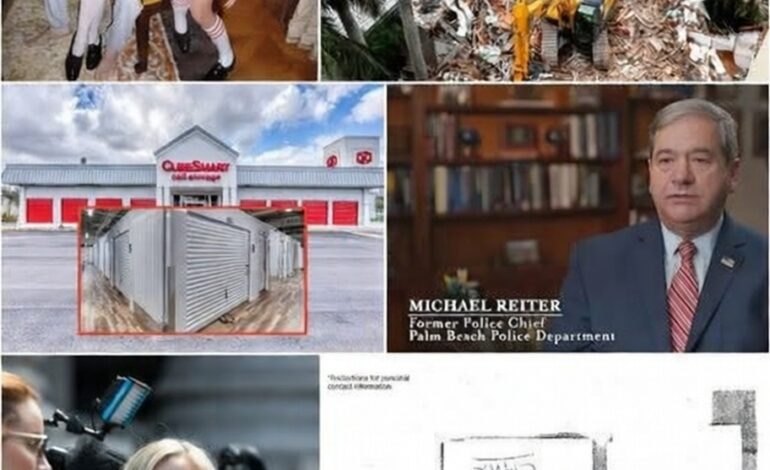

When police executed a search warrant on Jeffrey Epstein’s Palm Beach mansion in October 2005, they expected chaos. Instead, they found something far more unsettling — an unnervingly clean crime scene that told its own dark story.
1. The Scene: An Eerie, Calculated Calm
“They came with a warrant — and walked into a void.”
No scrambling. No frantic phone calls. No trace of chaos.
Just an eerie, calculated calm that felt wrong the second they stepped inside.
When Palm Beach Police Chief Michael Reiter entered Jeffrey Epstein’s 14,000-square-foot Palm Beach mansion in October 2005, it wasn’t what he found that raised alarms. It was what was gone.
Computers. Hard drives. Files. Photographs. The kinds of materials investigators expected to find in the home of a man already under investigation for sex crimes against minors. All of it had vanished with surgical precision.
This wasn’t a panicked cleanup. It was deliberate. Practiced. It suggested someone had known the warrant was coming — or at minimum, had been prepared for exactly this moment long before it arrived.
The question that has haunted investigators, journalists, and abuse survivors ever since: How?
|
2. Who Was Chief Michael Reiter?
Michael Reiter served as Chief of Police for Palm Beach, Florida — one of the wealthiest zip codes in America. His department was small, accustomed to noise complaints and traffic enforcement, not international sex trafficking networks.
But Reiter was not a man who bent easily.
When the investigation into Epstein first landed on his desk in the spring of 2005, Reiter made a decision that would define his legacy: he would follow the evidence wherever it led. Even if it led to one of the most well-connected men in the world.
By all accounts, Reiter was methodical, professionally meticulous, and deeply troubled by what his lead detective, Joe Recarey, was uncovering. He went on to write a formal letter to the U.S. Department of Justice in 2008 — a rare, extraordinary act for a local police chief — accusing federal prosecutors of giving Epstein a “sweetheart deal” that betrayed the victims.
That letter became a key document in understanding just how far the protection of Epstein extended.
Why Reiter’s Actions Mattered
- He refused pressure from Epstein’s powerful attorneys to slow or drop the investigation.
- He ensured Detective Recarey’s work was exhaustively documented.
- He personally escalated the case to the FBI when local prosecution hit walls.
- He publicly condemned the non-prosecution agreement after it was signed.
3. What the Search Warrant Targeted
The Palm Beach Police Department didn’t just knock on Epstein’s door on a hunch. The October 2005 search warrant was the product of six months of careful, methodical police work.
What investigators hoped to find:
- Computers and storage devices containing photographs, videos, or communication records
- Physical evidence corroborating victim testimony — massage tables, specific rooms, sex toys
- Financial records linking payments to young women and their recruiters
- Address books, contact lists, or phone records identifying a broader network
- Evidence of witness intimidation or coordination to suppress testimony
Detective Joe Recarey had already built a remarkable case from victim interviews alone. Multiple young women, some as young as 14, had described in chilling detail what happened inside that house. Their accounts were consistent, specific, and corroborated by each other.
Physical evidence would have made the case airtight. That’s exactly why it wasn’t there when police arrived.
4. The Evidence That Vanished: What Was Gone
Investigators documented the absence methodically. What they noted missing wasn’t random.
The Suspicious Absence of Digital Evidence
In 2005, hard drives and personal computers were among the most valuable forms of criminal evidence. For a man accused of using a network of girls to recruit other victims — and of photographing those victims — digital records would have been explosive.
They were gone.
Not damaged. Not erased. Gone. Physically removed from the premises before police could secure them.
What Remained — and What It Suggested
The house itself was intact. No signs of a rushed departure. Personal effects, furniture, artwork — all in place. Only the specifically evidentiary materials were absent.
This spoke to something calculated. Someone with legal sophistication, advance warning, or both had overseen a targeted evidence removal. Not a panicked burglar. A professional operation.
Or, as some investigators suspected: someone who had been tipped off.
The Question That Remains Unanswered
To this day, no one has been charged with obstruction of justice in connection with the removal of evidence from Epstein’s Palm Beach home. The question of who removed it, when, and on whose instruction has never been officially answered.
5. How Palm Beach PD Built the Original Case
The investigation began in March 2005 when a 14-year-old girl’s parents contacted the Palm Beach Police Department. They believed their daughter had been sexually abused by a wealthy man on the island.
Detective Joe Recarey was assigned to the case. What he found shattered any expectation that this would be a routine investigation.
The Scale of Victimization
Over the course of months, Recarey identified more than 36 potential victims. Most were young women and teenagers from working-class or vulnerable backgrounds. Many had been recruited by other girls who had already been through Epstein’s orbit — a pyramid structure that expanded the reach of abuse while creating social pressure against coming forward.
Their accounts shared specific, verifiable details: the layout of rooms, the physical description of Epstein, the nature of the abuse, the payments made afterward. These weren’t coincidental overlaps. They were corroboration.
Undercover Operations and Surveillance
PBPD conducted surveillance, ran undercover operations, and documented the flow of young women in and out of Epstein’s mansion. By the time they executed the search warrant, Recarey had built what legal observers later described as an exceptionally solid foundation for prosecution.
The problem was never the quality of the local investigation. The problem was what happened when it left local hands.
6. The Cover-Up: How the DOJ Buried It
In 2006, a state grand jury returned an indictment against Epstein on one count: solicitation of prostitution. One count. For a man police believed had abused dozens of minors.
Prosecutors in the Palm Beach State Attorney’s Office wanted more. They wanted Epstein charged federally, where sentences would be longer and the evidence stronger. That’s when the case was referred to the U.S. Department of Justice.
And that’s when things began to go sideways.
The Role of Powerful Attorneys
Epstein retained a legal dream team that included Alan Dershowitz, Ken Starr, Jay Lefkowitz, and others with deep connections to the federal legal establishment. They engaged U.S. Attorney Alexander Acosta in negotiations that would last over a year.
Those negotiations did not include the victims.
The Resulting Outcome: A Grotesque Bargain
In September 2007, Acosta signed a Non-Prosecution Agreement with Epstein. Epstein would plead guilty to state charges — solicitation of prostitution, not sex trafficking of minors. He would serve an 18-month sentence with the ability to leave jail six days a week on “work release.”
The agreement also contained a provision that shielded unnamed “co-conspirators” from any federal prosecution.
The victims were not informed. They were not consulted. Many only learned of the deal after it was signed — a violation of the Crime Victims’ Rights Act that would later be upheld in federal court.
“I was shocked… We had a very strong case. The government threw it away.” — Chief Michael Reiter, in subsequent public statements
7. The Non-Prosecution Agreement Explained
The Non-Prosecution Agreement (NPA) between Jeffrey Epstein and the U.S. Attorney’s Office for the Southern District of Florida is one of the most controversial prosecutorial documents in modern American legal history.
What Is an NPA?
A Non-Prosecution Agreement is a deal between the government and a target of criminal investigation in which the government agrees not to prosecute in exchange for certain concessions — usually cooperation, restitution, or guilty pleas to lesser charges.
They are legitimate legal tools. But they are almost never used to protect individuals from charges as serious as sex trafficking of children.
Key Provisions of the Epstein NPA
- Epstein would plead guilty to two Florida state charges, not federal charges
- He would serve 18 months, eligible for work release after 13 months
- He would register as a sex offender
- He would pay restitution to identified victims
- He and any co-conspirators would receive immunity from federal prosecution
- The agreement was kept confidential from victims
Why Was Co-Conspirator Immunity So Significant?
Legal experts noted that the broad immunity extended to unnamed co-conspirators was extraordinarily unusual. It effectively created a firewall around anyone who may have participated in or facilitated the abuse — before they had even been investigated.
The names of those co-conspirators, and the full scope of what they were shielded from, became one of the most hunted pieces of information in the years that followed.
8. Key Figures in the Case: Who Did What
| NAME | ROLE | KEY ACTION |
| Chief Michael Reiter | Palm Beach Police Chief | Refused to drop the investigation. Went public when DOJ buried the case. |
| Det. Joe Recarey | Lead PBPD Investigator | Built the original case. Identified 36+ victims. Died in 2018. |
| Alexander Acosta | U.S. Attorney, S. Florida | Negotiated secret NPA shielding Epstein & unnamed co-conspirators. |
| Jeffrey Epstein | Financier / Convicted Offender | Allowed to self-report, serve half-sentence, use work release. |
| Julie K. Brown | Miami Herald Journalist | Published 2018 investigation that reopened the case. |
| Ghislaine Maxwell | Alleged Recruiter | Convicted 2021 on federal sex trafficking charges. Sentenced 20 years. |
* Figures listed based on public records, court documents, and investigative reporting through 2024.
9. Timeline: From First Report to Epstein’s Death
| DATE | EVENT |
| March 2005 | 14-year-old victim’s family contacts Palm Beach Police after learning of Epstein’s abuse. |
| May 2005 | PBPD opens formal investigation. Undercover operations begin to build a case. |
| Oct 2005 | Chief Reiter executes search warrant on Epstein’s Palm Beach mansion. Evidence already gone. |
| Dec 2005 | FBI joins the investigation. Federal jurisdiction opens new avenues — and new dangers. |
| June 2006 | Grand jury indicts Epstein on one count of solicitation. Prosecutors want more. |
| Sept 2007 | Secret non-prosecution agreement (NPA) brokered by Alexander Acosta. Shields co-conspirators. |
| June 2008 | Epstein pleads guilty to state charges. Receives 18-month sentence. Serves 13 months — with work release. |
| Nov 2018 | Miami Herald’s Julie K. Brown publishes “Perversion of Justice” — reigniting national outrage. |
| July 2019 | Epstein arrested on federal sex trafficking charges. Denied bail. |
| August 10, 2019 | Epstein found dead in his Manhattan jail cell. Ruled suicide. Questions remain. |
| 2020–2024 | Civil suits, depositions, and document releases continue to expose network of enablers. |
* Timeline compiled from public court records, investigative reports, and DOJ documents through 2024.
10. What the 2024 Document Releases Revealed
In January 2024, a federal judge ordered the unsealing of approximately 900 pages of documents from a civil lawsuit brought by Epstein victim Virginia Giuffre against Ghislaine Maxwell. The release sent shockwaves through media and legal circles worldwide.
What the Documents Showed
- A list of individuals named in deposition testimony, including prominent political figures, business leaders, and royalty
- Detailed accounts of how Epstein’s network operated, including recruitment methods and the role of Maxwell as alleged “madam”
- Evidence of the extraordinary lengths taken to suppress victim testimony, including surveillance and alleged witness intimidation
- Testimony suggesting Epstein’s wealth and connections created what one lawyer called “a system that was rigged from the beginning”
What the Documents Did NOT Resolve
Despite the scale of the release, critical questions remained unanswered. Who removed the evidence from the Palm Beach mansion in 2005? Who exactly were the unnamed co-conspirators shielded by the NPA? What happened to the missing hard drives?
Some of the most significant documents related to Epstein’s intelligence connections — long alleged but never confirmed — were not included in the release.
The Ongoing Fight for Accountability
As of early 2026, civil litigation continues on behalf of Epstein’s survivors. Maxwell is serving a 20-year federal sentence but has appealed. Several individuals named in the released documents have denied wrongdoing. None have faced criminal charges in connection with Epstein’s trafficking operation.
11. Frequently Asked Questions
What did police find when they raided Epstein’s Palm Beach home in 2005?
When Chief Michael Reiter led the search of Epstein’s Palm Beach mansion in October 2005, investigators found that computers, hard drives, and other key forms of physical evidence had already been removed. The absence of digital materials — in a house otherwise intact — was described as deeply suspicious and consistent with deliberate evidence destruction.
Who was Chief Michael Reiter in the Epstein case?
Michael Reiter was the Palm Beach Chief of Police who oversaw the original investigation into Jeffrey Epstein beginning in 2005. He refused pressure to curtail the investigation, escalated the case to the FBI, and later publicly condemned the non-prosecution agreement signed by U.S. Attorney Alexander Acosta.
What was in Jeffrey Epstein’s search warrant in 2005?
The warrant authorized investigators to search for computers, hard drives, photographs, videos, financial records, and other materials relevant to allegations of sexual abuse of minors. Most of the anticipated digital evidence was not found — it had been removed from the property before police arrived.
Why did Epstein get such a lenient sentence in 2008?
Epstein received an 18-month sentence — serving only 13 months, largely on work release — as a result of a Non-Prosecution Agreement negotiated by U.S. Attorney Alexander Acosta. The deal allowed Epstein to plead to lesser state charges and shielded unnamed co-conspirators from federal prosecution. Acosta later said he was told Epstein was “above his pay grade” — a statement he subsequently walked back.
What happened to the evidence removed from Epstein’s Palm Beach home?
To date, no one has been charged with removing or destroying evidence from Epstein’s Palm Beach mansion. The missing materials have never been publicly recovered. Who ordered the removal, and when exactly it occurred relative to the issuance of the warrant, remains officially unresolved.
What did the 2024 document releases reveal about Epstein?
The 2024 unsealing of documents from the Giuffre v. Maxwell civil case revealed the names of numerous individuals mentioned in deposition testimony, detailed accounts of Epstein’s trafficking network, and evidence of efforts to suppress victim testimony. However, many of the most sensitive documents regarding alleged intelligence connections were not included.
Is Ghislaine Maxwell still in prison?
As of early 2026, yes. Ghislaine Maxwell was convicted in December 2021 on federal sex trafficking charges and sentenced to 20 years in federal prison. She has filed appeals, which remain ongoing.
12. Key Takeaways
Nearly two decades after Chief Reiter walked into that eerily empty Palm Beach mansion, the full truth remains just out of reach. But the documented record tells us enough to draw clear conclusions:
- The evidence removal was not accidental. The surgical precision with which digital materials were taken from Epstein’s home — while everything else remained in place — points to premeditation.
- The original investigation was sound. Palm Beach PD built a genuinely strong case. The failure occurred at the federal level, not the local one.
- The NPA was extraordinary. The breadth of immunity granted, and the secrecy surrounding it, had no precedent in comparable cases.
- The co-conspirator question is unresolved. Who was shielded by the NPA, and why, remains one of the most consequential open questions in the case.
- Victim accounts were systematically sidelined. From the NPA negotiations to the original sentencing, Epstein’s survivors were excluded from processes that directly affected them.
- Accountability remains partial. Maxwell is imprisoned. Epstein is dead. But no one involved in the institutional protection of Epstein has faced criminal consequences.
| Why This Story Matters in 2026
The Epstein case isn’t just history. Active civil litigation continues. Document releases are ongoing. And the systemic questions it raises — about who gets protected, how evidence disappears, and what justice looks like when power and money intersect — have never been more relevant. |
Sources & Further Reading
- S. District Court, Southern District of Florida — Epstein case records (PACER)
- Miami Herald: Julie K. Brown, “Perversion of Justice” investigative series, 2018
- S. Department of Justice Office of Professional Responsibility — Epstein NPA investigation report
- gov — Giuffre v. Maxwell civil case documents, unsealed January 2024
- Reiter letter to DOJ, 2008 — cited in multiple court filings and investigative reports
This article is based on public court records, investigative journalism, and official government documents through early 2026. It does not speculate beyond what the public record establishes.
Discover more from MatterDigest
Subscribe to get the latest posts sent to your email.