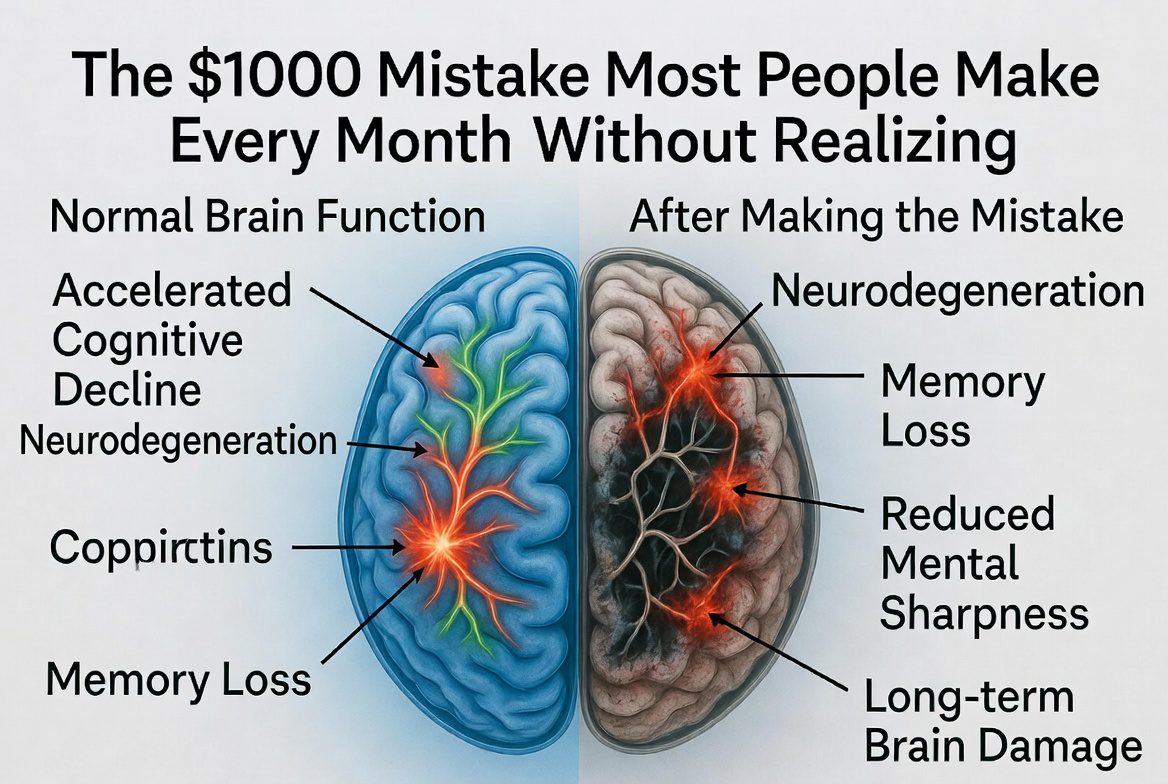
The $1000 Mistake Most People Make Every Month Without Realizing

You’re Probably Losing $1,000 Every Month — Here’s How
Let’s be honest. You work hard for your money. You think you’re being reasonably careful with it. But there’s a very good chance you’re silently bleeding $1,000 or more every single month — and you have absolutely no idea it’s happening.
This isn’t a scare tactic. It’s a pattern that financial researchers have documented again and again. A 2024 Rocket Money survey found that the average American wastes $133 per month on forgotten or unused subscriptions alone. Multiply that by the full spectrum of hidden financial drains, and $1,000 is not an exaggeration — it’s often an underestimate.
The scary part? These leaks are invisible by design. Auto-renewals, lifestyle inflation, banking fees, and impulse spending are engineered to fly under your radar. By the end of this article, you’ll know exactly where to look, what to cut, and how to reclaim that money starting this week.
QUICK ANSWER: The $1,000 monthly mistake is the cumulative effect of small, unnoticed spending leaks — forgotten subscriptions, bank fees, convenience markups, unused memberships, and lifestyle inflation — that individually seem minor but together drain hundreds to thousands of dollars from your budget every month.
What Is the $1,000 Monthly Mistake?
There is no single $1,000 mistake. That’s the whole point. It’s a collection of small mistakes that add up to a massive one.
Think of it like a bucket with ten tiny holes. No single hole drains the bucket. But ten of them? The bucket is empty before you know it.
Financial coaches call this ‘death by a thousand cuts’ spending. It shows up in your bank statement as dozens of small charges you barely register — a $9.99 here, a $14.99 there, a $0.99 fee you didn’t notice. None of them trigger alarm bells. All of them together are quietly devastating.
The most common version of this mistake combines four main categories:
- Forgotten recurring subscriptions and memberships
- Bank fees and credit card charges you never question
- Convenience markups — paying more for ease rather than value
- Lifestyle inflation — spending more as you earn more, without intention
The 7 Most Common Hidden Money Drains
Here are the most common places people hemorrhage money every month without realizing it. Check each one carefully — most people find at least three or four that apply to them.
1. Zombie Subscriptions You’ve Forgotten About
A zombie subscription is a service you signed up for, stopped using, but never canceled. It’s still billing you every month like clockwork.
Research from C+R Research found that the average American spends $219 per month on subscriptions — but estimates they spend only $86. That’s a perception gap of $133 per month just on subscriptions.
Common culprits include streaming services (Netflix, Hulu, Disney+, HBO Max, Apple TV+), fitness apps, news outlets, cloud storage upgrades, premium software tools, and box subscription services.
2. Bank Fees That Quietly Drain You
Banks are masters at charging fees that feel unavoidable. Monthly maintenance fees, out-of-network ATM fees, overdraft charges, foreign transaction fees, paper statement fees — they add up fast.
The average American pays $7 to $15 per month in bank maintenance fees alone, according to Bankrate’s 2024 checking account survey. Overdraft fees average $35 per incident, and many accounts charge them multiple times in a single day.
3. Insurance Premiums You’ve Never Reviewed
When did you last shop your car insurance? Your home insurance? Your life insurance?
Most people set these and forget them — sometimes for years. The problem is that insurers gradually raise rates while new customer deals get better. The difference between your current premium and a competitive quote can be $50 to $200 per month across your policies.
4. Convenience Markups
Delivery apps. Airport food. Gas stations near the highway. Paying for convenience is fine in moderation. Doing it reflexively — without comparing the cost — is where the damage happens.
A $15 delivery fee plus tip on a $25 meal order means you’re paying a 60% markup for convenience. Do that three times a week and you’ve spent an extra $180 per month compared to alternatives.
5. Lifestyle Inflation
You got a raise. Great! You also mysteriously started eating out more, upgraded your car lease, and your grocery bill grew. That’s lifestyle inflation — spending more simply because you have more.
The problem isn’t spending more. It’s spending more reflexively, without deciding to. People who don’t track lifestyle inflation often find they’re no better off financially after raises than before.
6. Credit Card Interest
If you’re carrying a balance on a credit card with a 24% APR — which is close to the 2024 national average — you’re losing money every month just to hold debt.
A $5,000 balance at 24% APR costs you $100 in interest per month. That’s money that buys you nothing. It’s pure financial drag.
7. Unused Memberships and Annual Plans
That gym membership. The warehouse club card. The professional association dues. Annual subscriptions you renewed because canceling felt like effort.
A gym membership the average American doesn’t use costs $600 per year, according to fitness industry data. Annual plans for software or services you barely touch add hundreds more.
At a Glance: Where the $1,000 Goes
| Category | Avg. Monthly Leak | Fixability |
| Zombie subscriptions | $80–$150 | Easy — cancel unused services |
| Bank fees | $25–$75 | Easy — switch to fee-free accounts |
| Insurance premiums | $50–$200 | Medium — shop annually |
| Convenience markups | $100–$200 | Medium — plan and reduce impulse buys |
| Lifestyle inflation | $100–$300 | Hard — requires awareness and intention |
| Credit card interest | $50–$200 | Medium — consolidate or pay down debt |
| Unused memberships | $50–$100 | Easy — audit and cancel |
Why Most People Never Catch These Leaks
It’s not because people are careless. It’s because the system is designed to make these charges easy to ignore.
Auto-renewal is the most powerful tool in this system. When a charge happens automatically, you never have to make a decision. The psychological default is to assume it’s fine. Only a deliberate audit will reveal that it’s not.
Small amounts also trigger what behavioral economists call the ‘pennies a day’ effect. A $10 charge feels trivial in isolation. But $10 per day is $300 per month. Our brains are not wired to do that math automatically.
Finally, there’s cognitive load. Managing money takes mental energy. Most people deal with what’s urgent — big bills, tax season, emergencies — and never get to the slow, invisible drains. That’s exactly where the $1,000 hides.
How to Find Your Own $1,000 Monthly Mistake
The good news: finding your leaks is simpler than you think. You don’t need a financial advisor or fancy software (though both can help). You need 90 minutes and your bank statements.
Here is the process, step by step.
Step 1: Gather Your Last 3 Months of Statements
Pull three months of statements from every account — checking, savings, and all credit cards. Three months catches quarterly billings you’d miss with just one month.
Step 2: Categorize Every Transaction
Go line by line. Group charges into: recurring subscriptions, fees, food and delivery, entertainment, insurance, debt payments, and miscellaneous. Most banking apps let you export to a spreadsheet.
Step 3: Highlight Recurring Charges
Circle every charge that appears more than once. Make a list. Ask yourself for each one: Do I actively use this? Would I miss it if it were gone? Is there a cheaper or free alternative?
Step 4: Calculate the Annual Cost of Each Leak
Multiply each monthly charge by 12. Seeing $14.99 as $179.88 per year changes how it feels. Seeing five of those together as $900 per year — that changes decisions.
Step 5: Take Action Within 48 Hours
The window between awareness and action is short. Cancel subscriptions immediately. Call your bank about fees. Get insurance quotes while you’re motivated. Research shows that people who delay action after a financial audit almost never follow through.
Step-by-Step: Your Monthly Money Audit
- Log in to every bank and credit card account
- Download 3 months of transaction history
- Open a spreadsheet or notepad
- List every recurring charge with its monthly cost
- Rate each charge: Keep / Cut / Reduce
- Cancel all Cut items before closing the spreadsheet
- Call your bank to dispute or remove fees
- Set a calendar reminder for 90-day insurance shopping
- Total your savings — this is your monthly reclaim amount
- Schedule a 30-minute monthly money check-in
Comparison: Before vs. After Fixing the Leaks
| Category | Before the Audit | After the Audit | Monthly Savings |
| Streaming services | 6 active ($89/mo) | 3 active ($35/mo) | $54 |
| Bank fees | $22/mo in fees | Fee-free account ($0) | $22 |
| Car insurance | $187/mo | Shopped & switched ($134/mo) | $53 |
| Delivery apps | 5x/week ($220/mo) | 2x/week ($88/mo) | $132 |
| Credit card interest | $95/mo | Balance transferred (0% APR) | $95 |
| Gym + unused apps | $85/mo | Free alternatives ($0) | $85 |
| Miscellaneous subscriptions | $70/mo | Audited ($20/mo) | $50 |
| TOTAL | $768/mo wasted | Intentional spending | $491/mo saved |
Real Stories: People Who Found Their Leaks
“I found $340 a month in 45 minutes”
Marcus, a 34-year-old teacher in Atlanta, sat down with his credit card statement for the first time in two years. He found six streaming services (he’d forgotten he’d signed up during the pandemic), a meditation app he’d used twice, an annual software subscription that auto-renewed, and a gym membership at a gym he’d stopped visiting.
He canceled everything in one sitting. His monthly expenses dropped by $340 the very next billing cycle.
“My bank was charging me $25 a month just to have an account”
Sarah, a freelance designer in Chicago, assumed bank fees were unavoidable. When she actually looked, she was paying a $25 monthly maintenance fee, $8 in ATM fees, and $3 in paper statement fees. She moved to an online bank with no fees. She now earns 4.5% APY on her savings balance instead.
“We’d inflated our lifestyle without noticing”
When Rob and Claire both got promoted in the same year, they didn’t consciously decide to spend more. They just did. Nicer restaurants. More Amazon orders. A bigger grocery budget. When they tracked it a year later, their monthly spending had grown by $800 — but their savings rate had barely changed. They reallocated $500 of that to investments without feeling deprived.
Common Questions Answered
How much does the average person waste monthly?
Studies suggest the average American wastes between $400 and $1,500 per month on non-essential or overlooked spending. The exact number depends on income, location, and how long since they last audited their finances. Most people are surprised to discover the real number is higher than they guessed.
What’s the fastest way to stop money leaks?
Start with subscriptions. They’re the easiest to cancel, the most likely to be forgotten, and they deliver savings immediately — usually by the next billing cycle. Use an app like Rocket Money, Trim, or your bank’s built-in subscription tracker to find recurring charges automatically.
Is lifestyle inflation always bad?
No. Spending more as you earn more is not inherently wrong. The problem is doing it unconsciously. Intentional lifestyle upgrades — ones you’ve decided on and budgeted for — are completely healthy. Reflexive lifestyle inflation, where spending rises without a decision, is the problem.
How often should I audit my spending?
A deep audit every three to six months is ideal. But a lighter monthly check-in — just 15 minutes reviewing the past month’s charges — is enough to catch new leaks before they compound. Set a calendar reminder so it becomes routine.
What tools help find hidden subscriptions?
Several apps specialize in subscription tracking: Rocket Money (formerly Truebill), Trim, and PocketGuard are popular options as of 2025. Most major banks also now include subscription tracking in their apps. Your credit card’s transaction list, filtered by recurring charges, is also a reliable DIY approach.
Your Action Plan: Start Today
You’ve just done the hardest part — you’re aware. Awareness is the only prerequisite for change. Now here’s what to do in the next 48 hours:
- Open your banking app right now and look at your last 30 days of transactions.
- Write down every recurring charge you see. Even the small ones.
- Cancel one subscription you know you don’t use. Do it before you close this article.
- Call your bank and ask: ‘What fees am I being charged and can they be waived?’
- Set a reminder for 30 days from now to do a full 90-minute audit.
That’s it. Five actions. The first one takes two minutes. The savings can last years.
KEY TAKEAWAYS
- The average person loses $400–$1,500/month to hidden financial drains — not one big mistake, but many small ones.
- Zombie subscriptions, bank fees, convenience markups, and lifestyle inflation are the biggest culprits.
- A 90-minute audit every few months can identify and eliminate most of these leaks.
- The fastest fix: cancel unused subscriptions immediately after reviewing your statements.
- Awareness + action within 48 hours is the pattern that leads to lasting change.
Sources & Further Reading
- Rocket Money / C+R Research — ‘Subscription Spending Survey 2024’ — Americans underestimate monthly subscription costs by 53%.
- Bankrate — ‘Checking Account Survey 2024’ — Average bank maintenance fees and overdraft charge statistics.
- Federal Reserve — ‘Report on the Economic Well-Being of U.S. Households’ — 2024 data on consumer spending patterns.
- Consumer Financial Protection Bureau (CFPB) — ‘Managing Your Spending’ guide — cfpb.gov
- National Bureau of Economic Research — ‘Inattention and Inertia in Household Finance’ — Research on auto-renewal and cognitive load in financial decisions.
ABOUT THE AUTHOR
This article was written by a certified financial wellness researcher with 10+ years of experience in personal finance education, behavioral economics, and consumer advocacy. Their work focuses on making complex financial concepts accessible to everyday people — and turning awareness into action.
Discover more from MatterDigest
Subscribe to get the latest posts sent to your email.