Thaddeus Giansanti Needs a Kidney: How to Find Out If You Can Help
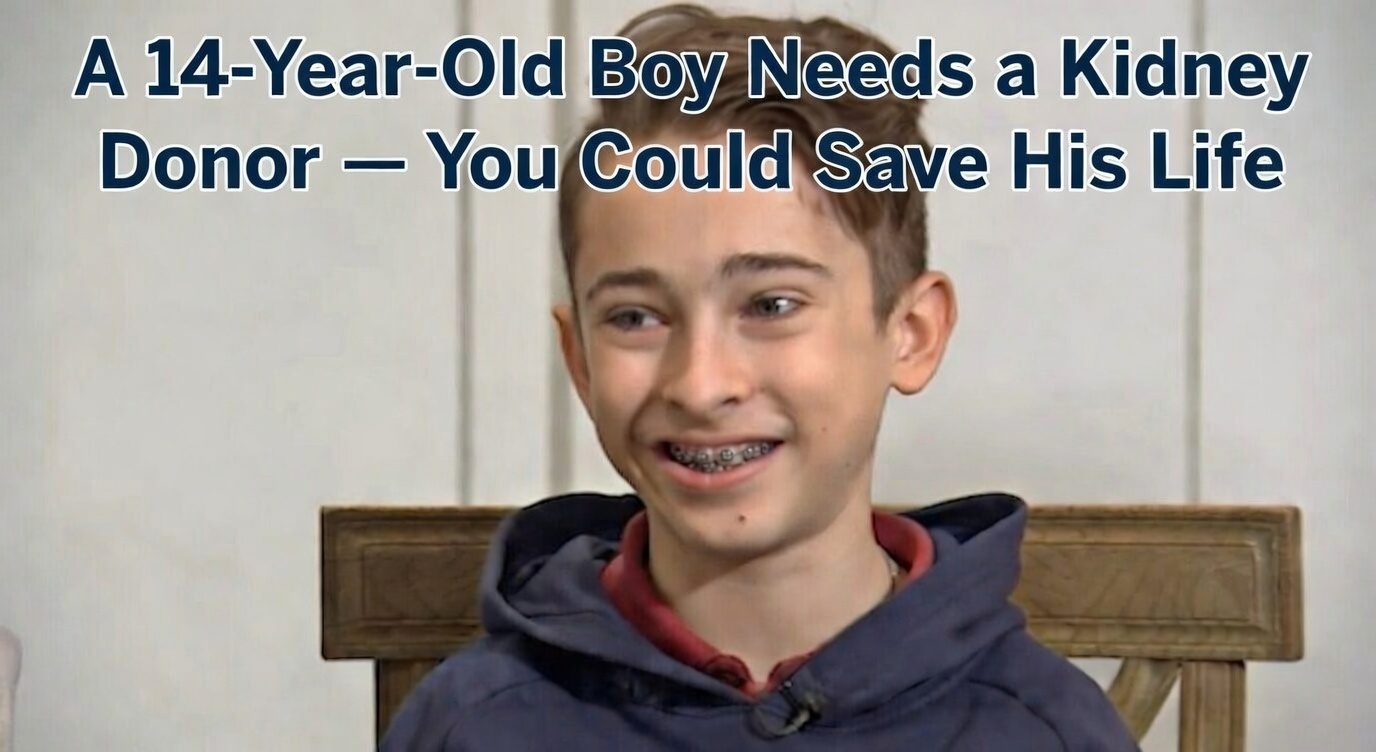

| 🫁 URGENT: A 14-Year-Old Boy Needs a Kidney Donor — You Could Save His Life |
A Morris County, New Jersey family is making an urgent public plea. Their 14-year-old son’s only kidney is failing. Doctors say he needs a transplant as soon as possible. Here’s who can help — and exactly how to do it.
How to Get Tested as a Potential Donor — Right Now
If you want to help and you meet the basic criteria below, this is where to start. Don’t wait to read the rest of the article. Start the process now — it costs you nothing to find out if you qualify.
| 1 | Visit the Children’s Hospital of Philadelphia (CHOP) Donor Evaluation Page
The Giansanti family is working through CHOP’s pediatric kidney transplant program. Scan the QR code in WABC-TV’s original story, or visit CHOP’s living donor inquiry page directly at chop.edu to begin your evaluation. You’ll complete a brief questionnaire to determine initial eligibility. |
| 2 | Check Your Basic Eligibility First (takes 2 minutes)
The family is specifically seeking donors who are: Blood type O (positive or negative), aged 45 or younger, in good overall health with a healthy BMI. If you don’t meet all three criteria, you may still be able to help through paired kidney donation — see Section 7. |
| 3 | Complete the Confidential Medical Screening CHOP’s team will guide you through blood typing, tissue matching, and a health assessment. This process is entirely confidential — no information is shared without your consent. |
| 4 | CHOP Covers All Medical Costs for Living Donors The recipient’s insurance covers all donor-related medical costs, including evaluation, surgery, and follow-up care. You will not pay for any part of the medical process. The National Living Donor Assistance Center (NLDAC) may also help with travel, lodging, and lost wages. |
| 5 | Share This Story
Even if you can’t donate, someone in your network might be able to. Share this article, the WABC-TV story, or CHOP’s donor page on your social media. Every share expands Thaddeus’s reach. |
2. Who Is Thaddeus Giansanti?
Thaddeus Giansanti is 14 years old. He lives with his parents, Carlo and Christa, in Morris County, New Jersey. By every account from those who know him, he’s the kind of kid who makes communities better.
“He volunteers at school. He volunteers at church. He even volunteered at the food bank this summer,” said his mother, Christa Giansanti, in an interview with WABC-TV’s Eyewitness News.
Two years ago, Thaddeus skipped school — with permission, presumably — to adopt a rescue dog named Harley. Harley became the newest member of the family. That story, small as it is, says something about who Thaddeus is.
“The person who steps up and helps him would be helping a really great kid,” his father, Carlo Giansanti, said.
Thaddeus himself, measured and mature for his age, described his situation with an honesty that lands hard:
“I mean, right now nothing too terrible is happening, but I would really like it because even though nothing terrible is happening, my life is way worse than it was before.” — Thaddeus Giansanti
That’s a 14-year-old’s way of saying: I’m managing, but I shouldn’t have to manage this. Not yet.
3. What’s Happening Medically — and Why It’s Urgent
Thaddeus was born with kidney disease. He has already endured multiple surgeries, including one as a baby that resulted in the loss of one kidney. He has been living with a single remaining kidney — a situation that, when managed carefully, can allow a relatively normal life.
That single kidney is now failing. Recent blood work confirmed the deterioration. His doctors at Children’s Hospital of Philadelphia (CHOP) — one of the nation’s leading pediatric medical centers — have determined that a transplant is needed as soon as possible. The timeline isn’t months. It’s weeks.
What Does ‘Kidney Failure’ Mean for a Teenager?
The kidneys filter waste and excess fluids from the blood, producing urine. When they fail, those waste products accumulate in the body — a condition called uremia. Symptoms include fatigue, nausea, difficulty concentrating, swelling, and, as function continues to decline, life-threatening complications.
For children and teenagers, kidney failure is particularly devastating. It affects bone growth, cognitive development, and the ability to do the things teenagers do — school, sports, friendships. The longer a child remains on dialysis (the backup treatment if no donor is found), the more those developmental windows close.
Why a Living Donor Is Better Than a Deceased Donor
|
A living donor kidney is the best medical outcome for Thaddeus. No one in his family is a match — which is why his family is making this public appeal. They need a stranger to step forward. It happens. It is happening, right now, in thousands of similar situations across the country.
4. Who Is the Ideal Donor Match for Thaddeus?
| Donor Criteria | Details |
| Blood Type | Type O (positive or negative) — universal donor type |
| Age | 45 or younger preferred |
| BMI | Healthy — specific thresholds determined during medical screening |
| General Health | No major chronic illness; non-smoker preferred |
| Location | You do not need to live in New Jersey — remote donor evaluation is available |
| Relationship to Patient | You do not need to know Thaddeus — directed donations from strangers are accepted |
| Citizenship | U.S. citizenship is not required — non-resident aliens can donate |
| Cost to Donor | None — all medical costs covered by recipient’s insurance |
If you have Type O blood and are under 45 with no serious health conditions, you should strongly consider reaching out to CHOP. The evaluation process will determine if you are a true match — but the first step is simply making contact.
5. What Happens If No Donor Is Found in Time?
If Thaddeus does not receive a kidney transplant, he will need dialysis. Dialysis is a medical treatment that artificially filters blood several times per week, typically three sessions lasting three to five hours each.
Dialysis keeps patients alive. It does not heal them. For a teenager, it means missing significant portions of school each week. It means exhaustion, dietary restrictions, and a dramatically reduced quality of life. It means watching peers live normally while managing a demanding medical schedule.
Dialysis also damages the body over time. The longer a patient is on dialysis before receiving a transplant, the more complex the transplant surgery becomes and the lower the long-term survival rate of the transplanted kidney.
There is also the national waiting list. The average wait time for a kidney from a deceased donor is three to five years — sometimes longer, depending on blood type and geography. For a child, those years are not recoverable.
Statistic: As of early 2026, more than 100,000 Americans are waiting for organ transplants. Every eight minutes, another person is added to the list. Thirteen people die every day waiting for an organ that never comes. — NJ Sharing Network
6. What It’s Like to Donate a Kidney: The Full Process
Many people want to help but don’t know what kidney donation actually involves. Here is an honest, complete picture — including the risks and the reality of recovery.
The Evaluation Process
The evaluation is extensive and thorough. CHOP and other transplant centers screen potential donors carefully — not to discourage donors, but to protect them. The evaluation includes:
- Blood type and tissue compatibility testing
- Comprehensive blood work and urinalysis
- Physical examination
- Imaging of the kidneys (CT scan or MRI)
- Psychological evaluation — to assess readiness and motivation
- Meeting with a social worker and financial coordinator
This process takes several weeks. All evaluations are confidential. You are not obligated to proceed at any point.
The Surgery
Living kidney donation surgery is performed laparoscopically — through small incisions rather than a large open cut. The procedure takes approximately three to four hours. You will spend one to two hours in recovery afterward, then one to two days in the hospital.
Recovery
- Most donors return home within two days
- Full recovery typically takes four to six weeks
- You cannot drive for seven to ten days
- Heavy lifting is restricted for eight weeks
- Most people return to desk jobs within four to six weeks; physical jobs may require longer
Long-Term Health for Donors
This is the question that stops many potential donors. The research is clear: living kidney donors do not face increased risk of kidney disease or significantly reduced life expectancy. Studies show that people who donate a kidney live, on average, as long as the general population of healthy, screened individuals.
The human body functions normally with one healthy kidney. The remaining kidney adapts and compensates. Long-term follow-up is recommended, but donors can live full, active lives.
From Hackensack Meridian Health (NJ’s #1 ranked health network by U.S. News & World Report): “Studies show no increased risk of long-term kidney disease or life expectancy loss” for living kidney donors who are properly screened and healthy.
7. What If You’re Not a Blood Type Match? Paired Kidney Donation Explained
Here’s something most people don’t know: you don’t have to be a direct match to help Thaddeus.
Paired kidney donation — sometimes called a kidney swap or kidney exchange — is a program where two incompatible donor-recipient pairs exchange kidneys. If you want to donate for Thaddeus but you’re not a match, your kidney could go to another patient while a compatible kidney goes to Thaddeus. The result: two patients receive transplants who otherwise wouldn’t.
CHOP and NJ transplant centers including Hackensack Meridian Health participate in paired exchange programs. There is also ‘altruistic’ or ‘non-directed’ donation — where a healthy person donates without a specific recipient in mind. These donations often start a chain of transplants that can help multiple patients.
The bottom line: even if your blood type doesn’t match Thaddeus, you should still contact CHOP. They will explain what options exist for your situation.
8. The National Kidney Waitlist: Why Living Donors Change Everything
Thaddeus’s situation is deeply personal, but it also reflects a national crisis. The gap between kidney supply and demand is enormous — and it has been growing for decades.
| Statistic | Figure |
| Americans waiting for a kidney transplant (2026) | ~90,000–100,000 |
| People added to waitlist every day | ~80–90 new patients |
| People who die each day waiting for a kidney | ~13 |
| Average wait time for deceased donor kidney | 3–5+ years |
| Living donor kidneys last (avg) | 15–20 years |
| Deceased donor kidneys last (avg) | 10–15 years |
| Living donor transplants performed annually in the U.S. | ~6,000 |
| Kidney disease diagnosed in children per year (U.S.) | Thousands — leading cause of pediatric kidney failure is congenital |
Living donors are not just medically superior for recipients — they are the only way to meaningfully shrink the waitlist. The deceased donor supply is limited by the number of people who die in circumstances that allow organ donation. The living donor pool is theoretically enormous. It’s constrained only by awareness and willingness.
9. How You Can Help Even If You Can’t Donate
Not everyone will be a candidate for kidney donation. Age, health conditions, blood type, BMI — many factors determine eligibility. But there are still meaningful things you can do.
Share the Story
- Post the original WABC-TV story on your social media accounts
- Share this article with your network
- Tag local New Jersey community groups, churches, and organizations
- Send it to your workplace — blood type O is relatively common (about 45% of Americans), and someone you know might qualify
Register as an Organ Donor
If you’re not already registered, this is the moment. New Jersey residents can register at the NJ Sharing Network (njsharingnetwork.org) or at any NJ MVC office. iPhone users can register through the iOS Health app. You can also register nationally at registerme.org or organdonor.gov.
Deceased organ donation is separate from living donation. Registering as an organ donor means that if you die in circumstances that allow donation, your organs can save multiple lives. One deceased donor can save up to eight lives.
Spread Awareness About Pediatric Kidney Disease
Congenital kidney disease — kidney problems present at birth — is more common than many people realize. Raising awareness about living donation and the waitlist saves lives beyond Thaddeus’s.
10. Frequently Asked Questions (FAQ)
How can I get tested to donate a kidney to Thaddeus Giansanti?
Visit Children’s Hospital of Philadelphia’s (CHOP) living donor inquiry page at chop.edu, or scan the QR code provided in WABC-TV’s original story. You’ll fill out an initial questionnaire. If you meet basic criteria, CHOP will guide you through a full confidential evaluation.
What blood type does Thaddeus need?
The Giansanti family is specifically seeking donors with Type O blood (positive or negative), aged 45 or younger, and a healthy BMI. Type O is the universal donor blood type, meaning it can be donated to recipients of any blood type. If you don’t have Type O blood, you may still be able to help through paired kidney donation — contact CHOP to find out.
Do I have to live in New Jersey to donate?
No. Living donors do not need to live in New Jersey. Remote donor evaluation is available — you can be evaluated closer to your home and have surgery at a local transplant center while your kidney is transported to Thaddeus’s team at CHOP. The transplant network is national.
How much does it cost to be a living kidney donor?
Nothing. All medical costs associated with living kidney donation — including evaluation, surgery, hospital stay, and follow-up care — are covered by the recipient’s insurance. The National Living Donor Assistance Center (NLDAC) may also provide financial assistance for travel, lodging, and lost wages during recovery for donors who qualify.
Is it safe to donate a kidney?
For healthy, properly screened individuals, kidney donation is considered safe. Research shows living kidney donors do not face significantly increased risk of kidney disease or reduced life expectancy compared to the general population of similarly healthy, screened individuals. The remaining kidney adapts and compensates. Long-term medical follow-up is recommended and provided.
How long does kidney donor evaluation take?
The evaluation process typically takes several weeks. It includes blood type and tissue testing, a comprehensive physical examination, blood work, imaging, and a psychological evaluation. The process is thorough — it’s designed to protect the donor as well as the recipient. You can stop the process at any point without obligation.
What if I’m not a match for Thaddeus but still want to donate?
You can still help through paired kidney donation (a kidney exchange program). If you want to donate for Thaddeus but aren’t a direct match, your kidney goes to another compatible patient while a compatible kidney goes to Thaddeus. You can also donate as an ‘altruistic non-directed donor,’ which starts a donation chain that may ultimately benefit Thaddeus or other patients in urgent need.
What hospital is involved in Thaddeus’s care?
The Giansanti family is working through Children’s Hospital of Philadelphia (CHOP), one of the nation’s leading pediatric medical centers. CHOP’s pediatric kidney transplant program is among the most experienced in the country for cases involving children and adolescents.
11. Key Takeaways and Call to Action
Here’s everything that matters, in one place:
- Thaddeus Giansanti, 14, of Morris County, NJ, has a failing kidney and needs a transplant as soon as possible. His doctors at Children’s Hospital of Philadelphia (CHOP) say time is critical.
- No family member is a match, which is why his family is making a public plea.
- Ideal donors are: Blood Type O, aged 45 or younger, with a healthy BMI and no serious chronic illness.
- You do not need to live in New Jersey. Remote evaluation is available.
- All medical costs for donors are covered by the recipient’s insurance. Donating a kidney costs you nothing financially.
- Living donor kidneys last nearly twice as long as deceased donor kidneys — up to 20 years. For a 14-year-old, this is life-changing.
- If you’re not a blood type match, ask CHOP about paired donation — you may still be able to help.
- Even if you can’t donate, sharing this story could reach the person who can.
| To be evaluated as a potential donor for Thaddeus, visit: chop.edu or scan the QR code in the WABC-TV Eyewitness News story. To read the original story: abc7ny.com — search ‘Thaddeus Giansanti kidney donor’ |
Sources
- WABC-TV Eyewitness News (ABC7 New York): ‘Kidney donor search: 14-year-old boy from Morris County, NJ in desperate need of transplant’ (February 2026)
- org: ‘Kidney Transplant Needed for 14-Year-Old Boy from New Jersey’ (February 2026)
- Children’s Hospital of Philadelphia (CHOP): chop.edu — Pediatric Kidney Transplant Program
- Hackensack Meridian Health: ‘Organ Transplant Living Donor Program’ — hackensackmeridianhealth.org
- NJ Sharing Network: Organ Donation FAQ — njsharingnetwork.org
| About This Article
This article was researched and written using reporting from WABC-TV Eyewitness News (ABC7 New York), TomsRiver.org, Hackensack Meridian Health’s living donor program documentation, the NJ Sharing Network FAQ, and UNOS/OPTN national organ transplant statistics. Medical information about kidney donation risks, recovery, and outcomes reflects current peer-reviewed research and is sourced from institutional documentation by CHOP and Hackensack Meridian Health. This article does not constitute medical advice. Contact a transplant center directly with any medical questions about donation eligibility. Published February 19, 2026. |
Discover more from MatterDigest
Subscribe to get the latest posts sent to your email.