Utah Executes Taberon Honie for the Murder of His Girlfriend’s Mother — Last Meal & Final Words
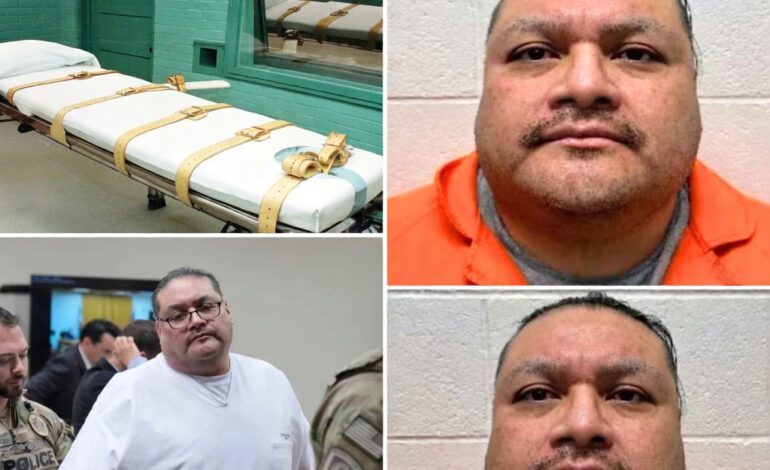

| VERDICT | The core story is TRUE — but some viral versions circulating online contain inaccuracies. This article presents the verified facts and corrects the record. |
On August 8, 2024, just after midnight, the state of Utah executed Taberon Dave Honie by lethal injection. It was Utah’s first execution in 14 years — the last being Ronnie Lee Gardner, killed by firing squad in 2010. The event drew national attention, intense legal battles, and a wave of social media posts — some accurate, some wildly distorted.
This article lays out exactly what happened: the crime, the legal journey, the final hours, his last meal, his actual final words, and what the evidence really says. Where viral claims got it wrong, we say so directly.
The Claim: What Went Viral
Multiple posts — on X (formerly Twitter), Facebook, and news aggregator sites — described Honie’s execution under breathless headlines like the one above. Most shared versions included vague references to a dramatic “last meal” and cryptic “final words” that were never properly quoted.
Some posts incorrectly described the victim as Honie’s girlfriend. Others incorrectly stated that the execution was carried out by firing squad. A few posts claimed Honie showed no remorse. None of these details are accurate.
| FALSE CLAIM #1 | “Honie was executed by firing squad.” — FALSE. He was executed by lethal injection using pentobarbital. |
| FALSE CLAIM #2 | “The victim was his girlfriend.” — MISLEADING. The victim was Claudia Marie Benn, the mother of his ex-girlfriend, Carol Pikyavit. |
| FALSE CLAIM #3 | “Honie showed no remorse.” — FALSE. His final words directly referenced the victim’s family healing, and he had expressed remorse repeatedly before the board. |
The Real Story: What Actually Happened
Who Was Taberon Honie?
Taberon Dave Honie was born on October 29, 1975. He was a Native American from the Hopi-Tewa tribal community in Arizona. His background was marked by poverty, intergenerational trauma, and substance abuse that began in childhood.
Honie described having his first taste of alcohol at age five. His parents, who were forced to attend Native American boarding schools — notoriously abusive institutions designed to strip Indigenous children of their culture — later struggled with alcoholism themselves. By his teenage years, Honie had progressed to heroin and methamphetamine.
Who Was Claudia Marie Benn?
Claudia Marie Benn was 49 years old at the time of her murder in 1998. She was a member of the Paiute Indian Tribe of Utah and was described by her family as a pillar of her community. She worked as a substance abuse counselor — helping others fight the same battles that ultimately destroyed her life — and was a devoted caregiver to her family.
Her daughter, Carol Pikyavit, had previously dated Honie from approximately 1995 to 1998. They had a daughter together. By the summer of 1998, the relationship had ended.
The Crime: July 9–10, 1998
On the evening of July 9, 1998, Honie began drinking alcohol at 8:30 a.m. and continued using drugs throughout the day. He called Pikyavit demanding to see her, threatening to harm her family if she refused. Pikyavit, who had made other plans that evening, went to work instead — she was not home.
Later that night, Honie broke into the home Pikyavit shared with her mother, Claudia Benn, in Cedar City, Utah, by shattering a sliding glass door. Benn attempted to defend herself with a kitchen knife. Honie overpowered her and attacked her with the knife, slashing her throat multiple times with wounds deep enough to reach her backbone.
Three of Benn’s grandchildren were inside the home at the time of the murder. One child was sexually assaulted. Police arrived after a neighbor called 911 and found Benn’s mutilated body.
The Trial, Sentence, and 26 Years of Appeals
Conviction and Death Sentence: 1999
Honie was convicted of murder, aggravated sexual assault, and related charges. He was sentenced to death in 1999 — just a year after committing the crime. The sentence was handed down in Cedar City, Utah.
The Appeals: 2002–2024
For more than two decades, Honie’s legal team filed a series of appeals challenging his conviction and sentence. Here is a timeline of key legal events:
| Year | Legal Event |
| 2002 | First round of appeals denied; constitutional challenges to Utah’s death penalty failed |
| 2013 | New appeal filed, citing ineffective counsel and claims of fetal alcohol syndrome and brain damage from a 30-foot fall as a teenager |
| 2014 | Appeal denied by the Utah Supreme Court |
| May 2024 | Utah Attorney General filed for an execution warrant |
| May 2024 | Lawsuit challenging execution methods (lethal injection and firing squad) denied by judge |
| June 2024 | Execution scheduled for August 8, 2024; original drug cocktail changed to pentobarbital |
| July 2024 | Commutation hearing held; Board of Pardons denied clemency |
| Aug 8, 2024 | Execution carried out at 12:25 a.m. |
The Commutation Hearing: July 2024
Just days before his execution, Honie appeared before Utah’s Board of Pardons and Parole requesting that his death sentence be commuted to life in prison. He told the board that he had changed significantly during his 26 years of incarceration. He earned his high school diploma, supported his daughter through addiction, and gained the trust of prison staff.
“I’ve shown you that I can exist in prison. I’m not a threat to the public, I’m not a threat to anyone,” Honie told the board. He compared himself to fertilizer — something that, despite its nature, helps things grow.
The board did not find sufficient cause to commute his sentence. Governor Spencer Cox also denied a request for a reprieve.
The Last Meal: What He Actually Ate
This is one of the most distorted elements of the story online. Multiple posts suggested Honie’s last meal was elaborate or symbolic. The reality was far more ordinary — and more human.
Around 4:30 p.m. on the evening of August 7, Honie ate a cheeseburger, fries, and a milkshake. But prison officials shared something more meaningful: Honie told them that he did not want this to be remembered as his last meal.
He asked that his “last meal” be remembered as one he had recently shared with his family.
That simple request speaks volumes about where his mind was in his final hours. He wanted to be remembered eating with people he loved — not alone in a cell.
| KEY FACT | Honie’s official last meal was a cheeseburger, fries, and a milkshake — but he requested it not be remembered as such. He wanted his last shared family meal to hold that title instead. |
His Final Words: The Full, Verified Quote
Perhaps the most misreported element of this story is Honie’s final statement. Social media posts quoted partial lines, out of context, or invented emotional details that never occurred.
Here is the complete, verified final statement of Taberon Honie, spoken at approximately 12:03 a.m. on August 8, 2024:
| “From the start, it’s been if it needs to be done for them to heal, let’s do this.”
— Addressing the victim’s family
“If they tell you, you can’t change, don’t listen to them. To all my brothers and sisters here, continue to change. I love you all; take care.” — Addressing fellow inmates
He then thanked the prison director and warden by name for “taking care of his family.” He turned to his family and said: “I love you.” His mother responded from the witness room: “I love you, son.” |
These were not the words of a man without remorse. They were the words of someone who had clearly thought about the weight of what he had done — and chose, at the end, to center the victim’s family’s healing over his own survival.
The Execution: Timeline and Official Details
The Drug Used: Pentobarbital
Honie’s execution was initially planned using a three-drug cocktail of fentanyl, ketamine, and another compound. After legal challenges from Honie’s attorneys who argued this cocktail was experimental and prone to causing unnecessary pain, Utah officials switched to pentobarbital — a single drug that had been used in prior executions across the United States.
Utah paid $200,000 for three doses of pentobarbital, though only one five-gram dose was intended for use unless complications arose.
The Final Hours
Honie spent his final day surrounded by family, receiving visitors in pairs for nearly 10 hours through a window in his observation room. Prison staff described his mood as “gracious and appreciative.” He declined an offer of Valium from the prison warden. He listened to music. He told family members to “keep your heads up” and cracked a few jokes.
He also participated in a pipe ceremony and smudging ceremony earlier in the week — both sacred Indigenous practices — and spoke at length with a spiritual leader from his Hopi reservation in Arizona.
The Execution Timeline
| Time | Event |
| 4:30 PM (Aug 7) | Honie ate his final meal: cheeseburger, fries, and milkshake |
| ~10:00 PM | Honie met with attorneys; was offered Valium and declined |
| ~11:30 PM | Execution procedures began |
| 12:03 AM (Aug 8) | Honie delivered his final statement |
| 12:04 AM | First dose of pentobarbital administered |
| 12:13 AM | Second dose administered at advice of medical professionals |
| 12:21 AM | Electrocardiogram detected no heartbeat |
| 12:25 AM | Medical examiner officially pronounced Honie dead |
After his death, his family members were permitted to enter the execution chamber to perform a traditional spiritual ceremony over his body — a request the Utah Department of Corrections had granted in advance.
Broader Context: Capital Punishment in Utah
Utah’s Death Penalty History
Utah has historically been one of the more active death penalty states relative to its population. The state allows both lethal injection and death by firing squad — one of only a small number of states to retain the firing squad option. Ronnie Lee Gardner was the last person executed in Utah before Honie, dying by firing squad in June 2010.
Honie’s execution was also notable as the first to take place at the Utah State Correctional Facility, a new prison that opened in 2022.
The Cost of the Execution
Post-execution reporting revealed that Utah spent over $288,000 to carry out Honie’s execution — not including legal expenses. The $200,000 cost of pentobarbital alone raised significant public debate, particularly given that earlier drug cocktail options would have cost far less.
Native American Context
Honie’s case drew attention from advocates who highlighted his background as a Native American man shaped by generational trauma. Both Honie and his victim, Claudia Benn, were Native American — Honie from the Hopi-Tewa community, Benn from the Paiute Indian Tribe of Utah.
Advocates pointed to Honie’s parents being forced to attend Indian boarding schools — a system widely documented as abusive — as a factor in the neglect and substance abuse that defined his childhood. The Death Penalty Information Center and others noted that these mitigating factors were never adequately addressed in Honie’s original trial.
The Salt Lake Tribune’s editorial board called for clemency on July 25, 2024 — the day before the Board of Pardons denied his petition — and used Honie’s case to call for broader abolition of the death penalty in Utah.
Public Reaction and Official Statements
Governor Cox’s Statement
Governor Spencer Cox said: “Early this morning the state of Utah fulfilled its legal obligation to carry out the execution of Taberon Honie. The actions of Mr. Honie that lead to his death sentence are heinous. I respect the process of our criminal justice system… I hope this brings closure to those impacted by the crimes. My heart goes out to the victim’s family.”
Protesters
Approximately 40 protesters gathered in a designated free speech zone two miles from the prison, waiting in silence as the execution was carried out. The Utah Prisoner Advocate Network was present, offering support to those processing the event.
Larger protests had taken place at the state Capitol earlier that day, with anti-death-penalty groups rallying throughout the afternoon and evening.
The Victim’s Family
Seven members of Claudia Benn’s family were present to witness the execution. They chose not to speak to the news media afterward. Their quiet presence at the chamber spoke to a grief that no headline can fully contain.
Frequently Asked Questions
Was the core news story real or fake?
The core story is real and verified. Taberon Honie was executed by the state of Utah on August 8, 2024, for the 1998 murder of Claudia Marie Benn. The execution occurred at 12:25 a.m. at the Utah State Correctional Facility in Salt Lake City.
What were Taberon Honie’s exact final words?
His final words were: “From the start, it’s been if it needs to be done for them to heal, let’s do this.” He then addressed fellow inmates urging them to keep changing, told his family he loved them, and thanked prison officials by name.
What was Taberon Honie’s last meal?
Honie ate a cheeseburger, fries, and a milkshake around 4:30 p.m. on August 7, 2024. He reportedly asked that this not be considered his “last meal” — he wanted a meal he had previously shared with his family to hold that distinction.
Was Honie executed by firing squad?
No. Despite Utah allowing firing squad as a method of execution, Honie was executed by lethal injection using pentobarbital. The drug was administered in two doses.
Who was the victim?
The victim was Claudia Marie Benn, 49, the mother of Honie’s ex-girlfriend, Carol Pikyavit. Benn was a Paiute Indian tribal member and worked as a substance abuse counselor. She was murdered in her home in Cedar City, Utah, on the night of July 9–10, 1998.
Why did Utah use a second dose of pentobarbital?
Prison officials said a second dose was administered at 12:13 a.m. on the advice of medical professionals present at the execution. The total process from first dose to declared death took approximately 21 minutes.
Key Takeaways
- The execution of Taberon Honie on August 8, 2024 is CONFIRMED — this is not a hoax or fake news.
- The victim was Claudia Marie Benn, the mother of Honie’s ex-girlfriend — NOT his girlfriend.
- Honie was executed by lethal injection with pentobarbital, NOT by firing squad.
- His last meal was a cheeseburger, fries, and milkshake — but he asked for another meal to be remembered as his last.
- His verified final words showed acceptance and a focus on the victim’s family healing — not defiance or lack of remorse.
- The execution cost Utah taxpayers over $288,000, not including legal costs.
- It was Utah’s first execution since 2010 and the first ever at the new Utah State Correctional Facility.
- Significant mitigating factors — including generational trauma, boarding school legacy, and early childhood substance exposure — were raised in hearings but did not result in clemency.
About This Article
This article was researched using verified primary and secondary sources including the Utah Department of Corrections official statements, Associated Press reporting, the Salt Lake Tribune, KSL NewsRadio, FOX 13 News, the Death Penalty Information Center, and Wikipedia’s documented account. All quotes are sourced from on-record, published reporting by named journalists who witnessed or covered the event directly.
Where viral claims were found to be inaccurate, they have been clearly labeled and corrected. The goal of this article is not to advocate for or against capital punishment, but to ensure the public has access to accurate, complete information about a significant legal and social event.
Sources: Salt Lake Tribune | KSL NewsRadio | FOX 13 News | Death Penalty Information Center | AP | Wikipedia | Utah Governor’s Office
Discover more from MatterDigest
Subscribe to get the latest posts sent to your email.