Will the Supreme Court Ruling Lower Car Prices?
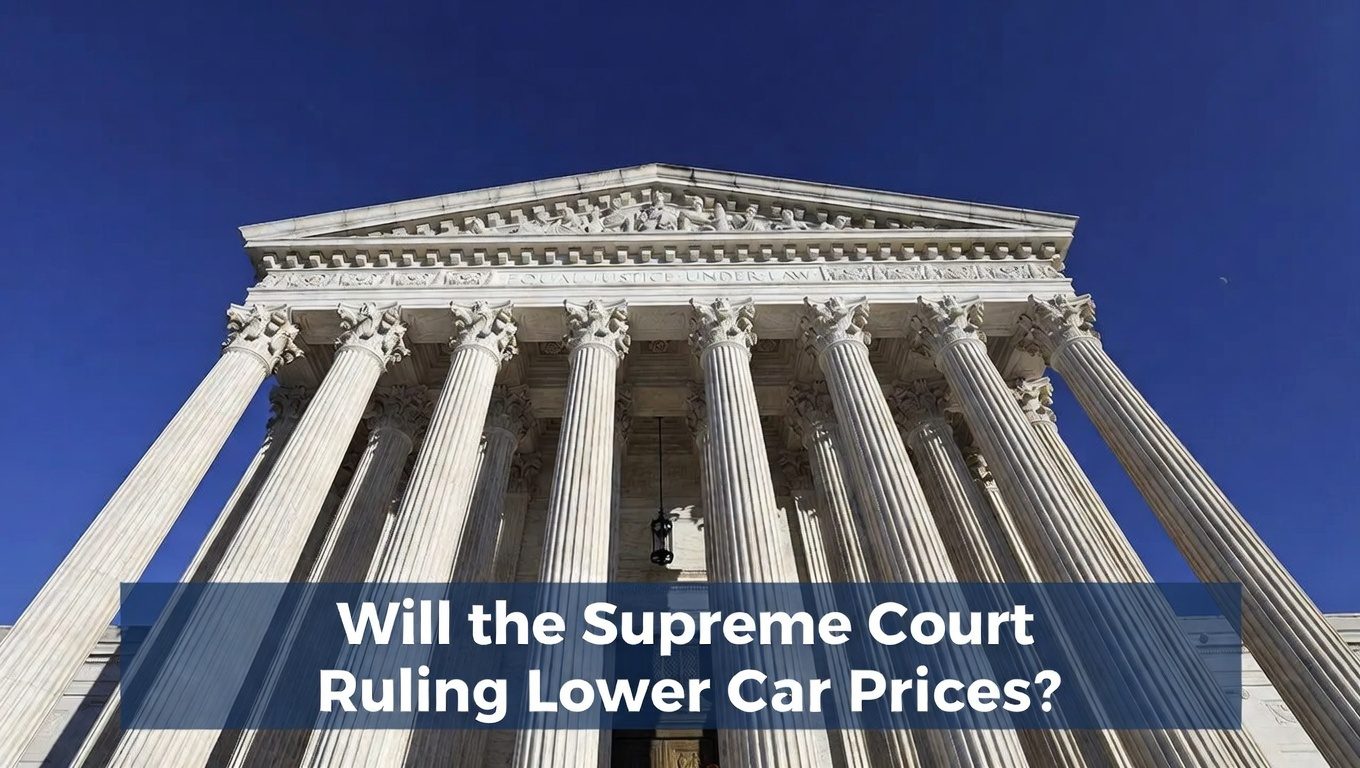

The Honest Answer — Based on Verified Data from Cox Automotive, Penn Wharton, KBB, CarBuzz, and the Center for Automotive Research
The Direct Answer: Will Car Prices Drop After the Supreme Court Ruling?
Partially, gradually, and not in the way most headlines suggest. The Supreme Court’s 6-3 ruling on February 20, 2026 struck down IEEPA tariffs — but according to Cox Automotive and Kelley Blue Book, the IEEPA tariffs are ‘NOT the tariff authority directly driving auto costs.’ The 25% tariffs on imported vehicles and auto parts remain under Section 232. Some cars and components may see modest price relief over the coming months — but the dominant auto-specific tariffs are still in place. Do not expect a dramatic reset.
Introduction: The Question Millions of Car Shoppers Are Asking
The Supreme Court just struck down Trump’s tariffs. Your social media feed is full of headlines. ‘Major blow to Trump’s trade agenda.’ ‘Landmark ruling.’ ‘Economic seismic shift.’
And you are thinking: great, but will my next car be cheaper?
That is the right question. And the honest answer — backed by data from Cox Automotive, Penn Wharton’s Budget Model, Kelley Blue Book, the Center for Automotive Research, and CarBuzz — is more nuanced than most of what you are reading. Yes, some price pressure has lifted. No, the major auto-specific tariffs have not gone anywhere. And no, the pricing impact will not be fast.
This guide cuts through the noise. It explains exactly which tariffs were struck down, which ones remain and why they matter more for your car purchase, what automakers are saying publicly, and what the realistic timeline for price relief looks like. By the end, you will know more about this than most journalists covering the story.
Visual suggestion: Open with a simple graphic comparing the two tariff systems side by side — IEEPA (struck down, shown in red) vs. Section 232 (still in effect, shown in amber). A secondary bar chart showing the dollar impact per vehicle from each tariff category makes the magnitude immediately clear.
1. Why the Honest Answer Is More Complicated Than Headlines Suggest
Most headlines after the February 20 ruling said some version of: ‘Supreme Court strikes down Trump’s tariffs.’ Full stop. Implication: tariffs are gone, prices will fall.
The reality requires one more sentence that most headlines omitted: the tariffs struck down by the court are not the main tariffs affecting car prices. Those are still in place.
Understanding why requires knowing that there are two entirely separate bodies of tariff law at play — IEEPA and Section 232. The Supreme Court ruled on IEEPA. Section 232 is a different law, with different legal authority, that the court did not review. And Section 232 is where the automotive industry’s most significant tariff burden sits.
This article is part of a tariff and auto market content cluster covering the Supreme Court IEEPA ruling, auto tariff impacts by vehicle type, the $133 billion refund process, and what consumers should do in the current market. Related articles: ‘Supreme Court Strikes Down Trump Tariffs: Full Breakdown’ and ‘BYD Sues US Over Trump Tariffs.’
2. Quick Recap: What the Supreme Court Actually Ruled
On February 20, 2026, the Supreme Court ruled 6-3 in Learning Resources, Inc. v. Trump that the president cannot impose tariffs under the International Emergency Economic Powers Act (IEEPA) because IEEPA does not authorize tariffs.
Chief Justice John Roberts wrote the majority opinion. The key line, quoted directly in the opinion: ‘IEEPA does not authorize the President to impose tariffs.’ The court’s ruling was based on statutory text — IEEPA does not use the word ‘tariff’ or any equivalent term. Without clear congressional authorization to impose tariffs, the executive action exceeded the law’s scope.
What Was Struck Down
- Country-specific ‘reciprocal’ tariffs (10% baseline for most of the world; higher rates for specific countries including 34% for China under IEEPA)
- Fentanyl-related tariffs of 25% on goods from Canada, China, and Mexico
- Broad universal baseline tariffs on imports from most US trading partners
What Was NOT Touched
- 25% tariff on imported automobiles — imposed under Section 232
- 25% tariff on auto parts — imposed under Section 232
- 25% tariff on steel and aluminum — imposed under Section 232
- Section 301 tariffs on Chinese goods — imposed under a different legal authority from the Obama and Biden eras
- Other pre-existing antidumping and countervailing duty tariffs
3. The Two Tariff Systems: IEEPA vs. Section 232 — Why This Distinction Is Everything
To understand the car price question, you need to understand the difference between these two legal systems. They are not interchangeable.
IEEPA: The Emergency Power Law (Now Struck Down for Tariffs)
IEEPA — the International Emergency Economic Powers Act — was passed in 1977. It gives the president broad emergency authority when an unusual and extraordinary threat exists. Trump used it to impose sweeping tariffs on imports from virtually every country simultaneously. The Supreme Court ruled this specific use was unlawful.
Section 232: The National Security Law (Still In Effect)
Section 232 of the Trade Expansion Act of 1962 allows the president to restrict imports that threaten national security. Unlike IEEPA, Section 232 has been used to impose tariffs by multiple presidents — Reagan, George W. Bush, Obama, and Trump all used it. The Supreme Court did not review Section 232 in the Learning Resources case.
Crucially: the 25% tariff on imported vehicles and the 25% tariff on auto parts were both imposed under Section 232. These are the tariffs that most directly impact new car prices. And they remain fully in effect.
Cox Automotive’s Definitive Statement
Kelley Blue Book parent company Cox Automotive stated directly after the ruling: the decision ‘impacts only IEEPA-based tariffs, which are NOT the tariff authority directly driving auto costs.’ Cox continued: ‘Section 232… is where the real impact sits, particularly around steel, aluminum, and imported vehicles.’
This is the most important sentence for car shoppers to understand. The organization that tracks more automotive pricing data than almost any other entity in the US is telling you: the tariffs that matter most for your car’s price are not the ones that were struck down.
4. Which Auto Tariffs Are Gone — and Which Ones Aren’t
Here is the complete picture in table form.
| Tariff | Legal Basis | Rate | What It Covers | Status After Ruling |
| Reciprocal / country-specific tariffs | IEEPA | 10-34% | Broad imports from most countries | STRUCK DOWN |
| Fentanyl tariffs | IEEPA | 25% | Goods from Canada, China, Mexico | STRUCK DOWN |
| Imported automobiles tariff | Section 232 | 25% | Cars & trucks imported into the US | STILL IN EFFECT |
| Auto parts tariff | Section 232 | 25% | Vehicle components imported into the US | STILL IN EFFECT |
| Steel tariff | Section 232 | 25% | Steel imports — feeds into vehicle production costs | STILL IN EFFECT |
| Aluminum tariff | Section 232 | 10-25% | Aluminum imports — feeds into vehicle production costs | STILL IN EFFECT |
| China Section 301 tariffs | Section 301 (Trade Act) | Up to 100%+ on EVs | Chinese-made goods incl. EVs | STILL IN EFFECT |
| Furniture / couch / cabinet Section 232 | Section 232 | ~25% | Home goods | STILL IN EFFECT |
| Copper Section 232 | Section 232 | Various | Copper imports used in vehicles | STILL IN EFFECT |
The automotive industry’s direct tariff burden — imported vehicles, imported parts, steel, aluminum, copper — all sits under Section 232. Every single one of those remains after the ruling.
5. The $133 Billion Refund Question
The Supreme Court ruling leaves one massive question unanswered: what happens to the $133 billion the US government has already collected in IEEPA tariffs?
The Scale of the Money
According to the Penn Wharton Budget Model, the US Treasury collected approximately $133.5 billion in IEEPA tariffs from February 2025 through mid-December 2025. The model projects total IEEPA collections may reach $175 billion by the time the ruling takes full effect. As of mid-2025, IEEPA tariffs represented approximately half of all US customs duties collected.
The Court Left Refunds Unaddressed
Here is the uncomfortable legal reality, explained by SCOTUSblog’s analysis of the ruling: the majority opinion says nothing about how refunds will work. The court resolved the legal question of authority and left the remedial mechanics — the actual process of giving money back — entirely to future proceedings.
Justice Kavanaugh’s dissent explicitly criticized the majority for this omission, writing that the court ‘says nothing today about whether, and if so how, the Government should go about returning the billions of dollars that it has collected from importers.’
What Happens to the Refunds
- Importers — the companies that paid the tariffs — have legal standing to claim refunds. The standard window is 180 days after goods are ‘liquidated’ through the Customs and Border Protection process.
- Consumer refunds: Consumers who paid higher prices because retailers passed on tariff costs are unlikely to receive any refund. The money will go to the companies, not to households.
- The ‘pass-through problem’: If a company passed the tariff cost to consumers in higher prices, can it still claim the refund? This is an unresolved legal question that trade attorneys are already debating.
- Timeline for refunds: TD Securities estimates refund processing will take 12 to 18 months. Trade lawyer Joyce Adetutu of Vinson & Elkins described the process as ‘going to be a bumpy ride for a while.’
- The refund mechanism: The Court of International Trade in New York, US Customs and Border Protection, and other lower courts will work out the process. Clark Hill law firm sent a note to clients saying the pathway will be ‘a mix’ of agency process and court action.
Key data point: Penn Wharton projects that fully reversing IEEPA tariffs could generate up to $175 billion in refund obligations. To put that in context: $175 billion is larger than the entire annual US defense procurement budget. The government has never processed a refund of anything close to this scale through the customs system.
6. How Much Did Tariffs Add to Car Prices? The Real Numbers
Before we can answer whether prices will drop, we need to establish how much tariffs actually added.
Section 232 Auto Tariff Impact: The Dominant Number
The Center for Automotive Research calculated that the Section 232 tariffs on imported vehicles and auto parts have cost the automotive industry approximately $108 billion — working out to roughly $4,240 per vehicle. This is the tariff that matters most for car prices.
These Section 232 tariffs remain fully in effect after the ruling.
IEEPA Auto Industry Impact: A Smaller but Real Number
The Center for Automotive Research also estimated the IEEPA tariff impact separately: approximately $1.8 billion annually in manufacturing costs for the auto industry, including approximately $902 million for the Detroit Three (GM, Ford, Stellantis). This worked out to roughly $250 per vehicle.
This is the tariff that the Supreme Court struck down.
The Context Numbers
- $4,240 per vehicle: The Section 232 tariff cost that remains — the big number
- $250 per vehicle: The IEEPA tariff cost that is now struck down — the smaller number
- $1,200 per household: Estimated total IEEPA tariff cost across all goods (not just cars) per household in 2025, according to the Center for Automotive Research
- $133.5 billion: Total IEEPA tariffs collected through mid-December 2025 (Penn Wharton / CBP data)
- $175 billion: Penn Wharton’s projected total IEEPA refund exposure
| Tariff Category | Legal Basis | Per-Vehicle Impact | Status After Ruling | Effect on Car Prices |
| Auto vehicle & parts tariff | Section 232 | ~$4,240 per vehicle | STILL IN EFFECT | No relief — the big number stays |
| IEEPA manufacturing inputs | IEEPA (struck down) | ~$250 per vehicle | STRUCK DOWN | Modest relief — the smaller number goes |
| Steel & aluminum | Section 232 | Embedded in production cost | STILL IN EFFECT | No relief on metal costs |
| China Section 301 EVs | Section 301 | Up to 100%+ on Chinese EVs | STILL IN EFFECT | No change for Chinese EVs |
7. Will New Car Prices Come Down? Category-by-Category Analysis
The ruling’s impact on new car prices varies by vehicle type, origin country, and supply chain composition. Here is the honest breakdown.
Fully American-Made Vehicles
Vehicles assembled in the US from primarily US-sourced or USMCA-compliant North American parts face the least tariff impact from either IEEPA or Section 232. For these vehicles, the IEEPA removal provides marginal relief on certain machinery and raw material imports used in production. The practical price impact is likely minimal — fractions of a percentage point.
Imported Vehicles from Japan, South Korea, Germany
These vehicles carry the full 25% Section 232 tariff on import. The IEEPA ruling removes any additional IEEPA burden on their country of origin — for example, the IEEPA reciprocal tariff applied to South Korean or Japanese goods broadly. That removal may reduce input costs for some components.
However, the dominant cost driver — the 25% Section 232 vehicle tariff — remains. Do not expect meaningful new-car price reductions for imported vehicles from traditional sources. CarEdge notes that Japanese, Korean, and European vehicles were competing under approximately 15% total tariff pressure before the ruling; that pressure is reduced but not eliminated.
Vehicles Made in Canada or Mexico Under USMCA
Many vehicles sold in the US — including popular trucks and crossovers — are assembled in Canada or Mexico. The IEEPA fentanyl tariff of 25% on Canadian and Mexican goods is now struck down. However, USMCA-compliant vehicle imports from Canada and Mexico were already structured to minimize tariff exposure. The practical impact depends on what percentage of specific models’ costs were affected by IEEPA vs. Section 232 duties.
Chinese-Made Vehicles
Chinese passenger EVs face Section 301 tariffs of approximately 100% (imposed by the Biden administration and untouched by the IEEPA ruling). The struck-down IEEPA China tariffs were an additional layer on top. The removal of that IEEPA layer does not make Chinese EVs viable for US consumer sales — the Section 301 tariff alone keeps their import prices prohibitive.
The CarEdge Summary Assessment
CarEdge, which tracks new and used vehicle pricing closely, assessed the ruling this way: ‘Vehicle prices are not going to collapse overnight. But structurally, this ruling removes a major upward force on pricing. For car buyers navigating a still-expensive market in 2026, that represents a meaningful shift — and potentially the first real affordability tailwind the industry has seen in quite some time.’
8. Will Used Car Prices Change?
Used car prices operate differently from new car prices — but they are connected.
The New-to-Used Price Cascade
When new car prices rise, many shoppers shift to used vehicles — increasing used car demand and pushing used prices up. If new car prices come down, even modestly, some of those shoppers return to the new car market, reducing used demand and putting downward pressure on used prices.
So if the ruling eventually nudges new car prices lower on certain models, used prices for similar vehicles may follow — with a lag of several months.
The Current Used Market Reality
Cox Automotive’s Manheim Used Vehicle Value Index — the gold standard for wholesale used vehicle pricing — reported an increase in wholesale used vehicle values in mid-February 2026. Used prices have remained elevated throughout the tariff period, supported by shoppers avoiding new car prices and by inventory that remains tighter than pre-pandemic levels.
- Used prices are still elevated vs. historical norms in early 2026
- The IEEPA ruling removes some upward pressure but does not eliminate it
- Section 232 tariffs continue to support new car prices, which in turn support used car prices
- If you are selling or trading in a vehicle, used values may stay strong longer than some expect given the continued Section 232 pressure on new car pricing
CarEdge’s assessment of used market dynamics: ‘If new car prices come down (even modestly), used car prices could also decline. That would be a win for all car shoppers in 2026. Those looking to sell or trade-in could see their trade-in values drop, however.’
9. What Automakers Are Saying: GM, Ford, Toyota, and Others
Automakers have been managing tariff exposure for months. Here is what the industry’s own data and statements reveal.
General Motors
GM reported in January 2026 that it expects between $3 billion and $4 billion in tariff costs for the full year 2026 — even after the Supreme Court ruling. This figure accounts primarily for Section 232 tariffs, which remain in effect. The ruling removes a portion of IEEPA-related costs, but GM’s total tariff burden remains substantial.
Ford Motor Company
Ford reported in February 2026 that its net tariff impact is expected to be roughly flat year-over-year at approximately $2 billion in 2026. Ford issued a statement after the ruling saying it is ‘continuing to work with the government on policies that promote a strong and globally competitive U.S. auto sector.’ Ford did not claim the ruling would meaningfully change its financial position.
Toyota
Toyota issued a direct statement after the ruling: ‘The Supreme Court’s ruling on IEEPA-related tariffs does not affect existing tariffs imposed under Section 232.’ Toyota added that it ‘remains committed to supporting US manufacturing, jobs, and long-term investment while working to improve affordability for customers.’ Toyota also called for a renegotiated USMCA that ‘strengthens North American competitiveness and delivers greater certainty for the industry.’
The Industry-Wide IEEPA Impact
Automotive News calculated that approximately $8 billion in tariff costs from the auto industry were tied to IEEPA authority — the costs now deemed unlawful. That is a significant number in absolute terms, but it compares to approximately $108 billion in Section 232 tariff impact according to the Center for Automotive Research. The IEEPA relief represents roughly 7% of total tariff exposure for the industry.
10. The Timeline: When Could You Actually See Price Relief?
Even where price relief is coming, it will not arrive at dealerships next week. Here is the realistic timeline.
Immediate (February-March 2026)
- The IEEPA tariffs are legally struck down as of the ruling date
- Customs and Border Protection will begin the administrative process of implementing the ruling — but practical guidance takes time
- Automakers and importers begin calculating their refund exposure and filing claims
- No visible consumer price changes at dealerships yet
Short-Term (3-6 months from ruling)
- Some reduction in production input costs for manufacturers that were paying IEEPA tariffs on non-vehicle imports — machinery, components, raw materials
- Automotive supply chain costs may begin reflecting reduced IEEPA tariff burden
- Importers begin receiving guidance from CBP on refund protest procedures — but refunds themselves are months away
- Wholesale vehicle pricing may begin showing marginal improvement on the most tariff-affected models
Medium-Term (6-18 months from ruling)
- Refund processing begins — TD Securities estimates the bulk of refunds take 12-18 months to process
- Manufacturers who receive input cost relief may begin adjusting MSRP on new vehicles — but competitive dynamics will determine how quickly this passes to consumers
- Used vehicle pricing adjusts based on new car market dynamics
- Trump administration response becomes clearer — if new tariffs are imposed under Section 232 or Section 301, the price relief timeline could shift
The Wild Card: Trump’s Next Move
President Trump has already signaled he intends to pursue alternative tariff strategies. CarEdge noted that ‘Trump has already committed to imposing a new 10% global tariff in coming days’ using whatever legal authority he can identify. If the administration successfully reimpose tariffs under Section 232 or other authorities, the price relief calculus changes significantly.
11. Should You Buy a Car Now or Wait?
This is the most practical question. Here is our honest assessment based on all the data above.
Reasons Not to Wait
- The Section 232 tariffs on imported vehicles — the dominant auto tariff — are still in place and show no sign of going anywhere
- The ruling removes IEEPA pressure, but that was never the main driver of new car prices — the $250/vehicle IEEPA impact vs. $4,240/vehicle Section 232 impact comparison tells you everything
- Trump’s stated intent to reimpose tariffs using other authorities creates continued uncertainty — waiting may not mean lower prices if he succeeds
- Interest rates in early 2026 remain elevated — the financing cost of waiting may outweigh any modest price reduction
- Used car values are currently strong — if you are trading in, that trade-in value could decrease if new car prices eventually fall
Reasons You Might Want to Wait
- If you are specifically shopping for a vehicle from a country that faced significant IEEPA reciprocal tariffs (Japan, South Korea, EU nations), there may be modest price relief in the coming months as supply chains adjust
- If you can wait 6-12 months and are price-flexible, there may be slightly improved affordability as IEEPA input costs filter through the supply chain
- Watch for the Trump administration’s next tariff action — if they announce a new broad tariff framework and you need a car, buying before implementation would be strategically sound
- Monitor auto manufacturer incentive programs — as competitive pressure increases slightly, automakers may offer improved deals
Bottom line for car shoppers: If you need a car now, buy now. The fundamental pricing dynamics — high interest rates, Section 232 tariffs, elevated used car values — have not changed meaningfully. If you can wait 6-12 months and are monitoring specifically for IEEPA input cost relief to filter into pricing on a specific imported model, patient shopping may yield modest savings. But do not hold out for a dramatic price drop — the ruling that would have caused that (Section 232 review) did not happen.
12. People Also Ask: Car Prices and the Supreme Court Tariff Ruling
Will car prices go down after the Supreme Court ruling?
Partially, gradually, and modestly. The Supreme Court struck down IEEPA tariffs, which will reduce some production input costs for automakers. However, the 25% tariffs on imported vehicles and auto parts under Section 232 were not struck down and remain in full effect. Cox Automotive and Kelley Blue Book both noted that IEEPA tariffs were not the primary driver of auto costs — Section 232 is. Expect modest and slow price adjustments on some models, not a broad reset.
What tariffs on cars are still in effect after the ruling?
The 25% tariff on imported vehicles (Section 232) and the 25% tariff on auto parts (Section 232) both remain fully in effect after the February 20, 2026 Supreme Court ruling. Steel and aluminum tariffs (Section 232) are also unchanged. Section 301 tariffs on Chinese goods — including a 100% tariff on Chinese electric vehicles — are also unaffected. The ruling struck down only IEEPA-based tariffs.
How much did Trump’s tariffs add to car prices?
The Center for Automotive Research estimated that Section 232 tariffs on vehicles and parts cost approximately $4,240 per vehicle — these remain in effect. The IEEPA tariffs, now struck down, added approximately $250 per vehicle in manufacturing costs. The total auto industry burden from IEEPA was approximately $1.8 billion annually; the Section 232 burden is estimated at approximately $108 billion total since implementation.
Will importers get refunds and will that lower prices?
Importers are expected to receive refunds on IEEPA tariffs paid — but the process will take 12-18 months according to TD Securities, and the Supreme Court’s ruling left the refund mechanics entirely to future court and CBP proceedings. Consumer refunds for higher prices paid are very unlikely — refunds will go to the importing companies. The Penn Wharton Budget Model projects up to $175 billion in total IEEPA refund exposure.
Are used car prices affected by the Supreme Court ruling?
Indirectly. If new car prices ease slightly due to the IEEPA ruling, some shoppers may return from the used car market to new cars — reducing used car demand and eventually putting downward pressure on used prices. However, Cox Automotive’s Manheim Used Vehicle Value Index showed used wholesale prices remained elevated in mid-February 2026. Used price changes will lag new car market adjustments by several months.
What does Chief Justice Roberts’ ruling say about tariffs?
Chief Justice John Roberts wrote the 6-justice majority opinion. The ruling’s central holding is: ‘IEEPA does not authorize the President to impose tariffs.’ Roberts reasoned that IEEPA contains no reference to tariffs or duties, that no previous president read IEEPA to confer such power, and that the Constitution assigns tariff authority to Congress — not the executive branch. The opinion’s core sections were joined by justices Sotomayor, Kagan, Gorsuch, Barrett, and Jackson.
Should I buy a car now or wait after the tariff ruling?
Buy now if you need a vehicle — the main auto-specific tariffs under Section 232 remain in effect and will continue to support new car prices. The IEEPA ruling removes a smaller layer of input cost pressure, but that relief will take months to filter through the supply chain to sticker prices. Interest rate dynamics and trade-in values also favor acting in the current market rather than waiting for a price drop that may be modest and slow.
13. Key Takeaways
- The Supreme Court struck down IEEPA tariffs on February 20, 2026 — but left the Section 232 tariffs (25% on imported vehicles, 25% on auto parts, 25% on steel and aluminum) fully intact.
- Cox Automotive and Kelley Blue Book confirm: IEEPA tariffs were ‘NOT the tariff authority directly driving auto costs.’ Section 232 is the dominant auto tariff — and it survived.
- The per-vehicle cost breakdown: Section 232 adds approximately $4,240 per vehicle (still in effect); IEEPA added approximately $250 per vehicle (now struck down).
- The ruling struck down $133-175 billion in collected IEEPA tariffs — but refund processing will take 12-18 months (TD Securities estimate) and consumer refunds are highly unlikely.
- GM expects $3-4 billion in tariff costs in 2026 despite the ruling; Ford expects approximately $2 billion — both driven primarily by surviving Section 232 tariffs.
- Toyota’s statement post-ruling: the decision ‘does not affect existing tariffs imposed under Section 232’ — the company’s auto market view is unchanged.
- The SCOTUSblog analysis: the court ‘resolved the legal question of authority and left the remedial mechanics entirely to future proceedings’ — meaning refund chaos is coming.
- Trump has signaled intent to reimpose tariffs under alternative legal authorities — creating continued price uncertainty for the auto market.
- For car shoppers: modest, gradual price relief on some imported models is possible. A dramatic broad reset is not. If you need a car, buy based on current market conditions.
Sources
- SCOTUSblog, Adam Feldman, ‘A breakdown of the court’s tariff decision,’ February 20, 2026 — scotusblog.com
- Kelley Blue Book / Cox Automotive post-ruling statement, February 20, 2026 — kbb.com
- Penn Wharton Budget Model, ‘Supreme Court Tariff Ruling: IEEPA Revenue and Potential Refunds,’ February 20, 2026 — budgetmodel.wharton.upenn.edu
- NPR, ‘After the Supreme Court’s ruling on tariffs, companies line up for refunds,’ February 21, 2026 — npr.org
- CarBuzz, ‘Supreme Court Declares Some Tariffs Illegal — Automakers Respond,’ February 2026 — carbuzz.com
- CarEdge, ‘Supreme Court Strikes Down Tariffs — What It Means for Car Prices,’ February 2026 — caredge.com
- CNBC, ‘Trump tariffs: After Supreme Court ruling, industries still face higher rates,’ February 20, 2026 — cnbc.com
- Center for Automotive Research tariff impact estimates — cargroup.org
Editorial Note on Data and Sourcing
All dollar figures cited in this article are sourced from verified institutional research: Penn Wharton Budget Model (IEEPA revenue), Center for Automotive Research (per-vehicle tariff impact), Cox Automotive / Kelley Blue Book (market commentary), TD Securities (refund timeline), and official automaker public statements from GM, Ford, and Toyota. Chief Justice Roberts’ quoted language is drawn from the SCOTUSblog analysis of the ruling. All sourced materials were published February 20-21, 2026. This guide will be updated as refund processing guidance, new administration tariff actions, and vehicle pricing data become available.
This article is part of a tariff and auto market content cluster. Related guides: ‘Supreme Court Strikes Down Trump Tariffs: Full Breakdown,’ ‘BYD Sues US Over Trump Tariffs and Eyes Canada,’ and ‘Section 232 Auto Tariffs: What They Are and Who Pays.’
Discover more from MatterDigest
Subscribe to get the latest posts sent to your email.