
Stephen Colbert Drops a 25-Name Indictment on Live TV — 320 Million Views and Hollywood Can’t Stop Talking
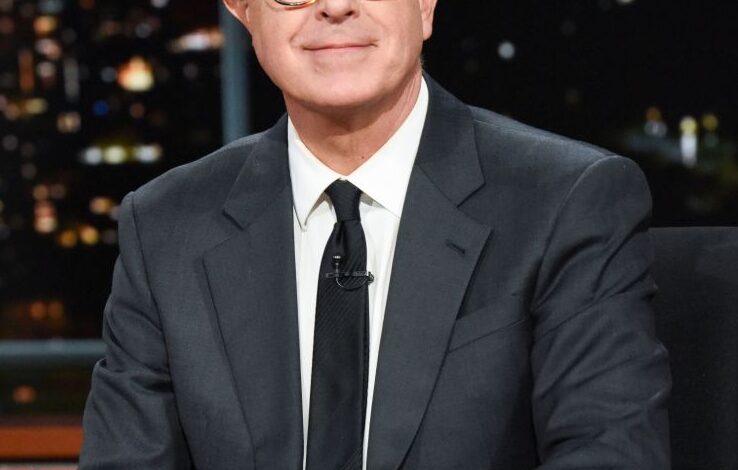
Sunday night television is not typically where political history gets made. But what Stephen Colbert delivered on his late-night broadcast this past weekend was something that nobody who watched it will easily forget. In a segment that has now surpassed 320 million views across platforms, Colbert stood at his desk, dropped his usual comedic tone, and began reading names — 25 of them — in what he called an indictment that the public deserved to hear out loud.
The moment caught the internet completely off guard. Within minutes of the broadcast, clips were being shared at a rate that social media analysts described as extraordinary even by the standards of viral late-night television. By morning, it was the most talked-about moment in entertainment and politics across every major platform. By evening, it had passed 320 million views and was still climbing.
Hollywood reacted. Politicians reacted. The public reacted. And the conversation that Colbert started — about accountability, power, and who has been protected from consequences for too long — is still going.
What Did Stephen Colbert Actually Say During the Viral Segment?
Colbert opened the segment the way he opens many of his monologues — with a joke. But something shifted quickly. Within the first two minutes, the tone changed. The laughter from the studio audience began to quiet. Colbert leaned forward and addressed the camera directly.
He explained that he had spent time compiling what he called a list. Not a list of grievances in the broad political sense. A specific list — of individuals whose names had appeared repeatedly in accounts of abuse, corruption, and the exploitation of power. Individuals who, in his assessment, had spent years shielded by wealth, influence, celebrity, and the particular kind of protection that comes from being too connected to powerful people to face consequences.
Then he began reading the names. All 25 of them. One by one, slowly, without editorial commentary between them. He let the names carry their own weight. There were individuals long embedded in Hollywood’s power structure. There were figures whose names the public would recognize immediately from years of headlines. And there were names that have been more carefully protected by legal agreements, media silence, and the quiet operations of lawyers and publicists whose entire job is to keep certain information away from public view.
320 million views within hours. The names Colbert read aloud on live television were ones that many in entertainment had known for years — but that few had ever dared to say on a broadcast platform.
Nothing was edited out in real time. The segment aired without interruption. No producers cut to commercial early. No network interference occurred — at least none that was visible to the audience at home. Whether that restraint reflected editorial conviction or simply the speed at which the moment unfolded is a question that media industry insiders have been debating ever since.
Who Were the 25 People Named in Colbert’s Segment?
The full list of names has been documented, shared, and discussed extensively across social media and in entertainment journalism. The individuals named span multiple decades and multiple sectors of the entertainment and media industries. Some are known primarily as executives. Others are performers. Some are agents and managers. A few have names that appear in connection with legal cases and investigations that never made it to trial or that resulted in settlements with confidentiality clauses attached.
There were individuals who had accumulated positions of influence behind the camera — the kinds of people whose power flows not from fame but from access. They control opportunities. They manage careers. They decide who gets meetings and who gets passed over. And they have, in many documented cases, used that structural power in ways that harmed people who had no equivalent leverage to push back.
There were also names that belong to the category that the entertainment industry has long referred to as open secrets. These are people whose behavior has been known, discussed, and documented within industry circles for years — sometimes for decades — but who have remained professionally active and socially protected because the machinery of fame and money moves faster and more efficiently than accountability.
Hollywood maintains a specific, unspoken culture around these open secrets. Everyone knows. Nobody says it on the record. Lawyers send letters. Settlements get signed. Careers continue. And the people who were harmed are left to absorb the damage quietly, often bound by legal agreements that prevent them from speaking about what happened even when speaking would bring them some measure of justice.
Colbert did not present himself as a journalist or as a legal authority. He was explicit about that. He framed his list as a statement from someone who has spent decades working within the entertainment industry and who has decided that the silence he has maintained, along with the silence of many others, has served the wrong people for too long.
Why Did the Segment Spread to 320 Million Views So Quickly?
The scale and speed of the response to Colbert’s segment is worth examining carefully — because it tells us something important about where the public is right now when it comes to questions of accountability and power.
Late-night television has always been a platform for political commentary. Colbert, along with peers like John Oliver, Trevor Noah, and others, has built an audience that expects sharp political content delivered through the lens of comedy. His show is not a news program. But it reaches an audience that cares deeply about what is happening in politics and culture, and it reaches them in a format that makes difficult topics feel approachable.
But this segment was different from his typical political content. It was not funny. It was not designed to be. And the absence of humor — from a host whose entire brand is built on wit — sent an immediate signal that something different was happening. When Stephen Colbert stops making jokes, people pay attention. And when he stops making jokes and starts reading names, people share what they are watching.
The second factor driving the spread was the content itself. The names Colbert read were not unknown to people who follow entertainment industry news closely. Many of them had appeared in investigative journalism, in court documents, in survivor testimonies, and in online discussions that the mainstream media had been slow to pick up or amplify. For people who had been following those threads — often for years — watching those names read aloud on a major broadcast platform was a validating and galvanizing experience. They shared the clip because it said something they had been waiting to hear said publicly.
The third factor was the reaction from Hollywood itself, which arrived quickly and cut in multiple directions at once.
How Did Hollywood React to Colbert’s 25-Name List?
Hollywood’s reaction to the segment was, as it almost always is with genuinely disruptive moments, deeply divided.
Some in the entertainment industry praised the segment loudly and publicly. Performers, writers, and crew members who have spent years working below the line — out of the spotlight and without the protection that celebrity provides — were among the most vocal in their support. Many of them said, in posts and interviews, that Colbert had named people whose behavior they had witnessed or heard about personally, and that seeing those names spoken publicly was both overdue and necessary.
Executives and established figures in the industry reacted with considerably more caution. Some offered no public comment at all. The silence from certain corners of Hollywood was, to observers familiar with how the industry operates, itself a form of communication — a signal of discomfort with the disruption that the segment represented and uncertainty about what might follow.
Others criticized the segment directly. Some argued that reading names on a late-night television program without the evidentiary standards of a court or a news organization was irresponsible. They raised questions about due process, about the potential for reputational harm based on unverified allegations, and about whether a comedian’s broadcast was the appropriate venue for what amounted to a public accusation.
Those concerns are not without merit and deserve to be taken seriously. Naming individuals publicly, without the context of a legal proceeding or a fully documented investigation, carries real risks — including the risk of harm to people who may have been named without sufficient justification. Colbert himself acknowledged the gravity of what he was doing and stated that he had spent significant time and consulted multiple sources before making the decision to proceed.
Supporters called it brave and overdue. Critics called it dangerous and reckless. But almost everyone agreed on one thing — it was impossible to ignore.
What is clear is that the segment has already had consequences inside the industry. Conversations that had been happening quietly and privately have moved into the open. Legal teams at major studios and talent agencies are reportedly assessing their exposure. And individuals whose names appeared on the list are, by all accounts, navigating a level of public scrutiny that was not present before Sunday night.
What Is the Long-Term Significance of What Colbert Did?
To understand the significance of Colbert’s segment, it is worth placing it in the context of the larger conversation about accountability in entertainment that has been building for nearly a decade.
The MeToo movement, which erupted in 2017 following the publication of investigative reporting about Harvey Weinstein, created a genuine and lasting shift in how the entertainment industry publicly addresses abuse of power. Figures who had seemed untouchable were brought down. Legal consequences followed. Institutional policies changed. The silence that had protected powerful abusers for decades cracked open in ways that many people believed would be permanent.
But in the years since, there has been a growing sense — particularly among survivors and advocates — that the initial accountability of the MeToo era has stalled. Some of the individuals who faced consequences early in the movement have quietly resumed their careers. New stories have emerged that received less attention than earlier ones. The structural conditions that allowed abuse to flourish — the concentration of power in the hands of a small number of gatekeepers, the use of legal agreements to enforce silence, the career penalties that attach to speaking out — have not been fully dismantled.
Colbert’s segment arrived in that context. It was not a journalistic investigation. It was not a legal proceeding. It was a television host using his platform to say, loudly and publicly, that he believes the accountability conversation is not finished — and that some of the people who should have faced consequences have not yet done so.
Whether what he did on Sunday night turns out to be a genuine catalyst for further accountability, or whether it becomes a moment that generates enormous short-term attention and limited long-term change, remains to be seen. The history of viral moments in the accountability space is mixed. Some of them become turning points. Others fade without producing the consequences that the moment seemed to promise.
What Happens Next After Colbert’s Viral Indictment Segment?
The immediate aftermath of the segment has set several things in motion simultaneously.
Legal teams representing individuals named in the broadcast have reportedly begun reviewing their options. Defamation law in the United States is complex, and the standards for what constitutes actionable defamation — particularly for public figures — are high. Whether any of the named individuals pursue legal action against Colbert or his network remains to be seen, but the possibility has been widely discussed in entertainment law circles.
Investigative journalists who have been working on stories related to some of the individuals named have described the segment as something that has accelerated their ability to reach sources. People who had been reluctant to speak on the record have, according to multiple journalists, reached out in the days following the broadcast. The public naming of names has, in some cases, created an opening for additional reporting that could deepen and document what Colbert raised in his monologue.
Congress has also entered the conversation. Several members of Congress have publicly stated that the issues raised in the segment — about the use of legal agreements to silence survivors, about the protection of powerful figures through institutional relationships, and about accountability for abuse in the entertainment industry — warrant legislative attention. Whether that attention translates into meaningful action is, as always in Washington, an open question.
And Colbert himself has not stepped back from what he said. He has not issued a clarification. He has not walked back any of the names. He has not expressed regret for the decision to air the segment. In a brief statement issued through his production company, he said only that the names he read were names the public had a right to know — and that he stood by every word.
For now, the conversation continues. 320 million views and counting. A list of 25 names that have gone from being open secrets to public record. And an entertainment industry trying to figure out what, if anything, comes next.
Key Takeaways: Colbert’s 25-Name Segment and Its Impact on Hollywood
Stephen Colbert used his Sunday night broadcast to read a list of 25 individuals in what he called a public indictment — naming people he believes have been shielded from accountability for years by wealth, influence, and industry silence.
The segment surpassed 320 million views within hours of airing, making it one of the fastest-spreading moments in late-night television history.
Hollywood’s reaction was sharply divided — with supporters praising Colbert’s courage and critics raising serious concerns about due process and the appropriateness of the broadcast format for this kind of public accusation.
The segment has accelerated conversations inside the entertainment industry about accountability, the limits of legal silence agreements, and whether the gains of the MeToo era have held up in the years since.
Legal, journalistic, and legislative responses are all in motion. The full consequences of what Colbert said on Sunday night — for the individuals named, for the entertainment industry, and for the broader accountability conversation — will unfold over the weeks and months ahead.
© 2026 Matter News. All rights reserved.
Discover more from MatterDigest
Subscribe to get the latest posts sent to your email.