Squirrels Mistake Fruity Vapes for Snacks — What Happens Next Is Wild
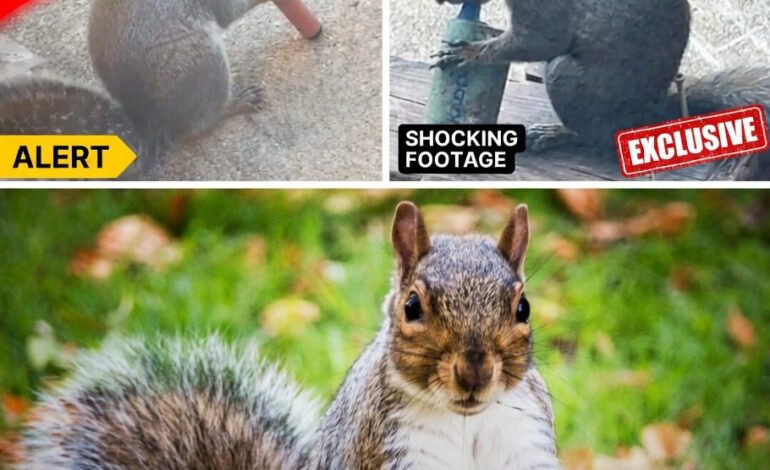

Squirrels Are Picking Up Discarded Vapes — And Experts Say the Fruity Smell Is to Blame
Videos of squirrels gnawing on e-cigarettes have gone viral across two continents. Wildlife experts say the animals are drawn to the sweet, fruity aromas these devices give off — but the consequences could be quietly deadly.
A Scene That Stopped the Internet in Its Tracks
Picture this: a gray squirrel, sitting comfortably on a wooden fence in Brixton, South London, holding a vaping device between its tiny paws and chewing on it like it is the most natural thing in the world.
That was the scene captured in a video that quickly went viral online, racking up thousands of views and sparking a wave of amused disbelief across social media. Commenters could not decide whether to laugh or be alarmed. The answer, it turns out, is both.
The London squirrel was not alone in its unusual habit. Around the same time, a separate TikTok video posted by a user in Philadelphia, Pennsylvania, showed another squirrel gnawing away on what appeared to be a popular brand of disposable vape pen. Two squirrels. Two different countries. Same strange behaviour.
At first glance, these videos might seem like nothing more than funny internet moments — the kind of quirky animal content that gets shared and forgotten within a day or two. But scientists and wildlife experts who have looked at these incidents say they point to a much more serious problem: the growing danger that discarded vaping devices pose to wild animals.
And as the evidence mounts, the message from experts is becoming harder to ignore.
Why Are Squirrels Picking Up Vapes?
The first question most people ask when they see these videos is a simple one: why? Why would a squirrel pick up a vaping device? What is in it for them?
The answer, according to wildlife experts, has everything to do with smell.
Modern e-cigarettes — especially the disposable, single-use kind that have flooded the market in recent years — come in a dizzying array of flavours. Watermelon. Blueberry. Mango. Strawberry ice cream. Grape. These devices are deliberately designed to smell sweet and fruity, because that makes them more appealing to human users. But the same qualities that attract people are also catching the attention of local wildlife.
Craig Shuttleworth, a red squirrel expert at Bangor University in Wales, explained this clearly when he spoke to reporters after the Brixton video went viral. He pointed out that squirrels rely heavily on their sense of smell to find food. Nuts, berries, seeds, fruit — these are the things squirrels look for, and they use their noses to locate them.
When a fruity-smelling vape pen is lying on the ground or tossed onto a fence post, a squirrel passing by has no reason to think it is anything other than something good to eat. The scent says: this is food. The squirrel follows its instincts, picks it up, and starts chewing.
“In the old days, you’d see lots of discarded cigarette butts, but I don’t remember squirrels running around with them,” Shuttleworth noted. “It would be reasonable to assume that a vape would be more attractive than a normal tobacco product that’s not fruity.”
Traditional cigarettes smell strongly of tobacco — a scent that most wild animals would not associate with food and would likely avoid. But a vape pen that smells like ripe mango or sweet berries? That is a completely different story.
What Happens When a Squirrel Chews on a Vape?
Here is where the cute videos take a darker turn. Because while a squirrel picking up a vape pen might look funny on screen, what actually happens when an animal chews on one of these devices is anything but amusing.
Experts have identified at least two major threats that vaping devices pose to animals who gnaw on them: nicotine poisoning and microplastic ingestion.
Starting with nicotine: the liquid inside most vaping devices — commonly called vape juice or e-liquid — contains nicotine. Nicotine is a powerful stimulant chemical. In humans, regular use leads to addiction. In small animals, even a small amount can cause serious harm. Nicotine affects the nervous system and can cause racing heart rate, tremors, vomiting, loss of coordination, and in severe cases, death.
Shuttleworth made this point clearly: “They don’t encounter nicotine in the wild, so like many chemicals, it’s something you don’t want them exposed to.”
A squirrel’s body is small — far smaller than a human’s. It would not take a large dose of nicotine to cause serious harm. If an animal bites through the casing of a disposable vape and the liquid inside reaches its mouth, it could absorb a dangerous amount of nicotine very quickly.
The second danger is microplastics. Disposable vaping devices are made largely of plastic — hard, colourful casings designed to be thrown away after a single use. When a squirrel gnaws on the outside of one of these devices, it breaks the plastic into tiny fragments. Those fragments, if swallowed, become microplastics inside the animal’s body.
Microplastics have been found in the bodies of fish, birds, mammals, and even insects around the world. Scientists are still working to understand the full impact they have on animal health, but early research suggests they can cause inflammation, disrupt hormones, and interfere with normal biological processes. For a small animal like a squirrel, the risks could be significant.
It Is Not Just Squirrels — The Problem Spans Species and Continents
The squirrel videos from London and Philadelphia grabbed attention because they were funny and easy to share. But they are far from the only examples of wildlife encountering discarded vaping devices — and other incidents have had far more tragic outcomes.
In 2023, the RSPCA — the Royal Society for the Prevention of Cruelty to Animals — published a blog post written by Scientific Officer Evie Button, which documented a range of wildlife incidents involving vaping devices. Among the cases she described was a bird in New Zealand that died after swallowing a vaping device whole. She also referenced photographs taken in Wales showing a squirrel attempting to bury a vape pen in the ground — a behaviour that makes complete sense when you understand that squirrels bury food to store it for later.
Button warned that these reported cases are almost certainly just a fraction of what is actually happening. “We know that this will only be the tip of the iceberg as so many litter casualties go unseen and unreported, particularly with wildlife,” she wrote.
This is an important point. When a pet dog or cat gets sick after chewing on a vape pen, there is usually a vet involved — and a record is kept. But when a wild bird, squirrel, fox, or hedgehog gets sick or dies from the same cause, nobody may ever know. The animal simply disappears. There is no record, no report, no statistic.
In a separate but related incident that caused outrage online, a video emerged of a woman at a zoo giving a vape pen to an orangutan — an act that was widely condemned as both cruel and reckless. The incident highlighted the fact that the risk is not limited to wild animals in urban areas. Any animal that encounters a vaping device — whether it is a city squirrel or an intelligent primate — is potentially at risk.
Pets Are at Risk Too — and the Numbers Are Alarming
Wild animals are not the only ones in danger. According to data from the Veterinary Poisons Information Service — a UK organisation that advises vets on cases of animal poisoning — there have been 680 reported calls about vape-related incidents involving pets since 2017. That averages out to roughly 75 calls per year, and the number has been climbing as vaping has become more common.
An overwhelming 96 percent of those calls involved dogs. This is not surprising. Dogs are curious animals that explore the world largely through their mouths. A dropped vape pen, a forgotten device left on a low table, or a discarded cartridge found on the pavement during a walk — all of these represent potential hazards for a dog that wants to investigate by chewing.
The RSPCA’s Evie Button confirmed in her report that there have been cases of pets dying after consuming liquid from vaping devices. The nicotine in e-liquid can be lethal in sufficient quantities, and for a small or medium-sized dog that chews through a full vape pen, a lethal dose may not be far away.
Symptoms of nicotine poisoning in animals typically include drooling, vomiting, diarrhoea, agitation, rapid breathing, tremors, and in severe cases, seizures and heart failure. If a pet owner notices any of these symptoms after their animal has been near a vaping device, veterinary attention should be sought immediately.
The Litter Problem: Five Million Vapes Thrown Away Every Week
To understand why wildlife and pets are encountering so many discarded vaping devices, you need to understand just how many of these devices are being thrown away.
According to RSPCA data, before the UK government moved to ban single-use e-cigarettes, approximately five million disposable vapes were being thrown away every week in Britain alone. That is five million brightly coloured, fruity-smelling, plastic-and-liquid-filled devices being discarded into bins — or, far too often, dropped on pavements, tossed into parks, left on walls, or thrown into gutters.
Disposable vapes were never designed to be recycled easily. They contain a mix of plastic, metal, electronics, and chemical liquids — a combination that makes them difficult and expensive to process. Most waste management systems are not equipped to handle them properly. As a result, a huge number end up as litter.
A spokesperson for the RSPCA described the situation as a “stark reminder of the danger discarded litter poses to our wildlife.” They urged the public to hold onto their rubbish until they can dispose of it safely and responsibly rather than leaving it on the ground.
But while individual responsibility matters, experts say the scale of the problem means that personal choices alone are not enough. Millions of devices being produced, sold, and discarded every week is a systemic issue that requires systemic solutions — better regulation, better recycling infrastructure, and better enforcement of littering laws.
The Ban on Disposable Vapes: A Step in the Right Direction?
In response to growing public concern about both litter and youth vaping, the UK government has moved to ban the sale of single-use disposable e-cigarettes. It is a significant step — one that campaigners had been pushing for over several years.
The ban targets the cheapest and most widely littered type of vaping device: the disposable, single-use pen that can be bought for just a few pounds and thrown away when empty. These are the devices that have been appearing in gutters, parks, school playgrounds, and yes, in the paws of squirrels across Britain.
Supporters of the ban argue that removing these products from sale will significantly reduce the amount of vape litter in public spaces, protecting both wildlife and the environment. It will also remove one of the most common entry points through which young people start vaping — cheap, colourful, easy-to-use devices that are sold in corner shops and petrol stations.
Critics of the ban, however, point out that it does not address the broader vaping industry. Rechargeable devices, refillable pods, and nicotine pouches remain on the market. And if people simply switch to these alternatives, the litter problem — while perhaps reduced — may not disappear entirely.
There is also the question of enforcement. Banning a product does not automatically make it disappear. Disposable vapes are small, cheap, and relatively easy to smuggle. Experts in trading standards and public health have warned that a black market in banned disposable vapes could quickly fill the gap left by legal sales.
Vaping and Human Health: The Picture Is Not Pretty Either
While this story started with squirrels, it would be wrong to end it without talking about what vaping is doing to the humans who use these devices every day.
E-cigarettes were introduced to the market roughly two decades ago and were widely marketed as a safer alternative to traditional tobacco cigarettes. For people trying to quit smoking, they were presented as a helpful tool — a way to manage nicotine cravings without the thousands of harmful chemicals produced when tobacco is burned.
But as vaping has grown into a massive global industry, and as millions of young people who never smoked traditional cigarettes have taken it up, the health picture has become much more complicated.
Research has linked regular vaping to a range of serious health problems. Studies have found associations between e-cigarette use and increased risk of heart disease, with some research suggesting that vaping can damage blood vessels and raise blood pressure. Other studies have raised concerns about links to early-onset dementia and cognitive decline.
The effects on the lungs are perhaps the most well-documented. A condition known as EVALI — e-cigarette or vaping product use-associated lung injury — has been identified in thousands of people, mostly young adults, in the United States. Some of these cases have been severe, requiring hospitalisation. A small number have been fatal. Several teenagers who became heavily dependent on e-cigarettes have experienced spontaneous lung collapses — a condition known as pneumothorax — linked directly to their vaping habits.
The American Heart Association has been particularly vocal about the growing problem of youth vaping. The organisation has described the sharp rise in e-cigarette use among teenagers and young adults as a “serious public health threat” — one that risks creating a new generation of nicotine-dependent people who may face serious health consequences down the line.
What makes this especially troubling is that many young vapers do not think of themselves as smokers. They see vaping as something different — something modern and relatively harmless. The fruity flavours, the colourful packaging, and the absence of smoke all contribute to an image that feels very far removed from the cigarettes their parents or grandparents smoked. But the nicotine inside these devices is the same addictive chemical, and the health risks — while different in some ways — are very real.
The Bigger Picture: What This Tells Us About Urban Litter and Wildlife
The image of a squirrel chewing on a vape pen is funny. It is also a symptom of a much broader problem.
Urban wildlife and human litter have always been intertwined. Birds choke on plastic bags. Foxes get their heads stuck in food containers. Hedgehogs are injured by broken glass. The arrival of vaping devices as a major source of urban litter simply adds one more hazard to an already dangerous landscape for animals living alongside people in cities and towns.
Squirrels, in particular, are highly intelligent and adaptable animals. They have learned to live in human environments, scavenging food from parks, gardens, and streets. This adaptability is part of what makes them so successful in urban areas — but it also makes them more likely to interact with human litter. A squirrel that picks up a vape pen is not doing anything wrong. It is simply doing what squirrels do: investigating a strange-smelling object that might be food.
The responsibility, experts are clear, lies with people — both as individuals who drop litter and as a society that has allowed a product to be sold in enormous quantities without adequate systems for dealing with its disposal.
What Can Be Done — and What You Can Do Right Now
Environmentalists and wildlife groups are calling for action on several fronts to address the threat that vaping litter poses to animals.
At the policy level, campaigners want governments to go further than simply banning disposable devices. They are pushing for stronger requirements on manufacturers to fund proper recycling and collection schemes for all vaping products. They want clearer labelling about the risks of improper disposal. And they want tougher enforcement against littering — including specific rules targeting the growing problem of discarded vaping devices.
At the individual level, the message from the RSPCA and other organisations is straightforward: do not drop vaping devices on the ground. If you use a vaping device, dispose of it responsibly — which means finding a proper waste bin, or better yet, using one of the specialist vape recycling collection points that are beginning to appear in some shops and public spaces.
If you have pets, be aware that vaping devices — and the liquid inside them — are potentially dangerous. Keep devices out of reach, and if you suspect your pet has chewed on one, seek veterinary advice immediately.
And the next time you see a video of a squirrel doing something with a vape pen and feel the urge to laugh — go ahead, because it is kind of funny. But also take a moment to think about what that image is really telling us about the world we are building for the animals we share it with.