Something Quiet Is Changing the World And Pope Leo XIV Might Be the Reason Why
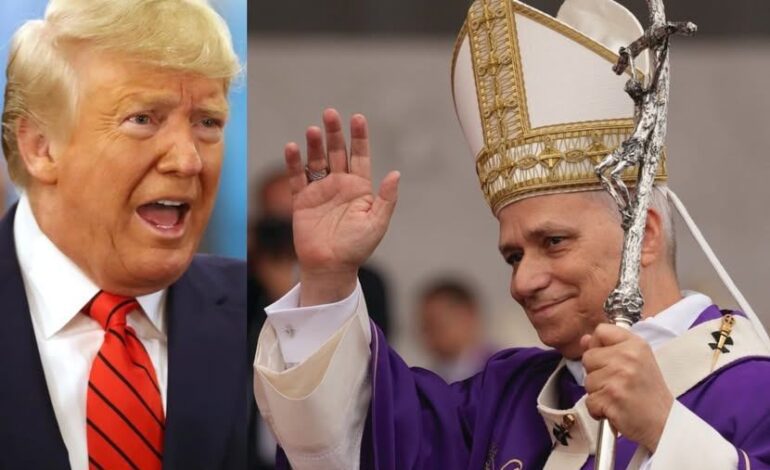

A Quiet Religious Shift Gains Momentum as Pope Leo XIV’s Message Resonates in a Divided and Uncertain World
Introduction: A New Voice in an Old World
Something unusual is happening in global religion. Quietly, steadily, a new kind of papal voice is finding its audience — not just among Catholics, but among anyone watching a fractured world search for direction.
Pope Leo XIV has been pope for less than a year. Yet already his words are landing in some of the most contested conversations of our time: immigration, artificial intelligence, nationalism, war, and the role of faith in public life.
This article unpacks who Pope Leo XIV is, what his core messages are, and why observers of religion, politics, and culture are paying close attention. Whether you are Catholic, spiritual but unaffiliated, or simply curious about how religion moves world events — this is a story worth understanding.
Quick Answer: Pope Leo XIV (born Robert Francis Prevost) was elected on May 8, 2025 — becoming the first American-born pope in Catholic history. His message centers on peace, unity, care for the poor, and a theological response to the challenges of artificial intelligence.
2. Who Is Pope Leo XIV? Quick Facts
Before diving into his message, here is what you need to know about the man himself.
| Born Name | Robert Francis Prevost |
| Nationality | American (Chicago, Illinois) |
| Elected | May 8, 2025 (fourth ballot of conclave) |
| Papal Name Inspiration | Pope Leo XIII and his 1891 encyclical Rerum Novarum |
| Previous Role | Cardinal, Prefect of the Dicastery for Bishops |
| Religious Order | Order of St. Augustine (OSA) |
| First International Trip | Turkey & Lebanon, November 2025 |
| First Major Document | Dilexi Te — on love for the poor |
| Conclave Attendance | 133 cardinals; elected on Day 2 |
His election surprised many Vatican insiders. A U.S. cardinal becoming pope was considered unlikely — historically, America’s superpower status made it politically sensitive. Yet the conclave chose him swiftly, on only the fourth ballot.
3. The Quiet Religious Shift: What It Means
The phrase ‘quiet religious shift’ is not about revolution. It is something subtler — and perhaps more lasting.
In a world drowning in loud, partisan noise, Pope Leo XIV has chosen a different frequency. He speaks about peace not as a political position, but as a spiritual imperative. He talks about migrants not as a policy debate, but as a Gospel obligation. He addresses artificial intelligence not as a tech issue, but as a moral one.
That reframing — bringing ancient religious wisdom to bear on cutting-edge modern problems — is exactly what makes his message stand out.
The Name That Signals Everything
Choosing a papal name is one of the first acts of a new pope. It is rarely accidental.
Leo XIV took his name in honor of Pope Leo XIII, whose 1891 encyclical Rerum Novarum (“On New Things”) was a landmark document on workers’ rights amid the Industrial Revolution. That choice sent a clear signal: this pope intends to do for the AI age what Leo XIII did for the age of steam engines.
“This choice is clearly a reference to the lives of men and women, to their work — even in an age marked by artificial intelligence. — Vatican Press Office Director Matteo Bruni”
According to Cardinal Fernando Chomalí of Chile, Leo XIV told him the name was chosen because of concern about the world’s cultural shifts — what the Pope described as a type of Copernican Revolution driven by artificial intelligence and robotics.
First American Pope, Global Vision
Being American did not make Leo XIV an American pope in a nationalist sense. Quite the opposite.
His Pentecost Sunday sermon — just weeks into his papacy — made headlines for its direct challenge to political nationalism. He said the Holy Spirit ‘opens borders, first of all, in our hearts’ and warned against ‘the exclusionary mindset that, tragically, we now see emerging also in political nationalisms.’
For a pope from the world’s most powerful nation, this was a striking stance. It told the world he was not going to be co-opted by any flag.
4. Key Messages Resonating Worldwide
Peace in a World at War
Few topics occupy more of Leo XIV’s public speech than peace. And not a vague, feel-good peace — a specific, urgent, theologically grounded peace.
In his message for World Peace Day 2026, he warned that the ‘confrontational’ tone dominating global and national politics is ‘deepening instability and unpredictability day by day.’ He pointed specifically to the growing push for military spending, the development of AI-controlled weapons systems, and what he called the ‘delegation’ of life-and-death decisions to machines.
“There is even a growing tendency among political and military leaders to shirk responsibility, as decisions about life and death are increasingly delegated to machines. — Pope Leo XIV, World Peace Day Message 2026”
He has repeatedly condemned Russia’s attacks on Ukraine’s energy infrastructure. He called for prayer and dialogue over Greenland tensions. He addressed Venezuela after the U.S. capture of President Nicolás Maduro. The pattern is consistent: Leo speaks when peace is threatened.
Religion as Healing, Not Division
One of his most distinctive contributions is the insistence that religion itself must be reclaimed from those who weaponize it.
In a message to the 8th Congress of Leaders of World and Traditional Religions held in Astana, Kazakhstan in September 2025, he wrote that religion ‘at its core, is not a source of conflict but a wellspring of healing and reconciliation.’
He went further in his World Peace Day message, condemning what he called the growing temptation to drag ‘the language of faith into political battles, to bless nationalism, and to justify violence and armed struggle in the name of religion.’
“Believers must actively refute, above all by the witness of their lives, these forms of blasphemy that profane the holy name of God. — Pope Leo XIV”
This is a bold claim. It positions authentic faith as the antidote to religious extremism — not just other extremism’s enemy, but its opposite in kind.
AI, Workers, and a New Industrial Revolution
Perhaps the most forward-looking aspect of Leo XIV’s papacy is his direct engagement with artificial intelligence.
He warned against ‘fundamentalist readings of scripture’ in one address and in the same period linked his papal name explicitly to the challenge AI poses to human labor and dignity. His first major apostolic exhortation — Dilexi Te (I Have Loved You) — focused on love for the poor. But embedded in that concern is a worry about economic systems that automate away human worth.
- He views AI as analogous to the Industrial Revolution — requiring a Rerum Novarum for the digital age
- He has warned that automated weapons systems raise urgent moral questions
- He connects economic inequality, migration, and technological displacement as intertwined crises
- He calls on the Church to be a moral voice in technological governance
5. Pope Leo XIV vs. Pope Francis: A Comparison
It is natural to compare Leo XIV to his predecessor. Francis was beloved for his accessibility and spontaneous gestures. Leo is more measured — but no less committed to the same core values. Here is a side-by-side look:
| Theme | Pope Francis | Pope Leo XIV |
| Style | Spontaneous, press-friendly | Disciplined, structured messaging |
| Key Focus | Mercy & peripheries | Peace, AI, labor rights |
| Ecumenism | Strong | Very strong (Nicaea trip) |
| Migrants | Outspoken defender | Equally strong defender |
| AI / Tech | Growing concern | Central theological concern |
| Name Inspiration | St. Francis of Assisi | Pope Leo XIII & Rerum Novarum |
The comparison is not a competition. Both men share a commitment to the Gospel, the poor, and peace. Leo’s approach is simply different — and in some ways, it may prove more sustainable long-term. Francis wore himself out being his own press secretary. Leo has pulled back from regular press encounters, letting his formal addresses and documents carry the weight.
6. The Holy Year 2025: A Bridge Between Eras
One of the most remarkable facts of the 2025 Jubilee is how unusual it was. Pope Francis opened the Holy Year in December 2024. He died on April 21, 2025 — and Leo XIV, elected just weeks later, inherited the task of closing it.
Only once before in history — in 1700 — had a Holy Year been opened by one pope and closed by another. The 2025 Jubilee saw approximately 33 million pilgrims travel to Rome, making it one of the largest religious gatherings in modern history.
When Leo closed the Holy Year on January 6, 2026 (the Feast of Epiphany), he used the moment to denounce consumerism and xenophobia — twin forces he sees as obstacles to authentic human community. Standing at the Holy Door of St. Peter’s Basilica with cardinals and diplomats watching, he called for fairness over inequality and for the ‘industry of war’ to be replaced by ‘the craft of peace.’
The symbolism was powerful. A Jubilee year — about reconciliation and renewal — became, under Leo XIV, a platform for some of the most direct political and spiritual commentary of his young papacy.
7. People Also Ask: Frequently Asked Questions
The following questions are among the most commonly searched about Pope Leo XIV. Each answer below is designed for clarity and accuracy.
| Question | Answer |
| Who is Pope Leo XIV? | Pope Leo XIV is Robert Francis Prevost, elected on May 8, 2025 — the first American-born pope in Catholic Church history. |
| Why did he choose the name Leo XIV? | In honor of Pope Leo XIII, whose 1891 encyclical Rerum Novarum established modern Catholic social teaching on labor rights — echoing today’s AI revolution. |
| What is Pope Leo XIV’s main message? | Peace, unity, care for the poor and migrants, religious freedom, and ethical responses to artificial intelligence. |
| How many Catholics are there worldwide? | Approximately 1.4 billion Catholics globally, making the Catholic Church the world’s largest Christian denomination. |
| Did Pope Leo XIV condemn nationalism? | Yes. He warned against religion being used to “bless nationalism” and called exclusionary nationalism a spiritual danger. |
8. Why His Message Matters Right Now
We are living through a peculiar moment. Global institutions are under stress. Democratic norms are being tested. Populist nationalism is on the rise. And two major wars — in Ukraine and the Middle East — have shown no sign of ending.
Into this environment, Leo XIV brings something rare: a consistent moral framework that does not belong to any political party or nation-state. He speaks for 1.4 billion Catholics, but his themes resonate far beyond that number.
The Ecumenical Dimension
Leo XIV’s first international trip — to Turkey and Lebanon in November 2025 — was deliberately ecumenical. He went to celebrate the 1,700th anniversary of the First Council of Nicaea alongside Christians of other traditions. He spent hours with Muslim communities in both countries.
He told reporters on the return flight: ‘The more we can promote authentic unity and understanding, respect and human relationships of friendship and dialogue in the world, the greater possibility there is that we will put aside the arms of war.’
That is a straightforward claim. And coming from a pope willing to travel to demonstrate it, rather than just preach it, it carries weight.
The Resonance in a Divided America
As an American-born pope, Leo XIV occupies an unusual position relative to U.S. politics. He has not endorsed any party. But his positions — on migrants, nationalism, economic inequality, and AI — put him at odds with some of the dominant political currents in his home country.
The U.S. Conference of Catholic Bishops, following his lead, approved a statement in November 2025 that rejected a ‘climate of fear and anxiety around questions of profiling and immigration enforcement’ and condemned ‘indiscriminate mass deportation.’ This alignment between the pope and the bishops signals that Leo’s influence on American Catholic life is already significant.
Religious Freedom as a Cornerstone
In October 2025, speaking at the launch of a Religious Freedom in the World Report, Leo stated that religious freedom is ‘a cornerstone of any just society.’ Critically, he added that it is ‘not merely a legal right or a privilege granted to us by governments’ but ‘a foundational condition that makes authentic reconciliation possible.’
That framing elevates religious freedom from a narrow civil liberties concern into a universal human rights principle — and calls governments to account for it in a theological, not just legal, register.
Discover more from MatterDigest
Subscribe to get the latest posts sent to your email.