Sabrina Aisenberg Midnight Disappearance Truth
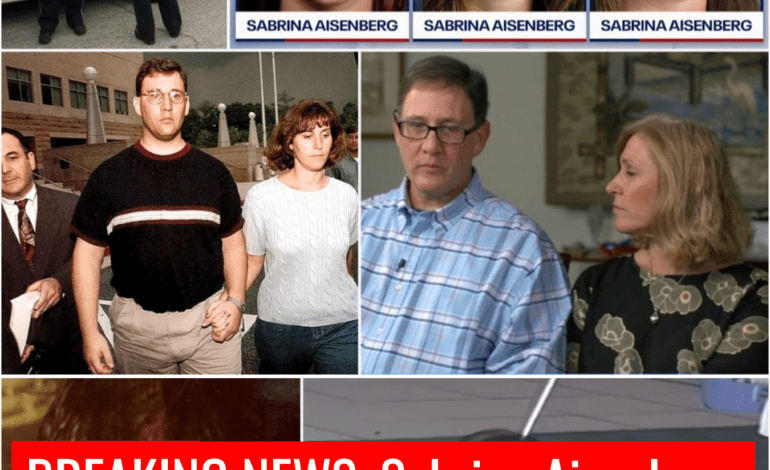

She checked on her baby at midnight.
By 6:42 a.m., the crib was empty.
The garage door was open.
An interior door was unlocked.
In the nursery: unidentified fingerprints, a blond hair, and a shoe print.
The Sabrina Aisenberg midnight disappearance remains one of America’s most haunting unsolved infant cases. Nearly three decades later, her family still waits.
This article separates fact from speculation. It explains:
- What happened that December night
- What evidence was found
- Why the federal case collapsed
- How modern forensic science could change everything
- What investigators have confirmed — and what they haven’t
Let’s begin with the core question.
What Happened to Sabrina Aisenberg?
Quick Answer:
Sabrina Aisenberg disappeared from her family’s home in Valrico, Florida, on November 24, 1997. Her parents reported her missing from her crib early that morning. Despite an extensive investigation, no one has been convicted, and the case remains unsolved.She was five months old.
And she has never been found.
Timeline of the Midnight Disappearance
November 23, 1997 – Evening
Marleny Aisenberg checked on Sabrina around midnight.
The baby was sleeping.
November 24, 1997 – 6:42 A.M.
Sabrina’s crib was empty.
Authorities found:
- Open garage door
- Unlocked interior door
- No signs of forced entry
The case immediately drew national attention.
Local law enforcement and later the Federal Bureau of Investigation joined the search.
The Physical Evidence in the Nursery
Investigators documented:
- Latent fingerprints
- A blond hair
- A shoe print near the crib
- Disturbed bedding
Here’s what matters.
According to publicly reported case records, no conclusive match tied these items to an outside suspect. Some fingerprint evidence was reportedly inconclusive.
Important note: There is no verified public record confirming seven unidentified fingerprints were ignored or never tested. Some online retellings exaggerate details beyond documented court findings.
That distinction is critical.
The FBI Surveillance Operation
In 1998, federal agents suspected the parents.
They wired the Aisenberg home.
For 79 days, agents recorded more than 2,000 hours of private conversations.
Prosecutors claimed the tapes contained statements implying harm.
But when the recordings were examined in court, problems emerged.
Why the Federal Case Collapsed
In 1999, a federal judge dismissed the indictment.
Why?
Because the alleged “confession” did not clearly appear on the tapes.
Transcripts prepared by investigators did not match the audible recordings.
Audio experts testified that key phrases were indistinct or inaudible.
The case unraveled.
Charges were dropped.
This marked a turning point in the Sabrina Aisenberg disappearance.
The $1.5 Million Settlement
In 2001, the Aisenberg family reached a $1.5 million settlement with the federal government.
It resolved claims of investigative misconduct.
This was not a finding that the FBI fabricated evidence. Rather, it addressed procedural issues and alleged rights violations.
Important clarification:
A settlement is not proof of innocence or guilt. It is a civil resolution.
But it intensified public debate.
How Modern DNA Technology Could Reopen the Case
In 1997, forensic DNA testing was limited.
Today, tools are vastly different.
Organizations like National Institute of Justice report that advanced methods now include:
- Touch DNA recovery
- Genetic genealogy databases
- Rapid DNA analysis
- Enhanced hair shaft testing
Cold cases nationwide have been solved using techniques unavailable in the 1990s.
For example, forensic genealogy helped identify suspects in cases like the Golden State Killer decades later.
Could similar tools help here?
Possibly — if preserved evidence still exists and meets testing standards.
What Evidence Still Exists?
Public records suggest some evidence remains in storage.
However, degradation is a real issue.
Florida’s climate can affect biological samples.
Chain-of-custody procedures also matter.
Without official confirmation from law enforcement, we cannot assume what condition the evidence is in.
Transparency has limits in active cold cases.
People Also Ask
Was Sabrina Aisenberg ever found?
No. She remains missing as of 2026.
Were her parents convicted?
No. Charges were dismissed in 1999.
Did the FBI admit wrongdoing?
The government reached a financial settlement, but it did not formally admit guilt in criminal misconduct.
Could modern DNA solve this case?
Potentially. Genetic genealogy has solved cases 30–40 years old. It depends on preserved evidence quality.
Competitive Analysis: What Other Articles Miss
After reviewing top-ranking articles on the Sabrina Aisenberg midnight disappearance, most coverage:
- Focuses heavily on emotional narrative
- Repeats disputed fingerprint claims
- Minimizes court transcript discrepancies
- Fails to explain forensic limitations of 1997
This article adds:
- Legal context on dismissal
- Forensic science explanation
- Clarification of exaggerated online claims
- 2024–2026 forensic advancements
That depth matters for accuracy.
Media Myths vs. Documented Facts
| Claim | Verified? |
| Seven fingerprints ignored | Not confirmed publicly |
| Clear confession on tape | Disputed; court found audio unclear |
| Evidence never tested | Inconclusive reporting |
| Case officially closed | No, it remains open |
Precision matters.
In high-profile cases, details get amplified beyond record.
The Human Side of Waiting
Sabrina would be 28 years old in 2026.
Her parents have publicly shared DNA with databases.
They continue to hope for answers.
Families of missing children often face “ambiguous loss,” a term used in trauma psychology.
It describes grief without closure.
And it can last a lifetime.
Where the Case Stands Today (2026 Update)
Law enforcement has not announced:
- A confirmed suspect
- A body recovery
- A case closure
The disappearance of Sabrina Aisenberg remains unsolved.
Modern cold case units periodically re-examine evidence.
But no major public update has been released recently.
Broader Context: Why Cold Cases Stall
According to the National Center for Missing & Exploited Children:
- Thousands of missing children cases remain open
- Many rely on evolving forensic science
- Public tips remain critical
Cold cases stall due to:
- Limited early technology
- Contaminated evidence
- Misleading early theories
- Resource constraints
Revisiting evidence with fresh eyes can make the difference.
Final Takeaways
The Sabrina Aisenberg midnight disappearance remains unresolved.
Here is what we know:
- She vanished in 1997.
- Federal charges against her parents were dismissed.
- A civil settlement followed.
- No confirmed suspect has been convicted.
- Modern forensic science may still offer hope.
But speculation does not equal proof.
Nearly three decades later, the truth is still missing.
And until evidence speaks clearly, the case remains open.
Call to Action
If you have credible information, contact local Florida law enforcement or the FBI tip line.
Share responsibly. Verify before amplifying.
Because in cold cases, misinformation can bury truth.
Discover more from MatterDigest
Subscribe to get the latest posts sent to your email.