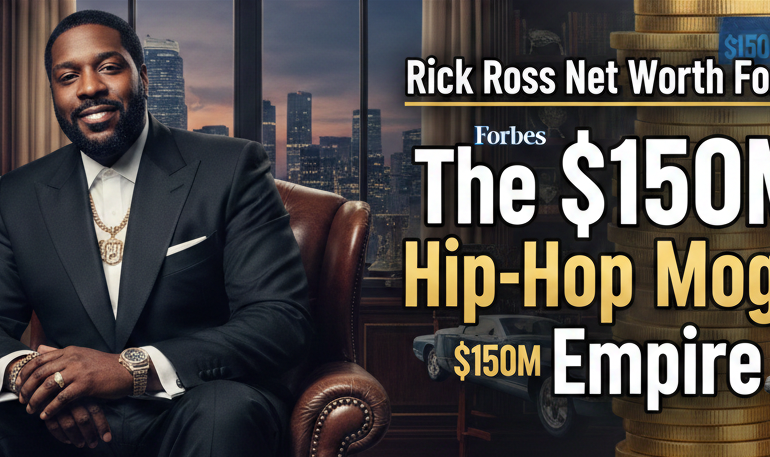

Rick Ross Net Worth Forbes: The $150M Hip-Hop Mogul Empire
Meta Description: Rick Ross net worth stands at $150M according to Forbes estimates. Discover how the rapper built his fortune through music, Wingstop franchises, and business deals.
From Corrections Officer to $150 Million Mogul
What does it take to transform from a Miami corrections officer making $30,000 yearly into a hip-hop mogul worth $150 million? Ask William Leonard Roberts II—better known as Rick Ross.
Rick Ross’s net worth is estimated at $150 million as of 2026, according to Forbes and Celebrity Net Worth analyses. But here’s what makes his story fascinating: music accounts for less than half his wealth. The real money? Wingstop franchises, real estate, and savvy business investments.
While most rappers chase record deals and streaming numbers, Ross quietly built an empire that generates income whether he drops an album or not. He owns over 25 Wingstop locations, a massive Georgia estate nicknamed “The Promise Land,” and a business portfolio that would make MBA graduates jealous.
In this deep dive, you’ll discover exactly how Rick Ross built his $150 million fortune, what he earns from music versus business, why Forbes tracks his wealth, and whether the “Biggest Boss” can reach billionaire status like Jay-Z and Diddy.
Let’s break down the money behind the Maybach Music.
Rick Ross Net Worth: Quick Answer
Estimated net worth (2026): $150 million
Primary wealth sources:
-
Wingstop franchises: $40-50M
-
Music catalog and royalties: $30-40M
-
Real estate holdings: $25-35M
-
Endorsements and partnerships: $15-20M
-
Other businesses: $10-15M
Annual income: $10-15 million (recent years)
Forbes ranking: Not on billionaires list, but tracked among wealthy hip-hop artists
How Rick Ross Built His $150 Million Fortune
The Music Foundation: $30-40M
Rick Ross burst onto the scene in 2006 with “Hustlin'”—a song that became his financial launching pad.
Album sales and streaming:
-
10 studio albums (all charted in Top 5)
-
4+ million albums sold in U.S.
-
Billions of streams across platforms
-
Estimated music earnings: $30-40M total
Key releases:
-
Port of Miami (2006): Debut #1 album
-
Teflon Don (2010): Commercial peak
-
God Forgives, I Don’t (2012): Critical acclaim
-
Rather You Than Me (2017): #3 Billboard
Record label: Maybach Music Group (founded 2009)
-
Signed Meek Mill, Wale, French Montana
-
Generated millions through artist development
-
Sold to Epic Records partnership
Touring income: $200K-500K per show (peak years)
The reality: Music built his brand but represents only 20-25% of total net worth.
Wingstop Empire: The $40-50M Game Changer
Here’s where Ross separated himself from typical rappers.
The numbers:
-
25+ Wingstop franchise locations (primarily in South)
-
Average franchise revenue: $1.2-1.5M annually
-
Owner profit margin: 15-20%
-
Annual income from Wingstop alone: $4-6 million
Timeline:
-
2011: First Wingstop franchise purchased
-
2014: Expanded to 10+ locations
-
2019: Owned 25+ restaurants
-
2026: Continues expanding
Why Wingstop worked:
-
Fast-casual dining boom (2010s trend)
-
Delivery-friendly model (pandemic advantage)
-
Low overhead vs. full-service restaurants
-
Recession-resistant comfort food
Ross’s strategy: “I wanted something that would pay me while I slept.”
Total Wingstop portfolio value: $40-50 million
This single business move generated more wealth than most of his music catalog.
Real Estate: The $25-35M Portfolio
Primary residence: “The Promise Land”
-
235-acre Georgia estate (former Evander Holyfield mansion)
-
Purchased: 2014 for $5.8 million (foreclosure deal)
-
Current value: $15-20 million
-
Features: 109 rooms, bowling alley, movie theater, pool
-
Monthly costs: $17,000+ (utilities, maintenance)
Additional properties:
-
Miami mansion: $5-7M
-
Fort Lauderdale home: $3-5M
-
Investment properties: $5-10M
Real estate strategy:
-
Buy undervalued properties
-
Renovate and increase value
-
Generate rental income
-
Long-term appreciation
Total real estate holdings: $25-35 million
Business Ventures: $10-15M
Checkers/Rally’s franchises:
-
Multiple locations owned
-
Similar model to Wingstop
-
Estimated value: $3-5M
Belaire Rosé partnership:
-
Co-owner/ambassador
-
Featured in countless videos and posts
-
Annual income: $1-2M
Luc Belaire champagne:
-
Ownership stake
-
Premium spirits market
-
Estimated value: $2-3M
Rap Snacks partnership:
-
“Rich By Heart” branded chips
-
Distribution deal
-
Income: $500K-1M annually
Cannabis ventures:
-
Exploring legal cannabis market
-
Potential future revenue stream
Other endorsements:
-
Reebok (past partnership)
-
Various brand deals: $1-2M yearly
Forbes and Rick Ross: Why He’s Tracked
Forbes Hip-Hop Wealth Coverage
Forbes doesn’t publish an official annual Rick Ross net worth report, but includes him in:
Hip-Hop’s Wealthiest Artists (periodic features) America’s Richest Entrepreneurs (business coverage) Celebrity Net Worth Tracking (when major deals occur)
Why Forbes tracks Ross:
-
Substantial business portfolio beyond music
-
Franchise ownership (measurable assets)
-
Real estate investments (public records)
-
Represents successful artist-to-entrepreneur transition
Forbes Methodology
When Forbes estimates net worth, they analyze:
-
Liquid assets: Cash, stocks, bonds
-
Real estate: Property values (public records)
-
Business valuations: Franchise values, ownership stakes
-
Future earnings: Contracts, royalties
-
Debt subtraction: Mortgages, loans
For Rick Ross specifically:
-
Wingstop franchise values (verifiable through corporate data)
-
Real estate public records
-
Music streaming data (publicly tracked)
-
Brand partnership disclosures
Estimate range: $140-160M (slight variations by source)
Rick Ross Annual Income Breakdown
Current Yearly Earnings: $10-15M
Wingstop franchises: $4-6M
-
25+ locations generating profit
-
Passive income requiring minimal involvement
Music royalties: $2-3M
-
Streaming royalties (catalog plays)
-
Performance royalties (radio, samples)
-
Publishing income
Touring/performances: $1-2M
-
Reduced touring schedule (age/health)
-
Select festival appearances
-
Private events and shows
Endorsements/partnerships: $1-2M
-
Belaire, Luc Belaire
-
Rap Snacks
-
Various brand deals
Other businesses: $1-2M
-
Checkers franchises
-
Real estate rental income
-
Misc. ventures
Peak earning years (2012-2016): $20-30M annually
Current status: Semi-retired from heavy touring, focusing on business expansion
Rick Ross vs. Other Rap Moguls
Hip-Hop Wealth Rankings (2026)
Artist Net Worth Primary Wealth Source Jay-Z $2.5B Businesses (Roc Nation, investments) Diddy $1B Cîroc, media, fashion Dr. Dre $500M Beats by Dre sale Kanye West $400M Yeezy (fluctuates) Rick Ross $150M Wingstop, music, real estate Eminem $250M Music catalog, touring Pharrell $250M Music, fashion, production
Ross’s position: Top 10 wealthiest rappers, behind mega-moguls but ahead of pure music artists.
What Separates the Billionaires
Jay-Z and Diddy reached billions through:
-
Early equity stakes in major companies
-
Building brands worth hundreds of millions
-
Strategic exits at peak valuations
-
Diversification across multiple industries
Ross’s approach:
-
Franchise model (stable but not explosive growth)
-
Real estate (slow appreciation)
-
Traditional business ventures
Could Ross reach $1B? Unlikely without major liquor brand sale or tech investment windfall.
The Promise Land Estate: Rick Ross’s Crown Jewel
Property Details
Size: 235 acres (one of Georgia’s largest private estates)
Rooms: 109 total
-
12 bedrooms
-
21 bathrooms
-
Indoor pool
-
Bowling alley
-
Movie theater
-
Recording studio
Purchase: $5.8M (2014) – originally listed at $52M
Previous owner: Evander Holyfield (boxing legend)
Why the deal: Bank foreclosure after Holyfield’s financial troubles
Current value: $15-20M (conservative estimate)
Monthly Costs
Utilities: $5,000+ Lawn maintenance: $3,000+ Pool/facility upkeep: $2,000+ Staff: $5,000+ Insurance/taxes: $2,000+
Total monthly: $17,000-20,000
Annual property costs: $200,000+
Ross’s perspective: “It’s not about affording to buy it—it’s affording to keep it.”
Cultural Significance
The Promise Land represents:
-
Black wealth building
-
Reclaiming foreclosed properties
-
Creating generational assets
-
Community events and giving back
Ross hosts:
-
Annual car shows (4,000+ attendees)
-
Community festivals
-
Music video shoots (rents to other artists)
How Rick Ross Spends His Money
Luxury Lifestyle
Cars (estimated collection value: $5M+):
-
Multiple Maybachs ($200K+ each)
-
Rolls-Royce fleet
-
Classic cars
-
Motorcycles (100+ collection)
Jewelry: $2-3M in chains, watches, rings
Fashion: Custom suits, designer wardrobes
Travel: Private jets for business/tours
Smart Spending vs. Flexing
Ross’s philosophy shift:
-
Early career: Excessive jewelry, cars (image building)
-
Current: Focus on assets that appreciate
-
Quote: “I had to learn assets from liabilities”
Investment priorities now:
-
Properties that generate income
-
Businesses with profit margins
-
Long-term wealth over short-term flex
Health investments:
-
Lost 100+ pounds (2014-2015)
-
Personal chefs and trainers
-
Better quality of life
Rick Ross Business Philosophy
Key Principles
1. Ownership over endorsements “Don’t just be in the commercial—own the commercial.”
2. Multiple income streams “I want money coming in when I’m sleeping, eating, or making music.”
3. Learn from mistakes Studied other rappers who went broke, avoided their pitfalls.
4. Think long-term Franchise businesses provide 20-30 year income, not quick cash.
5. Stay humble in business “Music is art. Business is math. Keep them separate.”
Lessons from His Success
For aspiring entrepreneurs:
-
Start with what you know (he loved Wingstop before buying)
-
Reinvest profits into new ventures
-
Don’t let ego dictate business decisions
-
Build teams of experts (lawyers, accountants, advisors)
For artists:
-
Brand yourself beyond your art
-
Plan for when touring stops
-
Invest early in career, don’t wait
-
Business acumen matters as much as talent
Controversies and Financial Setbacks
Past Legal Issues
2015: Kidnapping and assault charges
-
Settled out of court
-
Legal fees: $1-2M estimated
Various lawsuits:
-
Copyright disputes
-
Contract disagreements
-
Settled without major financial impact
Health Scares
2011 and 2018: Seizures
-
Medical costs covered
-
Forced lifestyle changes
-
Led to weight loss and health focus
Financial impact: Minimal, but changed priorities
IRS and Tax Issues
2016: Federal tax lien
-
$5.7M owed
-
Later settled
-
Reminder that even wealthy artists face tax troubles
Lesson learned: Hired better financial advisors
Future Wealth Projections
Conservative Scenario: $175-200M by 2030
Growth drivers:
-
Wingstop expansion (5-10 more locations)
-
Real estate appreciation
-
Continued music royalties
-
Existing business stability
Annual growth: 5-7% (matching investments)
Optimistic Scenario: $250-300M by 2030
If Ross successfully:
-
Expands franchises to 50+ locations
-
Launches successful new product line
-
Sells stake in liquor brand
-
Makes smart tech/startup investments
Annual growth: 12-15%
Billionaire Status?
Unlikely unless:
-
Major liquor brand reaches $500M+ valuation and he sells
-
Creates next billion-dollar brand (Diddy/Cîroc model)
-
Gets equity in unicorn tech startup
More realistic: Solidify as $200-300M mogul with diverse holdings
Rick Ross Net Worth: Key Takeaways
Current net worth: $150M (2026 estimate)
Wealth breakdown:
-
Wingstop franchises: $40-50M (largest asset)
-
Music catalog: $30-40M
-
Real estate: $25-35M
-
Other businesses: $25-30M
Annual income: $10-15M (current), peaked at $20-30M
Forbes status: Tracked among wealthy hip-hop artists, not billionaire list
Success factors:
-
Diversified beyond music early
-
Franchise model provided stable income
-
Smart real estate investments
-
Brand partnerships (Belaire)
Unique position: One of few rappers whose business income exceeds music income
Future outlook: Steady growth to $200M+ by 2030, billionaire status unlikely
Conclusion: The Boss Built Different
Rick Ross’s $150 million net worth proves something powerful: you don’t need a billion-dollar exit to win in business.
While Jay-Z and Diddy chased unicorns, Ross built a chicken wing empire. While others invested in tech, he bought proven franchises. While competitors flexed cars and jewelry, he accumulated income-generating assets.
The result? A rapper who makes millions annually whether he drops an album or not.
The Rick Ross formula:
-
Build brand through music
-
Reinvest in proven businesses
-
Focus on ownership, not endorsements
-
Create multiple income streams
-
Think decades, not quarters
He’s not the richest rapper. But he might be one of the smartest.
Your take: Is Rick Ross underrated as a business mogul? Could his franchise model work for other artists? Share your thoughts below.
FAQs About Rick Ross Net Worth
What is Rick Ross’s net worth according to Forbes? Rick Ross’s net worth is estimated at $150 million as of 2026. While Forbes doesn’t publish annual reports specifically on Ross, various financial analyses place his wealth in the $140-160M range.
How many Wingstop locations does Rick Ross own? Rick Ross owns 25+ Wingstop franchise locations, primarily in the Southern United States. These franchises generate an estimated $4-6 million in annual profit and represent his largest business asset.
How much does Rick Ross make per year? Rick Ross earns approximately $10-15 million annually from Wingstop franchises ($4-6M), music royalties ($2-3M), touring ($1-2M), endorsements ($1-2M), and other businesses ($1-2M).
What is Rick Ross’s biggest source of income? Wingstop franchises are Rick Ross’s largest income source, generating $4-6 million yearly—more than his music royalties, touring, and endorsements combined.
How did Rick Ross get rich? Rick Ross built wealth through music success (10 albums), smart business investments (25+ Wingstop franchises), real estate (including the 235-acre Promise Land estate), and brand partnerships (Belaire, Luc Belaire).
Is Rick Ross a billionaire? No, Rick Ross is not a billionaire. His estimated net worth of $150 million places him among wealthy rappers but far below hip-hop billionaires Jay-Z ($2.5B) and Diddy ($1B).
Discover more from MatterDigest
Subscribe to get the latest posts sent to your email.