REPRESENTATIVE TED LIEU SAYS EPSTEIN FINANCED PAM BONDI’S EDUCATION — Scrutiny Intensifies Over Legal Decisions in Florida
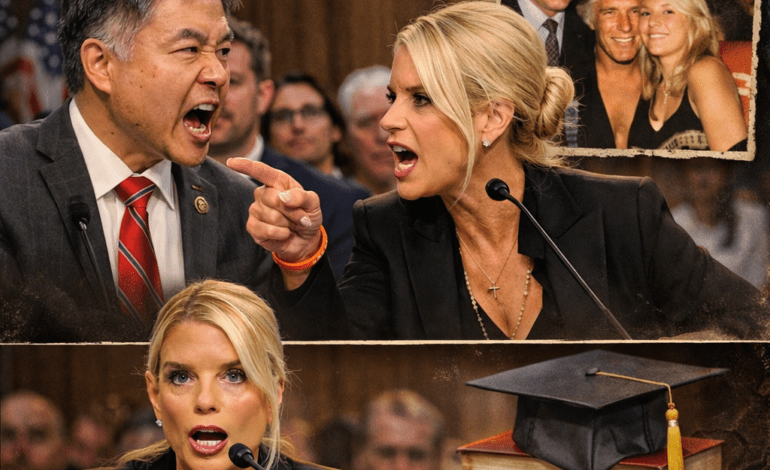

A wave of renewed attention has engulfed Washington and Florida politics as Representative Ted Lieu publicly raised serious questions regarding the financial and legal ties between Pam Bondi and the late convicted sex offender Jeffrey Epstein. According to Lieu, Epstein may have paid for Bondi’s college and law school tuition, a revelation that has fueled public debate about ethics, accountability, and the influence of powerful individuals over legal proceedings.
The discussion is particularly sensitive due to Bondi’s role as Florida Attorney General at the time when Epstein faced charges related to sexual misconduct with minors. Although legally Bondi’s actions in the Epstein case may have adhered to procedural standards, critics argue that her personal financial ties to Epstein raise questions of ethical responsibility and moral judgment.
This article explores the emerging claims, historical context, congressional scrutiny, and the broader implications of Bondi’s alleged connections to Epstein.
Ted Lieu’s Statement: Alleged Tuition Payments
Representative Lieu, known for his vocal stance on accountability and oversight, stated publicly that “It appears Epstein paid for Pam Bondi’s college and law school tuition so she could work for them.” While Lieu stopped short of asserting criminal wrongdoing, his remarks have reignited debate over the ethical and political ramifications of financial support from a known criminal.
The implication is clear: if Epstein financed Bondi’s education with the expectation of favorable legal treatment, the situation raises serious questions about conflicts of interest, public trust, and the broader integrity of the legal system.
Pam Bondi and the Epstein Case
Pam Bondi served as Florida Attorney General from 2011 to 2019, a period that overlapped with significant developments in the Epstein investigation. Epstein had been accused of multiple sex crimes involving minors, and the Palm Beach Police Department had gathered substantial evidence implicating him in unlawful activity.
Bondi’s office ultimately agreed to a controversial plea deal that allowed Epstein to avoid federal prosecution on several charges. Legally, this plea deal has been defended by some attorneys as within the bounds of prosecutorial discretion. However, critics—including Lieu—point out that the overwhelming evidence collected by law enforcement suggested a pattern of predatory behavior, which some argue should have warranted a more aggressive legal approach.
Bondi’s involvement has been the subject of scrutiny because, while prosecutors have significant discretion, public officials are expected to maintain not only legality but also ethical clarity. Allegations that her education may have been financially supported by Epstein—if true—could imply a conflict of interest that undermines public confidence.
The Palm Beach Police Department Evidence
When examining the controversy, the role of the Palm Beach Police Department is critical. Their investigation produced an extensive array of evidence, including:
- Victim statements documenting repeated abuse
- Financial records linking Epstein to his alleged victims
- Witness accounts corroborating patterns of exploitation
This body of evidence suggested systemic misconduct and exploitation, leading many critics to question how such strong documentation could result in a plea deal widely regarded as lenient.
Congressional observers argue that while Bondi may not have technically broken the law, her ethical obligations as Attorney General included consideration of the overwhelming evidence presented by law enforcement agencies.
Legal vs. Ethical Responsibility
One of the central debates surrounding Bondi’s actions is the distinction between legal compliance and ethical responsibility. Prosecutors have broad discretion in determining whether to pursue charges, negotiate plea deals, or defer cases to other jurisdictions. Legally, Bondi’s actions could be argued as within the bounds of prosecutorial authority.
Yet ethical considerations remain:
- Conflict of Interest – Receiving financial support from the individual under investigation, even indirectly, raises questions about impartiality.
- Public Trust – Legal decisions carry weight not only in courts but also in public perception. Citizens expect prosecutors to act in the public interest.
- Moral Responsibility – The extensive evidence collected suggested a pattern of abuse. Critics argue that ethical responsibility might have demanded more assertive action to protect vulnerable victims.
Representative Lieu’s remarks highlight this tension, emphasizing that legality alone does not fully address the moral dimension of Bondi’s decisions.
Congressional Scrutiny and Oversight
The issue has not remained purely in the realm of commentary. Members of Congress, particularly those focused on oversight and ethics, have signaled renewed interest in investigating connections between Epstein and public officials.
Key points of congressional focus include:
- Financial Relationships – Investigating any payments, gifts, or support provided to Bondi during her education or early career.
- Plea Deal Circumstances – Examining the decision-making process and communications surrounding the plea deal Epstein received in Florida.
- Institutional Responsibility – Considering whether structural oversight failures contributed to lenient legal outcomes.
While official hearings have not yet disclosed new evidence confirming the tuition payments alleged by Lieu, the public discussion has generated pressure for greater transparency and accountability in high-profile legal cases.
The Broader Epstein Network
Pam Bondi is only one figure in a larger web of powerful individuals associated with Epstein. Investigators and journalists have documented Epstein’s connections across finance, politics, and entertainment. These connections include high-profile figures, socialites, and corporate executives.
The allegation that Epstein may have funded Bondi’s education—intended to influence her career trajectory—fits a broader pattern in which Epstein allegedly cultivated influence over individuals positioned to affect legal or social outcomes.
Observers note that the potential for influence extends beyond criminal cases: strategic financial support, mentoring, and networking can create long-term leverage over those in positions of authority.
Public Reaction
News of Representative Lieu’s statement and the potential financial ties has provoked strong reactions across media and social platforms. Public sentiment appears divided:
- Critics of Bondi emphasize the ethical breach implied by receiving support from a convicted sex offender.
- Defenders of Bondi highlight that legal discretion allows prosecutors to make difficult choices and that no formal criminal wrongdoing has been proven.
- Observers focused on systemic issues argue that the case illustrates broader structural weaknesses in oversight and accountability for public officials.
Social media commentary has amplified the discussion, with hashtags referencing Epstein, Bondi, and public accountability trending intermittently.
Implications for Prosecutorial Ethics
The Bondi-Epstein controversy has renewed debate about prosecutorial ethics nationwide. Key considerations include:
- Disclosure Requirements – Should prosecutors be required to disclose financial relationships with individuals or entities connected to cases they handle?
- Conflict of Interest Policies – How can legal institutions ensure that personal or financial ties do not influence prosecutorial discretion?
- Public Oversight – What role should congressional or independent oversight play in reviewing past decisions that have broad public consequences?
Ethics experts suggest that even absent a legal violation, perceived conflicts of interest can erode trust in institutions. They argue that transparency and proactive safeguards are essential to maintaining the integrity of the legal system.
Historical Context
Pam Bondi’s tenure as Florida Attorney General coincided with high-profile investigations and politically sensitive cases. The Epstein plea deal is widely regarded as a turning point in public awareness of systemic failures in prosecuting wealthy and connected offenders.
Historical analysis indicates:
- The Epstein case highlighted vulnerabilities in how prosecutors balance discretion, evidence, and public perception.
- Media coverage of Bondi’s role intensified scrutiny of political and legal decision-making in Florida.
- Congressional oversight initiatives in subsequent years have focused on ensuring transparency and preventing undue influence in high-stakes legal matters.
Next Steps in Oversight and Investigation
Although Representative Lieu’s statements have brought renewed attention, several steps remain for further clarification:
- Verification of Financial Support – Investigators and journalists will seek documentation confirming or refuting claims that Epstein funded Bondi’s education.
- Congressional Hearings – Oversight committees may summon testimony to examine the circumstances surrounding the plea deal and Bondi’s career trajectory.
- Ethics Reviews – Independent ethics boards or legal associations may weigh in on potential conflicts of interest and prosecutorial conduct.
Public expectation is high, and the outcome of these inquiries could have lasting implications for both Bondi’s legacy and broader discussions about accountability in public office.
Conclusion
Representative Ted Lieu’s remarks regarding alleged financial support from Jeffrey Epstein to Pam Bondi have reignited scrutiny of one of the most controversial plea deals in recent legal history. While no formal legal wrongdoing has been confirmed, the ethical questions raised are significant, touching on conflicts of interest, institutional accountability, and public trust.
The controversy underscores a broader lesson: legality does not always equate to ethical responsibility. Even in cases where actions are technically permissible under the law, the perception of impropriety can undermine confidence in institutions and highlight the need for transparency and ethical safeguards.
As public and congressional attention continues, the scrutiny of Bondi’s decisions, the possible role of Epstein’s financial influence, and the lessons for prosecutorial ethics will remain a topic of national debate. The Epstein case, and its intersection with powerful figures like Bondi, serves as a stark reminder of the challenges inherent in balancing discretion, justice, and public trust.
Whether new evidence emerges confirming financial ties or clarifying the scope of Bondi’s involvement, the questions raised by Lieu’s statements will likely influence legal and ethical discussions for years to come.
Discover more from MatterDigest
Subscribe to get the latest posts sent to your email.