Prosecutors Had 60 Charges Ready. A Secret Deal Made Them Disappear.
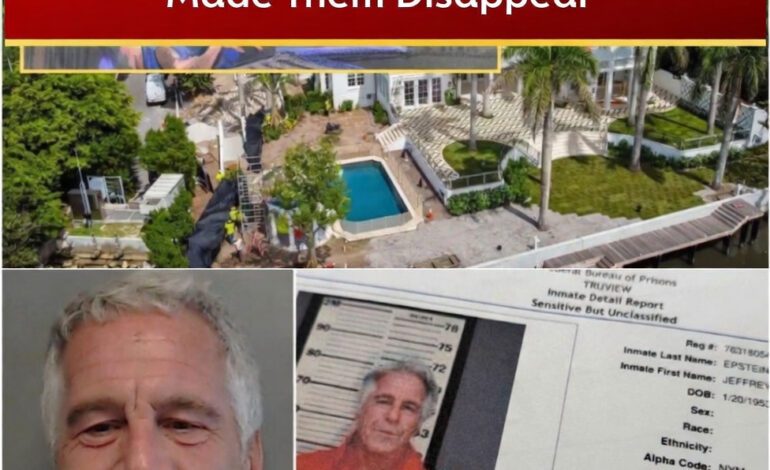

| VERDICT: SUBSTANTIALLY TRUE — WITH KEY NUANCES
The essential claims in this story are grounded in verified public records, official DOJ documents, and Congressional findings. However, several viral embellishments — including claims about an unnamed DOJ official’s specific quote, specific claims about a congressman “reading names aloud,” and assertions that the three unnamed co-defendants’ identities are completely unknown — require important corrections and context. This article separates fact from sensationalism. |
The Deal That Stunned Federal Prosecutors
In May 2007, federal investigators had everything they needed. An 82-page prosecution memo. A 53-page draft indictment. Sixty separate criminal counts. A grand jury date of May 15 on the calendar. Four targets — Jeffrey Epstein and three unnamed co-defendants — facing charges for conspiring to procure underage girls for sexual abuse spanning 2001 to 2005.
Then the signature line stayed blank.
No grand jury. No indictment. No federal trial. Instead, behind closed doors, US Attorney Alexander Acosta and Epstein’s legal team reached what critics would later call “the deal of a lifetime” — a Non-Prosecution Agreement (NPA) signed on September 24, 2007, that shielded Epstein from federal prosecution and, crucially, also extended that protection to his unnamed potential co-conspirators.
The girls who had come forward — some as young as 14 — were never told the federal case was dead. A court later confirmed this violated their legal rights under the Crime Victims’ Rights Act.
When the Justice Department released 3.5 million pages of Epstein investigation files on January 30, 2026, that buried draft indictment finally became public knowledge. And the questions it raised — about who those three unnamed co-defendants were, and why they were protected — have not gone away.
Fact-Check: What Is True, What Is Embellished
Before diving into the full story, it is essential to separate verified facts from viral claims circulating online and in some media reports. Here is a clear breakdown:
| VERIFIED FACT: The 60-Count Draft Indictment Is Real The DOJ’s January 2026 release confirmed a draft 60-count indictment submitted by an Assistant US Attorney in May 2007. It named Epstein and three unnamed co-defendants. The indictment alleged a conspiracy to procure females under 18 for sexual conduct between 2001 and 2005. This is not disputed — it is in the official record. |
| VERIFIED FACT: The NPA Protected Co-Conspirators
The 2007 Non-Prosecution Agreement explicitly extended immunity to Epstein’s “potential co-conspirators.” This was confirmed by the DOJ’s own Office of Professional Responsibility report in 2020, which found Alex Acosta used “poor judgement” — though it did not find formal professional misconduct. |
| VERIFIED FACT: Victims Were Not Notified
A federal court confirmed that the government’s failure to notify victims about the NPA violated the Crime Victims’ Rights Act (CVRA). This was established in the 2019 ruling in Doe v. United States in the Southern District of Florida. |
| NEEDS CONTEXT: The Three Unnamed Co-Defendants
It is true that the three co-defendants in the 2007 draft indictment remain unnamed in public records. However, one assistant — Lesley Groff — has been publicly identified through other released documents as someone prosecutors considered. Groff’s attorney says she cooperated fully and was told she was not being prosecuted. The identities of all three draft co-defendants have not been officially confirmed, but the claim that “no one knows” is an overstatement. |
| UNVERIFIED: The “Former DOJ Official” Quote
The dramatic quote attributed to a “former DOJ official” — stating the indictment “described exactly who ran the operation” — does not appear in any verifiable public record, court filing, or identified source as of this article’s publication. Treat this claim with caution until attributed to a named individual or official document. |
| PARTIALLY MISLEADING: “A Congressman Read Names Aloud”
On February 10, 2026, Congressman Ro Khanna did publicly name individuals whose names had been redacted in the DOJ files, after spending two hours viewing unredacted files. However, the specific framing that these were “names the DOJ tried to keep hidden” is an oversimplification — the DOJ maintained that many redactions were to protect privacy, and some were acknowledged errors. The names Khanna cited included Emirati businessman Sultan Ahmed bin Sulayem and others. |
The Real Story: How the Epstein NPA Actually Unfolded
Understanding this case requires going back to the facts — not the most dramatic telling, but the accurate one. Because the accurate story is, in many ways, more troubling than the embellished version.
The Investigation That Built 60 Counts
Palm Beach police first opened an investigation into Jeffrey Epstein in March 2005, after the family of a 14-year-old girl reported she had been molested at his mansion. Over the following year, police built a case — but the county’s top state prosecutor sent the case to a grand jury instead of filing charges directly. The result was a single count of solicitation of prostitution.
The Palm Beach Police Department was furious. They publicly accused the state attorney of giving Epstein special treatment. The FBI stepped in and launched a federal investigation.
That federal probe uncovered far more. By May 2007, an Assistant US Attorney had assembled evidence against at least 19 victims — all identified with pseudonyms, ranging in age from 14 upward. She submitted an 82-page prosecution memo and a 53-page, 60-count draft indictment. The charges alleged that Epstein and three unnamed co-defendants conspired to procure underage girls for his sexual gratification, with some co-defendants allegedly playing direct operational roles — including leading victims from Epstein’s kitchen to his bedroom.
The Secret Negotiation
For weeks, Epstein’s high-powered legal team — which included future Trump White House counsel Ken Starr and prominent defense attorneys — engaged in talks with Acosta’s office. Epstein’s lawyers argued his accusers were unreliable.
On July 31, 2007, Acosta’s office offered to drop the federal case if Epstein pleaded guilty to state charges, served at least two years, registered as a sex offender, and made victims eligible for monetary damages. Negotiations continued. On September 24, 2007, the NPA was signed.
The agreement allowed Epstein to avoid federal prosecution entirely. He pleaded guilty in state court to felony solicitation of prostitution and procurement of minors. He served 13 months in a county facility — not a federal prison — with liberal work-release privileges allowing him to leave six days a week.
His victims were not told the federal case was being dropped. Some believed it was still moving forward.
What the NPA Said About Co-Conspirators
One of the most significant — and legitimate — controversies surrounding the NPA is its scope. The agreement did not just protect Epstein. It explicitly provided that the government would not prosecute Epstein’s “potential co-conspirators.” Several individuals were named in the agreement itself.
The DOJ’s Office of Professional Responsibility report, completed in 2020, found this provision “unusual” and noted that Acosta had used “poor judgement” in several aspects of the deal. However, it stopped short of finding formal professional misconduct.
The Victims’ Rights Violation
The Crime Victims’ Rights Act requires that victims be notified of critical developments in federal cases. Epstein’s victims were not. They did not know the NPA was being negotiated. They did not know it had been signed. Some continued to believe a federal case was coming.
In 2019, US District Judge Kenneth Marra ruled that the government had violated the CVRA by failing to notify victims and confer with them before finalizing the NPA. This ruling validated what advocates had argued for over a decade: the deal was done in secret, at the victims’ expense.
Complete Timeline: From First Complaint to the 2026 Files Release
| Year / Date | Event |
| March 2005 | Palm Beach police open investigation after a 14-year-old’s family reports abuse at Epstein’s mansion. |
| July 2006 | Epstein arrested on minor state prostitution charge. FBI begins parallel federal investigation. |
| May 2007 | Federal AUSA submits a 60-count draft indictment with supporting 82-page memo against Epstein and three unnamed co-defendants. |
| September 24, 2007 | Non-Prosecution Agreement (NPA) signed by US Attorney Alex Acosta. Victims not notified. |
| June 30, 2008 | Epstein pleads guilty to state charges — solicitation of prostitution and procurement of minors. Sentenced to 18 months; serves 13 months. |
| July 6, 2019 | SDNY arrests Epstein on new federal sex-trafficking charges. Acosta resigns as Labor Secretary. |
| August 10, 2019 | Epstein found dead in federal custody. Medical examiner rules death a suicide by hanging. |
| December 30, 2021 | Ghislaine Maxwell convicted of sex trafficking and other crimes; sentenced to 20 years in 2022. |
| November 2025 | US Congress passes and Trump signs the Epstein Files Transparency Act. |
| January 30, 2026 | DOJ releases 3.5 million pages of Epstein investigation files. Draft 60-count indictment made public. |
| February 10, 2026 | Congressman Ro Khanna names six redacted individuals on the House floor after reviewing unredacted files. |
The January 2026 Files Release: What It Revealed
On January 30, 2026, the DOJ released more than 3.5 million pages of Epstein investigation records, fulfilling obligations under the Epstein Files Transparency Act signed into law in November 2025. The release was the most comprehensive public disclosure of the Epstein investigation to date.
What the Files Contained
The release was organized into multiple datasets. Key contents included:
- Email correspondence between Epstein and high-profile associates
- Victim interview statements and FBI records
- The previously unpublicized 60-count draft indictment from May 2007
- Internal DOJ correspondence about the 2007 NPA and subsequent decisions
- 180,000 images and 2,000 videos seized from Epstein’s properties (heavily redacted)
- Flight manifests to Epstein’s island in the US Virgin Islands
- Financial ledgers and property records
- FBI tip logs, including unverified third-party allegations
The Redaction Controversy
Almost immediately, the release drew criticism from two directions at once. Victims’ advocates pointed out that some victims’ names appeared unredacted — a serious privacy violation. On February 1, 2026, attorneys representing more than 200 alleged victims called the release “the single most egregious violation of victim privacy in one day in United States history.”
At the same time, lawmakers and public interest groups criticized the DOJ for redacting names that arguably should have been public — including the names of potential perpetrators and associates. Deputy Attorney General Todd Blanche acknowledged redaction errors but said they affected approximately 0.001% of materials.
Under pressure from Congress, the DOJ allowed individual members to review unredacted versions of key documents. Congressman Thomas Massie’s pressure led to the unredaction of businessman Leslie Wexner’s name in certain documents. On February 10, 2026, Congressman Ro Khanna publicly named six individuals he had identified after two hours reviewing unredacted files, including Emirati businessman Sultan Ahmed bin Sulayem.
High-Profile Names in the Files
The files documented Epstein’s extensive social network. It is critical to note that appearing in Epstein’s files does not automatically indicate wrongdoing — many names appear as associates, witnesses, or people who had limited contact with Epstein.
Notable names and their context from the files include:
- Ghislaine Maxwell — Epstein’s longtime associate, convicted in 2021 of sex trafficking and other crimes, sentenced to 20 years in prison.
- Leslie Wexner — Billionaire businessman and former Victoria’s Secret CEO who employed Epstein as a money manager. Wexner has stated he severed ties with Epstein in 2007, and his legal representative emphasized he was not a co-conspirator.
- Lesley Groff — Epstein’s personal assistant, identified in some documents as someone prosecutors considered indicting in 2007. Her attorney states she was told she would not be prosecuted after cooperating.
- Kathryn Ruemmler — Former White House Counsel who Epstein referred to as “my great defender.” She has stated she regrets knowing Epstein and denied formally representing him.
- Prince Andrew (Andrew Mountbatten-Windsor) — Stripped of his royal military titles in 2022. Victim Virginia Giuffre has alleged sexual encounters with him; Andrew has denied all allegations.
The Three Unnamed Co-Defendants: What We Actually Know
Perhaps no aspect of the 2007 NPA generates more public interest — or more speculation — than the identities of the three unnamed co-defendants listed in the draft indictment. Here is what can be verified:
What the Indictment Said
According to documents released in January 2026, the 60-count draft indictment alleged that Epstein and three unnamed individuals conspired together. At least one co-defendant was described as regularly leading victims from Epstein’s kitchen to his bedroom. At least one was alleged to have engaged in “lewd conduct” with victims. Co-defendants were alleged to have contacted girls to travel to Palm Beach and to solicit additional victims.
Why They Remain Unnamed Publicly
The co-defendants were never charged. The NPA explicitly immunized “potential co-conspirators” from federal prosecution. Because no charges were filed, no public charging document — which would normally name defendants — was ever created.
Congressional lawmakers have pressed the DOJ on whether the NPA prevented identification of these individuals. The DOJ has maintained that some redactions exist to protect people who were never charged and therefore retain certain privacy interests under federal law.
What Is Known About Possible Identities
Through the combined release of various documents, Lesley Groff has been publicly identified as someone prosecutors considered in 2007. She was one of three personal assistants who victims alleged helped coordinate logistics for Epstein’s operation. Groff’s attorney has stated she was never informed she was considered a co-conspirator and was told after cooperating that she would not be prosecuted.
The identities of the other potential co-defendants have not been officially confirmed in any public document as of this article’s publication date.
Alex Acosta and the NPA: A Decision That Defined His Career
Alexander Acosta served as US Attorney for the Southern District of Florida when the NPA was signed. He went on to serve as Secretary of Labor in the first Trump administration before resigning in July 2019, days after Epstein’s arrest on new federal charges.
In defending the deal at the time of his resignation, Acosta argued that state prosecutors had offered Epstein an even more lenient arrangement, and that the NPA secured at least some accountability — including sex offender registration and a mechanism for victims to seek monetary damages.
The DOJ’s 2020 Office of Professional Responsibility review found that Acosta had used “poor judgement” in how the NPA was negotiated and executed — particularly in failing to notify victims. However, the OPR report did not find that Acosta had committed professional misconduct severe enough to warrant disciplinary action. Critics argue this finding was itself too lenient.
What Ultimately Happened: Epstein’s 2019 Arrest and Death
The 2007 NPA was explicitly limited to the Southern District of Florida. In July 2019, federal prosecutors in the Southern District of New York — concluding they were not bound by the Florida agreement — arrested Epstein on new sex trafficking charges.
Days later, Acosta resigned as Labor Secretary amid renewed scrutiny of the deal he had made twelve years earlier.
On August 10, 2019, Epstein was found dead in his federal detention cell at the Metropolitan Correctional Center in New York. The medical examiner ruled his death a suicide by hanging. Two jail guards responsible for monitoring him were later charged with falsifying records. The DOJ Inspector General found that misconduct by jail staff contributed to the circumstances of his death.
Epstein’s death without trial has fueled extensive public speculation. Conspiracy theories about his death proliferated. While questions about jail failures are legitimate, no credible evidence of a coordinated killing has emerged in any official investigation.
Ghislaine Maxwell: The Only Person Convicted
Ghislaine Maxwell, Epstein’s longtime associate and girlfriend, was charged by federal prosecutors in New York in July 2020. After a monthlong trial, a jury convicted her on December 30, 2021, of sex trafficking of a minor and four other charges.
On June 28, 2022, Maxwell was sentenced to 20 years in federal prison. She is currently incarcerated and has continued to pursue appeals.
Maxwell’s prosecution represented the only criminal conviction of an Epstein associate for conduct directly related to the trafficking operation. Many victims and advocates have argued that others who facilitated or participated in Epstein’s crimes remain unaccountable.
The Victims: A Decade of Fighting for Accountability
The women who came forward in 2005 and 2006 to report Epstein’s abuse spent years fighting a legal system that, in their view, failed them at every turn.
Virginia Giuffre (formerly Roberts) became one of the most prominent voices. She alleged she was trafficked by Epstein beginning at age 17 and that she was directed to have sexual encounters with multiple high-profile men. She sued Prince Andrew in a US civil case, which was settled in 2022.
Multiple victims reached financial settlements with Epstein’s estate after his death. By 2026, Epstein’s estate has paid hundreds of millions of dollars to settling victims through a compensation program.
Many victims have been sharply critical of the DOJ’s handling of the 2026 files release, with some pointing out that their own identities appeared unredacted while alleged perpetrators’ names were blacked out.
Common Questions About the Epstein NPA and 2026 Files
Did the NPA Actually Prevent Prosecution of Other People?
Yes. The NPA explicitly shielded Epstein’s “potential co-conspirators” from federal prosecution in the Southern District of Florida. However, as the SDNY demonstrated in 2019, other federal districts were not necessarily bound by the agreement. The NPA also did not prevent state prosecutions.
Why Was the Deal Not Thrown Out After the CVRA Ruling?
Judge Marra’s 2019 ruling found the government violated the Crime Victims’ Rights Act but stopped short of voiding the agreement entirely. Legal scholars have debated this outcome. By the time the ruling came, Epstein was already facing new federal charges in New York, which made the practical impact of voiding the Florida NPA less urgent.
Were the 3.5 Million Pages All New Information?
Not entirely. Much of the material comprised FBI case files, investigative records, and communications that were already part of the case internally but had never been made public. The draft 60-count indictment was genuinely new public knowledge. Some material — such as unverified FBI tip logs — had never been reviewed publicly before but contained significant caveats about reliability.
Is There Really a Secret Client List?
No verified “client list” has been released or confirmed. The concept of a blackmail list circulates widely in public discourse. What do exist are flight manifests, contact books, and communications showing Epstein’s extensive social network. These documents show who associated with Epstein — which is not the same as a confirmed list of individuals who committed crimes. As of this article’s publication, no such list has been authenticated.
Why Are Some Names Still Redacted?
The DOJ has stated that some redactions protect national security, active investigations, victim privacy, or the privacy rights of individuals who have not been charged. Critics — including some members of Congress — argue the redactions are inconsistent and, in some cases, protect individuals who should be subject to public scrutiny.
Broader Context: What the Epstein Case Reveals About the Justice System
The Epstein case is not an isolated story about one man’s crimes. It is a case study in how wealth, political connections, and legal maneuvering can shape outcomes in the American criminal justice system.
Several systemic issues emerge clearly from the record:
Prosecutorial Discretion and Accountability
Federal prosecutors have enormous discretion about whom to charge and on what terms. The Epstein NPA illustrates how that discretion can be exercised in ways that, while not necessarily illegal, profoundly shape justice outcomes. The DOJ’s own review found the exercise of that discretion flawed — yet no prosecutor faced meaningful professional consequences.
The Crime Victims’ Rights Act
The CVRA was passed in 2004 specifically to give victims more rights in federal proceedings. The Epstein case became a landmark example of how the law can be violated — and of the limits on remedies available when it is.
Transparency and Public Records
The Epstein Files Transparency Act represents a significant legislative response to the secrecy that surrounded the original investigation. It established a framework for mandatory release of investigation records, including a requirement that redactions be justified in writing. Whether that framework will be applied consistently in future cases remains an open question.
Key Takeaways
- The 60-count draft indictment against Epstein and three unnamed co-defendants is real and is now part of the public record.
- The 2007 Non-Prosecution Agreement shielded Epstein and his potential co-conspirators from federal prosecution — a fact confirmed by the DOJ’s own review.
- Victims were illegally denied notification of the NPA, as confirmed by a federal court ruling in 2019.
- The three unnamed co-defendants from the 2007 draft indictment have not been officially confirmed publicly. Lesley Groff has been identified in related documents, but the complete picture remains incomplete.
- The January 2026 DOJ files release confirmed the draft indictment, documented Epstein’s extensive network, and also raised serious victim privacy concerns through inconsistent redactions.
- Only Ghislaine Maxwell has been criminally convicted for conduct directly related to Epstein’s trafficking operation.
- Claims about a specific DOJ official’s quote and certain other narrative embellishments circulating online should be treated with caution, as they lack verified sourcing.
Sources and Further Reading
This article is based on verified public records, official government documents, and reporting from credible news organizations. Key sources include:
- US Department of Justice, Epstein Files Library (justice.gov/epstein) — January 30, 2026 release
- DOJ Office of Professional Responsibility Report on the Epstein NPA, 2020
- Epstein Files Transparency Act, 119th Congress, H.R. 4405
- CNN Politics: Coverage of the January 2026 and February 2026 files releases
- PBS NewsHour: Timeline of the Epstein Investigation, February 2026
- Al Jazeera: Visual Guide to the Epstein Files, February 2026
- Wikipedia: Epstein Files (citations and source aggregation), March 2026
- Doe v. United States, Southern District of Florida — CVRA ruling, 2019
About This Article
This article was written as an investigative news piece based on verified public records, official DOJ documents, federal court rulings, and reporting from established news organizations. Where claims from the original viral narrative could not be verified against public records, they have been flagged. The goal is to provide readers with an accurate, comprehensive understanding of a complex and important story — not to amplify unverified claims, however dramatic. Publication date: March 6, 2026.
Discover more from MatterDigest
Subscribe to get the latest posts sent to your email.