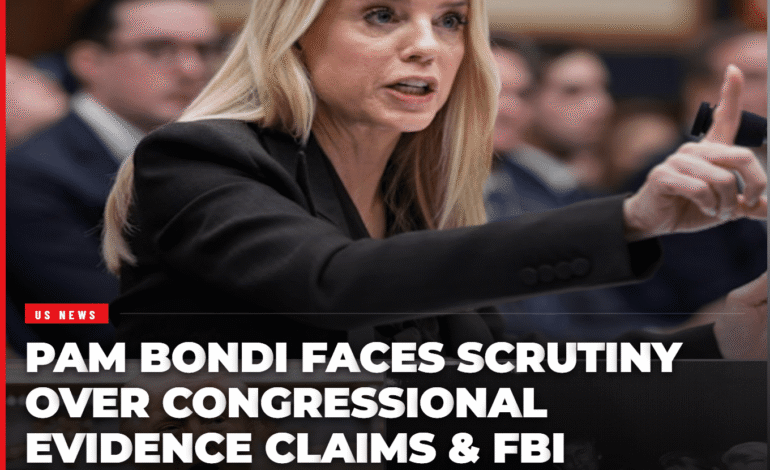
Pam Bondi Faces Scrutiny Over Congressional Evidence Claims & FBI Testimony

Introduction
Former Florida Attorney General Pam Bondi is now at the center of growing political and public scrutiny following allegations tied to congressional evidence claims and concerns surrounding the handling of FBI testimony records. The situation has sparked debate among analysts, political observers, and commentators, raising broader questions about transparency, accountability, and institutional integrity.
While no definitive findings have been confirmed, the controversy continues to gain attention as more voices weigh in on the implications of the claims. The evolving nature of the issue has made it a focal point for ongoing discussion within political and legal circles.
Background of the Controversy
The current scrutiny stems from claims involving evidence reportedly presented in a congressional context. According to reports, questions have emerged regarding both the accuracy of those claims and the way supporting materials were managed.
At the heart of the issue are allegations that certain FBI testimony records may not have been handled appropriately. Critics argue that if proven true, such concerns could reflect procedural shortcomings that warrant closer examination.
Although details remain limited and subject to interpretation, the controversy has nonetheless drawn attention due to its potential implications for institutional processes and public trust.
Key Allegations Explained
1. Congressional Evidence Claims
One of the primary points of concern involves assertions related to evidence referenced in congressional discussions. Observers have questioned whether the claims accurately reflect verified information or whether they may have been presented in a way that lacks full context.
This has led to calls for greater clarity regarding:
- The origin of the evidence
- How it was verified
- Whether it was presented in accordance with established standards
Critics emphasize that any ambiguity in such matters can lead to confusion and undermine confidence in official proceedings.
2. Handling of FBI Testimony Records
Another significant aspect of the controversy revolves around allegations of mishandling FBI testimony records. These records are typically considered critical components of investigative and oversight processes.
Concerns raised include:
- Whether all relevant testimony was preserved properly
- If any records were omitted, altered, or misrepresented
- How the records were documented and communicated
While no confirmed findings have established wrongdoing, the mere presence of these concerns has prompted calls for transparency and further review.
Why This Matters
The situation extends beyond a single individual or isolated claims. At its core, the controversy touches on broader themes that are central to democratic institutions:
Transparency
Transparency is a cornerstone of public trust. When questions arise about how evidence is presented or managed, it can lead to skepticism among the public and stakeholders.
Accountability
Public officials and institutions are expected to uphold high standards of accountability. Allegations involving evidence or testimony handling naturally invite scrutiny to ensure those standards are maintained.
Institutional Integrity
The credibility of congressional processes and federal investigative bodies depends on consistent adherence to established procedures. Any perceived deviation can have lasting effects on confidence in these institutions.
Reactions and Ongoing Debate
The response to the situation has been varied, reflecting a mix of concern, caution, and calls for further investigation.
Critics’ Perspective
Critics argue that the allegations, even if not yet proven, highlight the need for:
- Independent review of the claims
- Clear documentation of evidence handling procedures
- Greater transparency in congressional processes
They suggest that addressing these concerns proactively is essential to maintaining trust.
Supporters’ View
Others caution against drawing premature conclusions, emphasizing that:
- The claims have not been definitively substantiated
- Context may be missing from initial reports
- Further information is needed before making judgments
This perspective underscores the importance of allowing due process and thorough examination before reaching conclusions.
The Role of Media and Public Attention
Media coverage has played a significant role in bringing the issue to light and shaping public perception. As more outlets report on the controversy, the narrative continues to evolve.
Key factors influencing public attention include:
- The prominence of the individuals involved
- The seriousness of the allegations
- The broader political environment
The ongoing coverage has ensured that the issue remains part of public discourse, with new developments closely monitored.
Potential Implications
Although no final determinations have been made, the situation could have several potential implications depending on how it unfolds:
1. Increased Oversight
The controversy may lead to heightened oversight of how evidence and testimony records are handled in congressional and investigative contexts.
2. Policy or Procedural Changes
If gaps or inconsistencies are identified, there could be calls for reforms aimed at improving:
- Documentation practices
- Evidence verification processes
- Record management systems
3. Impact on Public Trust
Public confidence in institutions may be affected, particularly if the issue is not addressed transparently. Conversely, clear communication and accountability could help reinforce trust.
What Happens Next?
As the situation continues to develop, several key areas will likely determine its trajectory:
- Clarifications or responses from those involved
- Additional disclosures that provide further context
- Independent reviews or investigations, if initiated
Observers will be watching closely to see whether new information emerges that either substantiates or challenges the existing claims.
The Importance of Due Process
Amid the ongoing debate, it is important to emphasize that no conclusions have been officially reached. Allegations and scrutiny do not equate to confirmed findings.
Due process remains a critical element in situations like this, ensuring that:
- Claims are thoroughly examined
- Evidence is evaluated objectively
- Conclusions are based on verified information
Maintaining this approach is essential for fairness and credibility.
Broader Context
This controversy is part of a larger pattern in which issues related to evidence handling and institutional transparency come under public examination. In recent years, similar situations have highlighted the importance of:
- Clear communication from officials
- Strong internal procedures
- Independent oversight mechanisms
The current case adds to that ongoing conversation, reinforcing the need for robust systems that can withstand scrutiny.
Conclusion
The scrutiny surrounding Pam Bondi and the allegations tied to congressional evidence claims and FBI testimony records remains an evolving story. While no definitive outcomes have been established, the situation has already sparked significant discussion about transparency, accountability, and institutional integrity.
As more information becomes available, the focus will remain on understanding the facts, clarifying the claims, and assessing their broader implications. Until then, the matter continues to be closely monitored by observers, analysts, and the public alike.
FAQs
What are the main allegations involving Pam Bondi?
The allegations center on claims related to congressional evidence and concerns about the handling of FBI testimony records.
Has any wrongdoing been confirmed?
No definitive findings have been established. The situation is still under review and subject to ongoing discussion.
Why is this issue significant?
It raises broader questions about transparency, accountability, and the integrity of institutional processes.
What could happen next?
Possible developments include clarifications, further disclosures, or independent reviews to better understand the situation.
Discover more from MatterDigest
Subscribe to get the latest posts sent to your email.