From U.S. Cities to Global Streets—‘No Kings’ Protests Surge Against Donald Trump

No Kings Protests: Millions Take to the Streets Across America and the World Against Trump
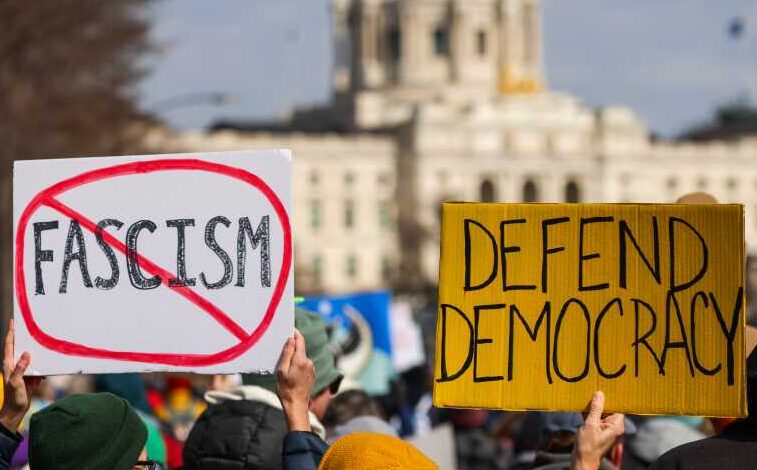
Millions of people joined the “No Kings” protest movement across the United States and around the world, making it one of the largest coordinated demonstrations in modern American political history. From major cities to small rural towns, crowds gathered simultaneously across all 50 states to voice opposition to President Donald Trump’s policies and what demonstrators described as an increasingly authoritarian style of governance.
The scale of the protests caught many political observers off guard. Organizers had expected large turnouts in major metropolitan areas. What they did not fully anticipate was the depth and geographic spread of the movement — towns that rarely see organized protest activity became gathering points for residents who said they felt compelled to show up for the first time in their lives.
This was not a single-issue protest. People came for different reasons. But they shared a common message: that the direction of the country under President Trump has pushed millions of Americans past a point of passive concern and into active, public opposition.
What Are the No Kings Protests and Where Did They Take Place?
The “No Kings” movement takes its name from a simple but pointed slogan. Participants say the phrase is a direct reference to what they see as authoritarian tendencies in the Trump administration — policies and actions they argue concentrate power in the executive branch in ways that undermine democratic institutions and the constitutional balance of power.
Demonstrations were held simultaneously across all 50 states, making this one of the most geographically widespread protest events in recent American history. The protests were not limited to the coasts or to traditionally liberal-leaning cities. Reports came in from communities in the South, the Midwest, and rural areas across the Mountain West — places where political protest of this kind is uncommon.
In Washington, D.C., one of the largest gatherings took place near the U.S. Capitol, where an estimated 200,000 people assembled. Protesters carried signs, chanted, and listened to speakers who called for the protection of democratic institutions, an end to immigration enforcement policies they described as cruel and unconstitutional, and greater transparency in government decision-making.
In New York City, one of the most prominent events drew more than 100,000 participants. Civil rights attorney Robert De Niro joined civil rights leader and New York Attorney General Letitia James at a Manhattan rally, adding a high-profile cultural voice to what organizers described as a broadly nonpartisan appeal for democratic accountability.
In Atlanta, more than 50,000 people gathered. In San Diego, Kansas City, and Houston, tens of thousands joined separately organized marches. In St. Paul, Minnesota, the protest took on an additional cultural dimension when musician and performer Har Mar Superstar performed an original song written specifically for the movement — a moment that was widely shared on social media in the hours that followed.
Who Joined the No Kings Protests and What Were They Demanding?
One of the most notable features of the No Kings demonstrations was the diversity of people who showed up. Organizers and observers described crowds that crossed the usual lines of age, race, profession, and political identity. Young people stood alongside retirees. First-time protesters marched beside experienced activists. Many participants said they had never attended a political demonstration before.
The protests were united by a shared opposition to what participants described as the authoritarian tendencies of the Trump administration. But the specific concerns people brought to the streets covered a wide range of issues.
Immigration enforcement was a dominant theme. Many demonstrators expressed outrage over what they described as aggressive and indiscriminate deportation tactics, family separations, and the treatment of undocumented immigrants in detention facilities. Signs and chants frequently referenced specific cases of people who had been deported or detained under circumstances that protesters argued were unjust or unlawful.
Foreign policy and military involvement were also frequently cited. Participants raised questions about the administration’s stance toward international alliances, concerns about U.S. engagement in global conflicts, and what some described as a reckless approach to diplomacy.
Democratic integrity was perhaps the most consistent theme across all locations. Speakers at multiple rallies focused on what they described as threats to free elections, an independent judiciary, freedom of the press, and the rights of Congress to serve as a check on executive power. The slogan “No Kings” was most often invoked in this context — as a declaration that the United States does not operate under a monarchy and that the president is not above the law.
How Does the No Kings Movement Compare to Previous Trump Protests?
Large-scale public protests against Donald Trump are not new. The Women’s March in January 2017, the day after his first inauguration, drew an estimated three to five million participants across the United States, making it one of the largest single-day protests in American history.
The No Kings movement, however, is being described by some political analysts as something different — not a single-day reaction to a single event, but the visible expression of a sustained and organized opposition that has been building for months.
The scale of coordination behind the No Kings protests is significant. A network of grassroots organizations, advocacy groups, and local community leaders worked together to synchronize events across all 50 states and in multiple countries simultaneously. That kind of organizational infrastructure does not emerge overnight. It reflects a level of civic engagement and institutional capacity on the left that has been growing since Trump’s return to the White House.
The fact that protests are no longer confined to major metropolitan areas is also seen as meaningful. When demonstrations reach smaller cities and rural communities — places that are not traditionally associated with organized political protest — it suggests a broader and more deeply rooted shift in public sentiment.
The third major factor distinguishing the No Kings movement from earlier protests is its international dimension. Demonstrations were reported in London, where an estimated 800,000 people gathered in what could be one of the largest protest events in British history. France, Germany, Japan, and Australia also saw significant turnouts. The global dimension of the protest signals that opposition to the direction of Trump’s America is not limited to U.S. citizens.
What Is Happening Internationally? How Did the World Respond to the No Kings Protests?
The international component of the No Kings movement deserves particular attention. It is one thing for American citizens to protest their own government. It is another for protests in solidarity with that movement to draw hundreds of thousands of people in other countries.
In London, organizers reported a turnout of approximately 800,000 people — a number that, if accurate, would place it among the largest demonstrations in the United Kingdom’s modern history. Participants in London carried signs that echoed the themes of the American protests, expressing concern about the global influence of Trump’s political style and the impact of U.S. foreign policy on international alliances and institutions.
Protests were also reported across France, Germany, Japan, and Australia, among other countries. The issues varied somewhat by location. In Europe, concerns about NATO commitments and trade policy were prominent. In Asia, demonstrators focused on U.S. diplomatic posture in the region. But the shared thread was a concern that the direction of the United States under Trump has global consequences that extend far beyond American borders.
International political analysts noted that the breadth of the global response is unusual. Protests in solidarity with American political movements have happened before, but rarely at this scale and across this many countries simultaneously. Some observers described it as a reflection of how deeply interconnected the world has become — and how clearly people in other nations understand that American political decisions affect their own lives.
What Do Supporters of President Trump Say About the No Kings Protests?
Supporters of President Trump and members of his administration have pushed back firmly against the characterization of the protests as a mainstream or broadly representative expression of public sentiment.
Trump’s defenders argue that the demonstrations are politically motivated and organized by groups with a specific ideological agenda. They say the protests do not represent the views of the majority of Americans — pointing to Trump’s election victory as the clearest expression of what voters actually want.
Administration supporters also contend that the policies being protested — particularly on immigration and executive authority — are lawful, constitutionally grounded, and necessary for national security and economic stability. They argue that critics are mischaracterizing the administration’s actions for political effect.
Some Trump allies have gone further, suggesting that the protests are coordinated and funded by political organizations that have a vested interest in opposing the administration regardless of its actions. They argue that the “No Kings” framing is deliberately inflammatory and designed to delegitimize a democratically elected president.
The disagreement over the protests reflects a deeper divide in American public life — one in which the same events can be interpreted as either a warning sign of democratic backsliding or an example of organized political opposition going too far. Where Americans land on that question depends heavily on where they already stand politically.
What Do Political Analysts Say About the Long-Term Impact of These Protests?
Political scientists and analysts have noted that large-scale protests can have significant political consequences — but that those consequences are not always immediate or direct.
Research on mass protest movements suggests that large demonstrations serve several important functions. They signal to elected officials that a significant portion of the public is paying close attention and is motivated enough to take action. They build social networks among participants that can be activated in future political campaigns or organizing efforts. And they shape media coverage and public narratives in ways that can influence how issues are framed and discussed over time.
Some analysts draw comparisons to the Tea Party movement of 2009 and 2010, which began as a series of street-level protests and evolved into a political force that shaped the Republican Party for more than a decade. Whether the No Kings movement has the organizational depth and staying power to produce a similar transformation on the left is a question that will take years to answer.
Others caution against reading too much into a single protest event. Turnout at demonstrations does not translate automatically into votes, policy changes, or electoral outcomes. History is full of large protest movements that generated enormous energy in the streets and far less lasting impact in the halls of government.
What most analysts agree on is this: when millions of people in all 50 states and dozens of countries simultaneously take to the streets over a shared set of concerns, it represents something that political leaders of all parties should take seriously — not as a threat, but as information about the state of public trust and the health of democratic engagement.
Why Is Public Protest Considered a Cornerstone of American Democracy?
The right to assemble and petition the government is guaranteed by the First Amendment of the United States Constitution. It is one of the foundational principles of American civic life — the idea that citizens have not just the right but the responsibility to make their voices heard when they believe their government is moving in the wrong direction.
Throughout American history, public protest has been a driver of major social and political change. The civil rights movement used mass demonstrations to build pressure for the Civil Rights Act of 1964 and the Voting Rights Act of 1965. The anti-Vietnam War protests helped shift public opinion and eventually contributed to the end of U.S. military involvement in Southeast Asia. More recently, the Women’s March and the George Floyd protests sparked national conversations that led to policy changes at state and local levels across the country.
The No Kings protests sit within this long tradition. Whatever one thinks of the specific political positions of the participants, the act of assembling publicly to express dissent is not just legally protected — it is, according to the framers of the Constitution themselves, a vital mechanism for keeping democratic government accountable to the people it serves.
For many participants in the March 2026 demonstrations, that principle was the point. They were not just protesting specific policies. They were asserting their role as citizens in a democratic system — insisting that their voices matter and that the direction of the country is a question that belongs to the people, not to any single leader or party.
Key Takeaways: No Kings Protests, Trump Opposition, and What Happens Next
Millions of people joined the No Kings protests across all 50 U.S. states and in multiple countries, making it one of the largest coordinated demonstrations in recent political history.
Demonstrators expressed opposition to what they described as authoritarian tendencies in the Trump administration, with immigration enforcement, democratic integrity, and foreign policy among the most cited concerns.
The protests drew a broad and diverse cross-section of participants, including many first-time demonstrators, and reached geographic areas not typically associated with organized political protest.
International turnout — including an estimated 800,000 in London — underscored the global dimension of concern about the direction of U.S. policy under President Trump.
The long-term political impact of the movement remains to be seen, but analysts note that protests of this scale typically signal sustained civic engagement that can shape electoral and policy outcomes over time.
Discover more from MatterDigest
Subscribe to get the latest posts sent to your email.