New Scrutiny Emerges Over Guard Actions the Night Jeffrey Epstein Died
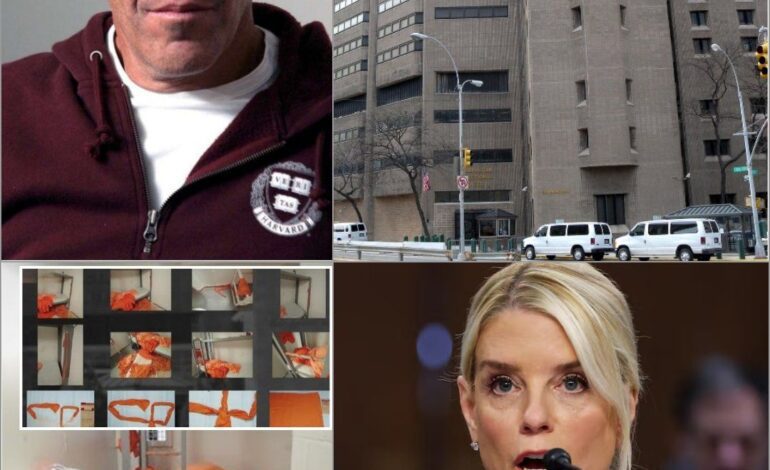

The Questions That Refuse to Go Away
On the morning of August 10, 2019, Jeffrey Epstein — the financier and convicted sex offender facing federal sex trafficking charges — was found unresponsive in his cell at the Metropolitan Correctional Center in New York City. He was pronounced dead at a hospital shortly after. The New York City Medical Examiner ruled his death a suicide by hanging.
That official ruling has been contested, doubted, and debated ever since. And in 2026, new documents released under the Epstein Files Transparency Act have given those questions fresh fuel.
At the centre of the renewed scrutiny: Tova Noel, the correctional officer assigned to monitor Epstein that night. New FBI forensic records show she Googled ‘latest on Epstein in jail’ twice in the minutes before his body was found. Her bank records, flagged in a Suspicious Activity Report filed by Chase Bank, show a $5,000 cash deposit just ten days before Epstein’s death — and a series of 12 other deposits stretching back more than a year.
In March 2026, the House Oversight Committee called Noel to testify. She has not yet appeared. The questions — after nearly seven years — remain unanswered.
Quick Answer: New DOJ files released in 2026 reveal that prison guard Tova Noel Googled ‘latest on Epstein in jail’ twice in the 40 minutes before Epstein’s body was found, made a $5,000 cash deposit 10 days before his death, and was identified by an FBI briefing as likely the unidentified orange figure seen near Epstein’s cell at 10:40 p.m. the night before. Congress has called her to testify.
1. Who Was Jeffrey Epstein? Essential Background
Jeffrey Epstein was a wealthy American financier who ran in some of the most powerful social circles in the world — from political figures to royalty to academics to business leaders. His connections were wide, his wealth was vast, and for years, he operated largely without legal consequence despite mounting allegations.
His legal troubles began in 2005, when police in Palm Beach, Florida, investigated reports that he had sexually abused a 14-year-old girl. That investigation eventually uncovered dozens of additional victims.
The 2008 Plea Deal
In 2008, Epstein struck a controversial federal plea deal negotiated by then-U.S. Attorney Alexander Acosta. Epstein pleaded guilty to state-level charges of soliciting prostitution from a minor, registered as a sex offender, and served just 13 months in a county jail — with work-release privileges that allowed him to leave the facility six days a week.
Critics, survivors, and legal experts widely condemned the deal as far too lenient. Acosta resigned as Secretary of Labor in 2019 when renewed attention fell on the agreement.
The 2019 Arrest
On July 6, 2019, federal prosecutors in New York arrested Epstein on new charges of sex trafficking minors. He was held without bail at the Metropolitan Correctional Center while awaiting trial. The charges alleged he ran a network of sexual abuse involving dozens of young women and girls.
The potential witness list he carried in his head made him, in the eyes of many observers, one of the most politically and legally significant defendants in American history. He never stood trial.
2. The Night He Died: A Minute-by-Minute Timeline
What happened at the MCC between the evening of August 9 and the morning of August 10, 2019 is central to every question about Epstein’s death. Based on DOJ files, court records, congressional testimony, and media reporting, here is what is documented.
| Time (Aug. 9–10) | Event |
| ~10:00 p.m. | Guard Tova Noel states she last saw Epstein alive ‘somewhere around after 10’ — her own sworn account to DOJ investigators in 2021. |
| ~10:40 p.m. | Surveillance video captures what an FBI briefing describes as an orange shape — believed to be Noel — carrying linen or clothing toward the entrance of the SHU (Special Housing Unit) tier. This is the last recorded approach by any officer to Epstein’s unit. |
| Night–5:30 a.m. | The required 30-minute check-in rounds are not conducted. Both Noel and Thomas later admitted to falsifying records claiming they had performed their rounds throughout the night. Investigators later determined the pair appeared to have been sleeping. |
| 5:42 a.m. | Noel searches Google: ‘latest on Epstein in jail’ — per FBI forensic examination of bureau computer. Noel later stated under oath she did not recall making this search. |
| 5:52 a.m. | Noel conducts a second Google search related to Epstein — again per FBI forensic records. |
| ~6:30 a.m. | Guard Michael Thomas knocks on Epstein’s cell door during the breakfast round. No response. Thomas enters and finds Epstein unresponsive, hanging from the top bunk with strips of orange cloth. Emergency services called. Epstein pronounced dead. |
The Cell Itself
When Thomas entered Epstein’s cell, investigators noted it was ‘unusually cluttered with extra blankets and linens.’ Epstein was found hanging from the top bunk of the bed using strips of orange cloth. How he obtained the extra linens — and who, if anyone, provided them — has not been definitively answered.
3. Who Is Tova Noel? The Guard Under Scrutiny
Tova Noel is an Army veteran who began working in the Special Housing Unit of the Metropolitan Correctional Center in early July 2019 — the same week Epstein was arrested and transferred there.
According to DOJ records, she was one of two correctional officers required to perform welfare checks on Epstein every 30 minutes throughout the night. She has described herself as the last person to see Epstein alive, placing that time at ‘somewhere around after 10’ on the night of August 9.
What She Was Charged With
- Conspiracy — with fellow guard Michael Thomas — to create false records.
- Falsifying federal records by claiming she had completed the required 30-minute rounds when she had not.
- Both Noel and Thomas admitted they were not performing the required checks during the roughly eight-hour window in which Epstein died.
In 2021, both guards entered a plea deal. Criminal charges were dropped in exchange for cooperation with the DOJ investigation. Neither served prison time. Both were fired from the Bureau of Prisons.
4. The Google Searches: What the FBI Forensic Examination Found
This is one of the most striking new details to emerge from the 2026 DOJ document release.
A 66-page FBI forensic examination of the Bureau of Prisons desktop computers used by Noel and Thomas shows that Noel searched Google for information about Epstein in the final hour before his body was discovered.
The Specific Searches
- 5:42 a.m.: Noel searched ‘latest on Epstein in jail’
- 5:52 a.m.: Noel conducted a second Google search related to Epstein
- 6:30 a.m.: Thomas found Epstein unresponsive in his cell
The time gap between the second search and the discovery of Epstein’s body was approximately 38 minutes.
What Noel Said
When DOJ Inspector General investigators interviewed Noel in 2021, they asked her about the Google searches. Her response, according to the DOJ records: she ‘repeatedly said she did not recall’ Googling Epstein, adding that such searches ‘wouldn’t be accurate.’
Critically, the investigators had access to the FBI forensic report at the time of this interview but did not ask Noel specifically about the $5,000 cash deposit revealed in banking records — a detail that has since drawn significant scrutiny.
Other Searches That Night
The forensic examination also shows Noel searched for furniture and ‘law enforcement discounts’ during the same overnight shift. Investigators noted these searches in their review.
5. The $5,000 Cash Deposit and the Bank’s Suspicious Activity Report
The financial picture surrounding Noel is one of the less-discussed but potentially significant threads in the new congressional scrutiny.
What the Records Show
- Chase Bank filed a Suspicious Activity Report (SAR) with the FBI in November 2019 — flagging cash deposits in Noel’s account.
- A total of 12 cash deposits were made between April 2018 and July 2019.
- The largest single deposit was $5,000, made on July 30, 2019 — just 10 days before Epstein was found dead.
- In December 2018 alone, records show seven cash deposits totalling $11,880.
- Investigative journalist Julie K. Brown — who broke the original Epstein story for the Miami Herald — noted on social media that records also showed repeated ‘Quick Zelle’ payments to Noel’s account during the same period.
Important context: The time frame of the earliest deposits (starting April 2018) predates Epstein’s July 2019 arrest by more than a year. This means the deposit pattern began before Epstein was even in Noel’s facility. Whether there is any connection to Epstein has not been established. The deposits were flagged as unusual by the bank; they have not been proven to be related to any illegal activity.
Was Noel Asked About the Money?
In her 2021 DOJ interview, Noel was not questioned about the cash deposits or the Suspicious Activity Report. This gap in the investigation is one of the key reasons the House Oversight Committee has called her back for testimony in 2026.
6. The Orange Figure: What the Surveillance Footage Shows
The January 2026 DOJ release included previously unseen prison surveillance footage and a specific FBI briefing that identified a detail that had not been made public before.
At approximately 10:40 p.m. on August 9, 2019, surveillance cameras captured what appeared to be an orange shape moving up a staircase toward the L-Tier — the locked section of the Special Housing Unit where Epstein was held. An FBI briefing noted this was ‘the last time any correctional officer approached the only entrance to the SHU tier.’
The FBI’s Assessment
According to documents first reported by the Daily Beast and Yahoo News, the FBI briefing stated that the figure ‘believed to be Tova Noel’ was seen carrying ‘linen or inmate clothing’ toward the SHU entrance at approximately 10:40 p.m. — consistent with Noel’s own statement that she last saw Epstein alive ‘somewhere around after 10.’
Why It Matters
Epstein was found hanging from strips of orange cloth. He was also found with extra clothing and linens in his cell — material that Noel, in her sworn statement, said she ‘never gave out’ because ‘that’s done the shift before.’
The combination of: an unidentified figure believed to be Noel approaching Epstein’s cell at approximately 10:40 p.m., Noel’s statement that she did not give out linen, and Epstein being found with extra orange cloth — has drawn pointed questions from congressional investigators.
The identity of the orange figure has not been officially confirmed as Noel. The FBI briefing described it as a belief, not a definitive identification. The heavily redacted nature of the surveillance footage limits the ability to draw firm conclusions from the visual evidence.
7. The Failed Security Cameras: A Systemic Problem
One of the most significant structural failures surrounding Epstein’s death is the state of the MCC’s security camera system. This is not a matter of speculation — it is documented in an official government report.
The 2023 DOJ Inspector General Report
- Approximately 50% of security cameras at the MCC were non-functional at the time of Epstein’s death.
- The failure was the result of long-term maintenance neglect — not a deliberate act on the night Epstein died.
- Cameras specifically positioned near Epstein’s cell in the Special Housing Unit failed to record.
- The FBI and OIG had ‘a significant lack of video footage’ to review as a direct result of these failures.
The MCC has since been closed — announced in 2021 — due to persistent issues including ‘lax security and crumbling infrastructure.’ It has not reopened.
The absence of clear camera footage from Epstein’s cell and the surrounding area is one of the primary reasons the official account has been so difficult to verify — and why conspiracy theories about his death have persisted for years.
8. What an Inmate Overheard — and the Shredded Documents
Beyond the digital records and financial documents, the 2026 DOJ files contain accounts from other people who were at the MCC the night Epstein died. These accounts have not been fully corroborated but were included in FBI reports.
The Overheard Conversation
An inmate housed in the Special Housing Unit told investigators they overheard correctional officers discussing Epstein’s death in the early hours of August 10. According to an FBI report cited by the Miami Herald, the inmate heard:
- A male guard say: ‘Dudes, you killed that dude.’
- A female guard respond: ‘If he is dead, we’re going to cover it up and he’s going to have an alibi, my officers.’
- The identity of the female guard was later identified as Noel, per the FBI report.
This account comes from a single inmate and has not been independently verified. It is included in FBI documents but has not been confirmed through other means. Noel has not publicly responded to this specific allegation.
The Alleged Document Shredding
The DOJ files also include an allegation from an inmate who reported that prison officials were shredding documents related to Epstein in the days following his death. This allegation has not been confirmed by investigators and is not supported by physical evidence in the released files.
9. The Criminal Charges That Were Dropped — and What That Means
In 2019, both Tova Noel and Michael Thomas were arrested and charged with conspiracy and falsifying federal records. The charges stemmed directly from their failure to conduct the required 30-minute welfare checks on Epstein and their creation of false records claiming they had done so.
The 2021 Plea Deal
- Both guards admitted they had not performed their required rounds.
- Both pleaded guilty to falsifying records.
- In exchange, criminal charges were dropped. Neither served prison time.
- Both were required to cooperate with the DOJ investigation as part of the agreement.
- Both were subsequently fired from the Bureau of Prisons.
Critics of the outcome have noted that the deal effectively ended criminal accountability for the guards while their cooperation — whatever it yielded — has never been publicly disclosed. Neither Noel nor Thomas has provided detailed public accounts of what they know about Epstein’s final hours.
10. The 2026 DOJ Files: What’s New, What’s Redacted, What’s Missing
The Epstein Files Transparency Act, passed in November 2025 and signed by President Trump, required the Department of Justice to release its investigative files by December 19, 2025.
What Was Released
- December 19, 2025: First tranche released. Heavily criticised for excessive redactions.
- January 30, 2026: Major release — 3+ million pages, approximately 2,000 videos, approximately 180,000 images.
- Included: MCC surveillance footage (approximately 400 videos in Data Set 8), FBI forensic computer logs, internal FBI briefings, prison interview transcripts.
- The 10:39–10:40 p.m. orange figure sighting was documented in this release.
- The FBI forensic examination of Noel’s computer was declassified and reported publicly in March 2026.
What Remains Problematic
- At least 550 pages in the initial December 2025 release were entirely blacked out.
- A faulty redaction technique in early releases allowed members of the public to copy-paste blacked-out text and reveal hidden content — an embarrassing oversight the DOJ acknowledged.
- Members of Congress stated after reviewing unredacted files that the DOJ appeared to have redacted victims’ identities less carefully than those of alleged associates.
- The DOJ declared the January 30, 2026 release its ‘final’ one, despite acknowledging approximately 6 million total pages might qualify for release. Members of Congress challenged this.
- A January 2026 CNN poll found 49% of Americans were dissatisfied with how much of the Epstein information had been released.
11. Congress Acts: The House Oversight Committee and Noel’s Testimony
The congressional response to the new files has been significant and bipartisan. The House Oversight Committee, chaired by Rep. James Comer (R-Ky.), has been at the centre of this scrutiny.
The March 13 Letter to Noel
On March 13, 2026, Chairman Comer sent a formal letter to Noel, citing the new DOJ documents and public reporting as the basis for requesting her testimony. The letter stated the committee was reviewing:
- The alleged mismanagement of the federal government’s investigation into Epstein and Ghislaine Maxwell.
- The circumstances and subsequent investigations of Epstein’s death.
- The operation of sex-trafficking rings and the federal government’s response.
- The ways in which Epstein evaded meaningful accountability for years.
The transcribed interview was scheduled for March 26, 2026, at 10:00 a.m. in Washington, D.C. It was postponed due to what the committee called ‘scheduling issues.’ Comer indicated a subpoena could follow.
Other Witnesses and Depositions
The House Oversight Committee has pursued a wide range of witnesses in the Epstein investigation. Those who have appeared or been compelled to appear include:
- Ghislaine Maxwell — testified February 9, 2026; invoked the Fifth Amendment and refused to answer questions.
- Bill and Hillary Clinton — deposed by the committee.
- Leslie Wexner (Les Wexner) — deposed; his name had been redacted from a key FBI document listing potential co-conspirators.
- Attorney General Pam Bondi — subpoenaed by the committee in March 2026.
12. The Full Timeline: From Death to 2026
| Date | Epstein Files Milestone |
| Aug. 10, 2019 | Epstein found dead at MCC. Death ruled suicide by hanging. Guards Noel and Thomas suspended. |
| Nov. 2019 | Noel and Thomas charged with falsifying records and conspiracy. |
| 2021 | Charges dropped in plea deal. Both fired from BOP. DOJ Inspector General begins review. |
| 2023 | DOJ OIG report released: confirms approx. 50% of MCC cameras were non-functional. |
| Nov. 18, 2025 | Congress passes Epstein Files Transparency Act (427–1 in House; unanimous Senate). Trump signs it. |
| Dec. 19, 2025 | DOJ begins first tranche release. Redactions draw criticism from both parties. |
| Jan. 30, 2026 | DOJ releases 3+ million pages, ~2,000 videos, ~180,000 images. Includes MCC surveillance footage, FBI forensic computer logs. |
| Mar. 7, 2026 | FBI forensic report of Noel’s computer search history declassified and reported by New York Post. |
| Mar. 13, 2026 | Rep. James Comer sends letter requesting Noel’s testimony before House Oversight Committee on March 26. |
| Mar. 26, 2026 | Scheduled Noel testimony postponed due to ‘scheduling issues.’ Committee continues to communicate with her attorney. Subpoena threatened. |
| Apr. 2026 | CNN, NBC, Bleacher Report and multiple outlets publish new details. Committee reviewing Noel’s cash deposits, Google searches, and possible link to orange figure near cell. |
13. The Unanswered Questions — At a Glance
| Unanswered Question | Current Status (April 2026) |
| Why did Noel Google Epstein minutes before his body was found? | No satisfactory explanation given. Noel told DOJ in 2021 she did not recall the search. |
| Who made the $5,000 cash deposit and why? | Chase Bank filed a Suspicious Activity Report. 12 deposits between Apr. 2018–Jul. 2019 flagged. Noel was never asked about these in her 2021 DOJ interview. |
| Who or what was the orange shape near Epstein’s cell at 10:40 p.m.? | FBI briefing says likely Noel. Epstein was found hanging with orange cloth. Connection is unproven but noted by investigators. |
| Why were security cameras near Epstein’s cell not functional? | DOJ OIG 2023 report: approx. 50% of MCC cameras were non-functional due to long-standing maintenance failures. |
| Why was Epstein removed from suicide watch? | He was placed on watch July 23, 2019 after a suspected self-harm attempt. He was removed approximately two weeks later. The decision remains disputed. |
| What did Noel mean by ‘cover it up’? | An inmate claims to have overheard a female guard (later identified as Noel) say ‘If he is dead, we’re going to cover it up’ — per FBI report cited by Miami Herald. Noel has not publicly responded. |
| Why were criminal charges against Noel and Thomas dropped? | Both entered a plea deal in 2021 requiring cooperation with DOJ. Neither served prison time. Charges for falsifying records were dropped as part of the deal. |
14. Frequently Asked Questions (FAQ)
How did Jeffrey Epstein die?
Jeffrey Epstein was found dead in his cell at the Metropolitan Correctional Center in New York on August 10, 2019. The New York City Medical Examiner ruled his death a suicide by hanging. He was found hanging from the top bunk of his bed using strips of orange cloth. This remains the official ruling. Some forensic pathologists and family members have publicly disputed the ruling, and congressional investigations continue.
Who was the guard on duty when Epstein died?
Two correctional officers were assigned to monitor Epstein: Tova Noel and Michael Thomas. Both were required to check on him every 30 minutes. Both were later charged with falsifying records claiming they had done so; neither actually performed the required rounds. Charges against both were dropped in a 2021 plea deal. Noel has been called to testify before the House Oversight Committee in 2026.
What did Tova Noel Google before Epstein’s body was found?
According to a 66-page FBI forensic examination of Bureau of Prisons computers, Noel searched ‘latest on Epstein in jail’ at 5:42 a.m. and again at 5:52 a.m. on August 10, 2019. Epstein’s body was found at approximately 6:30 a.m. — roughly 38 minutes after the second search. Noel told DOJ investigators in 2021 that she did not recall making these searches.
What was the $5,000 cash deposit in Noel’s bank account?
Chase Bank filed a Suspicious Activity Report with the FBI in November 2019, flagging a series of 12 cash deposits Noel made between April 2018 and July 2019. The largest was $5,000, deposited on July 30, 2019 — ten days before Epstein’s death. Noel was never asked about these deposits during her 2021 DOJ interview. No criminal charges have been filed in connection with the deposits.
What is the orange figure in the Epstein surveillance footage?
The January 2026 DOJ release included an FBI briefing noting that surveillance cameras captured what appeared to be an orange shape at approximately 10:40 p.m. on August 9, 2019 — moving toward the entrance of the SHU tier where Epstein was held. The FBI briefing identified this as likely Tova Noel carrying linen or clothing. This is the last recorded approach by any officer to Epstein’s unit. The orange cloth was the same material Epstein was found hanging with.
Why were the security cameras near Epstein’s cell not working?
A 2023 DOJ Inspector General report confirmed that approximately 50% of the MCC’s security cameras were non-functional at the time of Epstein’s death due to long-standing maintenance failures. The cameras near Epstein’s cell specifically failed to record. This was not attributed to deliberate tampering but to years of institutional neglect at the facility.
What happened to the criminal charges against Noel and Thomas?
In 2019, both Noel and Thomas were charged with conspiracy and falsifying federal records. In 2021, they entered a plea deal requiring cooperation with the DOJ investigation. Criminal charges were dropped as part of the deal. Neither served prison time. Both were fired from the Bureau of Prisons.
What did the Epstein Files Transparency Act require?
The Epstein Files Transparency Act was passed by Congress 427–1 in the House and unanimously in the Senate. President Trump signed it on November 19, 2025. It required the Department of Justice to release Epstein-related investigative files by December 19, 2025. As of January 30, 2026, the DOJ had released 3+ million pages, approximately 2,000 videos, and approximately 180,000 images — while declaring the release complete. Critics and lawmakers have disputed that characterisation.
Discover more from MatterDigest
Subscribe to get the latest posts sent to your email.