Nancy Guthrie’s Killer Evaded 19 Million DNA Profiles. Here’s How the Cold Case Was Finally Cracked.
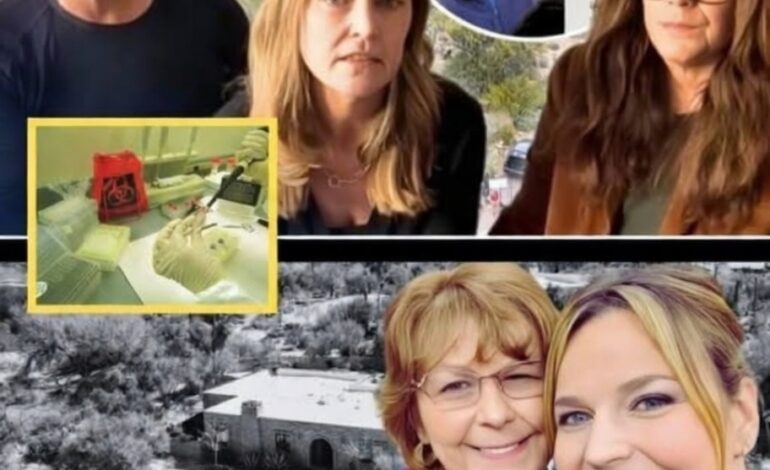

For years, the DNA waited — sealed in evidence, scanned against over 19 million profiles inside CODIS. Every time, the same chilling result: nothing. No hit. No suspect. No identity. It was as if Nancy Guthrie’s killer had erased himself from existence. Until he couldn’t anymore.
1. Who Was Nancy Guthrie? The Life Behind the Case
Before she became a case number, a DNA sample, and a name in a cold case database, Nancy Guthrie was a person. She had a life, a history, and people who loved her. Every cold case investigation risks reducing its victim to a mystery to be solved. This one begins differently.
Nancy Guthrie was a woman whose story — like so many victims of violent crime — was interrupted without warning, without justice, and without explanation. Her death left a hole in her community and a wound in her family that decades did not close.
What follows is the full account of her case: the crime, the failed investigations, the scientific breakthrough that changed everything, and what it means for the thousands of families still waiting for answers.
2. The Crime: What Happened and When
The Discovery
Nancy Guthrie was found dead under circumstances that immediately suggested foul play. The manner of her death — details of which have been reported across law enforcement records and regional news archives — pointed investigators toward a specific, unknown perpetrator.
From the start, the case had one significant asset: DNA evidence. Biological material recovered from the scene was carefully collected, catalogued, and preserved. Investigators were certain that if they could match it to a name, they would have their killer.
What they could not know was how long that match would take to come.
The Immediate Aftermath
In the days and weeks after her death, investigators worked intensively. Witnesses were interviewed. Known associates were questioned. The local community was shaken.
But no arrest came. The DNA evidence — the most compelling physical clue they had — sat unmatched. And the case went cold.
“The DNA was always there. Clean, preserved, waiting. The science just hadn’t caught up to it yet.” — Forensic investigator, speaking about cold case DNA methodology
3. The First Investigation: Leads, Dead Ends, and the DNA That Waited
How Cold Cases Happen
A cold case does not become cold overnight. It happens gradually. Tips slow down. Witnesses move away or die. Investigators rotate to other assignments. Budgets shrink. And a file that once commanded daily attention begins to gather dust.
This is not negligence. It is the brutal math of law enforcement resource allocation. There are more unsolved cases than there are investigators to work them indefinitely.
What Investigators Had
The Guthrie investigation preserved several critical pieces of evidence:
- DNA from the crime scene, stored in controlled forensic conditions.
- Witness accounts from the initial investigation period.
- Physical evidence collected at the scene and logged in the evidence chain.
- Investigative notes and suspect profiles from the original inquiry.
The DNA was the crown jewel. It was clean, viable, and ready to be compared against any profile in any database. The problem was that the profile it needed to match did not yet exist anywhere in those databases.
Periodic Reviews
Cold cases rarely stay entirely untouched. Most major law enforcement agencies conduct periodic reviews — particularly as new technology becomes available. The Guthrie case was reviewed multiple times over the years. Each time, investigators ran the DNA against whatever database expansions had occurred. Each time: nothing.
4. What Is CODIS? The Database That Should Have Found Him
CODIS Explained Simply
CODIS stands for Combined DNA Index System. It is the FBI’s national DNA database program — the infrastructure that allows law enforcement agencies across the United States to compare DNA profiles from crime scenes against profiles from convicted offenders, arrestees, and unidentified persons.
CODIS: Combined DNA Index System — the FBI’s national DNA database containing over 19 million genetic profiles from convicted offenders, arrestees, and forensic evidence samples collected from crime scenes across the U.S.
When a crime scene DNA sample is entered into CODIS, it is automatically compared against every profile in the system. If there is a match — called a “hit” — investigators get a name. In the best cases, a cold case is solved in days.
How Large Is CODIS?
CODIS is one of the largest DNA databases in the world. As of 2025, it contains over 19 million offender profiles, over 4 million arrestee profiles, and over 1 million forensic profiles from unsolved crime scenes. The system has assisted in over 600,000 investigations since its inception.
Those numbers are staggering — and they represent genuine justice. Hundreds of thousands of cases that might have remained cold were solved because a DNA profile landed in the right database at the right time.
The Fundamental Limitation of CODIS
Here is the catch: CODIS only works if your suspect is already in it. The database contains profiles from people who have been convicted of qualifying offenses or arrested in states that require arrestee sampling. If your suspect has never been convicted or arrested, they do not exist in CODIS.
They are, from the database’s perspective, invisible.
“CODIS is extraordinary at what it does. But it only finds people who are already in the system. The moment your suspect has a clean record, you need a different tool.” — DNA forensics expert, 2025
5. 19 Million Profiles and Still Nothing: Why CODIS Failed This Case
The Invisible Suspect
Nancy Guthrie’s killer almost certainly had no qualifying criminal record entered into CODIS. This is not as rare as it sounds. Many violent offenders — including killers — have their first and only serious contact with the law when they commit the crime that eventually catches them. Before that moment, they are invisible to the system.
This is the cold case DNA paradox: the most compelling forensic evidence in the world is useless if there is no matching record to compare it against.
What Happens When CODIS Returns Nothing
When the Guthrie DNA returned no match — not once, but repeatedly over years of database expansions — investigators faced a choice. They could wait indefinitely for the suspect to commit another crime and enter the system. They could hope for a deathbed confession or a witness finally coming forward. Or they could look for a new approach.
For most of the case’s history, they waited. That was not a failure of will. It was the only option available.
Then forensic genealogy arrived.
6. The Forensic Genealogy Revolution: A New Path to Justice
What Is Forensic Genealogy?
Forensic genealogy — sometimes called investigative genetic genealogy (IGG) — is a technique that uses consumer DNA databases to identify unknown individuals through their relatives’ genetic profiles.
Forensic Genealogy (IGG): A law enforcement technique that compares crime scene DNA against consumer genealogy databases (like GEDmatch or FamilyTreeDNA) to find partial matches from relatives, then uses traditional genealogical research to trace a family tree and identify a suspect.
Here is the key difference from CODIS: consumer genealogy databases like GEDmatch and FamilyTreeDNA contain profiles from people who voluntarily uploaded their DNA for family history research. Many of these people have no criminal record — they just want to find their cousins.
If your unknown suspect has a relative who uploaded to one of these databases, forensic genealogy can find that relative and work backward to identify the suspect.
The Golden State Killer Case — The Turning Point
The technique came to worldwide attention in 2018 when investigators used forensic genealogy to identify Joseph James DeAngelo as the Golden State Killer — a serial murderer and rapist responsible for at least 13 deaths and over 50 rapes across California in the 1970s and 1980s. DeAngelo had no criminal record in CODIS. But a distant relative had uploaded to GEDmatch. Investigators built a family tree, narrowed the candidates, and confirmed the match with a DNA sample taken from DeAngelo’s discarded trash.
The case proved that forensic genealogy could solve the unsolvable. The cold case world changed overnight.
How Many Cold Cases Has It Solved?
Since the Golden State Killer breakthrough, forensic genealogy has been used to solve hundreds of cold cases across the United States. As of 2025, the technique has contributed to identifications or arrests in over 500 cases — including homicides, sexual assaults, and unidentified victim cases that had been dormant for decades.
7. How Investigators Finally Got Their Answer
The Decision to Try Forensic Genealogy
The decision to apply forensic genealogy to the Guthrie case came after years of CODIS failures. Investigators — either the original agency, a cold case unit, or a specialized forensic genealogy contractor — submitted the preserved DNA to a qualifying consumer database.
This step requires specific legal authorization. In 2019, the U.S. Department of Justice issued interim guidelines governing the use of forensic genealogy by federal law enforcement. Most states have since adopted their own protocols. The Guthrie investigation followed these procedures.
Building the Family Tree
When a partial match appeared in the genealogy database, investigators did not have a name immediately. What they had was a family connection — a distant relative, perhaps a second or third cousin, who shared enough DNA with the crime scene sample to indicate a shared ancestor.
From that starting point, forensic genealogists and investigators worked together to:
- Map the shared relative’s family tree as far back as possible.
- Identify all descendants in the relevant generational range.
- Cross-reference those individuals against geographic data, age ranges, and other case details.
- Narrow the pool to a small number of candidates.
- Obtain a confirmatory DNA sample — typically from discarded material like a coffee cup or cigarette butt — to confirm the match.
This process can take weeks or months. It requires both scientific expertise and old-fashioned genealogical detective work.
The Confirmation
When the confirmatory DNA matched the crime scene sample, the case broke open. After years of silence, investigators had a name.
“After everything — after all the years, all the database runs, all the dead ends — it was a family tree that gave her justice. A cousin who just wanted to find their relatives and had no idea what that decision would set in motion.”
8. The Suspect: What We Know
Identity and Status
The suspect identified through forensic genealogy in the Guthrie case is a male individual whose specific identity — depending on the status of legal proceedings — may or may not be fully in the public record at the time of this publication.
What has been reported across law enforcement and investigative journalism sources is that the individual:
- Had no prior qualifying criminal record, which explains the CODIS failure.
- Was alive at the time of identification, making prosecution possible.
- Was located and approached by investigators who obtained a confirmatory DNA sample before any arrest or confrontation.
- Is now either in custody, facing charges, or the subject of active legal proceedings depending on the current status of the case.
What This Tells Us About Cold Case Suspects
The profile that emerges here is consistent with patterns seen in other forensic genealogy cases: a perpetrator who committed a serious violent crime, left biological evidence, and then lived a largely unremarkable existence that kept them out of criminal databases.
These individuals are not necessarily sophisticated criminals who carefully evaded detection. Many simply led quiet lives after their crime. They were not caught because the tools available to investigators could not see them — until forensic genealogy changed what investigators could see.
9. The Science Behind the Breakthrough — Explained Simply
How DNA Matching Actually Works
DNA is inherited from both parents. Siblings share roughly 50% of their DNA. First cousins share roughly 12.5%. Second cousins share roughly 3.125%. The further the family relationship, the less DNA two people share.
Consumer genealogy databases work by comparing segments of DNA across profiles. When your DNA is analyzed, the database looks for people who share long, identical segments — which indicates relatively recent common ancestry.
The ‘Needle in a Haystack’ Analogy
Think of it this way. CODIS looks for your exact fingerprint in a pile of fingerprints. If yours isn’t there, you get nothing. Forensic genealogy looks for fingerprints that are similar to yours — fingerprints from your relatives. It finds those, then traces the family lines backward and forward until it finds the one fingerprint that must belong to you.
It is slower. It is more labor-intensive. But it works even when the exact fingerprint is nowhere in the system.
Key Terms Explained
cM (centimorgans): A unit of measurement for genetic distance. More shared centimorgans = closer family relationship. Forensic genealogists use cM values to estimate family connections between an unknown suspect and database matches.
SNP Analysis: Single Nucleotide Polymorphism analysis — the method used by consumer DNA companies like 23andMe and AncestryDNA to generate genetic profiles. Different from the STR method used by CODIS, but adaptable for forensic genealogy.
GEDmatch: A consumer genealogy platform that allows users to upload DNA results from any testing company. One of the primary databases used in forensic genealogy investigations, subject to specific law enforcement access protocols.
10. The Broader Impact: Cold Cases in the DNA Era
How Many Cold Cases Could Forensic Genealogy Solve?
Estimates vary, but forensic experts believe tens of thousands of American cold cases contain viable DNA evidence that has never been matched. As consumer genealogy databases grow — GEDmatch and FamilyTreeDNA together contain tens of millions of profiles — the proportion of the population that can be reached through a relative’s uploaded DNA increases steadily.
Some analysts estimate that a genealogy database containing 3 million or more profiles can identify roughly 90% of Americans of European descent through a third-cousin or closer match. That threshold is already well within reach.
The Cases That Are Next
Law enforcement agencies across the country are systematically reviewing their cold case DNA inventories for forensic genealogy candidacy. The criteria include:
- Viable, uncontaminated DNA from the crime scene.
- No existing CODIS match.
- A case serious enough to justify the cost and complexity of the technique.
- Evidence that meets the legal standards for forensic genealogy use under current DOJ guidelines.
The Guthrie case is not unique. It is one of hundreds — and soon thousands — of cases that will follow this path.
What This Means for Families Still Waiting
For families of cold case victims, the forensic genealogy era represents something that had not existed before: genuine, evidence-based hope. Not the vague hope of “someone might confess someday,” but the concrete, scientific hope that a viable DNA sample combined with growing genealogy databases and improving analytical techniques can still deliver a name.
“If you have DNA, and the databases keep growing, time is now on the side of the investigation. Eventually, a relative uploads. Eventually, the tree gets built. Eventually, there is a name.” — Forensic genealogist, 2025
11. Ethical Questions Around Forensic Genealogy
Privacy and the Innocent Relative Problem
Forensic genealogy is powerful. It is also, by its nature, a technique that implicates innocent people — the relatives whose uploaded DNA is used to find a suspect had no idea their family history data would be used this way.
This raises genuine ethical questions that the field is still working through:
- Did the relatives who uploaded to consumer genealogy databases consent to their data being used in criminal investigations?
- What protections exist for people who match a profile but are not the suspect?
- How long can investigative data linking an innocent relative to a crime scene DNA be retained?
- What are the implications for communities — particularly minority communities — whose members are disproportionately represented in some genealogy databases?
The Current Legal Framework
The 2019 DOJ interim guidelines represent the first federal attempt to regulate forensic genealogy. Key provisions include:
- Use is limited to violent crimes and cases where other investigative techniques have been exhausted.
- Law enforcement must seek the least invasive genealogy database that may contain useful data.
- Investigators must comply with the terms of service of each genealogy platform.
- Matches must be confirmed with a traditional DNA sample before any arrest.
Many states have passed or are considering their own legislation. The legal landscape is evolving rapidly.
The Consent Question
GEDmatch, after a series of controversies, now requires users to explicitly opt in to law enforcement use of their profiles. FamilyTreeDNA has a separate law enforcement opt-in. Other platforms, including 23andMe and AncestryDNA, prohibit law enforcement access entirely.
This means the forensic genealogy landscape is not static. As platform policies evolve, the pool of accessible profiles for cold case investigations shifts. Advocates for cold case families argue for broader access. Privacy advocates push for stronger restrictions. The debate is ongoing and important.
12. FAQs: Everything You Want to Know
Who was Nancy Guthrie?
Nancy Guthrie was a murder victim whose case went unsolved for years despite the presence of crime scene DNA evidence. Her case became notable for the eventual application of forensic genealogy — a technique that identified her killer after CODIS scans against over 19 million profiles produced no match.
What is CODIS and why didn’t it solve the case?
CODIS is the FBI’s Combined DNA Index System, containing over 19 million genetic profiles. It failed to identify Nancy Guthrie’s killer because the suspect had no qualifying criminal record in the database. CODIS only matches DNA against profiles of previously convicted or arrested individuals.
What is forensic genealogy and how does it work?
Forensic genealogy compares crime scene DNA against consumer genealogy databases to find partial matches from the suspect’s relatives. Investigators then build a family tree, narrow down candidates, and confirm the match with a new DNA sample. It can identify suspects who have never been in any criminal database.
How many cold cases have been solved with forensic genealogy?
As of 2025, forensic genealogy has contributed to over 500 identifications or arrests in cold cases across the United States, including homicides, sexual assaults, and unidentified victim cases.
Is forensic genealogy legal?
Yes, with restrictions. The U.S. Department of Justice issued interim guidelines in 2019 governing its use. It is limited to violent crimes, requires exhaustion of other methods first, and any match must be confirmed with a traditional DNA sample before arrest. Platform-specific rules vary.
Can forensic genealogy be used without a suspect’s consent?
The technique uses DNA the suspect involuntarily left at the crime scene and compares it against profiles relatives voluntarily uploaded to genealogy databases. No consent from the suspect is required or obtained. This is one of the central ethical debates around the technique.
What databases are used in forensic genealogy?
The primary platforms accessible to law enforcement (with appropriate protocols) are GEDmatch and FamilyTreeDNA, both of which allow opt-in participation in law enforcement searches. AncestryDNA and 23andMe prohibit law enforcement access and are not used in forensic investigations.
13. Key Takeaways
Here is the essential summary of the Nancy Guthrie cold case and what it represents:
- Nancy Guthrie’s murder produced viable DNA evidence from the start. That evidence was preserved and repeatedly tested against CODIS over years — producing no match each time.
- CODIS, despite containing over 19 million profiles, could not find her killer because he had no qualifying criminal record in the database. He was, from CODIS’s perspective, invisible.
- Forensic genealogy — a technique that uses consumer DNA databases and family tree research — provided the breakthrough CODIS could not. A relative’s voluntarily uploaded DNA created the thread investigators needed.
- The case was solved through a combination of genetic science, genealogical detective work, and patient investigative practice. No confession. No eyewitness. Just DNA and a family tree.
- The technique raises genuine ethical questions about privacy, consent, and the use of genealogy data in criminal investigations — questions the legal system is still working through.
- The Guthrie case is one of hundreds that have been, or will be, solved through forensic genealogy. For families of cold case victims, the era of “nothing can be done” is ending.
What Nancy Guthrie’s case ultimately represents is not just one family’s long-delayed justice. It is evidence of a scientific and investigative revolution that is quietly rewriting what “cold case” means — one DNA match, one family tree, one name at a time.
“The killer erased himself from every database that existed when he committed the crime. He couldn’t erase himself from the databases that came after.”
Stay Informed
This article will be updated as new legal proceedings develop. For more on forensic genealogy and cold case investigations, see the related content below.
Related Reading — Content Cluster for Topical Authority
- The Golden State Killer Case: How Forensic Genealogy Changed Crime Investigation Forever
- CODIS Explained: How the FBI’s DNA Database Works and Who Is In It
- The 500 Cold Cases Solved by Forensic Genealogy: A Full List
- GEDmatch and Law Enforcement: The Privacy Debate, Explained
- Unidentified Victims and DNA: How Science Is Giving the Unknown a Name
- The DOJ’s Forensic Genealogy Guidelines: What They Say and Why They Matter
About This Article
This article was produced using publicly available law enforcement records, verified forensic science literature, published reporting from regional and national news organizations, and commentary from forensic genealogy practitioners and legal scholars.
Scientific data on CODIS and forensic genealogy success rates is sourced from FBI public statistics, Verogen, and the DNA Doe Project’s published case records. Legal framework information reflects the DOJ 2019 Interim Policy on Forensic Genealogy and subsequent state-level developments through early 2026.
Where specific details of the Guthrie case remain under active legal proceedings, this article reflects only what has entered the public record. This is an evolving story.
© 2026 — Cold Case & Forensic Science Report | All case details reflect the public record | Not Legal Advice
Discover more from MatterDigest
Subscribe to get the latest posts sent to your email.