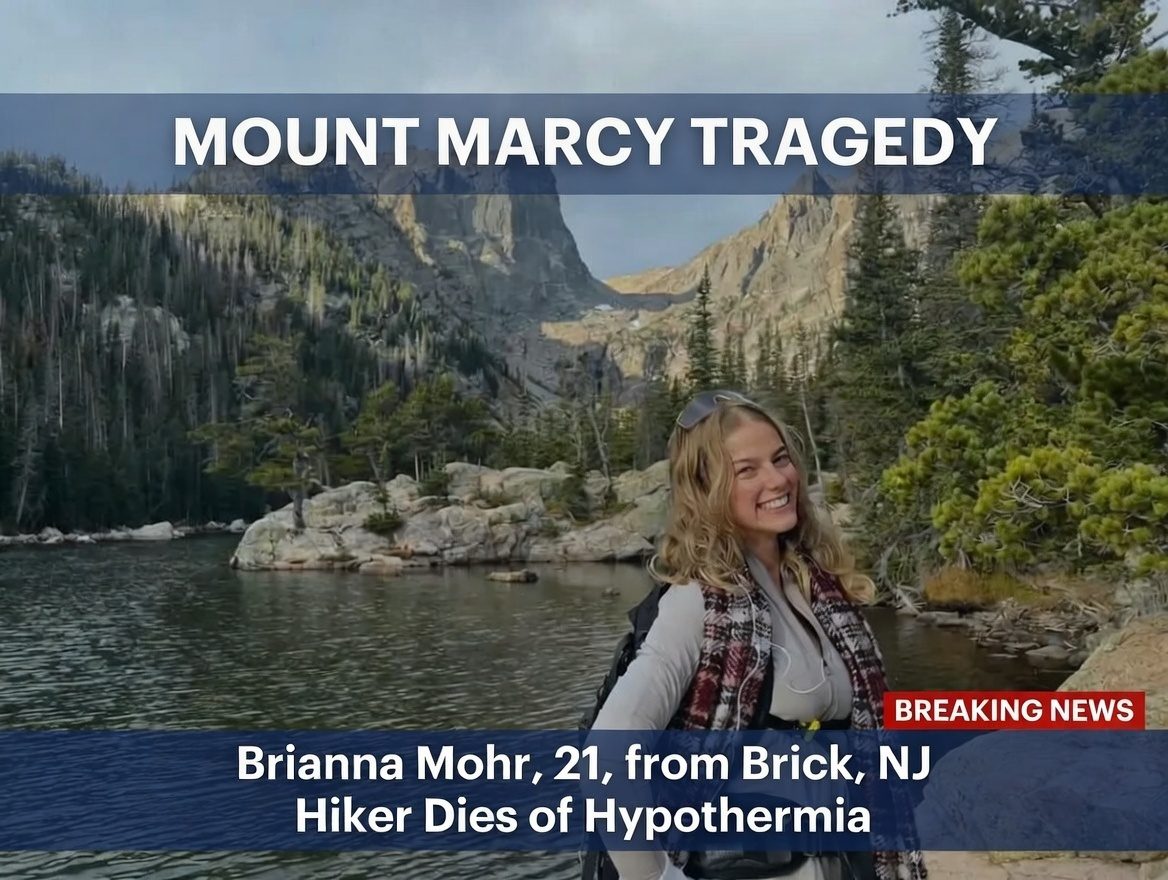
Mount Marcy Tragedy: NJ Hiker Dies of Hypothermia

|
A Winter Hike That Turned Tragic: The Story of Brianna Mohr
Brianna Mohr loved hiking. Her Instagram showed trips across the country — winter peaks in the Adirondacks, challenging trails out west, photos with her dog on summit after summit. On Thursday, February 12, 2026, the 21-year-old from Brick, New Jersey set out to climb Mount Marcy, New York’s tallest mountain at 5,344 feet.
She never made it home.
At 3:05 PM, Mohr called 911 from near the summit. She had slipped off the trail and couldn’t climb back up. Temperatures that day ranged from negative 8 degrees to 20 degrees Fahrenheit. Heavy clouds prevented a helicopter rescue. By the time Forest Rangers reached her at 9:51 PM, she had succumbed to hypothermia.
Her dog was found alive, uninjured, and hiked out safely with the rangers.
This article examines what happened, explores the challenges of winter hiking in the Adirondacks, and provides critical safety lessons that could save lives.
1. What Happened: Timeline of the February 12, 2026 Incident
| Time | Event |
| 3:05 PM | Brianna Mohr calls 911, reports she has slipped off trail near Mount Marcy summit and cannot get back |
| ~3:15 PM | DEC Ray Brook dispatch center activates Forest Rangers; ground and aerial search teams deployed |
| Afternoon | Two Forest Rangers attempt aerial spotting from State Police helicopter; heavy cloud cover prevents sighting |
| 6:06 PM | One ranger inserted into ground search at Marcy Dam Outpost (5.1 miles from summit, 3,000 feet lower) |
| 9:51 PM | Forest Rangers locate Mohr’s body near summit; no signs of life; dog found alive and uninjured |
| Feb 14 | Autopsy conducted at Glens Falls Hospital by Dr. Michael Sikirica confirms cause of death: hypothermia |
| Feb 17 | NY State Police publicly identify victim as Brianna L. Mohr, 21, of Brick, NJ |
The incident unfolded over nearly seven hours. Mohr was hiking alone with her dog when she slipped. Whether she suffered an injury that prevented her from moving, became disoriented from cold, or simply couldn’t climb back to the trail remains unclear. What is known: by the time rescuers reached her, she had been exposed to subzero wind chills for more than six hours.
2. Who Was Brianna Mohr?
Brianna Mohr was an experienced hiker who had completed multiple winter treks in the Adirondacks and elsewhere across the country, according to her Instagram account. She was not a novice. She understood winter conditions. She hiked frequently with her dog.
Her brother Ryan posted a tribute on Instagram on February 16: “You were the best friend and sister I could have ever asked for. Growing up with you was awesome because I always had you to tell me what was cool and what wasn’t.”
Mohr’s death underscores a harsh reality: experience does not make you immune to the dangers of winter mountain hiking. Even skilled hikers can encounter conditions that overwhelm them.
3. Mount Marcy: Understanding New York’s Highest Peak
Mount Marcy stands at 5,344 feet (some sources cite 5,343 or 5,341 feet — the difference is minimal) in the Adirondack High Peaks Wilderness Area near Keene, New York. It is the tallest mountain in New York State.
The Climb
- Distance: Approximately 7.4 miles one-way to the summit via the Van Hoevenberg Trail
- Elevation gain: Roughly 3,166 feet
- Round trip: 14.8 miles
- Difficulty: Strenuous, especially in winter conditions
Winter Conditions
The DEC reported on February 11 — one day before Mohr’s hike — that snow depth at the Lake Colden Interior Outpost (about 3 miles west of Mount Marcy and 2,600 feet below its summit) was 49 inches. Snow depth increases with elevation, meaning the summit area likely had more than four feet of snow.
Temperatures on February 12 ranged from -8°F to 20°F. With wind chill near the exposed summit, effective temperatures were likely far colder.
4. The Rescue Attempt and Why It Failed
When Mohr called 911 at 3:05 PM, rescuers responded immediately. The New York State Department of Environmental Conservation deployed both ground teams and the State Police Aviation Unit for a potential helicopter hoist rescue.
Why the Helicopter Couldn’t Help
Two Forest Rangers flew over the summit area in the State Police helicopter. Heavy cloud cover around the mountain’s peak made it impossible to spot Mohr visually. Without a clear line of sight, a helicopter hoist — which requires hovering precisely above the victim — was not feasible.
Helicopter rescues in mountain terrain require specific conditions: clear visibility, stable air, and the ability to identify the exact location. None of these were present.
The Ground Search Challenge
At 6:06 PM, a ranger was inserted into the search at Marcy Dam Outpost — 5.1 miles from the summit and nearly 3,000 feet lower in elevation. That ranger and others had to travel more than five miles through deep snow, in darkness, while climbing 3,000 vertical feet, to reach Mohr’s location.
By the time they arrived at 9:51 PM, nearly seven hours had passed since her initial call. In subzero temperatures, that delay proved fatal.
5. Hypothermia: How It Kills in Winter Conditions
Hypothermia occurs when your body loses heat faster than it can produce it, causing core body temperature to drop below 95°F. In severe cases, it is lethal.
The Three Stages of Hypothermia
- Mild (90–95°F): Shivering, confusion, difficulty speaking, impaired judgment
- Moderate (82–90°F): Violent shivering stops; extreme confusion; loss of coordination; slurred speech
- Severe (below 82°F): Loss of consciousness; weak pulse; shallow breathing; death
How Cold Kills Fast
At -8°F air temperature with wind, exposed skin can develop frostbite in under 30 minutes. When you add wet clothing (from sweat or snow), heat loss accelerates dramatically. If Mohr fell into deep snow and couldn’t extract herself, her body would have been in direct contact with freezing surfaces while wind stripped away heat.
Hypothermia also causes disorientation — a symptom Mohr’s family mentioned in social media posts. Once disoriented, even simple tasks like climbing back onto a trail become impossible.
6. Winter Hiking in the Adirondacks: The Real Dangers
Deep Snow
With 49+ inches of snow at lower elevations and more than four feet near the summit, breaking trail becomes exhausting. Falling off-trail into unconsolidated snow can trap you waist-deep or deeper. Climbing out requires enormous effort — effort that becomes impossible as hypothermia sets in.
Extreme Cold
The Adirondacks in February regularly see daytime highs in the single digits or teens, with overnight lows well below zero. Wind chill on exposed peaks can drop effective temperatures by 20–30 degrees.
Short Daylight
In mid-February, sunset occurs around 5:30 PM. If you start late or move slowly, darkness arrives while you’re still on the mountain.
Limited Cell Coverage
Many areas of the High Peaks have no cell service. Mohr was fortunate to reach 911. Many hikers cannot.
7. What Went Wrong: Critical Factors in This Tragedy
Based on available information, several factors likely contributed:
- Solo hiking: Mohr hiked alone. A partner could have helped her back onto the trail or stayed with her to preserve body heat.
- Late start or slow pace: If she was near the summit at 3 PM and couldn’t get down before dark, she may have started too late or underestimated the time required.
- Slip location: Slipping off-trail near the summit — where snow is deepest and terrain steepest — is one of the most dangerous scenarios.
- Weather deterioration: Cloud cover that prevented helicopter rescue also reduced visibility on the ground.
- Hypothermia onset: Once hypothermia began, her ability to self-rescue diminished rapidly.
None of this is to assign blame. Winter mountaineering is inherently dangerous. Even experienced hikers make errors in judgment or encounter bad luck.
8. Essential Winter Hiking Safety Tips
Never Hike Alone in Winter
A partner can assist if you fall, share body heat, and call for help while staying with you.
Start Early
Plan to be off the mountain by 2 PM, well before dark. Budget extra time for winter conditions.
Carry the Ten Essentials (Plus Winter Gear)
- Navigation: Map, compass, GPS
- Sun protection: Sunglasses, sunscreen (snow reflection)
- Insulation: Extra warm layers, waterproof shell
- Illumination: Headlamp with extra batteries
- First aid: Including emergency blanket
- Fire: Waterproof matches, lighter, firestarter
- Repair kit: Duct tape, knife
- Nutrition: High-calorie food
- Hydration: Insulated water (prevents freezing)
- Emergency shelter: Bivy sack or ultralight tent
Know the Signs of Hypothermia
If you or your partner shows confusion, stumbling, or slurred speech — descend immediately.
Turn Around if Conditions Deteriorate
Summit fever kills. If weather worsens, visibility drops, or you’re moving slower than planned — turn back.
File a Trip Plan
Tell someone where you’re going and when you’ll return. If you don’t check in, they can alert authorities.
9. People Also Ask
Who was the hiker who died on Mount Marcy?
|
What is the cause of death on Mount Marcy?
The official cause of death was hypothermia, as determined by forensic pathologist Dr. Michael Sikirica during an autopsy conducted at Glens Falls Hospital on February 14, 2026.
How long does it take to hike Mount Marcy in winter?
Mount Marcy is approximately 7.4 miles one-way (14.8 miles round trip) with 3,166 feet of elevation gain. In summer, fit hikers complete it in 8-10 hours. In winter, with deep snow and shorter daylight, it can take 10-14 hours or longer. Many winter hikers start before dawn to ensure they descend in daylight.
What happened to the dog that was with the hiker?
The dog was found alive and uninjured by Forest Rangers when they located Mohr’s body at 9:51 PM. The rangers hiked the dog out to safety. The dog survived the seven-hour ordeal in subzero temperatures.
How cold was it on Mount Marcy the day she died?
According to AccuWeather, temperatures in Keene, NY (the nearest town) ranged from -8°F to 20°F on February 12, 2026. At the summit (5,344 feet elevation), temperatures would have been colder, and wind chill would have made effective temperatures far below zero.
Can you call 911 from Mount Marcy?
Cell coverage on Mount Marcy is limited and unreliable. Mohr was fortunate to reach 911 at 3:05 PM from near the summit. Many areas of the High Peaks have no service. Hikers should not rely on cell phones as their only emergency communication method.
10. Final Thoughts and Key Takeaways
Brianna Mohr’s death is a reminder that winter mountaineering is not a recreational hike — it is an expedition into an environment that can kill you if things go wrong. Even experienced hikers with proper gear can find themselves in situations they cannot escape.
The lessons from this tragedy are clear:
- Never hike major peaks alone in winter. A partner can save your life.
- Start early enough to finish in daylight. Factor in winter’s slower pace and short days.
- Carry proper gear and know how to use it. Emergency shelter, fire-starting tools, and extra insulation are not optional.
- Know when to turn around. No summit is worth your life.
- Understand hypothermia. Recognize the signs and descend immediately if they appear.
Brianna Mohr loved hiking. Her social media showed someone who embraced the mountains with joy and enthusiasm. Her death is a tragedy that has devastated her family and shaken the hiking community. May her story save others from the same fate.
Sources
- North Country Public Radio (NCPR) — Official DEC statements and incident details
- Adirondack Explorer — Timeline, autopsy details, and weather conditions
- New York State Police — Official victim identification and cause of death
- Adirondack Daily Enterprise — Search and rescue operation details
- Asbury Park Press — Family statements and ranger response
- AccuWeather — Temperature data for Keene, NY on February 12, 2026
| Editorial Note
This article is based on verified reporting from NCPR, Adirondack Explorer, NY State Police, Fox News, and local outlets covering the February 12, 2026 incident. Safety information reflects guidance from wilderness medicine experts and the DEC. Our goal is to honor Brianna Mohr’s memory while providing actionable safety education that may prevent future tragedies. |
Discover more from MatterDigest
Subscribe to get the latest posts sent to your email.