Millions of Israelis Take Shelter as US-Israel Strike Iran in Operation Roaring Lion
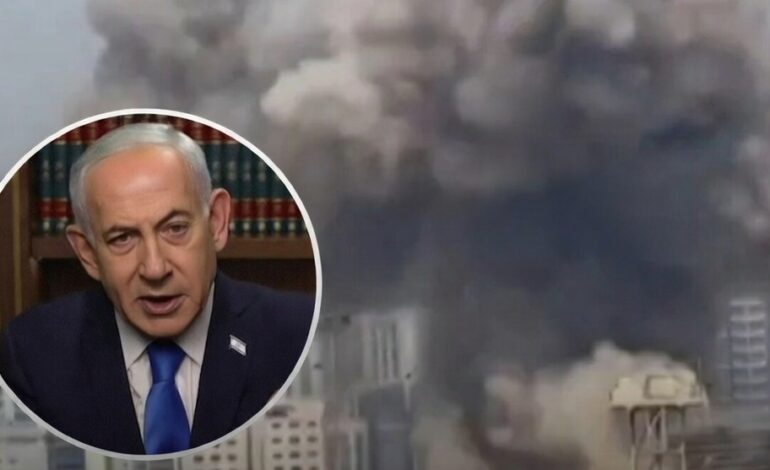

Quick Answer: What Is Happening in Israel Right Now?
On February 28, 2026, the United States and Israel launched a joint military operation — named Operation Roaring Lion — targeting nuclear and military facilities in Iran. Iran retaliated immediately with waves of ballistic missiles aimed at Israeli cities and US military bases across the Gulf. Millions of Israelis rushed to bomb shelters. As of this writing, the operation is ongoing. Both President Donald Trump and Prime Minister Benjamin Netanyahu stated their goal: the removal of the Iranian regime as a nuclear threat, and possibly as a governing power.
Introduction: The Day the Middle East Changed Forever
Saturday, February 28, 2026 started like any other morning in Israel. People were heading to markets. Children were at home. Traffic moved through Tel Aviv. Then the sirens started.
Within hours, millions of Israelis were sheltering in protected rooms and underground bunkers as Iran fired dozens of ballistic missiles toward Israeli cities. The cause? A massive, coordinated military strike by the United States and Israel against Iran — the largest Western military action in the Middle East since the 2003 Iraq War.
This article breaks down everything that happened, why it happened, and what comes next. Whether you are just hearing about this or following it closely, this is the most complete guide available.
1. The Day It All Changed: A Complete Timeline of Events
Here is a clear, chronological breakdown of what happened on February 28, 2026.
Timeline of Operation Roaring Lion — February 28, 2026
| Time (EST) | Event |
| ~4:00 AM EST | US and Israel launch Operation Roaring Lion — coordinated strikes hit Tehran and military sites across Iran |
| ~4:30 AM EST | Netanyahu releases video statement framing attack as removal of an ‘existential threat’ |
| ~5:00 AM EST | Trump announces ‘major combat operations’ in Iran; calls on Iranian people to ‘take over’ their government |
| ~10:00 AM EST | Iran fires first wave of ballistic missiles at Israel; air raid sirens wail across the country |
| ~12:00 PM EST | Explosions hit Dubai hotel; US embassies in Qatar, Bahrain, and Kuwait issue shelter-in-place alerts |
| ~5:30 PM EST | IDF confirms ~40 missiles fired at Israel; no direct hits in residential areas reported; light injuries only |
| Ongoing | Iran continues retaliatory missile barrages; Israel’s Home Front Command keeps nationwide shelter orders active |
The speed and scale of events caught many observers off guard. Iran closed its airspace within hours. Tel Aviv’s Ben Gurion Airport directed passengers to shelters. And in Dubai, a prominent hotel was struck by an Iranian missile — a rare direct hit in the Gulf.
2. Operation Roaring Lion — What We Know So Far
What Was Targeted?
According to US and Israeli officials, the strikes focused on three primary target categories:
- Iran’s nuclear program infrastructure, including enrichment facilities and storage sites
- Ballistic missile production plants — the IDF noted Iran had accelerated output to dozens of missiles per month
- Senior Iranian leadership, including Ayatollah Ali Khamenei and President Masoud Pezeshkian, both of whom were reportedly targeted in the initial wave of strikes
The first strikes appeared to hit the compound housing Iran’s 86-year-old Supreme Leader in central Tehran. Iranian authorities confirmed the blasts but did not immediately disclose casualties.
How Big Was the Strike Force?
The US had been quietly amassing a significant military force in the region in the days prior to the attack. While full details remain classified, reports indicate a combination of long-range bombers, carrier-based aircraft, and cruise missiles were used in a coordinated assault. Israeli air force jets flew in parallel, striking sites across multiple Iranian provinces.
What Did the IDF Say?
The Israeli military described the operation as a joint, broad, and powerful strike aimed at a thorough degradation of the Iranian terror regime and at eliminating existential threats to the State of Israel. The IDF added that Iran, despite taking serious blows in a June 2025 engagement, had continued attempting to fortify, shield, and conceal its nuclear programs.
3. Netanyahu’s Statement: Removing the Existential Threat
What Exactly Did Netanyahu Say?
In a video address posted to X (formerly Twitter) early on February 28, Netanyahu spoke directly to Israeli citizens — and to the world. He named the operation ‘Operation Roaring Lion’ and was unambiguous about its purpose.
“My brothers and sisters, citizens of Israel — a short while ago, Israel and the United States launched an operation to remove the existential threat posed by the terror regime in Iran.”
— Prime Minister Benjamin Netanyahu, February 28, 2026
The Nuclear Justification
Netanyahu centered his public argument on Iran’s nuclear ambitions, saying that a murderous terrorist regime must not be allowed to arm itself with nuclear weapons that would enable it to threaten all of humanity. For years, Israeli intelligence had warned that Iran was advancing its uranium enrichment toward weapons-grade material. The UN nuclear watchdog IAEA had also reported it could no longer verify whether Iran had suspended all uranium enrichment, after inspectors were denied access to key facilities.
The Call for Iranian Regime Change
Perhaps most strikingly, Netanyahu directly addressed the Iranian people — specifically naming ethnic and regional communities including Persians, Kurds, Azeris, Baloch, and Ahwazi — and called on them to cast off the yoke of tyranny. This framing suggests the operation was not simply a military strike but potentially the opening move in a longer campaign aimed at regime change.
A Message to Israelis
Netanyahu also told his own people to prepare for a prolonged period. In the coming days, during Operation Roaring Lion, we will all be required to show patience and inner strength, he said. Together we will stand, together we will fight, and together we will ensure the future of Israel.
4. Trump’s Announcement: Major Combat Operations
What Trump Said
Within minutes of the Israeli announcement, US President Donald Trump released a prerecorded video address confirming American involvement. He called it a major military operation and said the US military had begun major combat operations in Iran.
“Our objective is to defend the American people by eliminating imminent threats from the Iranian regime, a vicious group of very hard, terrible people.”
— President Donald Trump, February 28, 2026
Trump’s Goal: Freedom for the Iranian People
In a brief phone interview with The Washington Post, Trump stated his goal was freedom for the people of Iran. He also called on Iranian civilians to take over your government — echoing Netanyahu’s message. Trump acknowledged the operation could last days and that American casualties were a possibility.
The Context: Failed Nuclear Negotiations
The strikes came after weeks of tense, ultimately fruitless nuclear negotiations between the US and Iran. The US had pushed Iran to dismantle or severely limit its nuclear program. Those talks collapsed without resolution, and the military option was activated.
5. Iran’s Retaliation: Missiles, Drones, and Regional Escalation
How Did Iran Strike Back?
Iran did not wait long to respond. Within hours of the initial strikes, its military launched waves of ballistic missiles and drones at Israeli cities and at US military installations across the Gulf. By 5:30 PM local time, the IDF had confirmed approximately 40 missiles were fired at Israel.
Where Did the Missiles Hit?
- Israel: Explosions rocked northern Israel; air defense systems intercepted most incoming threats; only light injuries were reported in Israeli territory
- Dubai, UAE: A prominent hotel was struck — an unusual and alarming escalation targeting Gulf Arab states
- Bahrain, Kuwait, Qatar: US military bases came under missile fire; the US embassy in Qatar issued a duck and cover alert to American citizens in the country
Iran’s targeting of Arab Gulf states appears to be a deliberate strategy to raise costs for Washington and pressure Gulf governments to distance themselves from the US-Israel operation. Analysts note this may backfire — instead drawing Arab states closer to the US-Israel axis.
Iran Shuts Its Airspace
Following the strikes, Iran closed its airspace entirely. Global flight paths were disrupted, with airlines rerouting planes away from Iranian territory. This marks a significant disruption to international aviation in a region that handles tens of thousands of flights weekly.
Who Was Targeted in Iran?
Three sources briefed on the operation told reporters that both Supreme Leader Ayatollah Ali Khamenei and President Masoud Pezeshkian were targets in the initial wave of strikes. Their current status has not been officially confirmed as of this writing. Iranian state media has been largely silent on the fate of top leadership.
6. Life in Israel Under Fire: Bomb Shelters and Sirens
What Is It Like on the Ground in Israel?
For ordinary Israelis, February 28, 2026 brought back memories of October 2023 and the months of conflict that followed. Air raid sirens — a sound that has become grimly familiar — began wailing across cities including Tel Aviv, Haifa, and Be’er Sheva.
Israel declared a state of emergency. Civilians were instructed to shelter in place and stay close to protected rooms and reinforced shelters. At Ben Gurion International Airport, passengers were directed to bunkers mid-terminal. Streets emptied. The country collectively held its breath.
The Home Front Command Instructions
Israel’s Home Front Command — its civil defense authority — has issued nationwide alerts instructing civilians to:
- Remain near designated protected spaces at all times
- Follow siren alerts immediately and seek shelter within 90 seconds
- Avoid open spaces and large gatherings
- Monitor official channels for real-time updates
- Keep a supply of food, water, and medication inside shelters
How Are Israelis Responding?
Reactions are mixed, according to reporters on the ground. Some Israelis — particularly from the political right — expressed relief and even pride that their country had finally struck what they see as its greatest threat. Opposition leader Yair Lapid called the Israeli and US forces strong, affirming national unity in the moment of crisis.
Others expressed deep anxiety. One analyst quoted by Al Jazeera warned that people are exhausted, the army is exhausted, and that a prolonged war carries enormous risks. The concern is not just about rockets — it is about what comes next.
Injuries and Damage in Israel
Despite dozens of incoming missiles, Israel’s multi-layered air defense system — which includes the Iron Dome, David’s Sling, and Arrow-3 systems — intercepted the vast majority of projectiles. As of the latest reporting, only light injuries have been recorded in Israeli territory, with no direct missile hits on residential areas confirmed.
7. Key Players and Their Roles
| Player | Role / Action | Stated Goal |
| Benjamin Netanyahu (Israel) | Announced ‘Operation Roaring Lion’; addressed the nation | Remove nuclear threat; create conditions for Iranian regime change |
| Donald Trump (USA) | Ordered and announced ‘major combat operations’ | Defend Americans; topple the Islamic Republic |
| Ayatollah Ali Khamenei (Iran) | Targeted in strikes; status unconfirmed | Retaliate with missiles; protect the Islamic Republic |
| Masoud Pezeshkian (Iran) | Iranian president; also reportedly targeted | Vowed crushing response to US-Israel attack |
| UK / France / Germany | Called for negotiations; condemned Iranian retaliation | Diplomatic resolution; nuclear non-proliferation |
8. The Iran Nuclear Program: Why It Matters
What Was Iran Actually Building?
This conflict did not begin on February 28, 2026. It has been building for decades. At the core of the tension is Iran’s nuclear program — specifically, whether Iran was pursuing the capability to build a nuclear weapon.
Key Facts About Iran’s Nuclear Program (2025-2026)
- Iran had been enriching uranium to 60% purity — well above the 3-5% needed for civilian power, and approaching the 90%+ needed for weapons-grade material
- The IAEA stated it could no longer verify whether Iran had fully suspended uranium enrichment, because Iranian authorities had blocked international inspectors from key facilities
- Commercial satellite imagery showed regular vehicular activity outside known storage sites in Isfahan — suggesting continued work despite claims of suspension
- The IDF assessed that Iran had accelerated ballistic missile production to dozens of new missiles per month, giving it a growing delivery capability
- Iran’s Fordow, Natanz, and Isfahan facilities had been extensively fortified and buried underground — making conventional strikes highly complex
Why Did Negotiations Fail?
The US had been pressing Iran to agree to a verifiable, monitored dismantlement of its most advanced nuclear work in exchange for sanction relief. Iran resisted what it viewed as unacceptable conditions that would leave it permanently vulnerable. Talks collapsed without resolution, and the military option was activated.
9. International Reactions: Allies, Critics, and the UN
Western Allies: Not Involved, But Watching
Britain, France, and Germany released a joint statement confirming they did not participate in the strikes. However, they simultaneously condemned Iran’s retaliatory missile attacks against regional states, calling for a resumption of diplomatic negotiations. The three countries had led previous nuclear negotiation efforts and expressed the hope that diplomacy could still prevail.
NATO
NATO Secretary General’s spokesperson stated the alliance is closely following developments in Iran and the region. No collective NATO response has been announced, reflecting the sensitivity of a conflict that involves a NATO member — Turkey — in a complex neighborhood.
Russia: Strong Condemnation
Moscow issued a sharp condemnation of the strikes. The Russian Foreign Ministry called the attack a dangerous adventure that risks bringing the region closer to humanitarian, economic, and possibly radiological catastrophe. Russia described the stated goals of both Washington and Tel Aviv as amounting to the destruction of Iran’s constitutional order and the elimination of its leadership.
India
India issued an advisory to its nationals in Israel urging them to exercise the utmost caution, remain near designated shelters, and avoid non-essential travel. India maintains significant economic and diplomatic ties with both Israel and Iran, placing it in a delicate position.
The United Nations
The UN Security Council was expected to convene in emergency session. Russia and China were widely expected to introduce a resolution demanding an immediate ceasefire — a move the US would almost certainly veto.
10. What Could Happen Next? Scenarios and Analysis
Scenario 1: A Short, Sharp Operation
In the most optimistic scenario, US and Israeli forces successfully degrade Iran’s nuclear infrastructure and its missile production capacity within a matter of days. Iran’s leadership is either killed, goes into hiding, or is severely disrupted. Internal pressure from the Iranian population — emboldened by calls from Netanyahu and Trump — builds toward a political transition. This is the scenario both governments appear to be publicly betting on.
Scenario 2: Prolonged Regional War
In a more dangerous scenario, Iran’s military proves more resilient than expected, and its missile barrages inflict serious casualties on Israel or US assets. Hezbollah in Lebanon activates its massive rocket arsenal. Houthi forces in Yemen re-enter the conflict. The US finds itself drawn into a multi-front war across the Middle East, with no clear end date. Trump acknowledged this could last days — and analysts fear it could last far longer.
Scenario 3: Nuclear Escalation Risk
The most alarming scenario involves Iran’s nuclear materials. If strikes damage but do not fully destroy Iran’s nuclear infrastructure, there is a risk of radioactive contamination — a concern Russia explicitly raised. Additionally, if Iran believes it is facing total destruction, it may accelerate any remaining nuclear work as a last-resort deterrent. This scenario is considered low probability but cannot be dismissed.
What Analysts Are Saying
- Military analysts note that Israel’s experience in previous campaigns — including June 2025 — suggests its air defense can handle sustained barrages, but soldier and civilian exhaustion is a real factor
- Political analysts warn that regime change in Iran is an extremely complex objective that has no clear road map and carries enormous risks of chaos and power vacuums
- Economic analysts flag that oil prices are expected to spike dramatically when markets open Monday, given Iran’s role in Gulf energy supply routes
11. How to Follow This Story: Trusted Sources
This situation is evolving rapidly. Here are the most reliable sources for up-to-date information:
- The Times of Israel (timesofisrael.com) — Live blog with minute-by-minute updates from Israeli journalists on the ground
- The Washington Post (washingtonpost.com) — Breaking news and analysis from reporters with direct access to US officials
- Al Jazeera English (aljazeera.com) — Balanced coverage including perspectives from the region and within Iran
- Jewish Telegraphic Agency (jta.org) — Focused coverage on the Jewish and Israeli dimensions of the conflict
- IDF Spokesperson (idf.il/en) — Official real-time updates from the Israeli military
Suggested image/infographic: Map showing strike locations in Iran, missile trajectories toward Israel, and US military base locations in the Gulf region.
Suggested video element: Embed of Netanyahu’s video address, Trump’s announcement, and live footage of Israeli shelter scenes.
12. Frequently Asked Questions (FAQ)
What is Operation Roaring Lion?
Operation Roaring Lion is the name given to the joint US-Israel military operation launched on February 28, 2026, targeting Iran’s nuclear infrastructure, missile production facilities, and senior leadership. It represents the most significant military action against Iran in history.
Is Israel at war with Iran?
Yes. As of February 28, 2026, Israel and the United States are actively conducting strikes against Iran, and Iran is retaliating with ballistic missile attacks on Israeli territory and US military bases in the Gulf. Both sides have described this as an active military conflict.
Are civilians in Israel safe?
Israel’s Home Front Command has issued nationwide shelter-in-place orders. Israel’s multi-layered air defense systems — Iron Dome, David’s Sling, and Arrow-3 — are actively intercepting incoming missiles. As of the latest reports, only light injuries have been recorded in Israeli territory. However, the situation is ongoing and all civilians are advised to remain near protected shelters.
Why did the US join Israel’s strike on Iran?
The US stated its objective is to defend American people by eliminating imminent threats from the Iranian regime. The strikes followed the collapse of nuclear negotiations between Washington and Tehran. President Trump indicated the goal is freedom for the Iranian people and the removal of the Islamic Republic as a threat.
What happened to Iran’s Supreme Leader Ayatollah Khamenei?
According to three sources briefed on the matter, Ayatollah Ali Khamenei was one of the targets in the initial strikes. His current status has not been officially confirmed by either side. Iranian state media has not addressed the fate of its top leadership as of this writing.
How might this conflict affect oil prices and the global economy?
Iran is a significant oil producer and a key player in Gulf shipping lanes. A major conflict in the region historically drives oil price spikes. Analysts expect significant market volatility when trading resumes. The longer the conflict lasts, the greater the potential disruption to global energy supply chains.
What is Israel’s Home Front Command?
The Home Front Command is Israel’s civil defense authority, responsible for issuing alerts, instructions, and emergency guidance to civilians during conflict. It operates the national siren system and coordinates shelter protocols across the country.
Did Iran use nuclear weapons in retaliation?
No. Iran’s retaliatory strikes have used conventional ballistic missiles and drones. There is no indication Iran has or used nuclear weapons. The concern from analysts is about Iran’s nuclear capability as a future threat, not a current one.
13. Key Takeaways
- On February 28, 2026, the US and Israel launched Operation Roaring Lion — a massive joint military strike on Iran targeting nuclear sites, missile production facilities, and senior leadership including Supreme Leader Khamenei
- Iran retaliated immediately with waves of ballistic missiles, firing approximately 40 projectiles at Israel and striking a hotel in Dubai; US military bases in Bahrain, Kuwait, and Qatar also came under fire
- Millions of Israelis rushed to bomb shelters as air raid sirens activated nationwide; Israel’s air defense systems intercepted most incoming missiles, with only light injuries reported
- Netanyahu called the operation a move to remove the existential threat posed by the terrorist regime; Trump described major combat operations aimed at defending Americans and freeing the Iranian people
- Both leaders called on the Iranian people to rise against their own government, signaling regime change as a possible objective
- Western allies — UK, France, Germany — did not participate but condemned Iran’s retaliatory attacks and called for renewed diplomacy
- Russia sharply condemned the strikes; China, Turkey, and India called for de-escalation
- The operation is ongoing; the situation is extremely fluid and could escalate further
This is a developing story. Bookmark this page and check trusted news sources for the latest updates.
About This Article
This article was written and fact-checked using live reporting from The Times of Israel, The Washington Post, Al Jazeera, the Jewish Telegraphic Agency, and ABC News. All quotes from political leaders are drawn from official statements and verified video addresses released February 28, 2026. This is a breaking news situation and the article will be updated as events develop.
Sources: Times of Israel live blog (Feb. 28, 2026) | Washington Post live updates (Feb. 28, 2026) | Al Jazeera news reports | Jewish Telegraphic Agency | Outlook India | Daily Sabah | IDF Spokesperson statements
— END OF ARTICLE —
Discover more from MatterDigest
Subscribe to get the latest posts sent to your email.