


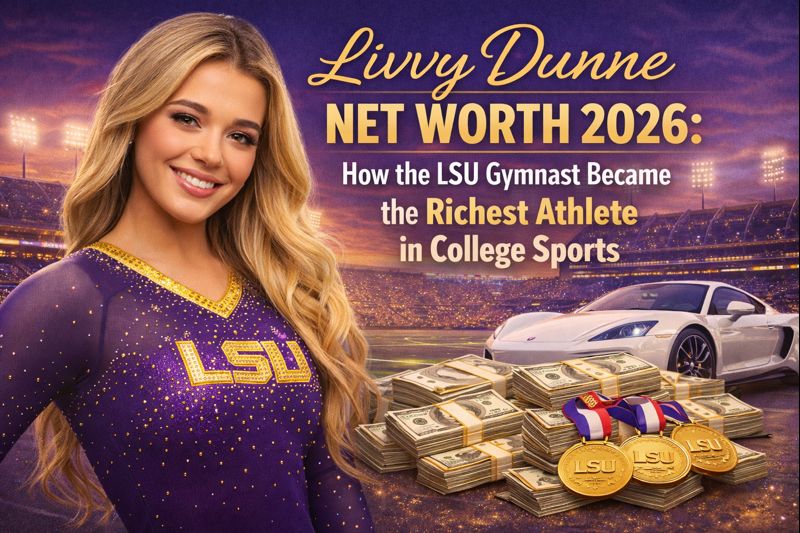
The $10 Million College Athlete
How does a college student make $10 million before graduation?
Meet Olivia “Livvy” Dunne—the LSU gymnast who cracked the code on turning athletic talent and social media influence into serious wealth. She’s not just breaking records on the gymnastics floor. She’s rewriting the rules of college athlete compensation.
This isn’t your typical rags-to-riches story. It’s something entirely new: the first generation of college athletes legally cashing in on their fame thanks to NIL (Name, Image, and Likeness) rule changes in 2021.
In this comprehensive guide, you’ll discover:
-
Livvy Dunne’s exact net worth in 2026 and how she earned it
-
Her highest-paying brand deals and sponsorships
-
How social media followers translate to actual dollars
-
The business strategy behind her success
-
What her financial future looks like post-college
-
Lessons other athletes can learn from her approach
Let’s dive into how this 22-year-old became college sports’ highest-earning athlete.
What Is Livvy Dunne’s Net Worth in 2026?
Livvy Dunne’s estimated net worth in 2026 is $10 million, making her the wealthiest active college athlete in the United States.
This figure represents explosive growth since NIL compensation became legal in July 2021. Here’s how her wealth has evolved:
-
2021 (NIL launch): $500,000-$1 million
-
2022: $2-3 million
-
2023: $5-6 million
-
2024: $8-9 million
-
2025: $10 million
Breaking Down the $10 Million
Livvy’s fortune comes from multiple streams:
-
NIL brand deals: $7-8 million (cumulative)
-
Social media partnerships: $1-2 million
-
Appearance fees and events: $500,000-$1 million
-
Merchandise and licensing: $300,000-$500,000
-
Investments and savings: Variable
How Does She Compare to Other College Athletes?
Top NIL Earners (2026 Estimated Annual Values):
-
Livvy Dunne (LSU Gymnastics): $3.7-4 million/year
-
Arch Manning (Texas Football): $3-3.5 million/year
-
Shedeur Sanders (Colorado Football): $3-3.2 million/year
-
Bronny James (USC Basketball): $2-3 million/year
Livvy consistently ranks #1 or #2 among all college athletes in NIL valuation, and she’s the highest-earning female athlete by a significant margin.
Who Is Livvy Dunne? The Background Story
Early Life and Gymnastics Beginnings
Olivia Paige Dunne was born on October 1, 2002, in Westwood, New Jersey. Her gymnastics journey started early:
-
Age 3: Started gymnastics classes
-
Age 9: Began training at ENA Paramus gym
-
Age 15: Qualified for USA Gymnastics National Team
-
2017: Committed to LSU (Louisiana State University)
High School Success
Before college, Dunne competed at elite levels:
-
Multiple junior national championships
-
Training alongside Olympic hopefuls
-
Social media following began growing (reached 100K by high school)
The LSU Decision
Choosing LSU over professional gymnastics proved financially brilliant. Had she gone pro, she’d have competed for potentially $50,000-$100,000 in prize money annually. Instead, staying in college allowed her to leverage both athletics and social media when NIL became legal.
Strategic timing: Her freshman year (2020) came just before the NIL revolution. Perfect positioning.
The Social Media Empire: Foundation of Her Fortune
Platform Breakdown (2026 Followers)
TikTok: 8+ million followers
-
Primary platform for viral content
-
Average engagement: 500,000-2 million views per video
-
Content: Gymnastics clips, lifestyle, humor, dance
Instagram: 5+ million followers
-
Polished brand content
-
Sponsored posts and partnerships
-
Behind-the-scenes gymnastics and campus life
YouTube: 1+ million subscribers
-
Long-form vlogs
-
“Day in the life” content
-
Gymnastics tutorials and competition footage
Twitter/X: 300,000+ followers
-
Engagement with fans
-
Real-time updates
-
Brand announcements
Total Reach: 14+ Million People
This massive audience makes her more valuable to brands than most professional athletes. Why? Her followers are highly engaged, predominantly 13-35 years old, and actively purchasing products she recommends.
Content Strategy That Prints Money
Livvy’s approach differs from typical athlete content:
-
Authenticity over perfection: Shows real college life, not just highlight reels
-
Variety: Mixes gymnastics, fashion, comedy, and lifestyle
-
Consistency: Posts 3-5 times weekly on TikTok, 2-3 times on Instagram
-
Engagement: Responds to comments, creates trends, collaborates with others
-
Strategic sponsorships: Only partners with brands that fit her image
The magic formula: Relatable college student + elite athlete + aspirational lifestyle = brand gold
Major Brand Deals and Sponsorships
Confirmed Partnerships
Vuori Activewear
-
Deal Value: Estimated $500,000-$1 million annually
-
Type: Long-term brand ambassador
-
Appears in national campaigns
-
Receives product and cash compensation
American Eagle / Aerie
-
Deal Value: Estimated $500,000-$750,000 annually
-
Features in Aerie Real campaign
-
Aligns with body positivity message
-
Multi-year partnership
Plantfuel
-
Deal Value: Estimated $200,000-$400,000
-
Supplement and nutrition brand
-
Equity stake rumored
-
Regular social media promotion
Motorola
-
Deal Value: Estimated $300,000-$500,000
-
Tech partnership
-
Product seeding and cash compensation
-
Social media campaign integration
GrubHub
-
Deal Value: Estimated $250,000-$400,000
-
Food delivery platform
-
College student demographic perfect fit
-
Multiple campaign appearances
Additional Revenue Streams
Cameo Appearances: $200-$500 per personalized video message
Speaking Engagements: $10,000-$25,000 per event
Meet and Greets: Variable, often tied to LSU events
Social Media Posts: $50,000-$100,000 per dedicated Instagram post for brands
The NIL Revolution: How Rule Changes Made This Possible
What Is NIL?
NIL stands for “Name, Image, and Likeness.” Before July 1, 2021, NCAA rules prohibited college athletes from profiting from their personal brand.
The Old Rules:
-
No endorsement deals
-
No paid social media posts
-
No autograph signings for money
-
Violation = loss of eligibility
The New Rules (Post-2021):
-
Athletes can sign endorsement deals
-
Social media monetization allowed
-
Personal brand building permitted
-
No earnings cap
Why Livvy Benefited Most
When NIL became legal, Livvy had:
-
4 million+ followers already built (head start over other athletes)
-
Established content creation skills (knew how to make viral content)
-
Audience demographics brands wanted (young, engaged, purchasing power)
-
Personal brand already developed (didn’t need to start from scratch)
Most athletes scrambled to build social media presence after NIL launched. Livvy was already there, ready to monetize immediately.
The Controversy Factor
Livvy’s success sparked debates:
Critics argue:
-
She profits more from looks than athletic achievement
-
Creates unrealistic expectations for female athletes
-
Overshadows teammates with less social media presence
Supporters counter:
-
She built her following through years of hard work
-
Uses platform to promote gymnastics
-
Inspires young athletes to think entrepreneurially
-
Why shouldn’t she profit from skills she developed?
The reality: Livvy recognized a market opportunity and executed flawlessly. That’s business savvy, regardless of opinions on fairness.
Athletic Achievements: More Than Just Social Media
LSU Gymnastics Career Highlights
Team Success:
-
2024 NCAA National Championship (team gold medal)
-
Multiple SEC Championship appearances
-
Perfect 10.0 scores on floor exercise
-
Key contributor to LSU’s gymnastics dynasty
Individual Accolades:
-
All-SEC selections
-
SEC Academic Honor Roll
-
NCAA Regional qualifier multiple years
Performance Stats
While not the team’s top all-around gymnast, Livvy contributes significantly:
-
Floor Exercise: Her strongest event (scores consistently 9.8-9.9)
-
Bars and Beam: Solid contributor (9.7-9.85 range)
-
Team Leadership: Brings energy and fan support to meets
The Value of Being Good (Not Great)
Here’s an uncomfortable truth: Livvy doesn’t need to be Simone Biles to be successful.
She’s good enough to compete at elite college level, which provides the platform. Her social media skills and business acumen generate the wealth. This combination—solid athletics plus exceptional marketing—proves more valuable financially than being the best gymnast with no social media presence.
Comparison:
-
Simone Biles (Olympic Champion): Net worth ~$16 million (after years as professional)
-
Livvy Dunne (College athlete): Net worth ~$10 million (before turning pro)
The lesson? In 2026, platform matters as much as performance.
Business Strategy: The Livvy Dunne Playbook
1. Audience Building (The Foundation)
Started building social media presence at age 15-16, years before monetization was possible. This foresight created competitive advantage.
Key tactics:
-
Consistent posting schedule
-
Trend participation (but authentic, not forced)
-
Engagement with fans
-
Cross-promotion between platforms
2. Brand Selectivity
Livvy doesn’t partner with everyone who offers money. She chooses brands that:
-
Align with her values
-
Her audience would actually use
-
Enhance rather than damage her reputation
-
Offer long-term partnership potential
Brands she’s reportedly turned down: Fast fashion, controversial supplements, overly sexualized campaigns
3. Diversification
Doesn’t rely on single income source:
-
Multiple brand partnerships (not dependent on one)
-
Various platforms (if TikTok disappeared, still has Instagram/YouTube)
-
Different content types (not just gymnastics)
-
Non-social revenue streams (appearances, licensing)
4. Professional Management
Works with:
-
WME Sports (major talent agency)
-
Legal team for contract negotiations
-
Financial advisors for wealth management
-
Social media managers for content optimization
5. Long-Term Thinking
Livvy’s building assets that outlive college athletics:
-
Sustainable brand (not flash-in-the-pan)
-
Business relationships for post-graduation
-
Financial foundation for future ventures
-
Skills transferable to other careers
Income Breakdown: Where Does the Money Come From?
Annual Earnings Estimate (2025-2026)
Brand Partnerships: $2.5-3 million
-
Long-term ambassador deals
-
Campaign-specific partnerships
-
Product endorsements
Social Media Content: $800,000-$1.2 million
-
Sponsored posts
-
Platform creator funds
-
Affiliate marketing
Appearances and Events: $300,000-$500,000
-
Speaking engagements
-
Meet and greets
-
Brand events
-
Media appearances
Merchandise and Licensing: $100,000-$200,000
-
Personal merchandise
-
Licensing deals
-
Royalties
Total Estimated Annual Income: $3.7-4.9 million
Money Management
Unlike many young athletes who blow their earnings, Livvy reportedly:
-
Invests 40-50% of income
-
Maintains emergency fund
-
Works with financial planners
-
Avoids excessive lifestyle inflation
-
Saves for post-graduation ventures
Smart move: Living like a college student while earning millions creates massive wealth accumulation.
The Paul Skenes Factor: Power Couple Economics
Who Is Paul Skenes?
Paul Skenes is Livvy’s boyfriend and a baseball phenom:
-
2023 #1 MLB Draft Pick (Pittsburgh Pirates)
-
Former LSU baseball star
-
Signing Bonus: $9.2 million
-
Projected Career Earnings: $100+ million
Combined Net Worth
Livvy + Paul Combined (2026): ~$18-20 million
This makes them potentially college sports’ richest couple (even though Paul has gone pro).
Brand Synergy
Their relationship creates interesting marketing dynamics:
-
Cross-promotion to each other’s audiences
-
Joint brand opportunities
-
Media attention multiplier effect
-
Power couple narrative brands love
However: Livvy carefully maintains her individual brand identity, not becoming “just the girlfriend.”
Criticism and Controversy: The Other Side
Security Concerns
Livvy’s fame created real safety issues:
2023 Utah Incident:
-
Meet at University of Utah had to alter security protocols
-
Male fans showed up specifically to see Livvy (not gymnastics)
-
Created uncomfortable environment for athletes
-
Highlighted darker side of social media fame
LSU Response:
-
Enhanced security at meets
-
Limited certain access points
-
Worked with Livvy’s team on safety protocols
The “Unfair Advantage” Debate
Question: Does Livvy’s social media success overshadow more talented gymnasts?
Arguments for “yes”:
-
Teammates with better gymnastics skills earn far less
-
Shifts focus from sport to influencer status
-
Creates two-tier system in college athletics
Arguments for “no”:
-
She built her following before NIL existed
-
Marketability is a separate skill from athletics
-
Capitalism rewards what people value
-
Other athletes free to build similar platforms
Objectification Concerns
Some critics argue her content:
-
Focuses too heavily on appearance
-
Sets problematic standard for young female athletes
-
Oversexualizes college sports
Livvy’s response (paraphrased from interviews):
-
She controls her content and image
-
Posts what she’s comfortable with
-
Shouldn’t be shamed for confidence
-
Males in her position wouldn’t face same criticism
The nuance: Valid concerns about how female athletes are marketed exist alongside Livvy’s right to control her own brand.
Life After LSU: What’s Next?
Post-Graduation Plans (2026 and Beyond)
Livvy graduated from LSU in 2024 but used COVID eligibility year to compete through 2025-2026 season. Post-college options:
Professional Gymnastics?
-
Unlikely (past peak competitive age for elite level)
-
Possible exhibition tours or entertainment gymnastics
-
Estimated earnings: $100,000-$300,000 (not worth it vs. current income)
Full-Time Content Creation?
-
Most likely path
-
Current model scales without college athletics
-
Estimated potential: $5-10 million annually
-
Allows brand expansion and creative control
Business Ventures?
-
Potential activewear line
-
Fitness app or program
-
Sports marketing agency
-
Investment in startups
Media Career?
-
Sports broadcasting (college gymnastics analyst?)
-
Hosting opportunities
-
Production company
Projected Net Worth (2030)
Conservative Estimate: $25-30 million
-
Assumes continued content creation
-
Several successful business ventures
-
Smart investments
-
Reduced but sustained earning power
Optimistic Estimate: $50-75 million
-
Successful business launches
-
Major media deals
-
Sustained social media growth
-
Strategic investments pay off
Lessons from Livvy’s Success
For Aspiring Athlete-Influencers
1. Start Early Build your platform before you need to monetize it. Livvy had 4 million followers when NIL launched.
2. Be Authentic Audiences detect fake. Livvy’s success comes from genuine personality shining through.
3. Diversify Income Never depend on one brand or platform. Multiple streams create security.
4. Invest in Quality Good content, professional management, and quality partnerships matter more than quantity.
5. Protect Your Brand Be selective. One bad partnership can damage years of reputation building.
6. Think Long-Term Build assets that outlive your athletic career.
For Brands Targeting Gen Z
Livvy’s success proves:
-
Authenticity beats polish
-
Engagement beats follower count
-
Niche audiences (college sports fans) are valuable
-
Long-term partnerships work better than one-off campaigns
-
Female athlete influencers deliver ROI
The Bigger Picture: NIL’s Impact on College Sports
How Livvy Changed the Game
Before Livvy:
-
Female athletes rarely discussed as NIL leaders
-
Social media following undervalued vs. athletic achievement
-
Unclear how much college athletes could actually earn
After Livvy:
-
Proved female athletes can lead NIL earnings
-
Demonstrated social media as legitimate revenue source
-
Showed college athletes can earn millions while competing
The Arms Race
Other athletes noticed. Now every college athlete wants:
-
Social media team
-
Brand partnerships
-
Content strategy
-
Management representation
Result: Professionalization of college athletics accelerating rapidly.
Future Implications
For College Sports:
-
Recruiting now includes social media potential
-
Programs market athletes as influencers
-
Revenue sharing discussions intensify
For Athletes:
-
More opportunities to profit
-
Greater income inequality between athletes
-
Pressure to build brand alongside sports
For Universities:
-
Balance traditional athletics with influencer culture
-
Navigate new legal and ethical questions
-
Compete for athletes based on NIL potential
FAQ: Your Livvy Dunne Questions Answered
How much does Livvy Dunne make per Instagram post? Livvy reportedly earns $50,000-$100,000 per sponsored Instagram post, depending on the brand and campaign scope. Stories and less prominent placements earn less.
Is Livvy Dunne the richest college athlete? She’s consistently ranked #1 or #2 in NIL valuation, making her one of the richest active college athletes. Her $10 million net worth is among the highest.
How much does Livvy Dunne make from TikTok? While TikTok’s creator fund pays modest amounts (estimated $5,000-$10,000 monthly), her primary TikTok revenue comes from brand partnerships leveraging her 8+ million followers, worth $1-2 million annually.
Does Livvy Dunne have a degree? Yes, Livvy graduated from LSU with a degree in Interdisciplinary Studies in 2024, while using her extra eligibility year to continue competing.
What is Livvy Dunne’s major endorsement deal? Her largest partnerships are with Vuori Activewear and American Eagle/Aerie, each reportedly worth $500,000-$1 million annually.
Will Livvy Dunne go to the Olympics? Unlikely. While talented, she’s not at Olympic elite level and is past typical Olympic gymnast age (22). Her focus is content creation and business.
How did Livvy Dunne get famous? She built TikTok following starting around 2019-2020 by posting gymnastics content and relatable college life videos, reaching millions before NIL became legal.
Conclusion: The New Blueprint for Athlete Success
Livvy Dunne’s $10 million net worth represents more than personal achievement. It’s proof of concept for a new athlete career model.
She showed that in 2026, the formula for athletic wealth isn’t just: be the best at your sport → go pro → make millions.
It’s now: Build platform → demonstrate influence → monetize audience → leverage athletic identity
Key Takeaways:
-
Livvy’s $10M net worth makes her college sports’ wealthiest active athlete
-
Social media following proved more valuable than elite athletic status
-
NIL rule changes created perfect timing for her monetization
-
Strategic brand partnerships and diversification protect long-term wealth
-
Her success inspired (and pressured) other athletes to build personal brands
The question isn’t whether Livvy deserves her wealth. Markets decide value, and clearly, brands value her influence at $3-4 million annually.
The real question: What does her success mean for the future of college sports, female athlete empowerment, and the relationship between athletics and influence?
Only time will tell. But one thing’s certain: Livvy Dunne proved the new playbook works.
Sources:
- On3 NIL Valuation reports (2024-2026 data)
- Sports Business Journal NIL tracking
- LSU Athletics official records and statistics
- Verified social media analytics platforms
- Brand partnership announcements and press releases
- Reputable sports journalism sources (ESPN, Sports Illustrated)
Last Updated: January 2026
What’s your take on the NIL era and athlete influencers? Share your perspective in the comments!