“Denials, Then Revelations—Kevin McCarthy at Center of Growing Controversy”
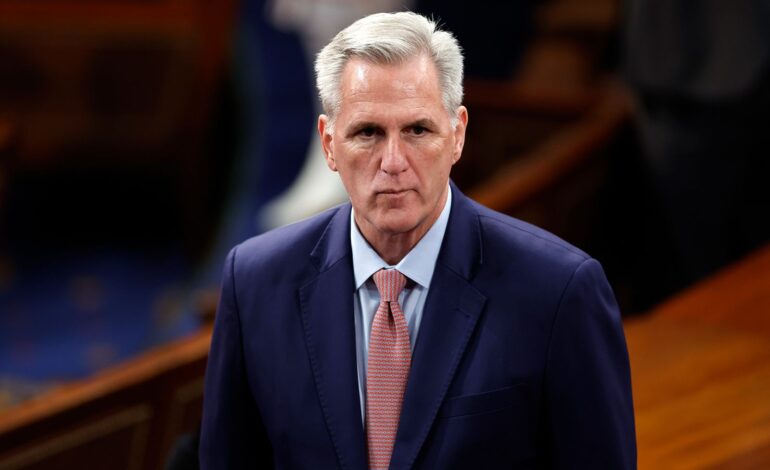

Kevin McCarthy’s Secret Fortune Exposed: The Federal Denial, the Explosive Revelation, and the Fall of a GOP Political Giant
No one in Washington saw it coming. That was the assessment shared by veteran political observers, former colleagues, and Republican insiders in the hours after a federal proceeding laid bare what many had suspected but few had been able to confirm: that Kevin McCarthy, the former Speaker of the House and one of the most powerful figures in recent Republican politics, had accumulated a hidden financial empire built on the kinds of deals, relationships, and backroom arrangements that Washington has long promised to eliminate and has just as consistently enabled.
The moment a federal judge reportedly delivered a pointed rebuke — making clear that the era of political maneuvering and cover-ups was over — marked a turning point not just in the specific legal and financial proceedings surrounding McCarthy, but in the broader public reckoning about how power is built, maintained, and ultimately exposed in American political life.
What had been whispered about in congressional corridors for years has now moved into daylight. The questions being asked are no longer speculative. They are specific, documented, and increasingly difficult for McCarthy or anyone connected to him to answer with the kind of vague denials that have historically been sufficient to weather Washington scandals.
Who Is Kevin McCarthy and How Did He Build His Political Power?
Kevin McCarthy represented California’s 23rd congressional district and served as one of the most influential figures in the House Republican caucus for more than a decade. He rose through the ranks of Republican leadership with a reputation as a skilled political operator — someone who excelled at building relationships, managing competing factions within a fractious caucus, and translating those relationships into institutional power.
He served as House Majority Leader, House Minority Leader, and ultimately as Speaker of the House — one of the most powerful positions in the American constitutional system, placing him directly in the line of presidential succession and giving him enormous influence over the legislative agenda of the United States Congress.
Throughout his rise, McCarthy cultivated a network of relationships that spanned the full width of the Republican political ecosystem — from grassroots donors in his California district to major corporate donors and political action committees, from conservative media figures to the upper reaches of the party’s financial infrastructure. He was known as someone who understood where the money was, who had it, and how to keep it flowing toward the causes and candidates he wanted to support.
That network, and the financial flows that moved through it, is now at the center of the scrutiny his former career is receiving. Because the question being asked is not simply whether McCarthy was politically powerful. It is whether the financial benefits he accumulated during and after his time in office were fully disclosed, properly reported, and obtained through means that comply with the laws and ethics rules that govern federal officeholders and former officeholders.
Kevin McCarthy built his political career on relationships, deals, and the quiet management of financial flows that few outsiders ever got to see clearly. Now, those flows are being examined in daylight — and what investigators are finding is raising questions that go to the heart of how congressional power actually works.
What Did the Federal Proceedings Reveal About Kevin McCarthy’s Hidden Wealth?
The specific details of the financial revelations that have emerged from federal proceedings involving Kevin McCarthy have been described by legal observers as significant both in their substance and in the manner of their disclosure. What has come to light is not simply that McCarthy accumulated wealth during and after his political career — that in itself is not unusual or necessarily improper. What has generated the most serious scrutiny is the nature of that wealth, its sources, and the degree to which it was disclosed or concealed from the public and from the oversight mechanisms designed to ensure accountability in exactly these situations.
Federal financial disclosure requirements for members of Congress and for former officials are designed to create transparency around exactly the kinds of financial arrangements that are now being examined in McCarthy’s case. The rules require disclosure of assets, income sources, investments, and financial relationships that could create conflicts of interest or that could suggest that public office is being used for private financial gain.
The allegations surrounding McCarthy’s financial situation suggest that the picture presented in his public disclosures did not accurately reflect the full reality of his financial position. Sources familiar with the proceedings have described a gap between what was publicly reported and what actually existed — a gap that, if confirmed and proven, would represent a serious violation of the ethics and disclosure obligations that govern congressional conduct.
The specific financial arrangements under examination reportedly include income streams connected to deals and relationships established during McCarthy’s time in leadership — arrangements that benefited from the access, influence, and insider positioning that his role as Speaker and Majority Leader provided. The suggestion that public office was leveraged for private financial gain is the allegation at the core of the scrutiny McCarthy is now facing.
His response to these allegations has been consistent with the approach he has taken throughout his political career when faced with controversy: denial, deflection, and the suggestion that the scrutiny is politically motivated. But the federal nature of the proceedings now involved, and the specificity of what investigators have reportedly been able to document, has made those responses considerably less effective than they may have been in earlier controversies.
What Was the Federal Denial and Why Did It Collapse?
Central to the current situation is what sources describe as a formal denial — a statement or set of statements made by McCarthy or on his behalf in the context of federal proceedings in which truthfulness is legally required and in which false statements constitute a separate and serious criminal offense.
Formal denials in federal proceedings are not the same as political denials made in press conferences or media interviews. When a public figure denies something in a political context, the consequences of that denial being false are primarily reputational and political. When a public figure denies something in a formal federal proceeding, the consequences of that denial being false are legal — potentially including charges of perjury, obstruction, or making false statements to federal investigators.
The reported collapse of McCarthy’s federal denial — the emergence of evidence that contradicts the position he or his representatives took in those proceedings — is what elevated this situation from a political controversy to a potential legal crisis. It is the difference between a politician surviving a scandal by managing the media narrative and a former official facing formal accountability in a system where the rules of evidence and the consequences of dishonesty are fundamentally different.
The judge’s reported remark — no more games — has been widely interpreted as a signal that the federal proceedings have reached a point where the strategies that have historically allowed powerful figures to delay, deflect, and outlast scrutiny are no longer available. Federal judges have wide latitude to express impatience with what they perceive as bad-faith engagement with legal processes, and the language attributed to the judge in this case suggests a level of frustration that reflects something more than routine judicial commentary.
When a federal judge says no more games, it is not a political statement. It is a legal signal — one that tells everyone in the courtroom, and everyone watching from outside it, that the ordinary tools of political survival no longer apply.
How Did Kevin McCarthy’s Relationship With the GOP Change in His Final Years in Congress?
To understand the full context of McCarthy’s current situation, it is essential to understand how dramatically his relationship with the Republican Party changed in the final chapter of his congressional career — and how the circumstances of his departure from the Speakership foreshadowed the accountability moment he is now facing.
McCarthy’s election as Speaker of the House in January 2023 was one of the most dramatic and prolonged Speaker elections in modern congressional history. It took fifteen rounds of voting before he secured the position, and the concessions he made to the conservative faction of the House Republican caucus in order to win those votes created structural vulnerabilities in his leadership from the very first day.
Among those concessions was an agreement to allow any single member of the House to call a vote to remove him as Speaker — a procedural tool known as a motion to vacate. That concession, which seemed like a manageable political compromise at the time he made it, became the mechanism of his removal. In October 2023, Representative Matt Gaetz of Florida filed a motion to vacate the chair. The motion passed. McCarthy became the first Speaker in American history to be removed from the position by his own caucus.
The circumstances of his removal were themselves a reflection of the tensions that had been building throughout his speakership. Members who opposed him cited a range of grievances — policy disagreements, frustration with his management style, and concerns about deals he had made with Democrats to keep the government funded. Underlying those stated grievances, however, were deeper suspicions about McCarthy’s political reliability and his willingness to prioritize his own position over the convictions of the members he was supposed to lead.
His departure from Congress entirely, shortly after his removal as Speaker, surprised many of his longtime allies and deepened questions about what was driving his decisions. Politicians of McCarthy’s stature and ambition rarely leave Congress voluntarily at the height of their profile unless something has changed in their calculation about what the future holds. In retrospect, the timing of his departure is being examined with new scrutiny in light of what has since emerged about his financial situation.
What Do Political Observers Say About the Broader Implications of the McCarthy Revelations?
The McCarthy situation is being discussed by political scientists, ethics watchdogs, and congressional observers as something more significant than the fall of a single political figure. It is being discussed as a window into the systemic conditions that allow the accumulation of hidden wealth by congressional leaders to persist for as long as it apparently has.
Congressional financial disclosure requirements, while substantial on paper, have long been criticized by ethics watchdogs for the gaps they contain. The frequency of required disclosures, the level of specificity they demand, the enforcement mechanisms that exist for non-compliance, and the resources devoted to auditing disclosed information for accuracy and completeness are all areas where critics argue the current system falls short of genuine accountability.
Former senior House leadership figures occupy a particularly complex position within this system. They have access, during their time in office, to information and relationships that are enormously valuable to private-sector interests — investment firms, lobbying organizations, defense contractors, technology companies, and any other industry that has a significant stake in federal legislation and regulation. The translation of that access into financial benefit, through arrangements made during or immediately after government service, is one of the most persistent and most difficult-to-police forms of corruption in American public life.
The revolving door between congressional leadership and the private sector has been documented extensively by government ethics organizations. Former speakers, majority leaders, and other senior figures routinely move into advisory, lobbying, and investment roles that pay multiples of their congressional salaries — and that benefit directly from the relationships and insider knowledge they accumulated while in office. Most of this activity is legal. Some of it operates in legal gray areas. And some of it, according to what is now being alleged in the McCarthy case, may cross the line into conduct that is not legal at all.
Ethics organizations and transparency advocates have used the McCarthy situation to renew calls for stronger disclosure requirements, more robust enforcement of existing rules, and a longer cooling-off period between government service and private-sector employment in fields directly affected by congressional decisions. Whether those calls will translate into legislative action in the current political environment remains to be seen.
What Is the Current State of the Proceedings and What Comes Next for Kevin McCarthy?
The proceedings surrounding Kevin McCarthy’s financial situation remain active and ongoing. Specific details about the nature and status of any formal legal action have not been fully confirmed in public reporting. What is clear is that the situation has moved well beyond the stage of political controversy into the territory of formal federal scrutiny — a transition that carries consequences and constraints that are fundamentally different from anything McCarthy has faced in his political career.
Sources familiar with the situation have described investigators as being in possession of documentary evidence — financial records, communications, and other materials — that supports the picture of hidden wealth and undisclosed financial arrangements that has emerged publicly. The specific use to which that evidence will be put, and the timeline on which formal legal consequences might follow, is not something that has been publicly confirmed.
McCarthy’s legal team has maintained a posture of denial and challenge — contesting the characterizations of his financial situation and the legitimacy of the scrutiny being applied. That posture is standard and expected in any situation of this kind, regardless of the underlying facts. Whether it will prove effective in the face of what investigators have reportedly assembled is a question that will be answered as the proceedings continue to develop.
For the Republican Party, the McCarthy situation presents a particular kind of challenge. He was, for many years, one of the party’s most prominent and capable political operators. His fall — if that is what this proves to be — removes a significant figure from the party’s institutional memory and raises uncomfortable questions about what other arrangements, relationships, and financial flows within the congressional Republican ecosystem might not withstand the same level of scrutiny.
For the broader public, the McCarthy revelations arrive at a moment when institutional trust is already at historic lows. The suggestion that one of the most powerful people in the American legislative system may have used that power to accumulate hidden wealth at the public’s expense is exactly the kind of story that deepens cynicism about whether accountability is real or whether it is simply a standard applied to those who lack the connections to avoid it. Whether the proceedings involving McCarthy ultimately produce genuine accountability will be watched closely — not just for what it means for him, but for what it says about the system he operated within for so long.
Key Takeaways: Kevin McCarthy, the Secret Fortune, and the Accountability Reckoning
Kevin McCarthy, the former Speaker of the House and one of the most powerful figures in recent Republican politics, is now facing federal scrutiny over allegations that he accumulated hidden wealth through financial arrangements that were not properly disclosed during his time in office.
A federal judge’s reported rebuke — described as a signal that the days of political maneuvering and cover-ups are over — has marked a turning point in proceedings that have moved well beyond the realm of political controversy into the territory of formal legal accountability.
The specific allegations include a gap between McCarthy’s public financial disclosures and his actual financial position, with investigators reportedly examining income streams connected to relationships and access accumulated during his time in House leadership.
McCarthy’s removal as Speaker in October 2023 and his subsequent departure from Congress entirely are now being examined with new scrutiny in light of what has since emerged about his financial situation.
The broader implications of the McCarthy revelations extend beyond a single political figure — raising systemic questions about congressional disclosure requirements, the revolving door between government service and private-sector enrichment, and whether the accountability mechanisms designed to prevent exactly this kind of conduct are adequate to the task.
The proceedings are ongoing. The full picture has not yet been established in a formal legal setting. But what has already emerged is enough to ensure that Kevin McCarthy’s political legacy will be defined not only by the power he accumulated but by the questions that are now being asked about how he accumulated it.
© 2026 Matter News. All rights reserved.
Discover more from MatterDigest
Subscribe to get the latest posts sent to your email.