Kermit Gosnell Dead at 85: The Man Who Hid a House of Horrors in Plain Sight
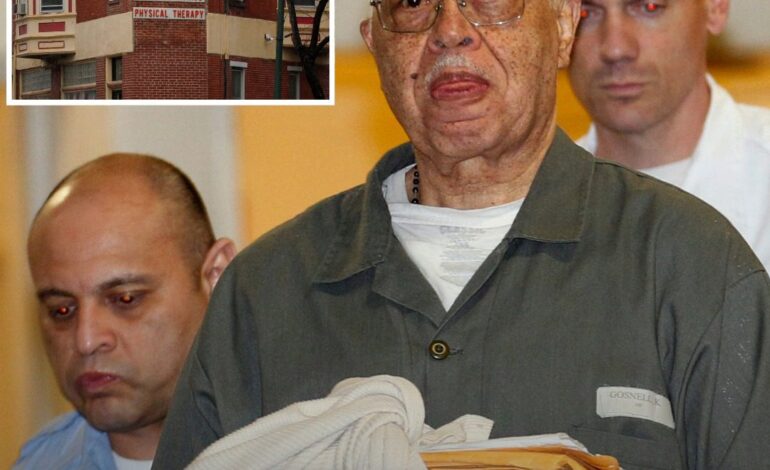

Kermit Gosnell, the Philadelphia physician whose West Philadelphia abortion clinic became the center of one of the most disturbing criminal cases in American medical history, has died. He was 85 years old. The Pennsylvania Department of Corrections confirmed that Gosnell passed away on March 1 at a hospital outside the prison system, where he had been transferred from the State Correctional Institution-Smithfield, a facility located roughly 60 miles south of Pittsburgh. No cause of death was publicly disclosed.
Gosnell was serving a life sentence at the time of his death — the consequence of his 2013 conviction on three counts of first-degree murder for killing babies born alive during late-term abortion procedures at his clinic, which prosecutors and investigators had come to call a “house of horrors.” He was also convicted of involuntary manslaughter in connection with the drug overdose death of a patient who died after undergoing an abortion at his facility. In addition to those state convictions, Gosnell had pleaded guilty to 12 federal drug charges, including conspiracy to distribute pain medication and illegal distribution of oxycodone, earning him an additional 30-year federal sentence stacked on top of his life term. He died behind bars, never having been released, never having expressed meaningful public remorse.
The story of Kermit Gosnell is not merely the story of a single criminal physician. It is a story about institutional failure, regulatory negligence, racial and socioeconomic exploitation, and the way in which the most vulnerable members of society can fall through the cracks of systems designed to protect them — all while those in positions of authority look the other way.
A Doctor Who Presented Himself as a Savior
For decades before his arrest, Gosnell operated his Women’s Medical Society clinic on Lancaster Avenue in West Philadelphia, a lower-income neighborhood where many of his patients were poor, uninsured, or undocumented women who had limited options for reproductive healthcare. Gosnell cultivated a public image as a compassionate community physician, a helper of desperate women who had nowhere else to turn. He charged relatively low fees and accepted patients others turned away. To many in the neighborhood, he appeared to be something close to a neighborhood institution.
But behind that carefully maintained image lay an operation that prosecutors, investigators, and former employees would later describe in terms that seemed almost too horrifying to believe. Gosnell was not a board-certified OB-GYN. He had no formal specialty training in obstetrics or gynecology, yet he performed hundreds — possibly thousands — of abortions, many of them late-term, over the course of his decades-long career. The grand jury convened to investigate his practice found that he routinely violated Pennsylvania’s 24-week gestational limit on abortion, performing procedures on women who were significantly further along in their pregnancies. He allegedly did so for cash, charging higher fees for later procedures.
The conditions inside his clinic were, by every account, appalling. Investigators who raided the facility in 2010 as part of a prescription drug trafficking investigation were reportedly stunned by what they found. The clinic smelled foul. Bloodstained furniture sat in procedure rooms. Medical instruments were visibly dirty. Bags and bottles containing fetal remains were stored throughout the facility, and jars of severed body parts lined shelves. Cats roamed the premises, leaving waste behind. The equipment used to sedate and monitor patients was outdated and poorly maintained. Staff members had no medical training — some were teenagers. It was, by any clinical standard, not a medical facility at all. It was something else entirely.
The Crimes Themselves
What elevated Gosnell’s case from a story about regulatory negligence to one of outright murder was the testimony of his own former employees. Multiple staff members, many of whom pleaded guilty to various charges and cooperated with prosecutors, testified that Gosnell regularly delivered babies alive — fetuses old enough to survive outside the womb — and then killed them after birth. The method he reportedly used was to sever the spinal cord at the base of the skull with scissors. He called this “snipping.” He allegedly joked about it.
Former employees described infants moving, whimpering, and breathing after delivery, and then being killed by Gosnell or at his direction. One baby, who came to be known during the trial as “Baby Boy A,” was described as so large and so clearly viable that a worker testified the child had “precipitated,” or fallen, into the toilet before Gosnell arrived. Another infant, later referred to as “Baby C,” was reported to have been breathing and moving for approximately 20 minutes after delivery before Gosnell cut the spinal cord. A third baby was described by staff as crying before it was killed.
Prosecutors argued — and the jury ultimately agreed — that these were not abortions. They were murders. The babies had been born. They were outside the womb, alive and breathing, before Gosnell killed them. That legal and moral distinction became central to both the criminal case and the wider public debate that followed the trial.
The grand jury’s 2011 report, a searing 281-page document that preceded the criminal trial, put the total number of newborn killings in the “hundreds,” while acknowledging that prosecuting most of them was impossible because Gosnell had systematically destroyed patient files. The report described his clinic as a “baby charnel house” — a phrase that captured both the physical reality of what investigators found and the moral horror of what had occurred there over the years.
A System That Failed
Perhaps the most troubling dimension of the Gosnell case was not what he did, but how he was allowed to do it for so long.
Pennsylvania’s health department had not conducted a routine inspection of Gosnell’s clinic — or any abortion clinic in the state — for 15 years before the 2010 raid. The grand jury’s report was explicit about why: politics. When Governor Tom Ridge, a pro-choice Republican, took office in 1995, succeeding the pro-life Democratic Governor Bob Casey, state health officials made an administrative decision to stop conducting routine inspections of abortion clinics. The reasoning, as documented in the grand jury report, was that inspections would amount to “putting a barrier up to women” seeking abortions. The state’s stated commitment to protecting abortion access had, in practice, meant abandoning its commitment to protecting the women who sought those abortions.
The consequence of that decision was that Gosnell’s clinic operated for a decade and a half without anyone from the government checking to ensure it met basic safety standards. Women were harmed. At least one died. And the system that should have protected them simply wasn’t looking.
Complaints had been filed. Multiple medical professionals and patient advocates had raised concerns about Gosnell over the years. Those concerns were either inadequately investigated or not acted upon. Even the Philadelphia Department of Public Health, which had its own inspection authority, failed to catch what was happening on Lancaster Avenue.
The grand jury was unsparing in its assessment of official culpability. The report noted that “the Commonwealth’s political decision to stop inspecting abortion clinics” created the conditions that allowed Gosnell to operate unchecked. Two senior state health officials were fired in the aftermath of the Gosnell scandal, and Pennsylvania subsequently enacted stricter regulations governing abortion clinics, requiring more frequent inspections and establishing clearer standards for facilities and personnel.
Critics from across the political spectrum found common ground in condemning the regulatory failure, though they often drew very different policy conclusions from it.
The National Debate
The Gosnell trial, which began in March 2013, became a flashpoint in the broader national conversation about abortion — a conversation that was already charged, and that would only intensify in the years to come. The case arrived roughly a decade before the Supreme Court’s 2022 decision in Dobbs v. Jackson Women’s Health Organization overturned Roe v. Wade, a ruling that had protected the right to abortion nationally for nearly 50 years.
Abortion opponents cited Gosnell as evidence of what they characterized as the moral bankruptcy of the broader abortion industry and argued that his crimes were a logical extension of abortion culture. They pointed to what they described as a media reluctance to cover the trial extensively in its early weeks — a perception that became a controversy in its own right, with journalists and critics debating whether the story had received adequate national attention given its gravity.
Abortion rights advocates, for their part, argued that Gosnell was a criminal aberration rather than a reflection of legitimate abortion practice, and that the real lesson of his case was the need for accessible, regulated reproductive healthcare. They argued that when women cannot access safe and legal abortion services through proper channels, they are driven toward dangerous providers like Gosnell — and that restricting abortion access would only create more Gosnells, not fewer.
Both arguments reflected genuine moral and policy convictions, and the Gosnell case gave each side visceral evidence to support its position. The debate his case ignited never really subsided, and in many respects it fed directly into the increasingly polarized national argument over abortion that culminated in Dobbs.
His Patients
Lost in much of the political and legal debate was sustained attention to the women Gosnell served. They were, by and large, poor women. Many were women of color. Some were immigrants. Many had limited English proficiency. They had come to Gosnell because they had few alternatives — because they could not afford clinics in more affluent parts of the city, because they had waited too long and other providers turned them away, because they did not know where else to go.
The grand jury report made clear that Gosnell treated these women with contempt. He reportedly slapped patients, provided what investigators characterized as abysmal care, and often refused to personally see or speak with patients — unless, the report noted pointedly, they were white or had money. The racial dimension of Gosnell’s conduct was documented but received less sustained public attention than other aspects of the case. He exploited the desperation of marginalized women while presenting himself as their champion.
At least one woman died as a direct result of his negligence. Karnamaya Mongar, a 41-year-old Nepalese refugee, died in November 2009 after being administered a fatal overdose of Demerol and other sedatives by untrained clinic staff before an abortion procedure. Gosnell was not present when she was sedated. Staff members panicked when she lost consciousness, and when emergency responders eventually arrived, they reportedly found that hallways inside the clinic were too cluttered and narrow to accommodate a standard-sized gurney.
Mongar’s death was the involuntary manslaughter charge that accompanied the murder convictions. Her name deserves to be remembered alongside the legal and political dimensions of the case she helped bring to light.
The End of a Grim Chapter
Kermit Gosnell spent the last years of his life in a Pennsylvania state prison, serving a sentence that guaranteed he would never be free again. He gave occasional interviews in the years following his conviction, at times maintaining that he had been unfairly prosecuted, at times claiming that his accusers had misunderstood the nature of his work. He never expressed the kind of remorse that would have satisfied his many critics, and he remained a divisive and disturbing figure in the public consciousness of American medicine and law.
His death at 85 closes a chapter, but it does not resolve the questions his case raised. The questions about regulatory oversight and political will. The questions about access to safe healthcare for poor and marginalized women. The questions about how a man could commit crimes of this scale, in plain sight, for this long, without being stopped sooner. Those questions remain.
The institutions that failed — the state health department, the city health department, the medical licensing boards, the complaints systems that absorbed concerns and produced nothing — did not die with Gosnell. The conditions that drove desperate women to a man like him have not disappeared from American life. The debate over abortion that his case both reflected and inflamed continues to shape legislation, litigation, and lived experience across the country.
Kermit Gosnell was a singular figure in the history of American crime: a physician who weaponized his position of trust against the very people who most needed his care. He is gone. The reckoning his story demands is not.