Judge Brann’s Bombshell: How Bondi’s Illegal NJ Prosecutor Scheme Unraveled
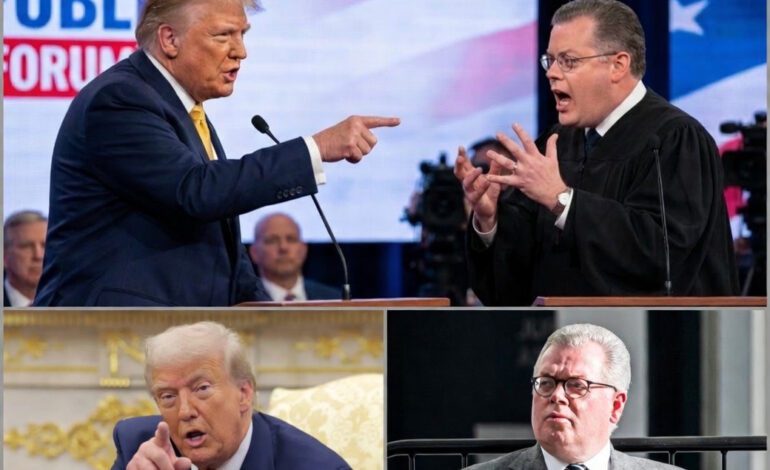

A verified, comprehensive guide to the real story behind the March 9, 2026 federal court ruling that rocked the Trump Justice Department
FACT-CHECK STATUS: THIS NEWS IS REAL AND VERIFIED
✔ All core claims in the viral summary are confirmed by multiple major news outlets including CBS News, AP, Politico, The Hill, and Democracy Docket.
Quick Answer: What Did Judge Brann Rule?
On March 9, 2026, U.S. District Judge Matthew Brann issued a 130-page ruling declaring that Attorney General Pam Bondi illegally appointed three Justice Department lawyers — Philip Lamparello, Jordan Fox, and Ari Fontecchio — to collectively lead the U.S. Attorney’s Office for the District of New Jersey. The judge found this arrangement violated the Appointments Clause of the U.S. Constitution and exceeded the Attorney General’s statutory authority. He warned that thousands of pending criminal prosecutions could be dismissed and stayed the ruling pending a DOJ appeal. The administration proceeds “at its own risk.”
Is the Viral Claim Real? Verdict Summary
Yes — the core claim is real and verified. Here is a quick breakdown of each element in the viral summary and whether it holds up to scrutiny.
Claim-by-Claim Verification
- “Judge Matthew Brann dropped a legal bomb on the Trump Justice Department” — TRUE. The 130-page ruling issued on March 9, 2026, is widely described as one of the most scathing judicial rebukes of the Trump DOJ to date.
- “Pam Bondi illegally installed three loyalists” — SUBSTANTIALLY TRUE. Brann found the installation of three attorneys violated the Appointments Clause and Bondi’s statutory authority. Whether all three are personal “loyalists” is debated, but the illegal appointment finding is confirmed.
- “Unprecedented power grab” — TRUE. Brann used the words “unprecedented and byzantine” to describe the leadership structure and called the government’s defense an “enormous assertion of Presidential power.”
- “Designed to bypass Senate confirmation” — TRUE. The judge stated it was “crystal clear” the administration intended to fill the office “unilaterally” to avoid the confirmation process.
- “Could jeopardize prosecutions and convictions” — TRUE. Brann warned that “scores of dangerous criminals could have their cases dismissed” and the government that further illegal appointments would trigger exactly that outcome.
- “The court kicked the trio out immediately” — PARTIALLY TRUE. Brann disqualified them but STAYED the ruling pending appeal, meaning they may temporarily remain in place. The “at their own risk” warning is confirmed.
- “Washington bracing for a firestorm” — TRUE in substance. The DOJ is appealing, and this is part of a nationwide pattern involving at least five states.
Background: How We Got Here — The Alina Habba Saga
March 2025: Trump Installs Habba as Interim U.S. Attorney
The trouble started in March 2025, when President Donald Trump installed Alina Habba — his former personal attorney — as interim U.S. attorney for the District of New Jersey. The move was immediately controversial. Habba had no significant prosecutorial experience and was widely seen as a political loyalist rather than a legal professional.
Under federal law, an interim U.S. attorney can serve for only 120 days without Senate confirmation or judicial appointment. After that window closes, the court has the authority to appoint someone in the role. Habba’s 120-day clock ran out with no Senate action — because Democratic Senators Cory Booker and Andy Kim blocked her confirmation.
August 2025: First Brann Ruling — Habba Is Out
In August 2025, Judge Brann ruled that Habba had been serving unlawfully past her 120-day limit. The Trump administration fought back with a “novel series of legal and personnel moves” to keep her in place. The Third Circuit Court of Appeals heard the case and upheld Brann’s ruling in December 2025. Habba formally resigned a week later.
December 2025: Bondi’s ‘Triumvirate’ Gambit
Rather than nominate a replacement through the Senate confirmation process — which is the straightforward legal path — Attorney General Bondi tried something different. She split the powers of the U.S. attorney role among three DOJ lawyers: Philip Lamparello (senior counsel), Jordan Fox (special attorney), and Ari Fontecchio (executive assistant U.S. attorney). Each would handle a different division of the office: criminal, civil, and administrative.
Defense attorneys for several criminal defendants immediately challenged this structure as unconstitutional. Those challenges reached Judge Brann — and on March 9, 2026, he agreed.
What Judge Brann Actually Ruled on March 9, 2026
The 130-Page Opinion
The ruling is sweeping — 130 pages of detailed legal analysis, constitutional history, and pointed criticism. Brann, a Pennsylvania judge assigned to the case to avoid conflicts of interest among New Jersey’s federal judges, held that Bondi’s arrangement violated two separate legal pillars:
- The Appointments Clause of the U.S. Constitution (Article II), which requires Senate confirmation for “officers” of the United States.
- The Federal Vacancies Reform Act (FVRA), which sets strict rules for how temporary vacancies in federal offices may be filled.
Key Language From the Ruling
“Why does the fate of thousands of criminal prosecutions in this District potentially rest on the legitimacy of an unprecedented and byzantine leadership structure? The Government tells us: the President doesn’t like that he cannot simply appoint whomever he wants.” — Judge Matthew Brann, March 9, 2026
“One year into this administration, it is plain that President Trump and his top aides have chafed at the limits on their power set forth by law and the Constitution.” — Judge Matthew Brann
“It is crystal clear and not capable of factual dispute that the Government’s conduct in this case is intended to fill the Office of the United States Attorney for the District of New Jersey unilaterally.” — Judge Matthew Brann
The Stay — And the Warning
Critically, Brann stayed his ruling pending a DOJ appeal. That means the three lawyers can, for now, remain in their posts while the case goes to the Third Circuit. But the judge made clear the stay does not cure the illegality. He wrote that “a stay cannot validate an unlawful appointment” and warned the administration it “proceeds at its own risk.” Any further illegal appointments, he said, would result in the dismissal of pending criminal cases.
The Rebuke of Deputy AG Todd Blanche
The judge also took aim at Deputy Attorney General Todd Blanche, who had posted on social media — twice — that “Judges don’t pick U.S. Attorneys, @POTUS does.” Brann flatly dismantled this claim, pointing out that Article II of the Constitution explicitly permits judges to appoint inferior officers when Congress authorizes it — and Congress has done exactly that for the circumstances at play in New Jersey.
The Three Lawyers at the Center of the Crisis
Philip Lamparello — Senior Counsel
Lamparello was placed in charge of the office’s civil division. He is a senior DOJ official but, like the others, was never Senate-confirmed for this specific role. His appointment was part of Bondi’s attempt to create a functional leadership structure after Habba’s departure without going through the constitutionally required process.
Jordan Fox — Special Attorney
Fox, who had been with the DOJ for less than a year at the time of his appointment, was assigned criminal division responsibilities. Notably, Fox had been working to repair the office’s relationships with New Jersey’s federal judges — relationships severely strained by the Habba era. He had been trying to correct a pattern of violated court orders the office had accumulated during the immigration litigation surge.
Ari Fontecchio — Executive Assistant U.S. Attorney
Fontecchio handled administrative responsibilities. All three were installed in December 2025 as a collective unit, with the DOJ arguing their combined authorities equaled those of a Senate-confirmed U.S. attorney. Brann rejected this argument entirely.
The Legal Framework: What the Constitution Actually Requires
What Is a U.S. Attorney?
A U.S. attorney is the chief federal prosecutor for a given judicial district. There are 93 such offices across the country. U.S. attorneys wield enormous power: they can launch grand jury investigations, bring federal indictments, and negotiate plea deals in major criminal cases. Their independence from direct political influence is a cornerstone of the American legal system.
The Appointments Clause (Article II)
Article II of the Constitution distinguishes between two types of federal officers. ‘Principal officers’ — such as cabinet secretaries — must be nominated by the president and confirmed by the Senate. ‘Inferior officers’ — such as U.S. attorneys — may be appointed differently, but only if Congress has specifically authorized that method. Congress has not authorized the Attorney General to simply delegate a U.S. attorney’s full powers to three subordinates indefinitely.
The Federal Vacancies Reform Act
The FVRA spells out who can temporarily fill vacant Senate-confirmed positions and for how long. It does not permit the Attorney General to create an indefinite multi-person workaround to avoid the confirmation process. Brann found that Bondi’s triumvirate arrangement fell outside every valid provision of the FVRA.
The Three Legal Paths Available (That the DOJ Ignored)
Brann noted — repeatedly — that the administration had at least three perfectly legal ways to fill the vacancy. It chose none of them:
- President Trump nominates a new U.S. attorney and the Senate confirms them.
- The district court judges for New Jersey appoint someone to fill the role (the exact mechanism triggered by Habba’s disqualification last summer).
- The administration uses a valid FVRA-compliant acting appointment from a pre-approved list of eligible officials.
Instead, Bondi created a structure the judge called “a convoluted patchwork of statutory cross-references” that courts could not find legal authority to support.
Comparison Table: Habba vs. the Triumvirate vs. the Legal Process
| Appointment | Alina Habba (March 2025) | Triumvirate (Dec 2025) | Required Process |
| Method | Interim / Acting | Split-role ‘delegation’ | Senate confirmation |
| Duration allowed | 120 days | Indefinite (claimed) | 4-year confirmed term |
| Court ruling | Unlawful — Aug 2025 | Unlawful — Mar 2026 | N/A |
| Appeal outcome | 3rd Circuit upheld ruling | Stayed pending appeal | N/A |
| Key legal issue | 120-day rule exceeded | Appointments Clause | Art. II Constitution |
Sources: CBS News, AP, Democracy Docket, Jersey Vindicator, March 2026.
Why This Matters — Criminal Cases at Stake
Thousands of Prosecutions at Risk
The New Jersey U.S. Attorney’s Office is one of the busiest and most powerful federal prosecuting offices in the country. It has historically handled major organized crime cases, corruption investigations, financial fraud, and drug trafficking. Judge Brann warned that “scores of dangerous criminals could have their cases dismissed” if the illegal appointment structure continues — because defendants can challenge the authority of unlawfully appointed prosecutors to bring or maintain charges against them.
Real Cases Already Affected
This is not theoretical. The challenge that led to Brann’s March 9 ruling was filed by two actual defendants. The first was Raheel Naviwala, a Florida man awaiting sentencing after being convicted of defrauding Medicare and other insurers of roughly $100 million. The second was Daniel Torres, who courts found had been unlawfully indicted under the illegitimate leadership structure. These are real cases with real consequences — and they are just the tip of the iceberg.
The Precedent for Defendants Nationwide
Brann’s ruling gives defense attorneys in New Jersey — and potentially in other states facing similar leadership disputes — a powerful argument for dismissing charges. If a prosecution was launched or maintained by an illegally appointed U.S. attorney, the constitutional validity of that prosecution is compromised. This could affect hundreds of active cases in New Jersey alone.
Reactions: Habba, Bondi, and the DOJ Push Back
Alina Habba’s Social Media Response
Habba, now serving as a senior advisor to AG Bondi (despite having been disqualified twice from leading the New Jersey office), responded to the ruling on social media platform X within hours. Her response was defiant and dismissive.
“Another ridiculous ruling from Judge Brann disqualifying three individuals serving New Jersey’s DOJ front office of the U.S. Attorney. Judges may continue to try and stop President Trump from carrying out what the American people voted for, but we will not be deterred.” — Alina Habba, X, March 9, 2026
She also wrote: “Judges do not fire DOJ officials, AG Pam Bondi and POTUS do — get in line.” This claim was directly addressed by Brann’s ruling, which cited the specific constitutional and statutory provisions granting judges exactly this authority under current circumstances.
The DOJ’s Official Response
The Department of Justice announced it would appeal the ruling to the Third Circuit Court of Appeals — the same court that upheld Brann’s first ruling against Habba. The DOJ argues the Attorney General has broad authority to organize the department’s offices and that Bondi acted within her statutory powers. Those arguments have not fared well in court so far.
Deputy AG Todd Blanche’s Social Media Post
Blanche had previously posted on X that “Judges don’t pick U.S. Attorneys, @POTUS does.” This was used in court as evidence of the administration’s intent to circumvent legal oversight. Brann’s ruling specifically addresses and rejects this claim, walking through the constitutional text that explicitly allows exactly this outcome.
The Bigger Pattern: Five States, Same Problem
New Jersey is not an isolated case. As of March 2026, federal courts have disqualified Trump-installed prosecutors in at least five states:
- New Jersey — Habba disqualified (August 2025); triumvirate disqualified (March 2026)
- New York — Unlawfully installed interim prosecutor ruled out
- Virginia — Court ruled Trump’s acting U.S. attorney serving unlawfully
- California — Similar ruling on unlawful interim appointment
- Nevada — Federal judge found Trump’s installed prosecutor exceeded time limits
Judge Brann noted this national pattern directly, writing that the administration “cares far more about who is running” the offices “than whether it is running at all.” He argued the pattern shows a systematic attempt to place presidential loyalists in positions of prosecutorial power while sidestepping the constitutional safeguards designed to prevent exactly that.
What Happens Next — The Appeal and Its Risks
The Third Circuit Appeal
The DOJ will appeal to the Third Circuit Court of Appeals — the Philadelphia-based federal appeals court that covers New Jersey, Pennsylvania, and Delaware. This is the same court that upheld Brann’s August 2025 ruling against Habba. The DOJ faces a steep uphill climb, but the stay means the three officials can continue working during the appeal.
The Supreme Court Question
If the Third Circuit again sides with Brann, the DOJ could seek emergency review from the U.S. Supreme Court. The Court’s current conservative majority has generally been supportive of broad executive power claims — but the Appointments Clause has historically been one area where the Court enforces constitutional requirements strictly, regardless of which party controls the White House.
The Dismissal Risk Is Real
Brann’s warning is not idle. The longer the illegal arrangement continues, the larger the pool of potentially tainted prosecutions grows. Every indictment, every plea deal, and every conviction obtained under the triumvirate’s authority is potentially vulnerable. Defense attorneys across New Jersey are already reviewing their cases for arguments based on this ruling.
The Path Forward: Senate Confirmation
The cleanest resolution remains the one Brann explicitly identified: the president nominates a qualified U.S. attorney candidate and submits the nomination to the Senate for confirmation. New Jersey’s Democratic senators have signaled they will evaluate any nominee on their merits. Whether the Trump administration chooses this path — or continues to fight in court while leaving the office in constitutional limbo — will determine how long this crisis continues.
People Also Ask: Key Questions Answered
Who Is Judge Matthew Brann?
Matthew Brann is the Chief Judge of the U.S. District Court for the Middle District of Pennsylvania. He was appointed by President Barack Obama in 2012. He is a registered Republican — a fact the ruling itself notes. He became nationally prominent in 2020 when he rejected the Trump campaign’s attempt to overturn Pennsylvania’s election results, writing that the campaign had asked courts to “disenfranchise almost seven million voters.”
Who Is Pam Bondi?
Pam Bondi is the current U.S. Attorney General, confirmed by the Senate in February 2025 after serving as Florida’s attorney general from 2011 to 2019. She was nominated by President Trump after Matt Gaetz withdrew from consideration. Her tenure has been marked by controversies including the Epstein files controversy and now the NJ U.S. attorney crisis.
Who Is Alina Habba?
Alina Habba served as one of Donald Trump’s personal attorneys, representing him in several civil litigation matters. Trump named her interim U.S. attorney for New Jersey in March 2025. She was found to be serving unlawfully by Judge Brann in August 2025, a ruling upheld by the Third Circuit in December 2025. She resigned shortly after and was named a senior advisor to AG Bondi. She continues to publicly defend the administration’s actions.
What Is the Appointments Clause?
The Appointments Clause is found in Article II, Section 2 of the U.S. Constitution. It states that the president shall nominate, and with Senate advice and consent, appoint “Officers of the United States.” It allows Congress to vest the appointment of “inferior officers” in the president alone, courts of law, or department heads — but only within limits Congress sets. U.S. attorneys are considered inferior officers who normally require Senate confirmation.
Can Criminal Cases Be Dismissed Because of This?
Yes. If an unlawfully appointed official brought, maintained, or made key decisions in a criminal case, defendants can argue those actions were legally invalid. Judge Brann has warned this outcome is a real risk and has told the administration that further illegal appointments will result in case dismissals. Defendants in cases pending before the NJ office are already filing motions based on this ruling.
What Is the Federal Vacancies Reform Act?
The Federal Vacancies Reform Act (FVRA) is a federal law that sets the rules for filling vacancies in Senate-confirmed positions on a temporary basis. It specifies who can serve in an acting capacity, for how long, and under what circumstances. It does not permit the creation of an indefinite multi-person leadership committee as a substitute for a Senate-confirmed officer.
Key Takeaways
What Is Confirmed and Real
- Judge Matthew Brann issued a 130-page ruling on March 9, 2026, finding that AG Bondi illegally installed a three-lawyer triumvirate to lead the NJ U.S. Attorney’s Office.
- The ruling found violations of both the Appointments Clause and the Federal Vacancies Reform Act.
- The judge called the scheme an “unprecedented” power grab to bypass Senate confirmation.
- Thousands of pending criminal prosecutions in New Jersey are potentially at risk.
- The ruling is stayed pending DOJ appeal — the three officials remain in place for now.
- New Jersey is one of at least five states where Trump-installed prosecutors have been ruled unlawful.
- The DOJ has three legal options to resolve this cleanly — it has used none of them.
What the Viral Summary Slightly Overstated
- The trio were not “kicked out immediately” — the ruling is stayed, so they technically remain pending appeal.
- The phrase “at Trump’s direction” is the judge’s inference from the administration’s stated intent, not a direct documented order.
The Bottom Line
This story is real, significant, and continuing. It represents a genuine constitutional confrontation between the judiciary and the executive branch over one of the most fundamental principles of American governance: that powerful law enforcement positions must be filled through processes designed to ensure accountability, not loyalty. The ruling does not end here — but every court that has examined these appointments has reached the same conclusion.
Sources and Further Reading
All claims in this article are drawn from the following verified sources:
- CBS News — “For 2nd time, judge rules top DOJ officials in New Jersey are serving unlawfully” (March 9, 2026)
- The Associated Press — “Judge disqualifies trio of lawyers tapped to lead New Jersey’s federal prosecutor’s office” (March 9, 2026)
- The Hill — “Trio of Habba successors are unlawfully leading NJ US attorney’s office, judge rules” (March 9, 2026)
- Democracy Docket — “Judge disqualifies New Jersey U.S. attorney’s office trio” (March 9, 2026)
- New Jersey Monitor — “Judge disqualifies leadership at U.S. Attorney’s Office in NJ” (March 9, 2026)
- The Jersey Vindicator — “Federal judge rules Trump administration’s NJ leadership structure is unlawful” (March 10, 2026)
- The Daily Beast — “Judge Nukes Attorney General Pam Bondi’s Prosecutor Plot” (March 10, 2026)
- Politico — Judge Brann ruling coverage and quotes (March 9, 2026)
This article is based on verified reporting from major news outlets as of March 11, 2026. Direct quotes from Judge Brann’s ruling are drawn from reporting by CBS News, AP, The Hill, and Democracy Docket. The ruling itself is a public court document.
Discover more from MatterDigest
Subscribe to get the latest posts sent to your email.