Jeffrey Epstein & Ghislaine Maxwell: How Two People Built the World’s Most Dangerous Social Network
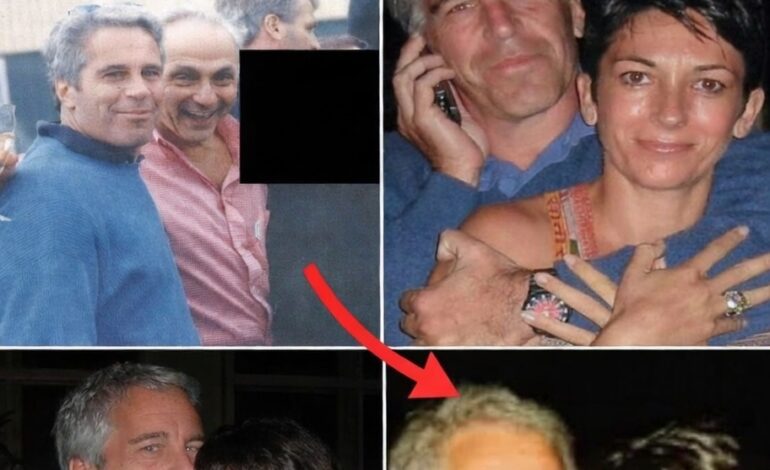

How did a convicted sex offender gain access to presidents, princes, and billionaires — and keep it for decades? The full story of Jeffrey Epstein and Ghislaine Maxwell: their rise, their methods, their crimes, and the powerful people who looked the other way.
1. The Hook: A Party Nobody Questioned
Crystal chandeliers blazing overhead. Champagne frozen mid-toast. Couture gowns flashing beneath relentless cameras. Manhattan penthouses. Palm Beach mansions. Power in every corner of the room.
And right there in the middle of it all — Jeffrey Epstein. Composed. Smiling. Effortlessly weaving himself into circles of royalty, celebrities, billionaires, and political heavyweights.
At his side, Ghislaine Maxwell — poised, hyper-connected, opening doors that most people never even see. It looked like the ultimate high-society fantasy. Untouchable. Unquestioned. Unstoppable.
But behind every glittering party was a machine. A deliberate, methodical system for acquiring influence, silencing critics, and — at its darkest core — trafficking and abusing young women and girls.
This is the story of how that machine was built, how it ran for decades without consequence, and what finally brought it down.
2. Who Was Jeffrey Epstein? The Origin Story
From Brooklyn to Bear Stearns
Jeffrey Epstein was born in Brooklyn, New York, in 1953. He grew up in a modest working-class family. He never finished college. Yet by his late twenties, he was teaching math and physics at the Dalton School — a prestigious Manhattan prep school — and rubbing shoulders with the city’s elite.
His real leap came through Bear Stearns, where he joined as a low-level options trader and rose quickly. Former colleagues describe him as intensely charming, hyper-intelligent, and entirely willing to blur ethical lines.
He left Bear Stearns under murky circumstances in 1981. Then came the pivot that would define the rest of his life: he reinvented himself as a private money manager for billionaires.
The Mysterious Business Model
Epstein claimed to manage money only for clients worth over $1 billion. He reportedly charged a flat fee rather than commissions — an unusual arrangement that fueled constant speculation about where his real income came from.
Investigators and journalists have long suspected that Epstein’s wealth was partly built on leverage — that is, on what he knew about powerful people, and what they feared he might reveal.
His most documented client was Les Wexner, the billionaire founder of Victoria’s Secret and L Brands. Wexner gave Epstein sweeping control over his finances — an arrangement so broad it struck many legal and financial professionals as extraordinary.
3. Ghislaine Maxwell: The Woman Who Opened Every Door
Born Into Power
Ghislaine Maxwell was not a self-made socialite. She was born into one of the most powerful — and most controversial — families in Britain.
Her father, Robert Maxwell, was a media tycoon, a member of Parliament, and a figure who inspired both reverence and fear. He was also, according to later investigations, a fraudster of staggering scale who stole hundreds of millions from his own employees’ pension funds.
When Robert Maxwell died in 1991 — his body found floating near his yacht in mysterious circumstances — his business empire collapsed. Ghislaine, already living in New York, found herself adrift.
The Partnership with Epstein
Enter Jeffrey Epstein. The two became romantically involved and then, by most accounts, evolved into something more durable: business partners in a social empire.
Maxwell had exactly what Epstein needed. She had genuine relationships with British royalty, European aristocracy, and the global elite. Doors swung open for her that no amount of money could buy. Epstein had the money and the ambition. Maxwell had the access and the credibility.
Together, they became nearly impossible to avoid at the highest levels of society — and nearly impossible to refuse.
Her Role in Recruitment and Abuse
Prosecutors and survivors have described Maxwell as far more than a social facilitator. Her 2021 federal conviction found her guilty of sex trafficking and other charges. Testimony painted a picture of a woman who actively recruited vulnerable young women and girls, groomed them, and delivered them to Epstein.
She was sentenced in June 2022 to 20 years in federal prison. She continues to appeal her conviction as of early 2026.
4. The Social Network: How Power Was Bought and Borrowed
What made the Epstein network so astonishing was not just who was in it — but how deliberately it was constructed.
The Properties as Instruments of Influence
Epstein owned some of the most extraordinary properties in the world. His Manhattan townhouse at 9 East 71st Street is reportedly one of the largest private homes in New York City. His Palm Beach estate. A ranch in New Mexico. A private island in the U.S. Virgin Islands — Little Saint James — which survivors and investigators called the epicenter of his abuse.
These properties were not merely homes. They were stages. Carefully designed environments where powerful guests could be entertained, observed, and — according to investigators — potentially compromised.
The Flight Logs: A Who’s Who of Power
Epstein’s private Boeing 727 — nicknamed the ‘Lolita Express’ by the press — became the most-scrutinized aircraft in modern American legal history. Flight logs, released through civil litigation, showed passenger lists that read like a global power directory.
Bill Clinton flew on the plane. So did Britain’s Prince Andrew. Kevin Spacey. Former Israeli Prime Minister Ehud Barak. Dozens of others. The presence of a name on a flight log does not imply knowledge of or participation in Epstein’s crimes — but it illustrates the extraordinary reach of his network.
The Strategy of Normalizing Access
Former associates describe Epstein as masterful at the long game. He would cultivate a relationship over years — offering connections, financial advice, use of his properties, introductions to other powerful figures. By the time questions arose, the relationship was too established to easily walk away from.
This is a textbook grooming dynamic — applied not to individuals, but to entire social ecosystems.
5. The Crimes: What Was Really Happening
While the parties blazed and the jets flew, something far darker was unfolding.
Dozens of women — many recruited as teenagers — have described a system in which they were approached under the guise of legitimate employment or opportunity, gradually groomed, and then sexually abused by Epstein and, in some cases, trafficked to his associates.
The Recruitment Pipeline
Survivors have described being recruited from suburban Florida, from troubled family situations, from modeling agencies. Maxwell and other female associates would identify young women who were financially vulnerable, often presenting the initial contact as an opportunity for massage work, legitimate employment, or social connection.
The grooming was gradual. Gifts. Trust-building. Normalization of sexual content. By the time abuse occurred, many survivors felt trapped — financially dependent, embarrassed, afraid, or uncertain that anyone would believe them over one of the world’s most connected men.
The Scale of Abuse
Investigators and journalists have documented allegations involving dozens of victims across multiple decades. The abuse is alleged to have occurred at Epstein’s Palm Beach home, his New York townhouse, his New Mexico ranch, and on Little Saint James island.
The true number of victims may never be fully known. The power dynamics, the length of time the abuse continued unchecked, and the resources Epstein deployed to suppress and discredit complaints all worked to keep survivors silent.
6. The First Collapse: 2008 and the Secret Deal
By 2005, Palm Beach police were investigating Epstein. By 2007, federal prosecutors in Florida had built what they believed was a strong case — one that could have resulted in life in federal prison.
What happened instead became one of the most controversial prosecutorial decisions in recent American history.
The Non-Prosecution Agreement
In 2008, Epstein pleaded guilty to two Florida state charges — solicitation of prostitution and solicitation of a minor for prostitution. He was sentenced to 18 months in a county jail, not federal prison. Crucially, he was allowed to leave the jail facility six days a week for ‘work release.’
Far more significantly, the deal included a secret non-prosecution agreement (NPA) with federal prosecutors in Miami. Under this agreement, Epstein and potential co-conspirators received immunity from federal prosecution.
Alexander Acosta and the Political Fallout
The deal was negotiated by then-U.S. Attorney Alexander Acosta, who would later serve as Secretary of Labor under President Trump until the Epstein scandal resurfaced in 2019. Acosta resigned shortly after Epstein’s re-arrest.
A 2019 federal court ruling found that the NPA had violated the Crime Victims’ Rights Act because victims were not properly notified. That ruling — and the extraordinary reporting of the Miami Herald’s Julie K. Brown — helped put Epstein back in the crosshairs of federal investigators.
7. The Second Act: How He Came Back
After his 2008 plea deal, most people assumed Jeffrey Epstein was finished. Instead, he staged one of the most brazen social comebacks in living memory.
He continued to entertain. He continued to cultivate relationships with scientists, academics, and business leaders. He donated to universities. He hosted events at his New York home. Harvard University received millions from Epstein — a relationship that would later cause significant reputational damage to the institution.
The lesson of his comeback is deeply uncomfortable: the very wealth and connections that should have put him in prison were also the tools he used to rehabilitate his image.
He was registered as a sex offender. It didn’t stop him. It barely slowed him down.
8. The Final Arrest and What It Exposed
On July 6, 2019, FBI agents arrested Jeffrey Epstein at Teterboro Airport in New Jersey as he returned from Paris on his private jet. He was charged with sex trafficking of minors and conspiracy.
The arrest triggered a global shockwave. Within days, new details emerged about the scope of his properties, his financial arrangements, his network. Prosecutors described finding hundreds of photographs of nude and semi-nude young women in his Manhattan townhouse.
The Death in Custody
On August 10, 2019, Jeffrey Epstein was found dead in his cell at the Metropolitan Correctional Center in Manhattan. The medical examiner ruled his death a suicide by hanging. The finding was immediately contested — by Epstein’s legal team, by independent forensic experts, and by a large segment of the public.
The circumstances were deeply troubling. He had been removed from suicide watch. Surveillance cameras outside his cell malfunctioned. Two guards who were supposed to be monitoring him were reportedly asleep and failed to conduct required checks.
Whether Epstein died by suicide or was killed remains one of the most contested questions in modern American criminal history. No definitive alternative explanation has emerged — but questions persist.
9. Maxwell’s Trial and Conviction
Ghislaine Maxwell was arrested on July 2, 2020, in Bradford, New Hampshire. Her trial began in November 2021 in federal court in New York.
On December 29, 2021, a jury found her guilty on five of six counts, including the most serious: sex trafficking of a minor. Four survivors testified against her. Their accounts were consistent, detailed, and damning.
Judge Alison Nathan sentenced Maxwell to 20 years in federal prison in June 2022. Maxwell continues to pursue appeals, arguing jury misconduct and other procedural grounds. As of early 2026, she remains incarcerated.
What the Trial Revealed — and Didn’t
The trial confirmed the operational reality of the abuse network. But it left a central question unanswered: who else was involved? Maxwell provided no cooperation to authorities. No higher-level co-conspirators have been federally charged.
The sealed documents — court filings from a 2015 civil lawsuit by Virginia Giuffre against Maxwell — have been gradually unsealed since 2022. They have named additional individuals but have not, so far, resulted in new criminal charges.
10. The Unanswered Questions
Despite a federal conviction, sealed document releases, congressional inquiries, and years of investigative journalism, enormous questions remain.
- Where did Epstein’s money actually come from? His financial arrangements remain poorly understood. The full extent of his wealth, its sources, and where it went after his death are still under investigation.
- Who were the real co-conspirators? Maxwell was convicted. Epstein died before trial. But investigators and survivors have consistently alleged that others — named and unnamed — participated in or enabled the abuse. No one else has been federally charged.
- What happened to the alleged ‘tapes’? Multiple sources, including former associates, have suggested that Epstein systematically recorded compromising interactions with powerful figures. The existence, location, and fate of any such recordings remain unknown.
- How did the 2008 deal happen? The full story behind the extraordinarily lenient non-prosecution agreement — and who may have influenced it — has never been fully established.
- What role did intelligence services play? Speculation has persisted that Epstein may have had connections to Israeli, American, or other intelligence services. No credible evidence has been made public, but the question has never been definitively closed.
11. Why This Story Still Matters in 2026
The Epstein case is sometimes discussed as a finished chapter — a scandal that has been litigated, convicted, and closed. It isn’t.
The Ongoing Document Releases
Courts continue to unseal documents. In 2024 and into 2025, new tranches of files from the Virginia Giuffre litigation were released, naming additional individuals. While the releases have not triggered new prosecutions, they continue to generate significant public attention and political pressure.
The Systemic Lessons
The Epstein case is not simply the story of a bad individual. It is a study in how systemic failures — in law enforcement, in prosecution, in media, in elite social culture — allowed serious, well-documented crimes to continue for decades.
Journalist Julie K. Brown’s reporting in the Miami Herald — despite significant institutional resistance — was instrumental in forcing the 2019 re-arrest. Her work is a reminder that accountability journalism can still break through even the most fortified walls of power.
The Survivors
Perhaps most importantly, this story is about the dozens of women and girls who were harmed. Many are still fighting — in civil courts, in public advocacy, in their own private lives — to be heard, believed, and compensated.
Virginia Giuffre. Annie Farmer. The four survivors who testified at Maxwell’s trial. The many others whose names we may never know. Their courage in coming forward — against a man who had the resources to destroy their credibility and the connections to make institutions look the other way — is extraordinary.
12. Key Takeaways & Frequently Asked Questions
Quick Answers
What was Jeffrey Epstein convicted of?
Epstein pleaded guilty in 2008 to Florida state charges of soliciting prostitution and soliciting a minor for prostitution. He died in 2019 before trial on new federal sex trafficking charges.
What was Ghislaine Maxwell convicted of?
Maxwell was convicted in December 2021 on five federal charges, including sex trafficking of a minor. She was sentenced to 20 years in prison in June 2022.
How did Epstein die?
The official ruling is suicide by hanging on August 10, 2019, at the Metropolitan Correctional Center in Manhattan. The ruling remains disputed by independent forensic experts and Epstein’s legal team.
Who were Epstein’s most famous connections?
Flight logs and civil testimony document associations with Bill Clinton, Prince Andrew (who later settled a civil lawsuit brought by Virginia Giuffre), Donald Trump, and many others. Association does not imply wrongdoing.
Are there still ongoing legal proceedings in 2026?
Yes. Maxwell continues to appeal her conviction. Sealed documents continue to be unsealed in civil proceedings. No additional criminal charges have been filed against other named individuals as of early 2026.
Key Takeaways
- Epstein and Maxwell built a social network that used wealth, properties, and elite access as deliberate instruments of influence and, according to prosecutors, cover for serious crimes.
- The 2008 non-prosecution agreement — negotiated by Alexander Acosta — was a critical failure of the justice system that allowed abuse to continue for over a decade.
- Ghislaine Maxwell’s 2021 conviction confirmed the operational reality of the trafficking network but left major co-conspirators unindicted.
- Investigative journalism — particularly by Julie K. Brown of the Miami Herald — was essential in forcing accountability where institutions had failed.
- The case remains legally and politically unresolved. Ongoing document unsealing, Maxwell’s appeals, and unanswered questions about co-conspirators mean this story is not over.
- The survivors at the center of this story demonstrated extraordinary courage in coming forward against one of the most powerful and well-connected men in the world.
Sources & Further Reading
- Brown, Julie K. Perversion of Justice: The Jeffrey Epstein Story. HarperCollins, 2021.
- S. v. Ghislaine Maxwell, S.D.N.Y. (2021) — Federal court transcripts and jury verdict.
- Miami Herald Epstein Investigation Series (2018–2019): miamiherald.com
- S. Department of Justice — Southern District of New York press releases on Epstein and Maxwell arrests.
- Virginia L. Giuffre v. Ghislaine Maxwell, S.D.N.Y. — Civil case documents (unsealed 2022–2025).
About This Article
This article was produced for informational and educational purposes. It draws exclusively on public court records, published investigative journalism, federal court filings, and documentary sources. All factual claims are attributed. The article is reviewed and updated as new legal developments emerge. Last updated: February 2026.
Discover more from MatterDigest
Subscribe to get the latest posts sent to your email.