Iran Fires Back With Explosive Demands as Trump’s Deadlines Keep Changing!

Iran Fires Back With Explosive Demands as Trump’s Deadlines Keep Changing — And the World Watches the Standoff Unfold
The Iran war entered a dangerous new phase this weekend. After five weeks of Operation Epic Fury, with American bombs hitting thousands of targets, the Strait of Hormuz still blocked, a U.S. pilot missing behind enemy lines, and gas prices above four dollars a gallon, President Donald Trump issued yet another ultimatum: open the strait and make a deal within 48 hours or face consequences he called “hell.”
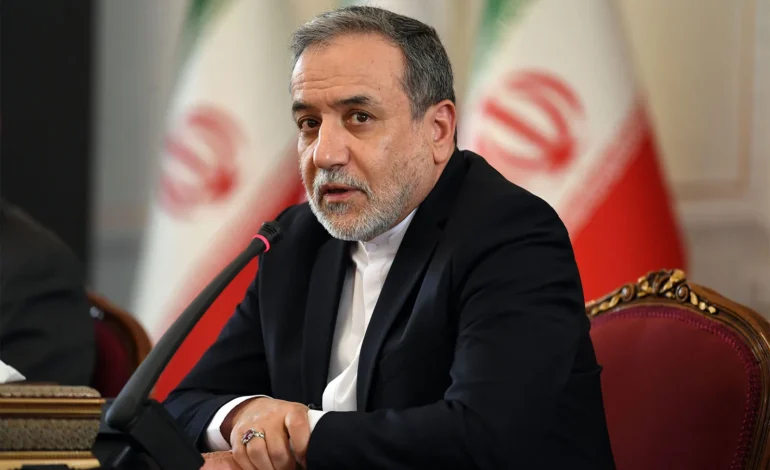
Iran’s response was swift and defiant. Tehran’s military command called Trump’s threat a “helpless, nervous, unbalanced and stupid action.” Its foreign minister left open the door to diplomacy — but only on Iran’s own terms, which include war reparations, international security guarantees, and a demand that would give Iran control over the Strait of Hormuz that Trump is trying to force open.
What is happening right now is not just a military standoff. It is a collision of two governments locked into positions they cannot easily back down from — with the global economy, the lives of American service members, and the future of the Middle East all hanging in the balance. This article breaks down exactly where things stand, what Iran is demanding, what Trump is offering, and why finding a way out of this war has proven far harder than the White House ever admitted.
Iran’s Counter-Demands: What Tehran Is Actually Asking For
After the Trump administration sent Iran a 15-point peace proposal through Pakistani mediators in late March, Tehran fired back with five conditions of its own. These are not vague diplomatic talking points. They are specific, sweeping demands that the White House has called completely unacceptable.
Iran’s five conditions, as reported by state-affiliated media and confirmed by Iranian embassies on social media, are: a complete and permanent end to military aggression against Iran; concrete international guarantees that the war will not resume; a clear mechanism for the payment of war reparations to compensate Iran for the damage done by American and Israeli strikes; a comprehensive ceasefire across all fronts, including Israeli operations in Lebanon against Hezbollah; and — the most explosive demand of all — recognition of Iranian sovereignty over the Strait of Hormuz.
That last demand is what makes the gap between the two sides so enormous. The Strait of Hormuz is the world’s single most important oil shipping lane. Roughly one-fifth of all global oil and natural gas passes through it. If Iran gets legal control over that waterway, it gains the ability to throttle global energy supplies at will. That is not something the United States, its Gulf allies, or the global economy can agree to. Former Middle East peace negotiator Aaron David Miller put it bluntly when he told CNN: the Iranians are going to demand a price Trump is not prepared to pay.
Iran’s foreign minister, Abbas Araghchi, said publicly on Saturday that Tehran remains open to diplomacy. But he was equally clear: what Iran cares about are the terms of a conclusive and lasting end to what he described as an illegal war. That framing — calling the conflict illegal — is itself a political statement directed as much at the American public as at the Trump administration.
The Ultimatum That Keeps Moving: Trump’s Shifting Deadlines
One of the most striking features of the past several weeks is how many deadlines Trump has set — and how many of them have quietly come and gone without the consequences he promised.
On March 21, Trump gave Iran a 48-hour ultimatum to open the Strait of Hormuz. He then extended it. On March 30, he threatened to obliterate Iran’s power plants, oil wells, and Kharg Island if a deal was not reached shortly — and gave the Strait closure until April 6 as the new deadline. When that deadline approached, he extended it again by 10 more days, citing what he called an Iranian government request and ongoing productive conversations. Then, on Saturday April 4, he issued yet another 48-hour warning, telling Iran that “all Hell will reign down on them” if they do not comply.
Iran noticed the pattern. Its military command called Trump’s latest threat a “helpless and nervous action” — language specifically chosen to suggest they see a president who is escalating in words because he has run out of easy military options. Iranian parliamentary speaker Mohammad Bagher Ghalibaf described his country as “locked, loaded and standing tall.”
The pattern of deadlines being set and then extended has created a real credibility problem. When Trump warned on March 19 that nobody was even shooting at U.S. aircraft — hours after a U.S. F-35 had actually been struck by Iranian fire — and then two weeks later an F-15 was shot down with a pilot still missing, the narrative of swift, total American dominance became very hard to sustain.
By Monday, April 6, Trump had already softened again — postponing his latest ultimatum and telling reporters there was a “very good chance” of a deal, while markets rallied briefly on the news. Iranian state media immediately declared that Trump had “retreated out of fear.” Whether that characterization is fair, it is the narrative Iran is pushing — and it is landing in parts of the world that are increasingly skeptical of Washington’s management of the conflict.
The Global Energy Crisis: What the Strait Closure Is Doing to the World
It is easy to get lost in the diplomatic maneuvering and miss the concrete damage that the Strait of Hormuz closure is doing to the global economy in real time.
The International Energy Agency called the disruption caused by Iran’s blockade the largest shock to global energy supply since the 1970s oil crisis. About 10 million barrels of oil per day — a fifth of all global supply — have been cut off from normal shipping routes. Oil prices surged more than 60 percent from the moment the war began. Gas prices in the United States crossed four dollars a gallon for the first time in more than three years. A Bank of America forecast warned that Brent crude prices would remain at around 100 dollars per barrel or higher through the rest of 2026.
The ripple effects extend far beyond the gas pump. Asian markets fell sharply after Trump’s April 1 address failed to signal a clear end to the war. Japan’s Nikkei dropped more than one percent. South Korea’s Kospi fell nearly three percent. Global stock markets remain well below pre-war levels. Businesses across multiple industries — from airlines to manufacturing to agriculture — are absorbing higher energy costs that they are beginning to pass on to consumers.
Iran understands the leverage this gives it. By maintaining the blockade, Tehran is not just fighting a military battle — it is fighting an economic one. Every week the Strait stays closed, the pressure on the global economy intensifies, the political cost for Trump at home grows, and the urgency of finding an exit from the war increases. Iran is betting that economic pain will do what military pressure alone cannot: force a deal on terms closer to its own.
The Failed 15-Point Peace Plan and Why the Gap Is So Wide
The Trump administration’s peace proposal — a 15-point plan delivered to Iran through Pakistani mediators — has not been made public in full. But based on reporting from multiple outlets, its core demands include a prohibition on Iran ever developing nuclear weapons, the surrender of Iran’s enriched uranium stockpiles, an end to Iranian support for regional proxy groups like Hezbollah and the Houthis, and the full reopening of the Strait of Hormuz.
Iran rejected it. An Iranian senior political security official described the 15 points as “excessive and unreasonable.” The Foreign Ministry said the proposals were being reviewed, but the conditions Iran published in response made clear just how far apart the two sides are. While the U.S. wants Iran to give up its nuclear ambitions and its regional military influence, Iran wants the U.S. to pay for the war it started, guarantee it will never attack again, and hand over effective control of one of the world’s most strategically valuable waterways.
Mediators from Pakistan, Turkey, Egypt, and China have all been working to bridge the gap. Pakistan’s foreign minister confirmed that indirect talks are taking place through messages being relayed between the two sides. China issued a joint statement with Pakistan calling for a ceasefire and the reopening of the Strait. But as CNN’s diplomatic analysts noted, the differences between the two sides are not just tactical — they are fundamental. The war’s endgame has never been clearly defined by Washington, and that ambiguity has made it harder, not easier, to find a path to peace.
The Diplomatic Contradiction at the Heart of Trump’s War
One of the most striking things about Trump’s approach to this war is how contradictory his messaging has been — often within the same week, sometimes within the same day.
In his April 1 prime-time address, Trump threatened to bomb Iran back to the “stone ages” while simultaneously saying that peace discussions were ongoing and a deal was possible. He told members of Congress privately that Iran wants to make a deal so badly but is afraid to say it — then turned around and issued a 48-hour ultimatum publicly threatening to destroy their power grid. He claimed the war was “nearing completion” three days before Iran shot down an American fighter jet.
This whiplash has frustrated American allies, confused global markets, and given Iran exactly the kind of diplomatic uncertainty that benefits a side trying to run out the clock. A CNN analysis described Trump as appearing “baffled” that Iran won’t end a war he started — and noted that his erratic approach, alternating between extreme threats and hints of imminent breakthroughs, reflects not strategic calculation but the pressure of a president who started a war without fully thinking through how it would end.
Meanwhile, Iran has been remarkably consistent. Its message has not changed: we did not start this, we will not surrender, and any deal must address our core interests. That consistency — when contrasted with Washington’s shifting deadlines and conflicting statements — has shaped how the war is being perceived internationally, even among U.S. allies.
Iran’s Strategic Calculation: Why Tehran Is Holding Firm
From Tehran’s perspective, the longer this war goes on without Iran collapsing — and Iran has not collapsed — the weaker Trump’s position becomes.
Iran’s supreme leader was killed in the early days of the operation. Its navy has been heavily damaged. Its missile stockpiles have been reduced. American forces have struck more than 12,000 targets inside the country. By any traditional measure of military campaign success, the United States has done enormous damage.
And yet Iran is still fighting. It is still shooting down American planes. It is still controlling the Strait of Hormuz. It is still launching missiles and drones at Israel and at Gulf states like Kuwait. It is still refusing to accept any of the terms Washington is demanding. And polls inside the United States are showing declining public support for the war.
Iran’s strategy appears to be simple: survive long enough for the domestic political cost in the United States to become unsustainable. With midterm elections on the horizon, with gas prices hammering American households, with casualty numbers climbing, and with the missing pilot dominating the news cycle, the political clock in Washington is ticking in ways that favor Tehran’s patience.
The question is whether Iran can absorb the ongoing military punishment long enough for that political clock to run out — or whether the destruction of its remaining infrastructure eventually forces it to negotiate on American terms. Neither outcome is certain. Both paths forward involve significant additional suffering — for Iranians, for Americans, and for the global economy.
The Political Fallout at Home: Polls, Pressure, and the Midterm Shadow
Inside the United States, the political landscape around this war has been shifting in ways the White House did not expect.
Public support for the operation has been declining. Americans who might have initially rallied around the flag when the war began five weeks ago are now dealing with the daily reality of higher gas prices, growing casualty reports, and a conflict that was supposed to be over quickly and clearly is not. Time magazine reported that Trump is facing political backlash, global economic shock, and the looming shadow of midterms — and still does not want to leave Iran without being able to claim victory.
That last part is the core of the political trap Trump now finds himself in. Declaring victory and walking away requires that the Strait of Hormuz actually reopen. Iran will not reopen it without a deal it finds acceptable. The deal Iran finds acceptable is one Trump says he cannot agree to. And so the war continues, the deadlines keep moving, and the cost keeps rising.
Critics in Congress — primarily Democrats, but increasingly some Republicans representing districts with large military communities — have been raising their voices about both the human cost and the legal basis of the conflict. The constitutional question of whether the war was properly authorized has not gone away. And with each new casualty report, each new shifting deadline, and each new contradictory statement from the White House, the pressure for accountability intensifies.
The International Response: Allies Staying Away, Mediators Stepping In
One of the most telling aspects of Operation Epic Fury is how isolated the United States is on the world stage in prosecuting it.
NATO allies declined to send forces. Trump publicly mocked European countries for lacking “delayed courage” and told them to “go get your own oil.” Defense Secretary Pete Hegseth declined to reaffirm the U.S. commitment to NATO’s collective defense, saying that would be up to the president after allies failed to join the operation. The war is a U.S.-Israeli effort, largely unsupported by the traditional Western coalition that has backed American military operations for decades.
Into that vacuum, a different set of international players has stepped forward — not to fight, but to mediate. Pakistan has been the most active intermediary, relaying messages between Washington and Tehran and presenting the U.S. 15-point plan to Iranian officials. Turkey and Egypt are also engaged. China and Pakistan jointly called for a ceasefire. These are not traditional U.S. allies in the usual sense. Their involvement reflects a broader shift in how the world is positioning itself around this conflict — and how little influence traditional American allies feel they have over Washington’s decision-making.
Meanwhile, hundreds of Israelis have taken to the streets in Tel Aviv, Jerusalem, and Haifa to demand an end to the war. Pope Leo has urged the world not to become numb to the scale of the violence. And the UN Security Council has been largely sidelined as the two warring parties talk around it rather than through it.
The Missing Pilot and the Human Dimension of the Standoff
Amidst all the geopolitical maneuvering, the biggest human story of this moment is the search for the missing American weapons systems officer whose F-15E Strike Eagle was shot down over Qeshm Island on Friday.
One crew member was recovered. The other ejected over Iranian territory and has not been found. Iranian state media immediately offered a bounty for information leading to the pilot’s capture. Iranian forces were flooding the area where the wreckage was found. U.S. search-and-rescue teams — who had two helicopters struck by Iranian fire during their initial attempts — are working against the clock.
Former Marine fighter pilot Amy McGrath captured the difficulty of the situation clearly: Iran is geographically enormous. If that pilot ejected somewhere in the middle of the country, sustaining search operations at any kind of distance is extraordinarily difficult. And every hour that passes makes the outcome less certain.
Trump notably did not reference the missing pilot in his Truth Social posts Saturday. His public messaging focused entirely on the Hormuz deadline. That silence about a service member still unaccounted for on enemy soil drew attention on its own.
Final Thoughts: A War With No Easy Exit and a World Holding Its Breath
Five weeks into Operation Epic Fury, the big picture is this: the United States has done enormous military damage to Iran. But it has not achieved its core stated objective. The Strait of Hormuz is still closed. The global energy crisis it caused is still worsening. American service members are still dying and being wounded. And the diplomatic path to ending the war is blocked by demands so far apart that multiple veteran diplomats have said publicly they see no easy resolution in sight.
Iran’s strategy — hold firm, resist the pressure, and let the political and economic cost in America do the heavy lifting — has so far not collapsed under the weight of American air power. Its conditions for peace are maximalist, but they are consistent. It knows what it wants. Whether the same can be said for Washington is a question being asked by allies, analysts, and lawmakers on both sides of the aisle.
The next 48 to 72 hours will reveal whether the latest round of indirect talks produces anything real — or whether the world heads into another week of escalating threats, shifting deadlines, and a missing pilot whose fate no one has been able to confirm.
One thing is certain: this war is not ending on the timeline the White House promised. And the gap between what was said and what is actually happening — in the air, on the diplomatic front, and in the daily lives of American families paying at the pump — is a gap that is getting harder to ignore.
Discover more from MatterDigest
Subscribe to get the latest posts sent to your email.