ICE Arrests in Chicago: Only 5 of 92 Cases Still Active After Mass Assault Charges Collapse
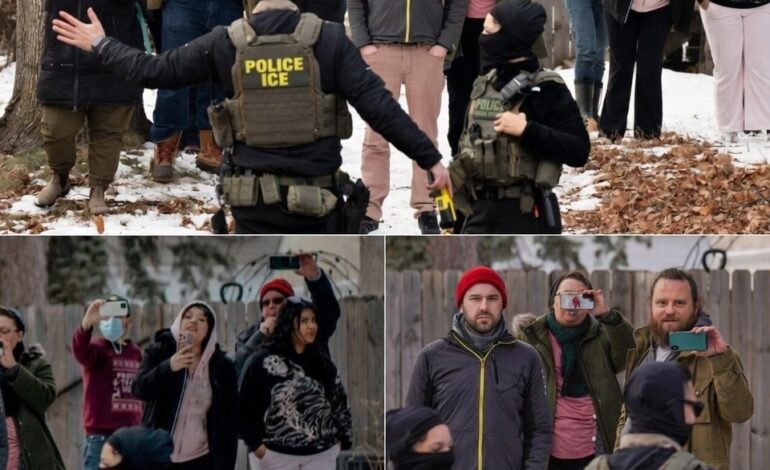

A new exposé of ICE enforcement data reveals a near-total collapse of criminal prosecutions following a mass arrest campaign last fall. Out of 92 people detained, not a single conviction has been secured.
1. The Numbers That Shocked Chicago
Here’s a stat that deserves a double-take.
Last fall, ICE (U.S. Immigration and Customs Enforcement) agents arrested 92 people in Chicago. The charge? Assaulting or impeding federal officers during enforcement operations. That sounds serious — and it is. Assaulting a federal officer is a federal crime that can carry years in prison.
So what happened next?
- 18 cases resulted in any charges being filed at all
- 13 of those 18 cases were later dismissed
- 5 cases remain “pending” — meaning no resolution yet
- 74 arrests never led to any charges whatsoever
That’s roughly 80% of all arrests producing zero charges. And of the 20% that did? 72% were thrown out.
QUICK ANSWER
Out of 92 people arrested by ICE in Chicago for assaulting officers, only 18 cases resulted in charges. Of those, 13 were dismissed. The remaining 5 cases are still pending. No convictions have been reported.
2. What Happened? Breaking Down the 92 Arrests
The Context: A Surge in ICE Activity
In the fall of 2025, Chicago saw a notable spike in federal immigration enforcement. ICE conducted a series of sweeps and targeted operations across the metro area. These operations frequently generated friction — protests, community members attempting to intervene, and tense standoffs between agents and bystanders.
Federal law makes it a crime to “forcibly assault, resist, oppose, impede, intimidate, or interfere” with a federal officer performing their duties. Under 18 U.S.C. § 111, even low-level physical contact can technically qualify.
ICE agents used this statute broadly during the fall operations. The result: 92 arrests tied to that charge alone.
The Breakdown at a Glance
| Outcome | Cases | Percentage |
| No charges filed | 74 | 80.4% |
| Charges filed | 18 | 19.6% |
| Charges dismissed | 13 | 72.2% of charged |
| Cases pending | 5 | 27.8% of charged |
| Convictions | 0 | 0% |
Source: Court records and local investigative reporting, 2025–2026
This table tells a stark story. The vast majority of people arrested never faced any formal prosecution.
3. Why Were So Many Charges Dismissed?
This is the most important question — and the answer likely involves several overlapping factors.
1. Weak or Insufficient Evidence
An arrest doesn’t require the same standard of proof as a conviction — or even a charge. Police and federal agents can arrest someone on probable cause, which is a relatively low bar. But prosecutors need enough evidence to prove a case “beyond a reasonable doubt.”
If agents arrested people based on chaotic scenes, limited body camera footage, or unclear interactions, prosecutors may have quickly determined the cases weren’t winnable.
2. Prosecutorial Discretion
The U.S. Attorney’s Office for the Northern District of Illinois decides which federal cases to pursue. They may have reviewed the arrests and concluded that many didn’t meet the threshold for a viable prosecution — or that pursuing them wasn’t the best use of federal resources.
3. Constitutional Concerns
Civil liberties attorneys raised flags about some of these arrests early on. If arrests were made without sufficient probable cause, evidence gathered could be suppressed — making prosecution nearly impossible.
4. Political and Legal Pressure
Chicago has been a high-profile flashpoint in national immigration debates. Advocacy organizations, public defenders, and city officials scrutinized these arrests closely. That scrutiny may have influenced prosecutorial decisions.
4. What Does “Pending” Actually Mean?
Five cases remain listed as “pending.” That word can mean different things in the federal system.
A pending case could mean:
- Active prosecution — the government is still building its case
- Deferred prosecution — charges are on hold pending cooperation or other conditions
- Administrative delay — paperwork or procedural issues haven’t been resolved
- The case is effectively inactive — no one has formally closed it yet
Without more specific data, it’s hard to know which applies to each of the five remaining cases. What we do know: none of the 92 originally arrested have been convicted.
5. The Legal Process: How ICE Arrests Work in Illinois
Understanding these numbers requires understanding how federal arrests actually flow through the system.
| Stage | What Happens |
| Step 1: Arrest | ICE agents arrest based on probable cause — a relatively low legal standard. |
| Step 2: Referral | Case referred to U.S. Attorney’s Office, which decides whether to pursue charges. |
| Step 3: Charging Decision | 74 of 92 cases ended here — no charges were ever filed. |
| Step 4: Court Proceedings | If charges filed, defendants can challenge evidence or file motions. 13 of 18 charged cases collapsed here. |
| Step 5: Resolution | Ends in dismissal, acquittal, plea, or conviction. Result so far: 0 convictions. |
6. Community and Political Reaction
Immigration Advocates
Immigrant rights groups in Chicago have pointed to these numbers as evidence of what they describe as pretextual arrests — using a criminal charge as justification to detain people during immigration operations, rather than a genuine belief that assault occurred.
“If 80% of arrests never even resulted in charges, you have to ask what standard was being applied.” — Civil liberties attorney (paraphrased from public statements)
Federal Officials
ICE and the Department of Justice have defended the operations, arguing that agents faced genuine threats during enforcement activities. Officials maintain that charging decisions are made independently by prosecutors and don’t reflect on the legitimacy of the arrests themselves.
Chicago City Officials
Chicago has long maintained a “sanctuary city” policy limiting local police cooperation with federal immigration enforcement. City officials have been vocal critics of the fall operations, and some have called for investigations into the arrest patterns.
Legal Experts
Several federal criminal law experts noted that the dismissal rate, while striking, isn’t entirely unusual for federal cases arising from chaotic enforcement situations. What’s notable here is the sheer volume — 92 arrests from a single campaign — and the near-total collapse of the resulting prosecutions.
7. What This Means for ICE Operations in Chicago
A Pattern Worth Watching
This isn’t the first time questions have been raised about the legal sustainability of mass arrests during immigration operations. Similar patterns have emerged in other cities — arrests made in large numbers, followed by prosecutions that quietly fade away.
The Chicago data is notable because it’s unusually complete. Court records allow researchers and journalists to track outcomes in a way that’s often difficult with immigration enforcement data.
Implications for Deterrence
One argument sometimes made in favor of aggressive enforcement is deterrence — the idea that arrests, even if not prosecuted, discourage future resistance to federal operations. Critics push back strongly on this, arguing that arrests without charges undermine the rule of law and community trust.
Accountability Questions
The data raises legitimate accountability questions: Who authorized this arrest campaign? What criteria were agents using? Were supervisors aware that prosecutors were unlikely to pursue most of these cases? So far, those questions remain largely unanswered.
What Happens to the People Who Were Arrested?
This is perhaps the most important downstream question. Even arrests that result in no charges can have serious consequences:
- Time in federal detention while awaiting charging decisions
- Immigration consequences, even without criminal conviction
- Employment disruption
- Family separation
- Lasting records of arrest
For people without legal immigration status, an arrest alone — regardless of charges — can trigger removal proceedings.
8. Frequently Asked Questions
What charges were the 92 people in Chicago arrested for?
They were arrested for allegedly assaulting or impeding federal officers — a federal crime under 18 U.S.C. § 111 — during ICE enforcement operations in Chicago in fall 2025.
How many of the 92 ICE arrests in Chicago led to convictions?
None. Of 92 arrests, 18 resulted in charges. Of those, 13 were dismissed. The remaining 5 are pending. No convictions have been reported.
Why were so many charges dismissed after ICE arrests in Chicago?
Prosecutors likely found insufficient evidence to meet the “beyond reasonable doubt” standard. Constitutional concerns, prosecutorial discretion, and legal pressure may also have played roles.
What does it mean when a case is listed as “pending” after an ICE arrest?
A pending case means no final resolution has been reached. It could be in active prosecution, deferred, or administratively stalled. It does not mean a conviction is coming.
Can ICE arrest someone without filing criminal charges?
Yes. ICE can detain people for civil immigration violations separately from criminal charges. An arrest related to assault on an officer is a criminal matter, but immigration detention is a separate civil process.
Is Chicago a sanctuary city?
Yes. Chicago has policies limiting local law enforcement cooperation with federal immigration agents, though these policies don’t prevent federal agents from operating in the city.
Who decides whether to prosecute someone arrested by ICE for assault?
The U.S. Attorney’s Office for the relevant federal district — in Chicago’s case, the Northern District of Illinois — makes independent charging decisions.
9. Key Takeaways
Here’s what the data tells us, stripped down to the essentials:
- 92 arrests. 0 convictions. That’s the bottom line from ICE’s fall 2025 enforcement campaign in Chicago.
- The 80% no-charge rate and 72% dismissal rate among charged cases suggest prosecutors found these cases largely unprovable.
- The 5 pending cases haven’t produced any convictions yet either.
- Even without criminal charges or convictions, the arrests themselves carry real consequences for the people involved.
- This story raises legitimate questions about arrest standards, oversight, and accountability in federal immigration enforcement operations.
- The broader pattern — aggressive arrest campaigns followed by prosecutorial retreat — has appeared in other cities and deserves sustained scrutiny.
What You Can Do: Next Steps for Researchers & Advocates
If you’re a journalist, researcher, or advocate working on immigration enforcement accountability, the Chicago data provides a concrete, documented example worth building on. Some directions worth exploring:
- FOIA requests to ICE and the U.S. Attorney’s Office for the Northern District of Illinois for full case-level data
- Comparison with other cities that saw similar fall 2025 enforcement surges
- Interviews with public defenders who handled these cases
- Tracking the 5 pending cases to their final resolution
This story isn’t over. Five cases are still pending — and the accountability questions raised by the other 87 haven’t been answered.
Sources & Further Reading
- S. District Court for the Northern District of Illinois — Public Case Records (PACER): pacer.gov
- American Civil Liberties Union of Illinois — aclu-il.org
- National Immigration Law Center — nilc.org
- 18 U.S.C. § 111 — Federal law on assaulting or impeding federal officers
This article covers publicly available court records and reporting on ICE enforcement operations in Chicago. For the most current case information, consult the U.S. District Court for the Northern District of Illinois’s public PACER database or local investigative journalism sources covering federal courts.
Discover more from MatterDigest
Subscribe to get the latest posts sent to your email.