He Saved New York City Billions Without Service Cuts — What Mamdani Did Is Surprising
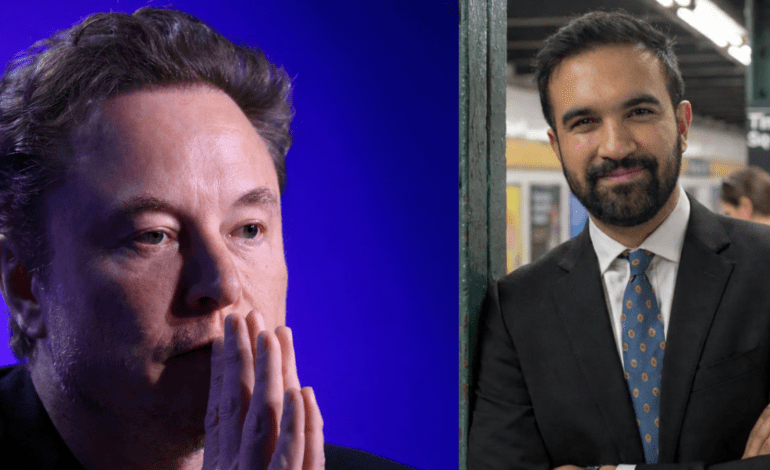

Mamdani Saves NYC Billions Without Cutting Services — Here’s How He Did What DOGE Couldn’t
What if the secret to cutting government waste wasn’t mass layoffs, chaos, and headlines? What if it was just… auditing health plans and renegotiating office supply contracts?
That’s the unglamorous, un-viral, entirely effective story of what Zohran Mamdani did in New York City. While the federal Department of Government Efficiency generated endless headlines with sweeping promises and dramatic job cuts, a city official quietly asked his agencies to find $1.7 billion in savings — without touching essential services. Then he delivered.
This article breaks down exactly what Mamdani did, line by line. It compares that record to DOGE’s actual results. And it explains why this contrast matters for anyone who cares about whether government can actually be made to work better.
1. Who Is Zohran Mamdani? Context First
Zohran Kwame Mamdani is a Democratic politician who has served in New York public office and taken on budget oversight responsibilities for a city with a spending budget well over $100 billion annually. New York City is not a small municipal operation — it is, by most measures, the largest and most complex city government in the United States, managing everything from the world’s largest urban transit system to one of the nation’s biggest school districts.
Understanding that scale matters. When Mamdani sets a savings target, he’s working within a system of hundreds of agencies, thousands of contracts, and a bureaucracy with enormous structural inertia. Finding $1.7 billion in savings in that environment without cutting services is not a small ask.
The Political Context: Why This Resonates Now
Mamdani’s savings effort emerged during a period when the national conversation about government efficiency was dominated by the federal DOGE initiative. That context is important. He wasn’t operating in a vacuum. He was, implicitly and explicitly, demonstrating an alternative model — one based on targeted audits and contract reform rather than mass job elimination.
2. The $1.7 Billion Challenge: How It Started
Two months before the results were announced, Mamdani issued a directive to city agencies: find $1.7 billion in savings. The constraint was explicit and non-negotiable — no essential services were to be cut. No programs eliminated. No front-line workers laid off to hit the number.
This kind of directive is not unusual in city government. What’s unusual is the follow-through. Budget targets get set all the time. They often get quietly revised downward, partially fulfilled, or absorbed into accounting adjustments that don’t represent real savings. Mamdani’s team actually delivered — and did it fast.
The Philosophy Behind the Directive
The approach reflected a specific theory of government waste: that most bloat in large bureaucracies doesn’t come from the services themselves, but from the contracts, vendors, overpayments, and administrative overhead that accumulates over years of low oversight. Cut the overhead. Keep the services. That’s the premise — and the results bore it out.
3. The Full Savings Breakdown: Every Dollar Accounted For
Here is the itemized record of what was saved and how:
$100 Million: Health Plan Auditing
The single largest line item came from auditing city employee health plans. Government health plans are notoriously difficult to manage at scale — they involve complex contracts with insurers, third-party administrators, pharmacy benefit managers, and healthcare providers. Overpayments accumulate quietly. Auditing them systematically surfaced $100 million in recoverable or renegotiable costs. This is real money returned without any change to employee benefits.
$57.8 Million: School Spending Controls
School system spending is one of the most politically sensitive budget areas in any city. It’s also one of the most complex, involving a vast network of vendors, programs, and administrative layers. Tightening spending controls — meaning better tracking, approval processes, and vendor oversight — yielded $57.8 million without closing a school, eliminating a program, or reducing classroom staffing.
$39.8 Million: Temporary Staffing Reduction
Temporary staffing agencies are a significant and often overlooked cost center in large government operations. Agencies use temp workers to fill gaps, manage seasonal demand, or avoid the complexity of full hiring processes. Over time, temp arrangements can calcify into permanent arrangements at premium cost. Cutting these unnecessary temp contracts saved $39.8 million.
$27 Million: Office Supply Procurement Reform
This might be the most illustrative line item. Twenty-seven million dollars on office supplies. It sounds almost comical — until you understand that a city with hundreds of agencies, each buying independently from different vendors at different prices, creates enormous inefficiency. Centralizing procurement and negotiating better terms saved $27 million on basic operational costs. It’s unglamorous. It’s exactly what good management looks like.
$9 Million: Eliminating an Unnecessary Contract
One contract. Nine million dollars. Gone — because someone actually looked at what it was for and asked whether it was necessary. This kind of waste — contracts that continue renewing on autopilot long after their purpose has lapsed — is endemic in large government systems. The savings here are modest in dollar terms but significant as a signal: basic oversight works.
Visual Suggestion: An infographic breaking down the savings pie chart by category would perform well here for social sharing and time-on-page.
4. The Key Principle: Efficiency Without Austerity
The term “austerity” gets used loosely in political debates, but it has a specific meaning: cutting public services and spending in ways that directly reduce what government delivers to residents. Laying off teachers. Closing libraries. Reducing health program eligibility. That’s austerity.
None of Mamdani’s savings came from austerity. Every dollar saved came from one of three sources:
- Overpayments that should never have been made in the first place
- Contracts that were bloated, redundant, or unnecessary
- Administrative inefficiencies in procurement and staffing
This distinction is not just rhetorical. It matters enormously for what government can actually deliver. A city that cuts its way to a balanced budget by eliminating services destroys trust and capacity. A city that audits its way to savings while preserving services builds both.
5. DOGE vs. Mamdani: A Side-by-Side Comparison
The contrast between these two approaches to government efficiency is stark. Here it is, laid out directly:
| Category | Mamdani / NYC | DOGE / Federal |
| Scope | New York City budget | Federal government |
| Savings claimed | $1.7B+ verified | Figures disputed / inflated |
| Services cut? | No essential cuts | Widespread disruption |
| Jobs lost | None reported | ~271,000 federal jobs |
| Method | Audit, renegotiate, cut waste | Mass layoffs, contract kills |
| Verified by | NYC agency reports | Claims disputed by GAO/CBO |
The table above tells a simple story. One approach produced verified savings without service disruption. The other produced disputed savings claims alongside massive job losses and new institutional problems.
6. What DOGE Actually Delivered — and What It Cost
The Department of Government Efficiency was announced with enormous ambition. The initial targets cited were in the hundreds of billions of dollars. The actual verified savings, as scrutinized by budget analysts and congressional researchers, fell dramatically short of those projections.
The Job Loss Count
Approximately 271,000 federal employees lost their jobs in the DOGE-era reduction effort, according to reporting from multiple outlets tracking federal workforce data. These weren’t primarily bloated administrator positions. They included scientists, veterans’ affairs workers, public health employees, food safety inspectors, and others doing work that directly touches American lives.
The Social Security Data Exposure Investigation
Among the most significant unintended consequences of the DOGE approach was triggering investigations into potential exposure of Social Security recipient data. When personnel with access to sensitive systems are rapidly removed or when new personnel are rapidly granted access without standard vetting, data security risks escalate. Investigations into this exposure represent new costs — financial and reputational — that offset claimed savings.
The Disputed Savings Numbers
Budget analysts from organizations including the Congressional Budget Office and independent fiscal watchdog groups consistently found that DOGE’s claimed savings included double-counting, projected future savings counted as current, and cancelled contracts that were later reinstated. The gap between claimed and verified savings was substantial.
7. Why the Mamdani Model Works: The Policy Case
Public administration researchers have studied government efficiency for decades. The evidence consistently points in the same direction Mamdani went: sustainable savings come from procurement reform, contract auditing, and administrative streamlining — not from headcount reduction.
Why Mass Layoffs Don’t Save Money Long-Term
When government agencies lose experienced staff rapidly, several things happen. Knowledge walks out the door. Remaining employees become overburdened. Mistakes increase. Legal challenges arise. New hires — often contractors at premium rates — are brought in to fill gaps. Studies of corporate downsizing and government workforce reductions consistently find that the long-term cost savings are far smaller than projected, and are often negative when disruption costs are included.
Why Procurement Reform Is So Effective
Government procurement is a chronic source of waste in virtually every large public institution. The reasons are structural: agencies have limited incentive to negotiate aggressively with vendors, contracting rules create administrative burden that discourages competitive bidding, and contracts tend to auto-renew without performance review. A targeted audit of any large government’s procurement portfolio will almost always find significant savings. Mamdani’s $100 million in health plan auditing and $27 million in office supply reform are textbook examples of this principle in action.
8. People Also Ask: Your Questions Answered
Who is Zohran Mamdani?
Zohran Mamdani is a Democratic politician involved in New York City government with budget and fiscal oversight responsibilities. He is known for a progressive governance approach that emphasizes auditing and administrative reform over service cuts.
How did Mamdani save $1.7 billion without cutting services?
Mamdani directed city agencies to find savings through auditing health plans ($100M), tightening school spending controls ($57.8M), cutting unnecessary temporary staffing ($39.8M), eliminating a redundant contract ($9M), and reforming office supply procurement ($27M). All savings came from waste reduction, not service elimination.
What is DOGE and did it actually save money?
DOGE (Department of Government Efficiency) is a federal initiative that claimed to reduce government spending through mass layoffs and contract cancellations. Its actual verified savings fell well short of projected figures, while the human and institutional costs — including approximately 271,000 jobs lost and data security investigations — added significant unplanned expenses.
What is the difference between efficiency and austerity in government?
Efficiency means delivering the same or better services at lower cost, typically by eliminating waste, redundancy, and overpayment. Austerity means reducing services and cutting programs to lower spending. Mamdani’s approach is efficiency. DOGE’s approach combined elements of both, but the disruption it caused undermined its efficiency claims.
9. Key Takeaways and What This Means Going Forward
- Savings without pain are possible. Mamdani’s $1.7 billion result shows that large government systems contain significant waste that can be recovered through systematic auditing and contract reform.
- Procurement is the low-hanging fruit. Health plan auditing and supply chain reform — the two largest single line items — are replicable in virtually any large government context.
- Mass layoffs are not a shortcut to efficiency. The DOGE experience suggests that rapid workforce reduction produces disruption costs that offset savings claims.
- The political case for this model is strong. Saving money while protecting services is genuinely popular across the political spectrum. It doesn’t require ideological alignment to appeal to voters.
- More savings are reportedly on the way. Mamdani has indicated that additional efficiency measures are in development, suggesting the $1.7 billion is a floor, not a ceiling.
The Bigger Picture: A Working Model for Government That Works
The Mamdani savings story isn’t really about politics. It’s about method.
The case it makes is straightforward: government waste is real, it’s large, and it can be addressed without destroying the services that people depend on. The tools are available — audits, procurement reform, contract review, spending controls. They’re not exciting. They don’t make for good television. But they work.
The comparison to DOGE isn’t meant to score partisan points. It’s meant to illustrate a genuine policy contrast with real consequences for real people. One approach preserved jobs, protected services, and produced verified savings. The other produced large claims, significant disruption, and ongoing institutional damage.
The question going forward is whether this model — boring, methodical, effective — can be scaled. If New York City can find $1.7 billion in recoverable waste across its agencies in two months, the possibilities at larger scales are significant.
Efficiency isn’t a left or right value. It’s a management value. And right now, one city just showed the rest of government what it looks like in practice.
Discover more from MatterDigest
Subscribe to get the latest posts sent to your email.