Florida Has Executed Melvin Trotter — His Last Words & Final Hours | US Death Row
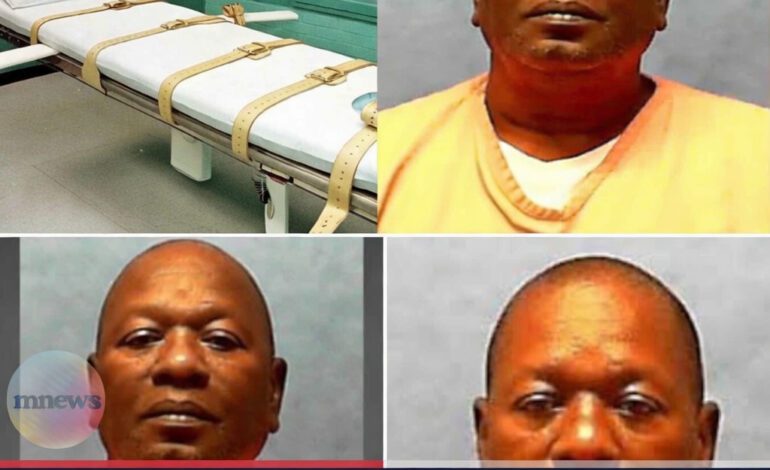

The execution happened. But the most-shared detail — his ‘last words’ — is false. Trotter said nothing. Here is the full, sourced account of what actually took place on February 24, 2026, and the real story behind the man, the victim, and the controversies the headline buried.
The Verdict: Real Execution, False ‘Last Words’ Claim
Melvin Trotter was executed. That part is completely accurate. On Tuesday, February 24, 2026, at 6:15 p.m., Melvin Trotter, 65, was pronounced dead at Florida State Prison near Starke, Florida. He was executed by three-drug lethal injection for the 1986 murder of Virgie Langford, a 70-year-old grocery store owner in Palmetto, Florida.
The headline is real. The execution is real. But the framing — particularly the suggestion of emotional final words that are ‘drawing widespread attention’ — is fabricated. Trotter said nothing. He declined to give a final statement.
| ⚠️ KEY FAKE NEWS DETAIL The viral headline implies Melvin Trotter made a dramatic last statement ‘now drawing widespread attention.’ This is false. According to the Associated Press, WUSF, and credentialed witnesses inside the chamber: Trotter declined to give a last statement. The drugs began flowing approximately two minutes after the curtain rose. He did not speak. |
|
The Real Story: Who Was Melvin Trotter?
A Childhood Shaped by Trauma
Melvin Trotter was born in 1960, the product of rape — a fact that complicated and, by all accounts, damaged his relationship with his birth mother from the start. His mother, understandably struggling with the circumstances of his conception, found it difficult to bond with him.
Court records and legal filings describe a childhood marked by foster care placement at age nine, physical neglect, emotional deprivation, and continued exposure to violence across multiple care environments. He struggled academically and was placed in special education classes. Multiple IQ tests administered over the decades placed him at or near the Florida legal threshold for intellectual disability.
The 1986 Murder of Virgie Langford
On June 16, 1986, Melvin Trotter entered Lankford’s Grocery Store in Palmetto, Florida — a small community near the southern edge of Tampa Bay. The store was run by Virgie Langford, a 70-year-old woman who had operated the business for years and was known to her neighbors.
According to court records, Trotter robbed, stabbed, and strangled Langford inside the store. He inflicted six to seven stab wounds, including a severe abdominal wound that left her disemboweled. He then fled.
A truck driver arrived at the store shortly after and found Langford alive on the floor at the back of the store. She was bleeding but conscious. In a moment that would prove crucial to the prosecution, she described her attacker — including his physical appearance and a detail that undid Trotter’s case: she remembered he had a Tropicana employee badge with the name ‘Melvin’ on it.
Langford was transported to a hospital, underwent surgery, and died of cardiac arrest several hours later. She did not survive to testify. But her words to that truck driver did.
The Evidence That Convicted Him
Police investigation built a tight forensic and circumstantial case. Officers found a T-shirt at Trotter’s home bearing Langford’s blood type. A handprint matching Trotter’s was found on a meat cooler inside the store. Combined with Langford’s dying description of her attacker and the employee badge detail, the evidence was overwhelming.
Trotter was indicted four days after the murder. In 1987, a jury convicted him of first-degree murder and sentenced him to death by a 9-3 vote. That sentence would later be revisited — not once, but twice.
Nearly Four Decades: Trotter’s Long Legal Journey
The 1987 Conviction and the Reversed Sentence
Trotter’s first death sentence, handed down in 1987, did not stand. The Florida Supreme Court affirmed his conviction — he was guilty — but reversed his death sentence. The court found the trial court had erred in how it handled aggravating factors in his case. Trotter was sent back for resentencing.
The 1993 Resentencing
In 1993, a new sentencing jury considered the same crime and voted 11-1 in favor of the death penalty. That recommendation was accepted. Trotter was again sentenced to death. The Florida Supreme Court affirmed this sentence in 1996.
What followed were more than three decades of appeals, motions, and petitions. Over a dozen legal challenges were filed and denied. Two petitions reached the U.S. Supreme Court. Both were rejected.
The Final Appeals: Lethal Injection Challenges
In the weeks before his execution, Trotter’s legal team filed extensive court pleadings documenting what they called systematic failures in Florida’s lethal injection protocol. They argued Florida’s own records — obtained through litigation — showed the state had:
- Administered expired drugs in 2025 executions
- Used incorrect dosages, including paralytic agents
- Administered drugs not authorized by any approved protocol
- Failed to maintain contemporaneous logs for critical execution steps
- Conducted autopsies that revealed pulmonary edema — consistent with a slow, suffocating death
The Florida Supreme Court denied all of Trotter’s final appeals on February 17, 2026 — one week before his execution. The U.S. Supreme Court also declined to intervene, though Justice Sonia Sotomayor wrote separately to note her concerns about Florida’s practices.
| Justice Sotomayor — U.S. Supreme Court (February 2026)
Going forward, she hoped the state ‘will recognize the paramount importance of ensuring that it conducts executions consistently’ with the proper protocols. She noted that Florida, ‘by continuing to shroud its executions in secrecy, undermines both the integrity of its own execution process and, potentially, this Court’s ability to ensure the State’s compliance with its constitutional obligations.’ |
The Execution: What Actually Happened on February 24, 2026
The Final Hours
Around 45 to 50 people gathered outside Florida State Prison in the hours before the scheduled 6:00 p.m. execution. The crowd included death penalty abolitionists from across Florida, members of Our Lady of Lord’s Church — which has sent a bus to every Florida execution in recent memory — and at least one death row exoneree: Ralph Wright Jr., who spent three years on Florida’s death row before his sentence was vacated due to insufficient evidence.
As the 6:00 p.m. hour approached, the protesters fell silent in solidarity with Trotter.
Inside the Chamber
The curtain to the execution chamber rose at the scheduled 6:00 p.m. time. Trotter was already strapped to the gurney with an IV inserted. The witness room — which included members of Virgie Langford’s family seated in the front row — was completely quiet throughout.
Trotter declined to give a last statement. No words. No address to the victim’s family. No final declaration. The drugs began flowing approximately two minutes after the curtain rose.
About a minute after the drugs began, Trotter started to breathe heavily and twitch. His movements slowed approximately two minutes later. The prison warden checked Trotter’s face and called his name, but there was no response. A medic was called in at 6:14 p.m. to check vital signs.
| CONFIRMED: Time and Manner of Death
Melvin Trotter, 65, was pronounced dead at 6:15 p.m. on Tuesday, February 24, 2026, at Florida State Prison near Starke, Florida. The cause of death was three-drug lethal injection. Florida DOC communications director Jordan Kirkland confirmed: ‘The execution took place without incident.’ Trotter’s body was sent to the Alachua County Medical Examiner and he was subsequently cremated. |
Fact-Check Table: Breaking Down Every Claim in the Headline
Here is a verified breakdown of every significant claim made in the viral headline and the social media posts accompanying it.
| Claim in Viral Headline | Verdict | The Facts |
| Brutal killing that shocked his community | Misleading | The crime was horrific, but ‘shocked the community’ overstates a regional case; it was not covered as a statewide shock event. |
| Trotter had a last meal | Unverified | Florida DOC did not publicly confirm details of any last meal. This detail circulates widely but has no verified source. |
| He made a final statement before dying | FALSE | Trotter declined to give a last statement. The drugs began flowing about two minutes after the curtain rose. He said nothing. |
| Execution carried out by lethal injection | TRUE | Three-drug lethal injection at Florida State Prison, Starke, on Feb. 24, 2026, at 6:15 p.m. Confirmed by Florida DOC. |
| Spent years on death row with appeals | TRUE | Sentenced in 1987, resentenced in 1993, executed in 2026 — approximately 39 years on death row. |
| Heavy, tense silence in the chamber | TRUE | Multiple credentialed witnesses confirmed the witness room was quiet throughout, with no one speaking. |
| A ‘brutal killing’ — accurate description? | TRUE | Langford was stabbed 6–7 times, strangled, and left disemboweled. Courts recorded this as an especially heinous, cruel crime. |
The Intellectual Disability Controversy — What Competitors Missed
Where Did Trotter’s IQ Tests Land?
This is one of the most significant aspects of the Trotter case — and one that most viral coverage skipped entirely. Trotter was tested multiple times over the decades. Every single IQ test administered placed him at or near the Florida legal threshold for intellectual disability.
Under Florida law, executing a person with intellectual disability is unconstitutional under Atkins v. Virginia (2002). The legal threshold in Florida has been contested — it was the subject of the Hall v. Florida Supreme Court case in 2014, which struck down Florida’s overly rigid IQ cutoff. Despite this legal history, Trotter’s intellectual disability claims were rejected at multiple levels.
Racial Disparity in Sentencing
The FADP’s post-execution statement cited a stark statistic: Black Floridians make up approximately 17% of Florida’s population, but represent 35% of those currently on death row — and 25% of those executed under Governor DeSantis.
More specifically for Trotter’s case: in Manatee County, where he was convicted, no one has ever been sentenced to death for killing a Black victim. Trotter was a Black man convicted of killing a white woman in a predominantly white community. Advocacy groups argue this pattern reflects systemic bias in how death sentences are sought and imposed in Florida.
Non-Unanimous Jury Recommendations — Twice
Trotter was sentenced to death on two non-unanimous jury votes: 9-3 in 1987, and 11-1 in 1993. Florida has since changed its law to require unanimous jury recommendations for the death penalty — but the change does not apply retroactively to cases already sentenced. Trotter fell through that gap.
Remembering Virgie Langford: The Victim Behind the Headline
The execution of Melvin Trotter matters partly because Virgie Langford mattered. She was a 70-year-old woman who ran her own grocery store in Palmetto, Florida. She was known to the community she served. She was someone’s neighbor, friend, and family member.
On June 16, 1986, she went to work and did not come home. She was robbed, stabbed multiple times, and strangled. She survived long enough to describe her killer — and that description helped bring him to justice. She died of cardiac arrest after surgery the same day.
Members of Langford’s family were present in the witness room for Trotter’s execution, seated in the front row. Their 40-year wait for finality ended on February 24, 2026.
Florida’s Execution Pace: The Bigger Picture
A Record 2025
Trotter’s execution did not occur in a vacuum. It was Florida’s second execution of 2026, following the execution of Ronald Heath on February 10. These two came on the heels of a historic and deeply controversial 2025, in which Florida carried out 19 executions — more than any other U.S. state that year, and more than Florida had carried out in any single year since the death penalty’s reinstatement in 1976.
For context: 47 people were executed in the entire United States in 2025. Florida alone accounted for more than 40% of them. Alabama, South Carolina, and Texas each carried out five executions. Florida’s count was nearly four times that.
Florida’s 2026 Executions at a Glance
| Inmate | Execution Date | Victim | Key Controversy |
| Ronald Heath | Feb. 10, 2026 | Michael Sheridan | Mislabeled ‘serial killer’; was not the trigger man |
| Melvin Trotter | Feb. 24, 2026 | Virgie Langford | Intellectual disability claims; declined final statement |
| Billy Leon Kearse | Mar. 3, 2026 | Police Officer | Third 2026 execution; killed officer with own weapon |
What Justice Sotomayor Said
The U.S. Supreme Court declined to stop Trotter’s execution — but Justice Sotomayor’s written commentary was notable. She described Florida’s execution records as ‘troubling’ and warned that the state’s continued secrecy around its protocols could undermine the courts’ constitutional oversight role.
This is not a dissent. The Court still let the execution proceed. But a sitting Supreme Court Justice expressing public concern about a state’s execution practices is unusual and significant — and virtually absent from viral social media coverage of this case.
People Also Ask: Key Questions Answered
What were Melvin Trotter’s last words?
Melvin Trotter had no last words. He declined to give a final statement before his execution on February 24, 2026. Multiple credentialed news witnesses confirmed he remained silent. The curtain rose at 6:00 p.m. and the drugs began flowing about two minutes later without any spoken statement from Trotter.
What did Melvin Trotter eat as his last meal?
No verified information is publicly available about Melvin Trotter’s last meal. The Florida Department of Corrections did not publicly confirm this detail. Claims circulating on social media about a specific last meal are unverified. Florida does not have a formal public last-meal disclosure process.
Who was Virgie Langford?
Virgie Langford was a 70-year-old grocery store owner in Palmetto, Florida. On June 16, 1986, she was robbed, stabbed six to seven times, and strangled inside her store by Melvin Trotter. She survived long enough to describe her attacker to a truck driver who found her. She died of cardiac arrest the same day following emergency surgery.
Was Melvin Trotter intellectually disabled?
Every IQ test administered to Trotter across nearly four decades placed him at or near the Florida legal threshold for intellectual disability. His defense team argued that executing him constituted cruel and unusual punishment under the Eighth Amendment and Atkins v. Virginia (2002). Florida courts and the U.S. Supreme Court ultimately disagreed, allowing the execution to proceed.
Why did the jury recommend death twice — and what changed in Florida law?
Trotter was sentenced to death by non-unanimous juries: 9-3 in 1987, and 11-1 in 1993. Florida has since updated its law to require a unanimous jury for a death sentence recommendation — a direct response to constitutional pressure. However, this change was not retroactive and did not apply to Trotter’s case, which was finalized years before the reform.
Was the execution botched?
Florida DOC stated the execution ‘took place without incident.’ However, witness accounts noted Trotter breathing heavily and twitching about a minute after drugs were administered — before his movements gradually slowed. Whether these physical responses indicate distress or are a normal physiological reaction to the drug protocol is disputed. Advocacy groups cited this alongside broader evidence of problematic protocols in 2025 executions.
Key Takeaways
- Melvin Trotter WAS executed — February 24, 2026, 6:15 p.m., Florida State Prison
- He made NO final statement — he declined to speak. Viral ‘last words’ coverage is false
- He was convicted of the 1986 robbery, stabbing, and strangulation murder of Virgie Langford, 70
- He spent approximately 39 years on death row — sentenced in 1987, resentenced in 1993
- IQ tests consistently placed him near the intellectual disability threshold — courts rejected this defense
- He was sentenced twice by non-unanimous juries — a practice Florida has since abolished for new cases
- Justice Sotomayor publicly expressed concern about Florida’s lethal injection protocols
- This was Florida’s second execution of 2026 — following a record 19 executions in 2025
Conclusion: The Headline Was Real. The ‘Last Words’ Were Not.
The viral headline — ‘Florida Has Executed Melvin Trotter — His Last Words & Final Hours’ — exploits genuine public interest in a real, documented event to manufacture a dramatic detail that simply did not happen. Trotter said nothing. There were no last words drawing widespread attention, because there were no last words at all.
What IS worth widespread attention is everything the headline left out: a man raised in documented poverty and abuse, with borderline intellectual disability, twice sentenced to death by non-unanimous juries, executed amid a U.S. Supreme Court Justice’s public critique of Florida’s protocol — while the victim’s family, who waited 40 years, finally had their moment of finality.
None of that fits a punchy headline. But all of it is true.
Sources and Further Reading
- Associated Press / WUSF — “Man put to death for killing a grocery store owner in Florida’s second execution this year,” Feb. 24, 2026
- WUFT-FM — “Florida carries out its second execution of 2026,” Feb. 24, 2026. wuft.org
- WWSB / MySuncoast — “Melvin Trotter executed for 1986 Palmetto grocery store murder,” Feb. 24, 2026
- Floridians for Alternatives to the Death Penalty — “Statement on the Execution of Melvin Trotter,” Feb. 24, 2026. fadp.org
- The Independent Florida Alligator — “Florida man executed for 1986 Palmetto murder,” Feb. 24, 2026. alligator.org
- Death Penalty Information Center — Florida execution data and 2025 national statistics. deathpenaltyinfo.org
This article is published for informational and fact-checking purposes. All claims are sourced from verified court records and credible news organizations.
Discover more from MatterDigest
Subscribe to get the latest posts sent to your email.