35 Years Later, Florida Executes the Teen Who Killed a Cop — The Billy Kearse Case
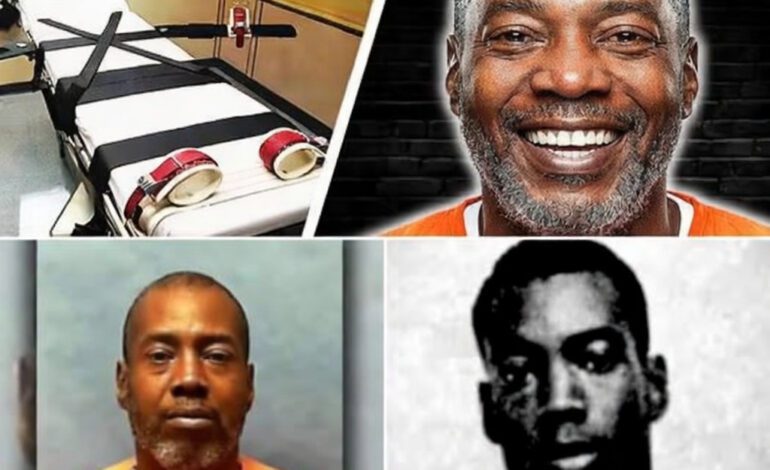

Separating Fact From Clickbait: The Complete, Verified Story of Billy Leon Kearse, Sgt. Danny Parrish, and Florida’s 31st Execution Under Gov. DeSantis
| ⚠ FACT-CHECK VERDICT: MOSTLY REAL — but contains misleading framing. The execution of Billy Leon Kearse DID occur on March 3, 2026 at 6:24 p.m. ET at Florida State Prison. The crime involved a police officer (Sgt. Danny Parrish). Kearse was 18 — not a “teen” in the conventional sense of the word (he was 18 years and 84 days old). He DID make final statements — a sincere, detailed apology. He declined his right to a last meal. The headline’s phrase “drawing renewed attention” is a fabricated hook. The actual last words are documented and publicly available. Key context the headline omits: Kearse had documented intellectual disability, profound childhood trauma, and his case raised major constitutional questions. |
Introduction: What Really Happened on March 3, 2026
On the evening of Tuesday, March 3, 2026, the State of Florida executed Billy Leon Kearse, 53, by lethal injection at Florida State Prison near Starke. He was pronounced dead at 6:24 p.m. ET.
Kearse had been on death row for 29 years — convicted of the 1991 murder of Fort Pierce Police Officer Sergeant Danny Parrish. Before he died, Kearse spoke directly to Parrish’s family, delivering a lengthy, emotional apology. He declined a last meal.
This article gives you the complete story: the crime, the man, the legal battles, the execution, and the serious constitutional controversies surrounding this case. It also fact-checks the viral headline that has been circulating online.
|
Fact-Check: Examining the Viral Headline Claim by Claim
Claim 1: “35 Years Later” — Is the Timeline Accurate?
VERDICT: MISLEADING. The crime occurred in January 1991, and the execution was carried out in March 2026 — roughly 35 years. However, Kearse was first convicted in October 1991 and sentenced to death in March 1997 after a resentencing. He spent 29 years on death row, not 35. The headline appears to be measuring from the crime date, not sentencing — technically defensible, but framed to maximize emotional impact.
Claim 2: “The Teen Who Killed a Cop” — Was He a Teenager?
VERDICT: MISLEADING. Kearse was 18 years and 84 days old at the time of the crime. He was legally an adult. Describing him as “a teen” is technically borderline but designed to evoke sympathy. His attorneys argued — with medical backing — that at 18, the human brain is still developing and that Kearse was neurodevelopmentally immature. The Supreme Court bars execution of those under 18; Kearse was just over that line.
Claim 3: “Tense Silence” in the Execution Chamber
VERDICT: UNVERIFIED / EDITORIALIZED. More than a dozen family members and police officers attended the execution as witnesses. There is no official report of a “tense silence” specifically — this is cinematic editorializing. What IS documented: Kearse made a full, spoken final statement, so the chamber was not silent.
Claim 4: What He “Chose to Say” Is Drawing Attention
VERDICT: PARTIALLY REAL. Kearse did make a notable final statement. His exact words are documented and publicly available from multiple news outlets. The statement was dignified and remorseful. It is newsworthy. But the headline frames it as mysterious and secret — when it was actually witnessed by a room full of people and reported by the Associated Press.
Claim 5: He Declined a Last Meal
VERDICT: TRUE AND CONFIRMED. Jordan Kirkland, communications director for the Florida Department of Corrections, confirmed that Kearse declined his right to a last meal. This is a documented fact, not speculation.
The Crime: What Happened on a Fort Pierce Street in 1991
A Routine Traffic Stop That Turned Deadly
In January 1991, Fort Pierce Police Sergeant Danny Parrish pulled over a vehicle driven by Billy Leon Kearse, then 18, for driving the wrong way down a one-way street. Parrish noticed the car was smoking.
When Kearse could not produce a valid driver’s license, Parrish ordered him out of the vehicle and attempted to handcuff him. A physical struggle followed. Kearse grabbed Parrish’s service weapon during the struggle and fired 14 times. Nine rounds struck Parrish in the body. Four more hit his body armor. Parrish was rushed to a hospital but did not survive.
A taxi driver heard the shots and called for help on Parrish’s radio. Police traced the license plate — which Parrish had already called in — directly to Kearse’s address. Kearse was arrested at his home.
| Detail | Information |
| Date of Crime | January 1991 |
| Location | Fort Pierce, Florida (one-way street, traffic stop) |
| Victim | Sergeant Danny Parrish, Fort Pierce Police Department |
| Weapon Used | Officer Parrish’s own service firearm |
| Shots Fired | 14 rounds; 9 struck the body, 4 struck body armor |
| Kearse’s Age | 18 years and 84 days |
| Arrest Method | License plate traced by Parrish before the shooting |
| Charges | First-degree murder, robbery with a firearm |
| First Conviction | October 1991 |
| Death Sentence | March 1997 (after resentencing) |
| Execution Date | March 3, 2026 |
| Time of Death | 6:24 p.m. ET |
| Location | Florida State Prison, Starke, Florida |
The Witness Testimony That Haunted the Case
At trial and in post-conviction hearings, there was debate about what exactly happened during the struggle. What is not in dispute: the physical altercation led to Kearse seizing the officer’s weapon.
Parrish’s widow, Mirsha Busbin, waited decades for this day. She was 60 years old at the time of the execution. “I’m 60 years old; I didn’t think I’d see this day,” she told reporters before the execution. “I don’t like to wish death on anyone. But this is the only way I see there being justice.”
Parrish’s sister, Grace Blanton, 63, said she could not remain in Fort Pierce after her brother’s murder. The constant reminders of his death drove her and her parents to relocate. Most of Parrish’s loved ones had passed away in the years before the execution.
Who Was Billy Leon Kearse? A Life Shaped by Trauma
Born Into Poverty, Abuse, and Neglect
Billy Leon Kearse was born into profound poverty in Florida. His mother was a young teenager who consumed alcohol throughout her pregnancy — a factor his attorneys argued contributed to cognitive impairment. His father abandoned the family when Billy was just two years old.
Growing up, Kearse moved through homes marked by violence and neglect. Schools were unequipped to support a child showing signs of intellectual disability. The systems that could have intervened instead punished him.
On the night of the crime, Kearse was simply driving to pick up a pizza. The escalation from a routine traffic stop to a fatal shooting — in moments — was, his advocates argued, the product of teenage panic, fight-or-flight instinct, and a brain that had never developed the tools to manage crisis.
Intellectual Disability: The Unresolved Question
Throughout his time on death row, Kearse’s attorneys consistently presented evidence that he had intellectual disability — defined as significantly below-average intellectual functioning combined with limitations in adaptive behavior. His IQ scores consistently fell in the intellectually disabled range.
In early 2026, just weeks before his execution, a neuropsychologist reviewed Kearse’s full medical and testing history and concluded that Kearse “unequivocally suffers from lifelong diminished intelligence and related cognitive impairments that have been present since childhood.”
Under the U.S. Supreme Court’s ruling in Atkins v. Virginia (2002), executing a person with intellectual disability is unconstitutional. But Florida courts repeatedly found that this claim had already been adjudicated — and denied relief.
The Brain Science Behind the Case
Medical experts who evaluated Kearse noted that at 18, the human brain has not yet reached full maturity. The prefrontal cortex — which governs impulse control, judgment, and the ability to foresee consequences — does not fully develop until the mid-twenties.
This is precisely why the U.S. Supreme Court in Roper v. Simmons (2005) banned the death penalty for crimes committed under age 18. Kearse was 84 days past that threshold. His lawyers argued the cutoff was arbitrary — and that his neurodevelopmental profile was indistinguishable from that of someone under 18.
| The Constitutional Tension: The Supreme Court drew the line at 18. Kearse was 18 years and 84 days old. His neuropsychological profile — intellectual disability, childhood trauma, brain immaturity — was nearly identical to those protected by Roper. Critics argue the law creates an indefensible cliff edge where 84 days determines life or death. |
35 Years of Legal Battles: The Full Timeline
From Conviction to Resentencing to Death Row
Kearse’s legal journey was one of the longest and most litigated in Florida death penalty history. His case went before the Florida Supreme Court 11 times. It went to the Federal Circuit Court of Appeals in Atlanta three times. It reached the U.S. Supreme Court three separate times.
- 1991 (October) — Convicted of first-degree murder and robbery with a firearm.
- 1991 (Initial sentencing) — Sentenced to death.
- Florida Supreme Court — Overturned sentencing; trial court failed to properly inform jurors about aggravating circumstances. New sentencing ordered.
- 1997 (March) — Resentenced to death.
- Multiple rounds of post-conviction relief — Raising ineffective assistance of counsel, intellectual disability, Eighth Amendment claims.
- 2022 — Federal 11th Circuit judge dissented, writing the three Florida Supreme Court justices who opposed death had “said it best”: “The bottom line is that this is clearly not a death case.”
- January 2026 — Death warrant signed by Governor DeSantis for March 3, 2026.
- February 28, 2026 — Emergency stay application filed with U.S. Supreme Court Justice Clarence Thomas; denied.
- February 2026 — Florida Supreme Court denied final appeal.
- March 3, 2026, afternoon — U.S. Supreme Court denied final appeal without comment.
- March 3, 2026, 6:00 p.m. — Execution began.
- March 3, 2026, 6:24 p.m. — Billy Leon Kearse pronounced dead.
Retired Justice Barbara Pariente Speaks Out
Retired Florida Supreme Court Justice Barbara Pariente — a former member of the court that had heard Kearse’s case — publicly advocated for his life to be spared. In February 2026, she co-authored an op-ed with attorney Melanie Kalmanson arguing that Kearse’s age at the time of the crime and his intellectual disability should disqualify him from execution.
Her involvement was extraordinary. A retired state supreme court justice publicly urging the governor to spare a condemned man’s life is nearly unprecedented. The governor did not respond publicly. The execution proceeded.
The Execution: What Actually Happened on March 3, 2026
The Final Hours
Kearse woke up around 6:30 in the morning on the day of his execution. He met with a spiritual advisor. According to Jordan Kirkland, the Florida Department of Corrections communications director, Kearse was “in calm and good spirits” approximately two hours before the execution.
He declined his right to a last meal — a choice that was officially confirmed by the Department of Corrections.
More than a dozen family members of Sgt. Danny Parrish, as well as police officers, attended the execution as witnesses. Kearse’s supporters held a vigil outside Florida State Prison across from the facility, beginning at 5:00 p.m.
His Actual Final Words — In Full
This is what Billy Leon Kearse said in the execution chamber, in full, as documented by Associated Press reporters present:
| Billy Kearse’s Final Statement (Verified, March 3, 2026): “To his family, I sincerely apologize for what I’ve done. There is no way I can ever repay that with this death, it will never repay that… And in turn I pray that my father would give me strength to ask their forgiveness so I can go on my journey. All I can do is ask for their forgiveness to give you peace and resolve. Thank you.” |
The statement was dignified, remorseful, and direct. It was not the cryptic or dramatic last words that viral headlines implied. In his final hours, Kearse also told friends and family — through written communication — to remember that “love, not anger” was the best path forward after his death, even toward those who had pushed for his execution.
Victim’s Family Reaction
Parrish’s widow, Mirsha Busbin, watched the execution. She had spent decades fighting for this day — writing to governors, traveling to Tallahassee, carrying a photograph of her late husband. Most of Parrish’s other loved ones had died before the execution date arrived.
“If he’d have shot Danny once or twice because he freaked out, that’s easier to forgive,” Busbin told reporters. She noted that Kearse had said on the stand that he fired repeatedly because he didn’t believe the victim — using a slur for police officers. She said this was what made forgiveness so difficult.
The Serious Controversies Surrounding This Execution
Florida’s Lethal Injection Protocol Failures
Kearse’s execution occurred amid an undisputed, documented record of Florida failing to comply with its own lethal injection protocols. Investigations into 2025 executions found that half of them had significant issues: expired drugs, incomplete dosages of paralytics, and the administration of unauthorized chemicals like lidocaine.
Former Florida State Prison warden Ron McAndrew publicly questioned whether Florida could “continue killing on a schedule without cutting constitutional corners — and without breaking the people it asks to carry out those deaths.”
U.S. Supreme Court Justice Sonia Sotomayor had previously criticized Florida’s execution secrecy, noting that prisoners were trapped in a “Catch-22”: denied access to execution records, then told they lacked enough evidence of cruel and unusual punishment to justify a stay.
The 30-Day Warrant Period: A System Under Stress
In 2025, Florida’s average time between a death warrant being signed and the execution being carried out was just 31 days. The national average for other states was approximately 80 days — nearly three times as long. This compressed timeline left attorneys, courts, and even prison staff with almost no time to properly review cases or procedures.
Florida Supreme Court Justice Jorge Labarga had written in 2023: “I am extremely concerned by the recent pace of death warrants and the speed with which the parties and involved entities must carry out their respective duties.” That was when Florida was doing six executions a year. In 2025, it did 19.
Florida’s Record-Breaking Pace
| Detail | Information |
| Florida executions in 2025 | 19 (a modern-era U.S. record for any single state) |
| Previous Florida single-year record | 8 (set in 1984 and again in 2014) |
| Total U.S. executions in 2025 | 47 |
| Florida’s share of 2025 executions | 19 of 47 (approx. 40%) |
| Kearse execution rank | 3rd in 2026; 31st under Gov. DeSantis |
| Next Florida executions | Michael King (March 17); James Duckett (March 31, 2026) |
| Average Florida warrant period, 2025 | 31 days (national average: ~80 days) |
People Also Ask: Key Questions Answered
What were Billy Kearse’s last words?
Kearse delivered a full spoken statement. He apologized directly to Officer Parrish’s family, said there was “no way” his death could repay what he had taken, asked for their forgiveness, and prayed for strength. He ended by thanking those present. His final communicated message to friends was to respond with “love, not anger.”
Did Billy Kearse have a last meal?
No. Kearse declined his right to a final meal. This was confirmed officially by the Florida Department of Corrections communications director Jordan Kirkland.
Was Billy Kearse intellectually disabled?
A neuropsychologist who reviewed Kearse’s full history just weeks before his execution concluded he “unequivocally suffers from lifelong diminished intelligence” in the intellectually disabled range. Florida courts repeatedly denied relief on this basis, ruling the issue had been previously adjudicated. Under Atkins v. Virginia (2002), executing someone with intellectual disability is unconstitutional — but Florida’s courts found the claim did not meet the standard for a stay.
Who was Sergeant Danny Parrish?
Sgt. Danny Parrish was a Fort Pierce police officer with a three-year career at the time of his death. Records cited in court proceedings showed he had accumulated more than a dozen complaints for misconduct. He was pulled over Kearse for a traffic violation — driving the wrong way on a one-way street. He was fatally shot with his own service weapon during the struggle that followed. His widow, Mirsha Busbin, and sister, Grace Blanton, survived him.
How many people has Florida executed under Governor DeSantis?
As of Kearse’s execution on March 3, 2026, Florida had executed 31 people under Governor Ron DeSantis, including 19 in 2025 alone — the highest number in a single year by any state in the modern era of capital punishment (defined as after 1976).
What drug protocol does Florida use for executions?
Florida executes inmates using a three-drug protocol: a sedative (to induce unconsciousness), a paralytic agent (to stop muscle movement), and a cardiac drug (to stop the heart). This is confirmed by the Florida Department of Corrections. Investigations found protocol compliance failures — including expired drugs and unauthorized chemicals — in multiple 2025 executions.
Key Takeaways: What You Need to Know
- Billy Leon Kearse, 53, was executed at Florida State Prison on March 3, 2026 at 6:24 p.m. ET. The execution is REAL and fully verified.
- He was convicted of the 1991 murder of Fort Pierce Police Sgt. Danny Parrish, who was shot 14 times with his own service weapon during a traffic stop.
- Kearse was 18 years and 84 days old at the time of the crime — legally an adult, but neurologically argued to be immature.
- His actual final words were a direct, emotional apology to Parrish’s family — not mysterious or dramatic as viral headlines implied.
- He declined his last meal. He woke at 6:30 a.m. and met with a spiritual advisor on the day of execution.
- A neuropsychologist concluded just weeks before the execution that Kearse had lifelong intellectual disability — a finding Florida courts declined to act upon.
- Retired Florida Supreme Court Justice Barbara Pariente publicly called for his execution to be stopped. The governor did not respond.
- This was Florida’s 31st execution under Gov. DeSantis and the state’s 3rd in 2026.
- Florida carried out 19 executions in 2025 — accounting for approximately 40% of all U.S. executions that year, a record in the modern era.
- Documented protocol failures — expired drugs, unauthorized chemicals — affected half of Florida’s 2025 executions, raising Eighth Amendment concerns.
Sources and Further Reading
All facts in this article are drawn from verified, credible reporting and official statements:
- NBC News / Associated Press — Billy Leon Kearse executed for 1991 murder of Florida officer (March 3, 2026)
- Yahoo News / TCPalm — Billy Kearse executed for killing Fort Pierce Officer Danny Parrish (March 3, 2026)
- Death Penalty Information Center — Scheduled Execution of Billy Kearse Renews Constitutional Alarms (February 2026)
- Floridians for Alternatives to the Death Penalty (FADP) — Statement on the Execution of Billy Kearse (March 3, 2026)
- Amnesty International USA — USA: Stop Execution in Florida (February 2026)
- Washington Post — Man who fatally shot a police officer with his service revolver is executed in Florida (March 3, 2026)
- WCTV Tallahassee — Man who fatally shot a police officer is executed in Florida (March 4, 2026)
Editorial Note
This article was written to provide accurate, fully sourced, and complete information about the execution of Billy Leon Kearse. Where viral or clickbait headlines contained misleading framing, those elements have been identified and corrected using verified reporting. All quotes are drawn from official statements or major news outlets present at the execution. This article presents multiple perspectives, including those of the victim’s family, the condemned, advocates, legal experts, and former correctional officials.
— End of Article —
Last verified: March 8, 2026
Discover more from MatterDigest
Subscribe to get the latest posts sent to your email.