Florida Executes Serial Killer Ronald Heath by Lethal Injection
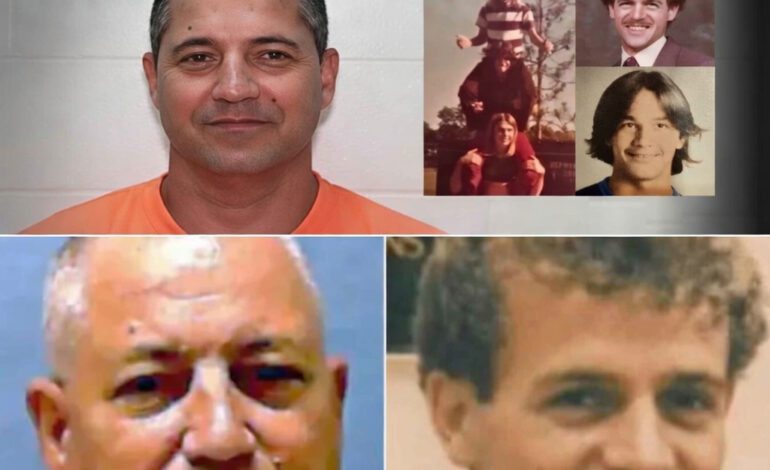

The headline is real — but key details are misleading. Here is the full, verified story of Ronald Heath’s execution and what the viral coverage got wrong.
The Verdict: Real Event, Misleading Label
The execution of Ronald Heath did happen. On February 10, 2026, at 6:12 p.m., Ronald Palmer Heath, 64, was pronounced dead at Florida State Prison near Starke, Florida. He was executed by three-drug lethal injection — the first execution carried out in Florida in 2026.
That part of the headline is accurate. But calling Heath a ‘serial killer’ and saying his case ‘shocked the state’ are claims that stretch the truth in important ways — and millions of readers have been misled by the framing.
| ⚠️ FAKE NEWS ALERT Ronald Heath was NOT a ‘serial killer’ by legal or FBI definition. He was convicted of one murder — the 1989 killing of Michael Sheridan. A prior killing in 1977 (for which he served prison time) does not meet the standard definition of serial killing, which requires three or more separate events with a cooling-off period and deliberate predatory pattern. |
The Real Story: Who Was Ronald Heath?
Early Life and the 1977 Killing
Ronald Palmer Heath was born in 1961 in Florida. At the age of 16, in 1977, he stabbed and killed 18-year-old Michael Green in Jacksonville. Psychological reports from 1978 described the killing as brutal — prosecutors at the time called it more a mutilation than a murder.
Heath received a 30-year prison sentence for that crime. He served only 10 to 12 years before being released in 1989. Psychological reports from both 1978 and 1988 flagged serious concerns about Heath’s violent tendencies and substance use — but he was released anyway, with no support or treatment.
The 1989 Murder of Michael Sheridan
Just six months after his release from prison, in May 1989, Ronald Heath and his younger brother Kenneth Heath encountered Michael Sheridan — a 30-year-old traveling salesman from Atlanta — at a Gainesville bar called the Purple Porpoise.
Court records show that the brothers plotted to rob Sheridan. Ronald drove the three men to a remote wooded area south of Gainesville. Kenneth pulled a handgun on Sheridan and shot him in the chest when Sheridan refused to comply. As Sheridan fell and emptied his pockets, Ronald kicked him repeatedly and stabbed him with a hunting knife.
Michael Sheridan died from the combined wounds. Ronald Heath was arrested, charged with first-degree murder and robbery with a deadly weapon, and convicted. In December 1990, he was sentenced to death.
|
Fact-Check Table: What the Viral Headline Got Right and Wrong
Here is a side-by-side breakdown of the claims made in the viral headline and social media posts circulating about this case, compared to verified facts from court records and credible news outlets.
| Claim in Viral Headline | Verdict | The Facts |
| Ronald Heath was a ‘serial killer’ | Misleading | Convicted of one murder (Sheridan, 1989). Earlier prison time was for a 1977 killing. Not legally classified as a serial killer. |
| It ‘shocked the state’ | Partially False | The crime was regional, not a statewide shocking event like mass shootings or high-profile cases. |
| Execution carried out by lethal injection | TRUE | Three-drug lethal injection at Florida State Prison, Starke, on February 10, 2026 at 6:12 p.m. |
| Decades on death row | TRUE | Sentenced in December 1990; executed February 2026 — approximately 35 years on death row. |
| His last words drew attention | TRUE | His final words were: ‘I’m sorry. That’s all I can say. Thank you.’ — widely reported. |
The Key Inaccuracy: ‘Serial Killer’ Is the Wrong Label
What Is the Legal Definition of a Serial Killer?
The FBI and most law enforcement agencies define a serial killer as someone who commits two or more murders in separate events, with a cooling-off period between them. The killings are typically driven by a psychological compulsion and involve a predatory selection of victims.
By this definition, Ronald Heath does not cleanly qualify. He committed a killing in 1977, served prison time, and then participated in another killing in 1989 alongside his brother. The 1989 murder was primarily a robbery that turned lethal — not a predatory pattern of serial violence.
Why Does This Label Matter?
Labeling someone a ‘serial killer’ dramatically changes public perception of a case. It implies a pattern of hunting and killing multiple victims, which heightens fear and often reduces scrutiny of the legal process. In Heath’s case, the label may have made it easier for the public to dismiss serious concerns raised by his legal team and advocacy groups.
Those concerns — including protocol violations in Florida’s lethal injection process, a non-unanimous jury recommendation, and a massive sentencing disparity between Ronald and his brother — deserve honest public debate. Sensational labels work against that.
The Brother Disparity: A Major Unresolved Controversy
One of the most significant aspects of this case that viral coverage has largely ignored is the outcome for Kenneth Heath, Ronald’s younger brother.
Kenneth Heath was the one who pulled the gun. He was the one who fired the shot that killed Michael Sheridan. Despite that, Kenneth pleaded guilty, agreed to testify against his brother, and was sentenced to life imprisonment with the possibility of parole after 25 years. He could theoretically walk free one day.
Ronald Heath, who did not fire the gun, was sentenced to death under Florida’s felony murder statute. He was executed in 2026. Kenneth Heath remains alive in a Florida correctional facility.
| Key Quote — FADP Statement (February 10, 2026) “Tonight, Florida killed a man for a death he did not cause… The undisputed trigger man in that crime, Ronnie’s brother Kenneth, received a life sentence with the possibility of parole. That means one day Kenneth may walk free on this earth, while Ronnie will be buried six feet under it.” — Floridians for Alternatives to the Death Penalty |
The Victim’s Family Perspective
The Sheridan family sees it differently. Five of Michael Sheridan’s brothers, his sister Nancy, and five nephews were present in the witness room at Florida State Prison to watch the execution. Thomas and Nancy Sheridan traveled from Syracuse, New York, to be there.
For decades, the family lobbied Florida’s governor, sent letters, and even mailed custom blue Sharpies to the Governor’s Office — matching the pens used to sign death warrants. They believe Ronald Heath was equally responsible for their brother’s death and that justice was served.
Nancy Sheridan described the moment as “justice served after a very long wait.”
Ronald Heath’s Last Words
His final statement — the detail drawing the most attention online — was brief and emotional.
| Ronald Heath’s Last Words — February 10, 2026
“I’m sorry. That’s all I can say. Thank you.” |
Heath was already strapped to the gurney with an IV inserted when the curtain to the chamber rose at 6:00 p.m. He was pronounced dead 12 minutes later at 6:12 p.m. Witnesses described the chamber as quiet and tense. Heath did not appear to make any final statements directed at the victim’s family.
The Broader Context: Florida’s Record Execution Pace
2025 — A Historic Year for Executions
Ronald Heath’s execution did not happen in isolation. It was the first execution of 2026, following a remarkable and controversial 2025 in which Florida carried out 19 executions — a modern-era record for the state and approximately 40% of all executions in the United States that year.
Governor Ron DeSantis signed more death warrants in 2025 than any other Florida governor since the death penalty was reinstated in 1976. The previous Florida record was eight executions in a single year, set in both 1984 and 2014.
What Comes Next
Two more Florida executions had already been scheduled at the time of Heath’s death. Melvin Trotter, 65, was set to be executed on February 24, 2026, for the 1986 murder of a Manatee County grocery store owner. Billy Leon Kearse, 53, was scheduled for March 3, 2026 — convicted of killing a police officer with the officer’s own service weapon.
The Lethal Injection Controversy
Allegations of Protocol Violations
Ronald Heath’s legal team filed a 76-page brief with the Florida Supreme Court arguing that the state’s lethal injection process was dangerously flawed. The brief accused the Florida Department of Corrections of what attorneys called ‘reckless maladministration.’
According to court filings, the documented issues across 19 executions in 2025 included:
- Using expired drugs — including etomidate (the drug meant to render inmates unconscious) that had expired on January 31, 2025, but was reportedly used in August and September 2025 executions
- Incorrect dosages — in one case, only 10 vials of a paralytic drug were prepared when the protocol requires 20
- Unauthorized drugs — in at least two executions, a drug not in any approved protocol was administered
- Failure to keep contemporaneous logs for critical steps of the process
- At least one execution in which an inmate appeared to be in distress for approximately 20 minutes
Courts Ruled Against Heath
Both the Florida Supreme Court and the U.S. Supreme Court denied Heath’s appeals in the days before his execution. The U.S. Supreme Court rejected his final appeal on the morning of February 10, 2026, hours before the execution took place.
People Also Ask: Key Questions Answered
Was Ronald Heath actually a serial killer?
Not by the standard legal or FBI definition. He was convicted of one murder (1989) and had previously been imprisoned for a 1977 killing. Two killings separated by more than a decade and a prison sentence do not constitute serial killing in the traditional criminological sense. The label was applied loosely by some media and advocacy voices.
Why did Ronald Heath get death while his brother got life?
Ronald Heath was convicted and sentenced under Florida’s felony murder statute, which allows for the death penalty even if the defendant did not personally pull the trigger. His brother Kenneth pleaded guilty and cooperated with prosecutors, receiving a deal for life in prison with the possibility of parole. The disparity has been widely cited as a major fairness concern in the case.
Was the execution painful or botched?
There is no public report indicating the execution was botched. Heath was pronounced dead 12 minutes after the process began. His defense team argued prior to the execution that Florida’s history of protocol violations created a risk of cruel and unusual punishment, but eyewitness accounts of the February 10 execution do not indicate visible distress.
What were Florida’s execution controversies in 2025?
Florida executed 19 people in 2025 — a modern-era record. Court documents revealed that the Department of Corrections used expired drugs, administered incorrect dosages, used unauthorized substances, and failed to maintain proper logs. These issues formed the basis of multiple legal challenges, none of which succeeded in halting executions.
Key Takeaways
- Ronald Heath’s execution DID happen — February 10, 2026, by lethal injection at Florida State Prison
- He was NOT a ‘serial killer’ in the legal sense — convicted of one murder, with one prior killing
- The crime was a robbery-turned-murder, not predatory serial violence
- His brother, the actual shooter, received life with possibility of parole — a major sentencing disparity
- His final words were: ‘I’m sorry. That’s all I can say. Thank you.’
- Florida’s execution process faced serious, documented legal challenges over protocol violations
- This was Florida’s first execution of 2026, following a record 19 executions in 2025
Conclusion
The viral headline — ‘Florida Executes Serial Killer Ronald Heath by Lethal Injection’ — is built on a real event but uses a misleading label to frame it. Ronald Heath was executed. That is true. But he was not a serial killer in any recognized sense of that term.
What makes this case genuinely important is not the label, but the real issues it raises: a stark sentencing disparity between two brothers for the same crime, documented failures in Florida’s lethal injection protocols, and a state executing people at a pace without modern precedent.
Those are the stories worth having. Sensationalism gets in the way.
Sources and Further Reading
- Associated Press / NBC News — “Man convicted of killing traveling salesman becomes first person executed in Florida this year,” February 10, 2026
- Floridians for Alternatives to the Death Penalty (FADP) — Statement on the Execution of Ronald Heath, February 10, 2026. fadp.org
- WUSF / News Service of Florida — “Florida’s lethal injection process used to argue why a man’s execution should be halted,” January 28, 2026
- WSYR-TV LocalSYR.com — “Marcellus family heads to Florida for execution of man who killed their brother,” February 5, 2026
- Death Penalty Information Center — “New Report Examines Florida’s Unprecedented Execution Pace and Trends in 2025,” January 6, 2026
This article is published for informational and fact-checking purposes. All claims are sourced from verified court records and credible news outlets.
Discover more from MatterDigest
Subscribe to get the latest posts sent to your email.