Epstein’s ‘Baby Ranch’: How a Sex Trafficker Used Elite Science Circles to Pursue a Eugenics Fantasy
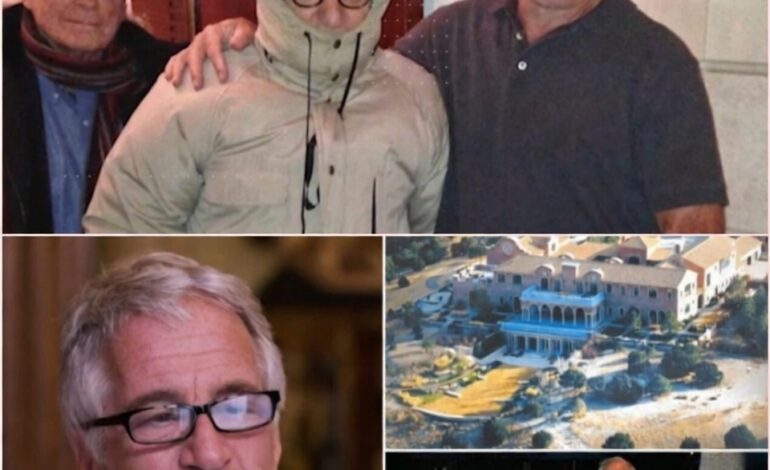

Jaron Lanier’s 2019 account to the New York Times revealed that Jeffrey Epstein openly discussed plans to impregnate 20 women at his New Mexico ranch — and used lavish dinner parties to recruit scientists and screen candidates for what one scientist called a ‘baby ranch’
| Editorial Note: This article is based on reporting first published by the New York Times on July 31, 2019, citing more than a dozen scientists and associates of Jeffrey Epstein. The New York Times confirmed its reporting with four sources familiar with Epstein’s thinking. Jaron Lanier’s account is secondhand — he reported what a woman who identified herself as a NASA scientist told him at a dinner party. There is no verified evidence that Epstein’s ‘baby ranch’ plan was ever executed. Epstein died in federal custody on August 10, 2019, at age 66. |
1. What the Record Shows: The Core Account
|
| Key Detail | Confirmed Information |
| Original source | New York Times investigation, July 31, 2019 |
| Reporters | James B. Stewart, Matthew Goldstein, and Jessica Silver-Greenberg |
| Key witness | Jaron Lanier — author, computer scientist, founding father of virtual reality |
| Lanier’s source | An unnamed woman who identified herself as a NASA scientist, at Epstein’s Manhattan dinner party, approximately 2002 |
| Epstein’s stated plan | Impregnate 20 women at a time at his Zorro Ranch, New Mexico |
| Stated model/inspiration | Repository for Germinal Choice — the so-called Nobel Prize sperm bank |
| Epstein’s ideology | Transhumanism; selective breeding; genetic enhancement |
| NYT sources confirming plan | Four people familiar with Epstein’s thinking |
| Evidence plan was carried out | None |
| Scientists who declined Epstein funding | Jaron Lanier (due to Epstein’s sexual offenses) |
| Scientists who criticized Epstein’s ideas | Steven Pinker (called him an ‘intellectual impostor’) |
| Epstein’s death | August 10, 2019, federal Metropolitan Correctional Center, NYC; ruled suicide |
2. Jaron Lanier’s Account — And Its Limits
The central eyewitness account comes from Jaron Lanier, a prominent computer scientist and widely credited founding father of virtual reality. Lanier spoke to the New York Times as part of its July 31, 2019 investigation into Epstein’s cultivation of elite scientists.
Lanier described attending a dinner party at Epstein’s Manhattan townhouse on the Upper East Side, approximately in 2002. He said the gathering featured Nobel laureates, professors, and classical music — standard fare for Epstein’s gatherings, by multiple accounts.
During the evening, Lanier said he spoke with a woman who identified herself as a NASA scientist. She told him that Epstein’s goal was to impregnate 20 women at a time at his 33,000-square-foot Zorro Ranch outside Santa Fe, New Mexico. According to Lanier, the woman was not alarmed. She was matter-of-fact.
The New York Times, July 31, 2019: Lanier said that at a dinner at Epstein’s Upper East Side mansion, he talked to a scientist who told him that Epstein’s goal was to have 20 women at a time impregnated at his Zorro Ranch. Lanier said the scientist identified herself as working at NASA, but he did not remember her name.
The Limits of This Account
Lanier’s account is important — but it is a secondhand account. He heard the ‘baby ranch’ plan described to him by a third party, whose identity he could not later confirm. The New York Times was transparent about this. The paper described a separate, ‘shakier, secondhand account’ also relayed to them by another source, suggesting Epstein had even broader plans.
Lanier also made a distinction about his own relationship to Epstein: he said he declined any funding from Epstein specifically because of Epstein’s sexual offenses, and that he had met Epstein only once after Epstein’s 2008 guilty plea to Florida state prostitution charges.
His separate account — that he had the impression Epstein used the dinner parties to screen women as candidates to bear his children — is Lanier’s interpretation, not a direct statement from Epstein. The New York Times reported both the claim and this interpretive framing clearly.
3. Epstein’s Scientific Circle: Who Attended, Who Declined
Epstein’s ability to attract leading scientists was central to how this story unfolded. He did not simply fantasize in private. He cultivated relationships with world-renowned researchers — using lavish parties, significant donations, private travel, and his financial credibility to gain access and credibility.
According to the New York Times and Slate’s detailed reconstruction of Epstein’s scientific network, the scientists Epstein courted over the years included:
- Stephen Hawking — the late theoretical physicist (who attended at least one Epstein-organized conference)
- Murray Gell-Mann — Nobel laureate who discovered the quark
- Marvin Minsky — artificial intelligence pioneer
- Oliver Sacks — neurologist and author
- Stephen Jay Gould — evolutionary biologist
- Lawrence Krauss — theoretical physicist
- Frank Wilczek — Nobel Prize-winning physicist
- George Church — Harvard geneticist
- Martin Nowak — Harvard evolutionary biologist (whose program received Epstein funding)
- Roger Schank — psychologist and computer scientist; among the more candid about the nature of Epstein’s gatherings
Epstein also donated $6.5 million to Harvard’s Program for Evolutionary Dynamics, and hosted lunches there. He was a registered sex offender when many of these relationships were maintained or built.
Who Declined
Jaron Lanier explicitly declined Epstein’s funding and limited contact after Epstein’s 2008 plea. Steven Pinker, the Harvard psychologist who attended some Epstein events, later publicly called Epstein an ‘intellectual impostor’ — though Pinker himself faced criticism for the nature of his earlier association with Epstein.
Many of the scientists who attended Epstein events later said they had not been aware of the extent of his criminal conduct, or that the prospect of funding led them to rationalize continued contact. Slate, in a 2019 analysis, documented the heavily male composition of Epstein’s scientific gatherings — noting that the few women present were often described in terms of their physical appearance alongside their academic credentials.
4. What Is Transhumanism — And How Did Epstein Distort It?
To understand what Epstein claimed to believe, it helps to understand transhumanism — and where his version of it diverged from mainstream thinking.
Transhumanism: The Legitimate Version
Transhumanism is a philosophical and scientific movement that holds that humans can and should use technology to improve the human condition — including extending healthy lifespans, enhancing cognitive capacities, and potentially one day achieving radical life extension. Mainstream transhumanists include researchers working on Alzheimer’s disease, genetic medicine, prosthetics, and artificial intelligence. The movement has reputable proponents at major universities.
How Critics Compare It to Eugenics
Critics argue that transhumanism — particularly its more ambitious variants — echoes the eugenics movement of the early 20th century. Eugenics held that human populations could be ‘improved’ through selective breeding, and it was used to justify forced sterilization programs in the United States and, most infamously, genocide under the Nazi regime. The discrediting of eugenics as both scientifically invalid and morally catastrophic is settled history.
The line between ‘improving human potential through technology’ and ‘controlling who reproduces’ is where the ethical divergence lies — and where Epstein’s stated views crossed it unambiguously.
Epstein’s Version
Multiple sources told the New York Times that Epstein framed his interest in terms of transhumanism. But his stated plan — impregnating dozens of women with his own DNA at a private ranch — had nothing to do with technological enhancement of human capability. It was a plan for one man to spread his own genetic material as widely as possible, using the language of science as a veneer.
Alan Dershowitz, who represented Epstein in his 2008 case, told the New York Times he was shocked when Epstein raised the topic of genetic improvement in conversation: the discussion called to mind, he said, the Nazis’ use of eugenics to pursue racial purity. ‘Everyone speculated about whether these scientists were more interested in his views or more interested in his money,’ Dershowitz said.
Roger Schank, a psychologist who knew Epstein and attended his events, offered a more personal interpretation to Slate: Epstein did want to be a father — but not in a conventional sense. Around the time Epstein turned 50, Schank said, Epstein asked him what would happen if he impregnated many different women and then helped them financially. Would the children turn out the way he wanted? Schank characterized this as Epstein’s actual motivation: not a scientific project, but a narcissistic paternity fantasy.
5. The Repository for Germinal Choice: Epstein’s Stated Model
According to Lanier’s account of what the NASA scientist told him, Epstein explicitly modeled his ‘baby ranch’ idea on the Repository for Germinal Choice — a real institution that has been extensively documented.
What Was the Repository for Germinal Choice?
The Repository for Germinal Choice was a California sperm bank founded in 1980 by Robert Graham, a businessman and eugenicist. Graham intended the bank to be stocked exclusively with the sperm of Nobel Prize-winning scientists, on the theory that their genetic material would produce intellectually superior offspring.
The reality was more complicated. The bank operated until 1999. Despite its popular name — the ‘Nobel Prize sperm bank’ — only one Nobel laureate publicly acknowledged contributing sperm: physicist William Shockley, who held deeply racist eugenicist views. Other donors were high-achieving individuals without Nobel credentials. The bank produced an estimated 200–250 children before closing.
Scientific consensus holds that the premise was fundamentally flawed: intelligence, creativity, and achievement are complex traits influenced by environment, experience, and countless genetic interactions — not reducible to the DNA of a single distinguished parent. The Repository is now studied primarily as a cautionary example of eugenics ideology operating in a democratic society.
The Key Difference
Graham’s Repository, whatever its flaws, was a voluntary institution using consensual donors and recipients. Epstein’s stated plan — as relayed by the NASA scientist to Lanier — described impregnating women at his private ranch, with Epstein as the sole ‘donor,’ and with the women apparently recruited through the dinner party circuit Epstein controlled.
The New York Times report does not make clear from available accounts whether Epstein was describing a plan involving consensual insemination, artificial insemination, or something else. No women have come forward publicly to describe being recruited to participate in any such scheme. As the Times noted, there is no evidence the plan was ever carried out.
6. What Scientists Said About Epstein’s Scientific Ideas
The scientists who engaged with Epstein’s intellectual pretensions were, almost unanimously, unimpressed with the ideas themselves — even when they continued to accept his hospitality or funding.
Steven Pinker, Harvard psychologist: described Epstein as an ‘intellectual impostor’ who ‘would abruptly change the subject, ADD-style, dismiss an observation with an adolescent wisecrack’ when challenged on the substance of his ideas.
Jaron Lanier: said that Epstein’s ideas ‘did not amount to science, in that they did not lend themselves to rigorous proof.’ As one example, Lanier cited Epstein’s hypothesis that atoms behaved like investors in a marketplace.
Roger Schank: characterized the eugenics scheme as ‘nonsense’ as a scientific matter.
The New York Times noted that Epstein was willing to fund research that other institutions would not — including efforts to identify ‘a mysterious particle that might trigger the feeling that someone is watching you,’ an idea with no scientific foundation.
At a Harvard visit, Epstein reportedly dismissed research focused on reducing starvation and providing health care to the poor — suggesting that helping disadvantaged populations only contributed to overpopulation. This view is consistent with a strain of eugenicist thinking that equates social welfare with genetic deterioration, a framing that most mainstream scientists reject entirely.
7. The Broader Pattern: Women at Epstein’s Events
The ‘baby ranch’ account sits within a well-documented broader pattern: Epstein consistently surrounded himself with young women at his gatherings, even events nominally organized around scientific discourse.
Slate’s 2019 analysis of Epstein’s documented science events found a heavily male guest list — with women appearing far less frequently. When women were present, they were often described by witnesses in terms of both their physical appearance and their academic credentials. Roger Schank described meeting Epstein for the first time over lunch: ‘It was me, him, and six girls,’ he told Slate.
Schank also described attending a 2002 AI conference organized by Marvin Minsky on Epstein’s private island: ‘Epstein walks into the conference with two girls on his arm. He was in the back, on a couch, hugging and kissing these girls.’ Schank said he believed the women were in their early 20s or late teens.
Lanier’s impression — that the dinner parties were being used to screen women as potential candidates to bear Epstein’s children — fits within this pattern. It is an interpretation, not a direct statement from Epstein. But it is an interpretation offered by a credible witness describing what he observed directly.
8. Epstein’s Other Fringe Science Beliefs
The ‘baby ranch’ plan was not Epstein’s only fringe scientific interest. The New York Times reported several others:
- Cryogenics: Epstein told an adherent of transhumanism that he wanted his head and penis cryogenically frozen after death, with the intent of being resurrected in the future. No credible scientific consensus supports cryogenic resurrection as a viable technology.
- ‘Feeling of being watched’ particle: Epstein reportedly bankrolled efforts to identify a hypothetical particle that could explain the subjective sensation that someone is watching you — a concept with no basis in established physics.
- Atoms as marketplace investors: Lanier cited Epstein’s hypothesis that atomic behavior could be modeled on market economics — an idea Lanier said did not meet any recognizable standard of scientific reasoning.
- DNA analysis business: Epstein’s Virgin Islands-incorporated business, Southern Trust Company, disclosed in a local filing that it was engaged in DNA analysis. The nature and scope of that work has not been publicly established.
Taken together, these interests paint a portrait of a man who used the language and associations of science to construct an image of intellectual seriousness — while the substance of his ideas was, by the assessment of actual scientists who spent time with him, largely without merit.
9. What Happened to Epstein
Jeffrey Edward Epstein was born January 20, 1953, in Brooklyn, New York. He worked as a math teacher before entering finance, where he built a career as a money manager for ultra-high-net-worth clients. The origins and mechanisms of his wealth were never fully explained or publicly verified.
Epstein pleaded guilty in 2008 to Florida state charges of soliciting prostitution from a minor and procuring a minor for prostitution. He served 13 months in county jail under a controversial plea deal negotiated with then-U.S. Attorney Alex Acosta, who agreed not to pursue federal charges. That deal was exposed by the Miami Herald in 2018 in a series by journalist Julie K. Brown.
On July 6, 2019, Epstein was arrested by federal authorities in New York on charges of sex trafficking of minors and conspiracy to commit sex trafficking. He pleaded not guilty. The charges described conduct from at least 2002 to 2005, involving dozens of girls as young as 14 at his properties in New York, Florida, his private island, and elsewhere.
On July 23, 2019 — one week before the New York Times published the ‘baby ranch’ reporting — Epstein was found unconscious in his Metropolitan Correctional Center cell with neck injuries. He was placed on suicide watch and then removed from it.
On August 10, 2019, Epstein was found dead in his cell. The New York City medical examiner ruled the cause of death suicide by hanging. His death occurred before trial. Ghislaine Maxwell, his longtime associate, was later convicted on five federal counts related to sex trafficking and conspiracy and is currently serving a 20-year federal prison sentence.
10. Why This Story Matters Beyond the Spectacle
The ‘baby ranch’ account has attracted significant public attention since 2019 — some of it driven by genuine outrage, some by morbid curiosity. As a news story, it deserves to be read and contextualized seriously, not sensationalized.
There are several reasons the account is newsworthy in a public-interest sense:
- It documents how a convicted sex offender maintained and exploited access to elite scientific institutions, including Harvard. Understanding how Epstein infiltrated these circles matters for reforming the institutional safeguards that failed.
- It illuminates how fringe eugenicist ideology can be laundered through the language of mainstream science — and how wealthy individuals can use financial leverage to gain the implicit endorsement of credentialed researchers without subjecting their ideas to actual scrutiny.
- It adds texture to the documented pattern of Epstein’s predatory behavior toward women — specifically his use of social and intellectual prestige as a recruiting and screening mechanism.
- It raises unresolved questions about the extent of Epstein’s financial network and what specific DNA-related activities his Virgin Islands business was actually conducting.
The story should not be reduced to a curiosity item about a dead man’s bizarre fantasies. It is one piece of a much larger documented record of institutional failure, enabling, and abuse — most of which remains unresolved in terms of public accountability for those who surrounded and supported Epstein over decades.
11. Frequently Asked Questions (FAQ)
What was Epstein’s ‘baby ranch’?
According to reporting by the New York Times, confirmed by four sources familiar with Epstein’s thinking, Jeffrey Epstein discussed plans to impregnate up to 20 women at a time at his Zorro Ranch — a 33,000-square-foot property outside Santa Fe, New Mexico — with the stated goal of spreading his DNA and improving the human gene pool. Jaron Lanier relayed the account of a woman who identified herself as a NASA scientist and described the plan to him at a Manhattan dinner party around 2002. There is no evidence the plan was ever carried out.
Who is Jaron Lanier and why is his account important?
Jaron Lanier is a computer scientist, author, and widely credited founding father of virtual reality. He is a credible witness who spoke to the New York Times as part of its 2019 investigation into Epstein’s cultivation of elite scientists. Lanier’s account is important because he was physically present at Epstein’s Manhattan dinner parties, directly heard the ‘baby ranch’ plan described to him by a woman who identified herself as a NASA scientist, and was transparent about the limits of his account — including that it was secondhand and that he could not remember the woman’s name.
Did Epstein ever carry out his eugenics plan?
No evidence has emerged that Epstein carried out the plan. The New York Times, in its original reporting, was explicit: ‘There is no evidence that it ever came to fruition.’ Epstein died in federal custody in August 2019 before his sex trafficking trial could proceed.
What was the Repository for Germinal Choice?
The Repository for Germinal Choice was a California sperm bank founded in 1980 by eugenicist Robert Graham, intended to be stocked with Nobel laureates’ sperm to produce intellectually gifted children. Only one Nobel laureate — physicist William Shockley — publicly acknowledged contributing. The bank operated until 1999. According to Lanier’s account, Epstein explicitly cited this institution as the model for his ‘baby ranch’ idea.
What happened to the scientists who attended Epstein’s events?
The scientists who attended Epstein’s events faced varying degrees of public scrutiny after his 2019 arrest and the publication of the New York Times investigation. Most issued statements explaining they had not been aware of the extent of his criminal conduct. Several, including Steven Pinker, acknowledged the relationship while defending the limited nature of their contact. Jaron Lanier had declined Epstein funding before the arrest. No scientist has faced criminal charges related to Epstein’s conduct at these events.
Who is Ghislaine Maxwell and what happened to her?
Ghislaine Maxwell was Jeffrey Epstein’s longtime associate and, according to federal prosecutors, a central participant in his sex trafficking operation. She was convicted in December 2021 on five federal counts including sex trafficking of a minor and is currently serving a 20-year federal prison sentence at FCI Tallahassee.
Primary Sources
- New York Times: ‘Jeffrey Epstein Hoped to Seed Human Race With His DNA’ — James B. Stewart, Matthew Goldstein, and Jessica Silver-Greenberg (July 31, 2019). This is the foundational report on which all other coverage is based.
- Slate: ‘What It Was Like to Be a Scientist in Jeffrey Epstein’s Circle’ — Daniel Engber (August 2019). Detailed examination of the gender composition of Epstein’s scientific events.
- Rolling Stone: ‘Jeffrey Epstein, Cartoon Villain, Wanted to Start a Baby Ranch’ (July 31, 2019)
- Daily Beast: Coverage of the New York Times report (July 31, 2019)
- Times of Israel: ‘Report: Epstein Wanted to Spread His DNA by Impregnating 20 Women at His Ranch’ (August 1, 2019)
- Gothamist: ‘Jeffrey Epstein Reportedly Wanted to Turn New Mexico Ranch Into Eugenicist Baby-Making Lab’ (July 31, 2019)
- Irish Times: ‘How Jeffrey Epstein Planned to Impregnate 20 Women at a Time’ (August 6, 2019)
- SDNY/Department of Justice evidence filing: EFTA00018466 — includes excerpted New York Times text in evidence package
| About This Article
This article synthesizes reporting from the New York Times (July 31, 2019), Slate, Rolling Stone, the Daily Beast, the Times of Israel, Gothamist, and the Irish Times. All direct characterizations of Jaron Lanier’s account are attributed to his documented statements to the New York Times. The account of what the NASA scientist told Lanier is secondhand — Lanier could not confirm the scientist’s name. No direct statements from Epstein about the ‘baby ranch’ plan were ever recorded on the public record; all accounts are from third parties who heard Epstein discuss the plan. This article does not confirm, speculate about, or add to the documented record beyond what has been established in cited reporting. Last updated: February 2026. |
Discover more from MatterDigest
Subscribe to get the latest posts sent to your email.