Election Conspiracy Activist Just Got Convicted of Election Fraud — The Irony Has Everyone Talking
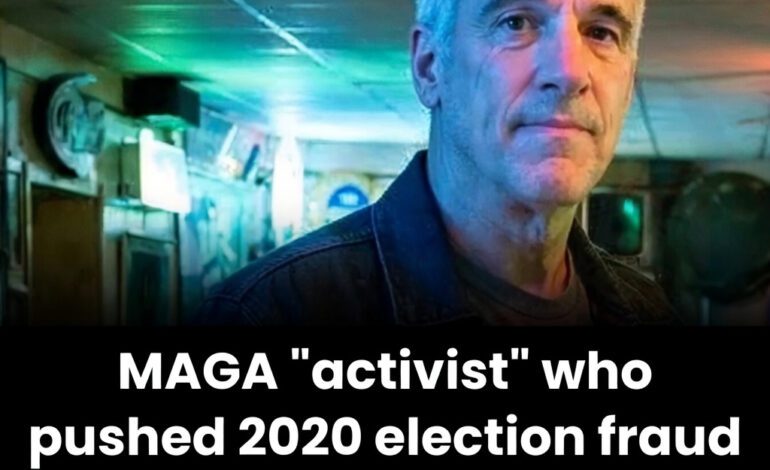

Election Denier Harry Wait Convicted of Election Fraud in Wisconsin
| Quick Answer Harry Wait, a 71-year-old Wisconsin election conspiracy activist, was convicted of election fraud and felony identity theft in 2025 after illegally requesting absentee ballots in the names of two elected officials without their consent. A Racine County jury found him guilty on all three counts after a two-day trial. Wait faces up to six years in prison at sentencing. |
Introduction
There is a particular kind of irony that needs no commentary. A man spends years claiming elections are riddled with fraud. He demands investigations. He rallies supporters. He insists the system is broken.
Then a jury convicts him of committing election fraud himself.
That is the story of Harry Wait — a 71-year-old Wisconsin activist whose crusade against supposed voting vulnerabilities ended in a felony conviction and the prospect of six years behind bars. His case is not just a local news story. It is a lens through which to examine the entire election denialism movement, the real-world damage it causes, and what happens when rhetoric collides with the law.
This article covers everything: who Wait is, exactly what he did, how the trial unfolded, why the case matters nationally, and what it reveals about the state of election integrity in America in 2025.
Who Is Harry Wait? The Man Behind the Case
Harry Wait was not a fringe figure in Wisconsin’s election conspiracy community. He was one of its most vocal and persistent voices. Based in Racine County, Wait led a local organisation called HOT Government — an acronym for Honest, Open, Transparent Government.
The group positioned itself as a watchdog operation, dedicated to uncovering what it claimed were systemic vulnerabilities in Wisconsin’s absentee ballot system. Wait gave interviews, attended public meetings, and cultivated a following among voters convinced that the 2020 presidential election had been stolen.
His History of Election Claims
Wait had been agitating about alleged election irregularities for years before his arrest. He focused particular attention on Wisconsin’s MyVote website — a state portal that allows residents to request absentee ballots online. Wait repeatedly argued that the system was too easy to abuse and that anyone could request a ballot in another person’s name.
He was right about one thing: it was technically possible to request a ballot using another person’s publicly available information. He was deeply wrong about what the appropriate response to that vulnerability looked like.
A Profile in Extremes
Wait’s worldview was shaped by the broader 2020 election denial movement that took hold after Donald Trump’s defeat. Activists like Wait believed — and in many cases still believe — that widespread coordinated fraud had changed the election outcome. Courts, election officials, and independent audits repeatedly found no evidence to support these claims.
But belief, once fixed, is hard to dislodge. Wait chose to act on his.
What Harry Wait Actually Did — The Crime Explained
In the summer of 2022, Harry Wait put his theory into practice. Using Wisconsin’s MyVote absentee ballot request system, he submitted requests for absentee ballots in the names of two real, living, elected officials — without their knowledge or consent.
The Two Targets
The first was Robin Vos — the Republican Speaker of the Wisconsin State Assembly. Vos is one of the most powerful figures in Wisconsin Republican politics. The second was Cory Mason — the Democratic Mayor of Racine. Wait chose one official from each major party, apparently to demonstrate that his ‘test’ was nonpartisan.
Both officials were contacted by election authorities when the unexpected ballot requests appeared. Neither had requested a ballot. Neither had authorised anyone to do so on their behalf. Both were, to put it plainly, victims.
Wait’s Stated Justification
Wait did not deny making the requests. He admitted it publicly and on the record almost immediately after the story broke in 2022. His justification was framed as civic activism: he claimed he was exposing a security vulnerability in the absentee ballot system to force state officials to fix it.
He told reporters at the time: ‘You’ve got to expect to pay some costs sometimes when you are trying to work for the public good.’
The legal system’s response was unambiguous. What Wait described as a public service, prosecutors described as a crime.
Why the Justification Didn’t Hold
Wait’s ‘I was testing the system’ defence has a fundamental flaw: it doesn’t matter why you commit election fraud. Requesting an absentee ballot in another person’s name without their consent is illegal under Wisconsin law — full stop. The intent of the requester is not a defence.
Think of it this way: if someone breaks into a bank to ‘test’ its security, they have still committed breaking and entering. Good intentions do not erase criminal acts. The law is not in the habit of making exceptions for self-appointed civic testers.
The Trial: Two Days, Three Counts, One Verdict
The trial moved quickly. Jury selection, opening arguments, testimony, deliberations, and verdict — all within two days in Racine County. For a case that carried a felony charge and up to six years in potential prison time, that pace was notable.
Why the Trial Was So Short
In large part, the trial was brief because the facts were largely undisputed. Wait had admitted to making the ballot requests years earlier. The question before the jury was not whether he did it — it was whether what he did constituted a crime under Wisconsin law.
Prosecutors argued clearly: requesting an absentee ballot in someone else’s name without their authorisation is election fraud. It is also identity theft. The defence tried to argue intent and public benefit. The jury was not persuaded.
The Verdict
Jurors found Harry Wait guilty on all three counts: two misdemeanor election fraud charges (one for each ballot request) and one felony identity theft charge. The felony charge carries the heaviest potential consequences.
| Count | Charge | Details |
| Count 1 | Election fraud (misdemeanor) | Ballot request — Robin Vos |
| Count 2 | Election fraud (misdemeanor) | Ballot request — Cory Mason |
| Count 3 | Identity theft (felony) | Using personal info without consent |
Sentencing and What Comes Next
Following the guilty verdict, Wait faces a sentencing hearing where a judge will determine his actual punishment. The felony identity theft charge alone carries a maximum of six years in Wisconsin state prison. Combined with the misdemeanor charges, the potential exposure is significant for a 71-year-old defendant.
Defence attorneys typically argue for reduced sentences in cases involving elderly defendants, first-time offenders, and non-violent crimes. Prosecutors will likely argue that the nature of the offence — deliberate interference with the electoral process by someone who knew exactly what they were doing — warrants serious punishment.
The Charges Broken Down: Fraud, Identity Theft, and What They Mean
What Is Election Fraud Under Wisconsin Law?
Wisconsin Statute 12.13 defines a range of election-related offences. Fraudulently requesting an absentee ballot on behalf of another person — without their authorisation — falls clearly within the statute’s scope. It is the kind of conduct the law was designed precisely to prevent.
Misdemeanor election fraud in Wisconsin carries a potential sentence of up to nine months in jail and fines. It is not a trivial offence, even at the misdemeanor level.
What Is Identity Theft?
Identity theft, as charged in this case, refers to using another person’s personal identifying information — name, address, date of birth — to obtain something of value or to commit a crime, without that person’s consent. Requesting an official government document (an absentee ballot) in another person’s name fits this definition precisely.
Wisconsin’s identity theft statute (Wis. Stat. 943.201) is a felony when the conduct is intentional and involves personal identifying information. Wait’s conduct was intentional by his own admission.
| Visual Suggestion
Infographic: ‘How Absentee Ballot Fraud Works — And Why It’s Rare.’ Show the multi-step process of requesting, receiving, completing, and returning a ballot. Illustrate where Wait’s fraud occurred and how it was caught. |
Wait’s Own Defence: ‘Working for the Public Good’
Harry Wait has been remarkably consistent in his framing of what he did. Even after conviction, the core of his argument has remained unchanged: he believes he was performing a public service by demonstrating a genuine vulnerability in Wisconsin’s absentee ballot system.
This framing deserves serious examination — not because it is legally valid (it is not), but because it reflects a worldview shared by many in the election integrity activist community. Understanding why people like Wait believe what they believe is essential to understanding the broader phenomenon.
The ‘Security Researcher’ Analogy
Wait’s argument echoes claims made by cybersecurity researchers who find vulnerabilities in computer systems. In that world, ‘white hat’ hackers sometimes probe systems for weaknesses in order to report them and improve security. Some operate under formal authorisation. Others act without permission and face legal consequences.
The analogy breaks down in a crucial way when applied to elections. An election is not a computer system owned by a private company. It is a public institution, and interfering with it — even ‘to test it’ — constitutes interference with a democratic process that belongs to all citizens. There is no parallel to the corporate security researcher model.
Did Wait Actually Find a Vulnerability?
This is the uncomfortable question buried inside the case. Wisconsin’s MyVote system did, at the time of Wait’s actions, allow absentee ballot requests using publicly available personal information. This is true. Election security advocates on both sides of the political aisle have raised concerns about such systems.
But there is a legal, appropriate way to raise those concerns: contact election officials, write to legislators, submit formal public comments, work with election security researchers. What Wait did was not a responsible disclosure. It was a criminal act that affected real people and generated public distrust in the electoral system.
Why This Case Matters: Election Integrity and the Bigger Picture
On its surface, this is a local Wisconsin story about one man’s misguided activism. Zoom out, and it becomes something much more significant.
The Scale of the Election Denial Movement
The movement that produced Harry Wait is massive. A 2023 survey by the Public Religion Research Institute found that roughly one-third of Americans believed there was widespread fraud in the 2020 presidential election, despite no credible evidence to support that belief. That represents tens of millions of people.
A small fraction of those people, like Wait, have moved from belief to action. Some have harassed election workers. Some have attempted to interfere with vote counting. Some have run for positions on local election boards. And some, like Wait, have committed the very crimes they claimed to be fighting.
The Real Harm of Election Denialism
Election denialism causes concrete, measurable harm to democratic institutions. The nonpartisan Brennan Center for Justice has documented a wave of threats and harassment directed at election workers since 2020. Many experienced poll workers have left their positions rather than face continued intimidation.
When activists like Wait make claims of widespread fraud without evidence, they erode public confidence in elections. That erosion is not abstract — it affects voter participation, institutional trust, and ultimately the health of democracy itself.
The Deterrent Value of Prosecution
Wait’s conviction sends a clear message: claiming to act in the public interest does not grant legal immunity for criminal conduct. This matters for future cases. The prosecution of election-related crimes — when the evidence supports it — is itself a form of election integrity protection.
The Irony at the Heart of This Case
It is worth pausing on the central irony here, because it is genuinely remarkable.
Harry Wait spent years arguing that the absentee ballot system was vulnerable to fraud. He was, in the most literal sense possible, correct — because he used it to commit fraud. He is the fraudster he warned about. His own actions proved his point while simultaneously destroying his credibility to make it.
This is not a partisan observation. It is a factual one. The Racine County jury — composed of ordinary Wisconsin citizens — heard the evidence and reached a unanimous verdict. The legal system worked exactly as it is supposed to work.
A Pattern, Not an Anomaly
Wait is not the only case of its kind. Across the country, several individuals who have claimed to be investigating or exposing election fraud have themselves been charged with election-related crimes. The pattern is consistent enough to be worth examining as a systemic phenomenon, not just a series of isolated incidents.
The most generous interpretation is that some activists, convinced of widespread fraud, have convinced themselves that extra-legal action is justified. The least generous interpretation is that some use the rhetoric of election integrity as cover for partisan interference. In either case, the legal outcome is the same.
People Also Ask: Your Top Questions Answered
What did Harry Wait do that was illegal?
| Harry Wait used Wisconsin’s online absentee ballot request system to submit requests in the names of two elected officials — Republican Assembly Speaker Robin Vos and Democratic Mayor Cory Mason — without their knowledge or consent. Both requests were fraudulent and illegal under Wisconsin election law and identity theft statutes. |
What was Harry Wait convicted of?
Wait was convicted of two counts of misdemeanor election fraud and one count of felony identity theft. A Racine County jury returned the guilty verdict on all three counts after a two-day trial in 2025.
How much prison time does Harry Wait face?
Wait faces up to six years in prison primarily due to the felony identity theft conviction. The misdemeanor election fraud charges each carry up to nine months of additional potential jail time. His actual sentence will be determined by a judge at a separate sentencing hearing.
Did Harry Wait admit to requesting the ballots?
Yes. Wait publicly admitted to making the ballot requests as far back as 2022, shortly after the incident became public. His defence at trial was not that he didn’t do it, but that his intentions justified his actions. The jury rejected that argument.
Who are Robin Vos and Cory Mason?
Robin Vos is the Republican Speaker of the Wisconsin State Assembly, one of the most powerful state legislative leaders in Wisconsin. Cory Mason is the Democratic Mayor of Racine, Wisconsin. Wait chose officials from both major parties in what he described as an effort to demonstrate that his ‘test’ was nonpartisan.
Is election fraud actually common in the United States?
No. Comprehensive studies by election security researchers, the Heritage Foundation’s own election fraud database, and multiple independent academic analyses consistently find that verified instances of election fraud in the U.S. are extremely rare. The rate of fraud is far too low to have affected any statewide or national election outcome in recent history.
Wisconsin’s Election System: What Was Actually at Risk?
The Harry Wait case inevitably raises questions about Wisconsin’s absentee ballot infrastructure. Were there genuine vulnerabilities? What has changed since 2022? And how secure is the system today?
How Wisconsin’s Absentee System Works
Wisconsin allows voters to request absentee ballots online through the MyVote Wisconsin portal. To submit a request, a voter needs to provide their name, address, and date of birth — all information that is publicly available in many cases through voter registration records.
Once a ballot is requested, it is mailed to the registered address of the voter. The voter must sign the ballot envelope, and that signature is compared against the signature on file with election officials. This signature verification step is a key safeguard.
Why the Safeguards Worked in Wait’s Case
When Wait submitted the fraudulent requests, neither Vos nor Mason received unexpected ballots and sent them in. Instead, election authorities flagged the unusual requests, contacted the officials, and the fraud was identified before any ballot was actually cast fraudulently.
This is a crucial point that often gets lost in the coverage: Wait’s ‘test’ demonstrated that fraudulent requests can be made — but also that the downstream safeguards (signature verification, voter notification) prevent fraudulent ballots from actually being counted. The system caught the fraud.
System Improvements Since 2022
Following the Wait incident and broader scrutiny of Wisconsin’s absentee ballot system, election officials have discussed and in some cases implemented additional notification measures — alerting registered voters when a ballot request is made in their name. This kind of proactive notification is a legitimate security enhancement.
Similar Cases: Election Deniers Caught Committing Election Crimes
The Harry Wait case is unusual in its specificity, but it is not unique in its irony. A pattern has emerged across the country of individuals associated with the election denial movement being charged with or convicted of election-related offences.
| Individual / State | Alleged Conduct | Outcome |
| Tina Peters, Colorado | Mesa County Clerk convicted of tampering with voting equipment while claiming to expose fraud | Convicted 2024, sentenced to 9 years |
| Mark Courriel, Louisiana | Charged with fraudulently voting in 2020 while spreading claims of voter fraud | Pleaded guilty 2022 |
| Barry Morphew, Colorado | Registered his missing wife to vote for Trump in 2020 — a case that gained national attention | Pleaded guilty to election fraud |
| Harry Wait, Wisconsin | Requested absentee ballots in officials’ names ‘to expose vulnerabilities’ | Convicted 2025, faces up to 6 years |
Each of these cases followed a similar pattern: the accused was publicly vocal about election integrity concerns, then was charged with or convicted of election-related crimes themselves. The pattern does not prove that the broader election integrity movement is composed of bad actors. But it does illustrate the danger of taking extra-legal action based on unverified beliefs.