Do Politicians Lie? A Complete Guide to Proving It
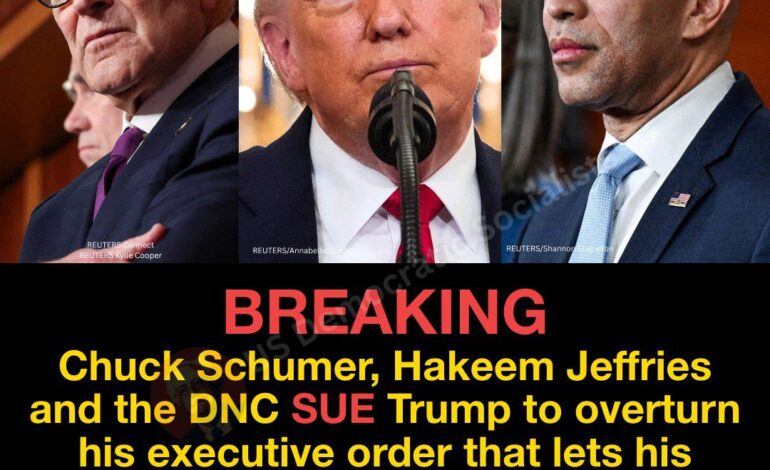

Democrats Sue to Stop Trump’s Mail Ballot Crackdown
The political fight over voting rights just escalated—fast.
Within hours of a new executive order from Donald Trump targeting mail-in voting, top Democrats filed a lawsuit to block it. Their argument is simple: a U.S. president cannot control how states run elections.
The lawsuit, backed by major Democratic organizations and leaders like Senate Minority Leader Chuck Schumer, asks a federal court to immediately stop the order before it affects upcoming elections.
According to reporting by Reuters and other outlets, the executive order would require absentee ballots to be sent only to voters appearing on federally approved lists of eligible citizens.
Critics say that crosses a constitutional line.
Supporters say it strengthens election integrity.
Either way, the fight now moves to court.
In this deep-dive guide, you’ll learn:
- What Trump’s order actually changes
- Why Democrats claim it’s unconstitutional
- How mail voting works in the U.S.
- What courts previously ruled in similar cases
- What could happen before the next election
Let’s break it down.
Why Democrats Filed the Lawsuit So Quickly
Short Answer
Democrats sued to block Trump’s mail-voting executive order because they argue the U.S. Constitution gives states and Congress—not the president—the authority to regulate elections. They claim the order could restrict voting access and unlawfully centralize election control in the federal government.
The coalition behind the lawsuit
Several Democratic groups joined the legal challenge, including:
- Democratic National Committee (DNC)
- Democratic Governors Association
- Democratic Congressional Campaign Committee
- Democratic Senatorial Campaign Committee
Their complaint argues the order is an attempt to reshape election rules for partisan advantage.
One line from the filing is especially blunt:
The Constitution’s framers anticipated attempts to seize control of elections.
Democratic leaders say the plan risks blocking legitimate voters from receiving ballots.
Schumer summed up the party’s position in a message directed at the White House:
“See you in court.”
What Trump’s Executive Order Actually Does
The executive order introduces several major changes to mail-in voting procedures.
Key provisions of the order
According to reports:
- Creation of a federal voter eligibility list
- Use of federal data to confirm U.S. citizens eligible to vote
- Mail ballots only delivered to people on approved lists
- Greater federal oversight of voter verification
The administration says the goal is to prevent non-citizen voting and election fraud.
But critics warn the system could be inaccurate and block legitimate voters.
One concern: compiling nationwide voter lists quickly is extremely difficult.
Elections officials warn errors could disenfranchise voters.
Why Critics Say the Order Is Unconstitutional
At the heart of the lawsuit is one clause of the U.S. Constitution.
The Elections Clause
The Constitution states that the “Times, Places and Manner” of federal elections are determined by:
- State legislatures
- Congress
Not the president.
Because of this, legal experts say a unilateral executive order may exceed presidential authority.
Several election scholars have already predicted courts will strike down the order.
Some point out something else:
Federal judges previously blocked a similar Trump election order.
Trump’s Long Campaign Against Mail Voting
Mail-in voting became a political flashpoint after the 2020 election.
Since then, Trump has repeatedly argued that absentee ballots invite fraud.
However, multiple investigations—including some led by Republicans—found no evidence of widespread fraud.
Election experts across the political spectrum largely agree on one point:
Mail voting is secure when properly administered.
Yet the issue remains politically powerful.
Trump continues to frame restrictions as necessary for election integrity.
How Mail-In Voting Actually Works in the U.S.
Mail voting is not new.
In fact, Americans have used it for over 150 years.
Quick timeline
- Civil War: Soldiers voted by mail
- 1970s–1990s: Absentee voting expanded
- 2020 pandemic: Mail voting surged nationwide
Today, several states conduct elections primarily by mail.
Others allow absentee ballots under certain conditions.
States with widespread mail voting
- Oregon
- Washington
- Colorado
- Utah
- Hawaii
Millions of Americans use the system every election cycle.
Is Mail Voting Vulnerable to Fraud?
Evidence shows mail-in voter fraud is extremely rare. Studies examining millions of ballots found fraud rates measured in fractions of a percent, often fewer than 1 case per tens of thousands of votes.
What research shows
Studies from groups such as:
- Brennan Center for Justice
- Heritage Foundation voter fraud database
- State election audits
All found extremely low fraud rates.
Common security measures include:
- Signature verification
- Ballot tracking
- Barcodes
- Chain-of-custody controls
These systems make large-scale fraud very difficult.
Key Legal Questions the Courts Must Decide
This case could hinge on several legal questions.
1. Does the president have authority over election administration?
Most constitutional scholars say no, except where Congress has delegated authority.
2. Can federal agencies create national voter lists?
Critics argue this may violate:
- Privacy laws
- Voting Rights Act protections
3. Can the federal government control ballot distribution?
States traditionally control absentee ballot systems.
That’s why many experts expect a major constitutional battle.
What Happens Next in the Lawsuit
The case will likely move through several stages.
- Emergency injunction request to pause the order
- Federal district court hearing
- Possible appeals
- Potential Supreme Court review
Because elections are approaching, courts may fast-track the case.
Election law disputes often move quickly.
People Also Ask
Did Trump try to restrict mail voting before?
Yes. Earlier efforts to reshape election rules were blocked by federal courts, which ruled they likely exceeded presidential authority.
Can a president change election laws?
Generally, no. The Constitution gives election authority primarily to states and Congress, not the executive branch.
Is mail voting common in the United States?
Yes. Tens of millions of Americans vote by mail in every federal election, and some states run elections almost entirely through mail ballots.
Could the Supreme Court decide the case?
Possibly. If lower courts issue conflicting rulings or the issue is deemed nationally important, the case could reach the Supreme Court before future elections.
Discover more from MatterDigest
Subscribe to get the latest posts sent to your email.