


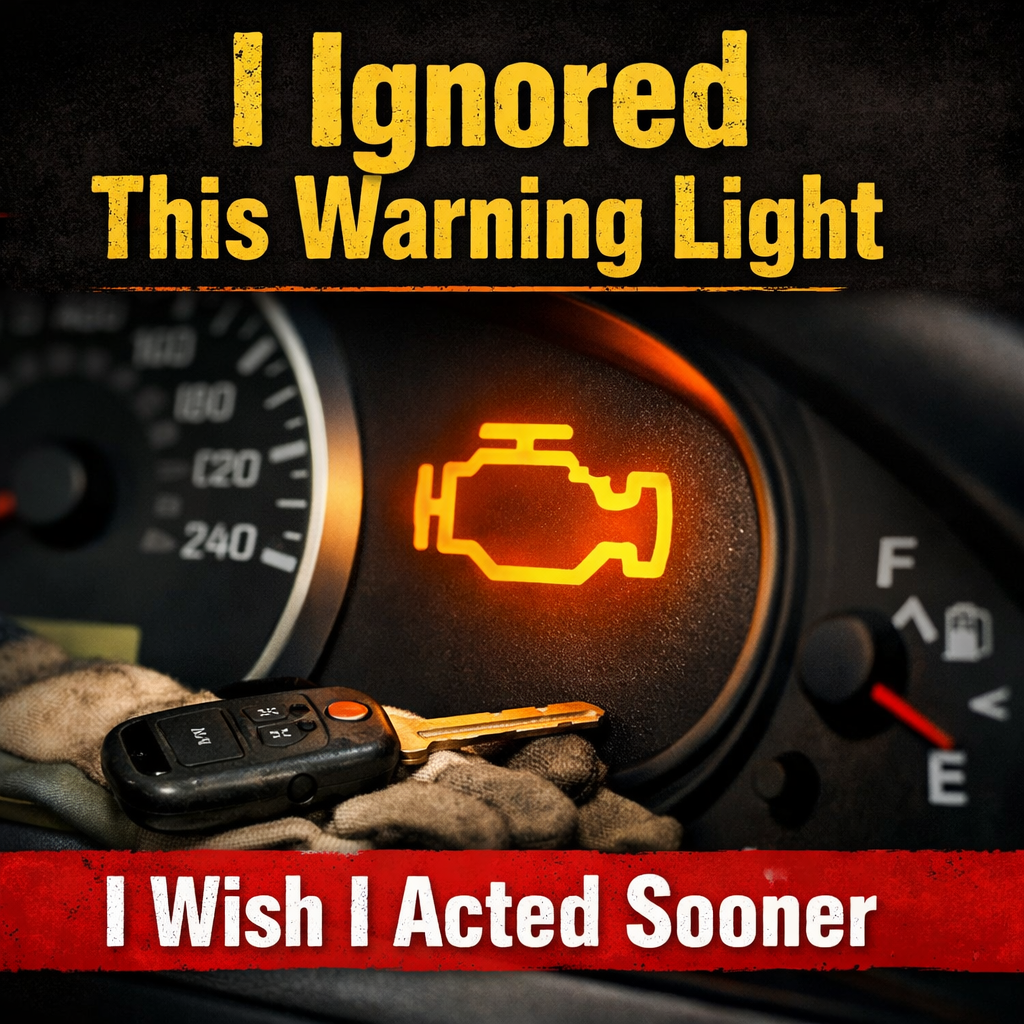
Standing in that repair shop, listening to the mechanic explain how three months of driving with a check engine light had destroyed my transmission, I felt like an idiot. But I also felt misled. I’d always heard that check engine lights come on for dozens of reasons, most of them minor. Loose gas cap. Faulty sensor. Emissions issue that doesn’t affect drivability. I’d seen friends drive for months with the light on, no consequences. I’d read forum posts from people saying the light was just the car being overly cautious.
What I didn’t understand—what most drivers don’t understand—is that the check engine light doesn’t tell you how serious the problem is. It just tells you there’s a problem. And some of those problems, if left unaddressed, create cascading failures that turn into catastrophically expensive repairs. The light I ignored for three months was warning me about a failing oxygen sensor. That sensor cost around $200 to replace. Because it failed and I kept driving, my catalytic converter got damaged. Because the catalytic converter was compromised, my transmission started running hotter than it should. Now I’m looking at a repair bill in the thousands.
In this article, I’ll explain what I wish I’d known about check engine lights, why the common advice to ignore them is dangerous, and how to think about that light when it appears on your dashboard.
The Situation
I’ve owned my 2017 Ford Escape for six years. It’s been reliable, I’ve kept up with oil changes and basic maintenance, and I’ve never had any major issues. I’m not a car person, but I’m not neglectful either. When the check engine light came on during my commute home one evening, I wasn’t particularly worried.
The circumstances seemed to support my lack of concern. I’d just filled up at a gas station I’d never been to before because my usual spot was closed for renovation. The car was running normally—no rough idle, no hesitation, no strange sounds. I’d heard that bad gas or a loose gas cap could trigger the light, so I pulled over, tightened the cap until it clicked several times, and continued home.
The next morning, the light was still on. I figured I’d drive it for a few days to see if it cleared itself. If it was just bad fuel, it should go away once I burned through that tank and refilled with good gas. That seemed like reasonable logic at the time.
The Common Assumption
Most drivers, including me, operate under the assumption that check engine lights are like smoke alarms that go off when you burn toast. They’re oversensitive, they trigger for minor reasons, and most of the time there’s no real emergency. This belief exists because it’s partially true. Check engine lights can illuminate for relatively minor issues: a loose gas cap, a faulty sensor that doesn’t affect performance, an emissions component that’s slightly out of spec.
The automotive industry hasn’t helped. Mechanics and service advisors often downplay the urgency of check engine lights because they know customers are tired of being upsold on unnecessary repairs. Online forums are full of people who’ve driven for years with the light on and never had a problem. And the light itself doesn’t differentiate between “you should get this checked soon” and “you’re actively damaging your vehicle right now.”
This creates a culture of complacency. If the car seems fine and you’ve heard that the light is often nothing serious, why would you drop everything and spend money on diagnostics? That was my thinking, and it’s the thinking of millions of drivers every day.
The Turning Point
About ten weeks after the light first came on, I started noticing a slight delay when accelerating from a stop. It wasn’t dramatic—just a momentary hesitation before the car would engage and move forward. I mentioned it to a coworker, who said it sounded like transmission fluid might be getting low or old, and suggested I check the level.
I pulled the owner’s manual and discovered that my Escape has a sealed transmission with no dipstick for checking fluid. The manual said if I suspected a transmission issue, I should take it to a dealer or qualified mechanic. But the hesitation was so minor that I convinced myself it could wait until my next scheduled oil change, which was about a month away.
Two weeks after that, the hesitation got worse. The car would sometimes slip out of gear for a second while accelerating on the highway. That’s when I finally made an appointment. By the time I got the car to the shop, the transmission was slipping regularly, and I knew I was in trouble.
What Most People Miss
The specific thing most drivers don’t understand about check engine lights is this: the light indicates a fault code has been stored, but it doesn’t tell you whether that fault is actively causing damage or just monitoring a potential issue.
Modern cars have dozens of sensors monitoring everything from air-fuel ratios to exhaust emissions to engine temperature. When one of these sensors detects something outside normal parameters, it triggers a fault code and illuminates the check engine light. Some of these codes are informational—they’re telling you something is slightly off, but continuing to drive won’t cause immediate harm. Other codes indicate active, ongoing problems that get worse every mile you drive.
Here’s what happened in my case. The fault code was P0420, which indicates catalyst system efficiency below threshold. In plain English, my catalytic converter wasn’t working as efficiently as it should. But the root cause wasn’t the catalytic converter itself—it was a failing oxygen sensor that was sending incorrect data to the engine computer.
When an oxygen sensor fails, it can’t accurately measure how much oxygen is in the exhaust. The engine computer uses that data to adjust the air-fuel mixture. Without accurate data, the engine runs too rich or too lean. Running too rich means unburned fuel gets pushed into the catalytic converter, which overheats and degrades the converter’s internals. A degraded catalytic converter can’t regulate exhaust flow and temperature properly, which in my case caused the transmission fluid to run hotter than designed.
Automatic transmissions are incredibly sensitive to heat. Transmission fluid that runs even 20 degrees hotter than it should will break down faster, lose its lubricating properties, and cause friction that damages clutches and seals. That’s what happened to mine.
If I’d taken the car in when the light first appeared, the mechanic would have pulled the code, tested the oxygen sensor, and replaced it. The catalytic converter would have been fine. The transmission would have been fine. Total cost: probably around $200–$300 for the sensor and labor.
Instead, I drove for three months with a failing oxygen sensor, which damaged the catalytic converter and overheated the transmission. Now I’m looking at replacing the sensor, the catalytic converter, and rebuilding or replacing the transmission. The total is somewhere in the range of several thousand dollars, depending on whether a rebuild is possible or if I need a full replacement.
Consequences of Ignoring It
In the short term, ignoring a check engine light often doesn’t produce any noticeable symptoms. That’s the trap. The car keeps running, you keep driving, and nothing seems wrong. But underneath, damage is accumulating.
Let’s look at some common scenarios. If the light is triggered by a misfire in one cylinder, continuing to drive means unburned fuel is being pushed into the exhaust system and catalytic converter. Over time, that can destroy the converter, which can cost upward of $1,000 to replace on many vehicles. If the light is triggered by a failing coolant temperature sensor, the engine might be running hotter or cooler than optimal, which accelerates wear on gaskets, seals, and internal components.
In the medium term, small problems create larger problems. A failing ignition coil causes misfires, which damage the catalytic converter, which causes backpressure in the exhaust, which reduces engine efficiency and fuel economy. A faulty mass airflow sensor causes incorrect air-fuel ratios, which fouls spark plugs, which causes more misfires, which damages the converter. These systems are interconnected, and a fault in one area cascades.
In the long term, ignoring check engine lights shortens the life of your vehicle and costs you significantly more in repairs than addressing the original issue would have. The repair I’m facing now could have been avoided entirely if I’d spent $100 on a diagnostic scan and a few hundred on a sensor replacement when the light first appeared.
Financially, this is the difference between a manageable expense and a potential car payment. If I’d caught the oxygen sensor early, I could have paid for the repair out of pocket without much stress. Now I’m considering whether to finance a transmission rebuild or start shopping for a replacement vehicle because the repair cost approaches the car’s current value.
How to Check or Think About This Properly
Here’s the process I now follow—and recommend—when a check engine light appears.
Step one: Note the circumstances immediately. Did the light come on right after you fueled up? Did it appear during hard acceleration or while idling? Is the light solid or flashing? A flashing check engine light indicates an active misfire that can damage the catalytic converter within minutes. A solid light means a fault has been detected but it’s not an immediate emergency—though “not immediate” doesn’t mean “ignore it.”
Step two: Check for obvious issues. Make sure your gas cap is tight. Look for any fluid leaks under the car. Listen for unusual sounds. If you don’t notice anything obviously wrong, that doesn’t mean there’s nothing wrong—it just means the problem isn’t visible or audible yet.
Step three: Get the codes read as soon as reasonably possible. Most auto parts stores will scan your codes for free. This takes five minutes. The scan will tell you which system triggered the light. You don’t need to understand the technical details of the code—you just need to know what it is so you can research or ask a mechanic about urgency.
Step four: Determine urgency based on the code. Some codes genuinely can wait a bit—like an EVAP code indicating a small leak in the emissions system. Others should be addressed quickly—like anything involving oxygen sensors, catalytic converters, misfires, or cooling system faults. If you’re not sure, ask. Call a mechanic, describe the code, and ask whether it’s safe to keep driving or if you should bring it in immediately.
Step five: Don’t wait for symptoms to appear. By the time you feel a problem—rough running, hesitation, overheating—the damage is already happening. The check engine light is an early warning system. Treating it like a final warning is a mistake.
Step six: If you can’t afford the repair right away, at least know what the repair is and monitor the situation. If the code is for something that can cause cascading damage, like a misfire or sensor failure, it’s better to park the car or limit driving until you can afford the fix than to keep driving and multiply the damage.
Common Myths and Misunderstandings
Myth 1: If the car is running fine, the check engine light isn’t serious. The car feels fine because most engine and emissions faults don’t immediately affect drivability. But damage is happening in the background. By the time you feel a problem, it’s often too late to catch it early.
Myth 2: You can reset the light and it’ll stay off if it was nothing important. You can clear the codes, but if the underlying problem still exists, the light will come back on within a few drive cycles. Clearing the light doesn’t fix the problem—it just hides the warning until the computer detects the fault again.
Myth 3: Check engine lights are just the car being overly sensitive. Modern engine computers are sophisticated. They don’t trigger warnings for no reason. The thresholds are set based on engineering data about what parameters indicate a fault. If the light is on, there’s a fault, even if it’s not catastrophic yet.
Myth 4: Dealerships just want to scare you into expensive repairs. Some service advisors do upsell, but that doesn’t mean check engine lights are fake. Get a second opinion if you’re skeptical, but don’t assume the warning itself is a scam. The fault codes are objective data.
Myth 5: Older cars always have the check engine light on, so it doesn’t matter. Older cars might accumulate more fault codes because sensors and components age, but ignoring them still causes damage. If you own an older car and can’t afford to fix every code, at least know which ones are urgent and which ones are minor annoyances.
When It Matters Most (And When It Doesn’t)
Check engine lights matter most when they indicate faults that cause ongoing damage if ignored. Codes related to misfires, oxygen sensors, coolant issues, and oil pressure should be addressed quickly. Codes related to evaporative emissions, minor EVAP leaks, or certain sensor glitches are less urgent and can usually wait a few weeks without causing harm.
They matter more in newer cars with complex emissions systems and tightly integrated components. A problem in one area of a modern engine can cascade into other systems faster than in older, simpler vehicles. They also matter more if you’re planning to keep the car long-term—addressing small issues now prevents expensive repairs later.
They matter less if the code is purely emissions-related and doesn’t affect engine operation or safety, and if you’re in a state without strict emissions testing. An EVAP code might mean you won’t pass inspection, but it probably won’t damage your car if you keep driving. That said, you’ll still need to fix it eventually if you want to renew your registration.
They don’t matter much if you’re driving a beater car with high mileage that you’re planning to replace soon anyway. At a certain point, the cost of chasing down every check engine light exceeds the value of the vehicle. But for a daily driver you intend to keep, ignoring the light is false economy.
There’s no one-size-fits-all rule. A misfire code in a turbocharged engine is more serious than in a naturally aspirated engine. An oxygen sensor code in a car with 200,000 miles is different from the same code in a car with 50,000 miles. Context matters, which is why getting the code read and asking about urgency is critical.
Final Takeaway
I could have saved myself thousands of dollars if I’d spent an hour and a couple hundred bucks addressing that check engine light when it first appeared. The excuse that the car was running fine was just that—an excuse. I gambled that the light wasn’t serious, and I lost.
But I also learned something more valuable than the cost of the repair. I learned that check engine lights aren’t about how the car feels right now. They’re about what’s happening inside systems I can’t see or feel until the damage is already done. Ignoring that light doesn’t make the problem go away. It just gives the problem time to get worse.
The next time a check engine light comes on in any car I own, I’ll get the codes read within a day or two. I’ll research the urgency. And if it’s something that can cause cascading damage, I’ll fix it immediately, even if it means putting off other expenses. That’s not paranoia—it’s just math. A $300 repair now beats a $3,000 repair later every single time.
That afternoon in the repair shop, when the mechanic showed me the fault code history and explained how each problem had led to the next, I realized how easily this could have been avoided. The check engine light wasn’t lying to me or overreacting. It was doing exactly what it was designed to do—giving me an early warning before a small issue became a catastrophic one. I just didn’t take it seriously until it was too late. If you’ve got a check engine light on right now, don’t make the same mistake I did. Get the codes read. Find out what’s actually wrong. And fix it before it turns into something you can’t afford to fix. That light is there for a reason, and ignoring it doesn’t save you money—it just delays the bill and makes it bigger.