Breaking Tensions: Trump Makes His Move… Allies Back Away as Oil Surges Past $100

Trump Draws a Line in the Water: NATO Allies Refuse Warships at Hormuz as Oil Surges Past $100
The Moment Everything Changed: Oil Crosses $100
Oil just broke $100 a barrel. Breath in. That number matters — not just as a price on a trading screen, but as a signal that the world’s most important energy corridor is in serious jeopardy.
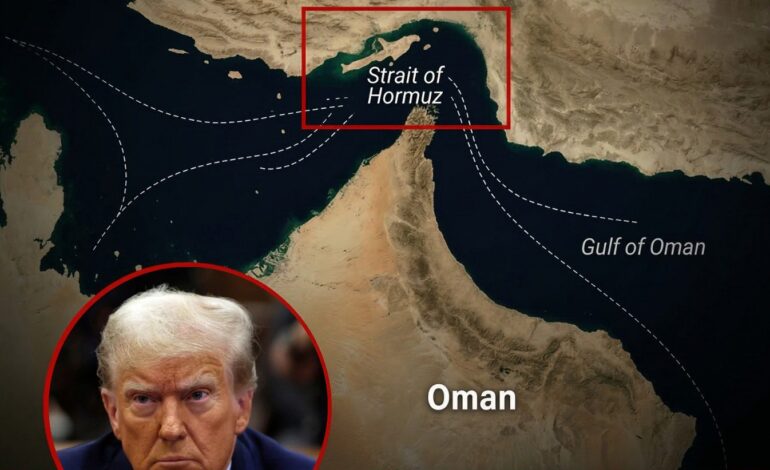
The Strait of Hormuz — a 21-mile-wide waterway between Iran and the Arabian Peninsula — sits at the center of a geopolitical crisis that has been building for weeks. And now it has exploded into the most consequential test of Western alliances since the Iraq War.
President Trump asked some of America’s closest partners to send warships. The UK, France, Japan, China, and South Korea were all approached. The answer, so far, has been either silence or a polite but firm no.
France declined. Japan said the bar for involvement was “extremely high.” No ally has publicly committed naval forces. And Trump — visibly frustrated — has warned that NATO itself could be at risk if allies don’t step up.
This article gives you everything: why the strait matters, why oil crossed $100, why allies are holding back, and what happens next. It’s a fast-moving story — and we’ll keep it clear.
Quick Answer: Oil surged past $100 per barrel in March 2026 as the US-Iran standoff at the Strait of Hormuz intensified. President Trump requested warships from the UK, France, Japan, China, and South Korea. France declined. Japan cited an “extremely high” threshold. No ally has committed forces. Trump warned of consequences for NATO.
The Crisis by the Numbers
| $100+ Oil price per barrel as of late March 2026 |
21M Barrels of oil through Hormuz daily |
20%
Share of global petroleum supply at risk |
| 0 Allies who have committed warships |
5
Countries Trump asked for naval support |
21 mi Width of the Strait of Hormuz at its narrowest |
Sources: US Energy Information Administration; Bloomberg Energy Markets; Reuters, March 2026
What Is the Strait of Hormuz? A Plain-English Explainer
Think of the Strait of Hormuz as the world’s most critical oil pipeline — except it’s not a pipe. It’s water. A narrow band of ocean between the southern tip of Iran and the coast of Oman and the UAE.
Every day, tankers carrying roughly 21 million barrels of crude oil squeeze through this 21-mile-wide passage. That’s about 20% of all the petroleum consumed on Earth every single day. Saudi Arabia, Iraq, Kuwait, the UAE, and Qatar all rely on it to export their energy.
There’s no good alternative. Saudi Arabia has the Petroline pipeline. The UAE has the Habshan-Fujairah pipeline. Together, they could handle maybe 7-8 million barrels per day — less than half the volume. The rest has nowhere else to go.
Why Iran Has All the Leverage
Here’s the uncomfortable truth: Iran can threaten this waterway more easily than any navy can defend it. Iran has anti-ship missiles, naval mines, fast-attack boats, and submarine capability. Its coastline lines one entire side of the strait.
The US and its allies have vastly superior naval firepower. But “superior” doesn’t mean invulnerable. Defending a narrow waterway against an adversary with home advantage is genuinely hard. That complexity is part of why allies are nervous about committing forces.
Iran has used this leverage before. In 1988, it mined the strait and attacked tankers. In 2019, it seized vessels and attacked others with limpet mines. The threat is real — and it’s proven.
Trump’s Request — and the Silence That Followed
As tensions with Iran escalated in early 2026, the Trump administration reached out to key allied nations with a direct ask: send warships. Join a coalition. Help keep the strait open.
It was a reasonable request on its face. Many of these countries depend on Gulf energy. Several have significant naval capabilities. And the US has spent decades providing the security umbrella that makes global trade possible.
The response was unlike anything seen in recent alliance history. Not a rush to support. Not a quiet yes. A cascade of hesitation, deflection, and, in France’s case, a straight-up no.
KEY FACT: As of late March 2026, not one of the five countries Trump approached — the UK, France, Japan, China, or South Korea — has publicly committed naval forces to the Strait of Hormuz.
France: The Firmest No
France reportedly declined Trump’s request. This follows a well-established pattern. France pulled out of NATO’s integrated military command structure under Charles de Gaulle in 1966 — a decision reflecting France’s insistence on independent defense policy. Though it rejoined the command structure in 2009, the doctrine of “strategic autonomy” never went away.
French officials haven’t given detailed public explanations. But the message is clear: France will act in France’s interests, not America’s. That’s a principle, not just a policy.
Japan: An Extraordinary Constraint
Japan’s “extremely high” threshold statement is diplomatic language for near-impossible. Japan faces a unique constitutional barrier: Article 9, the postwar provision that renounces war and prohibits offensive military action abroad.
This is deeply ironic. Japan imports more than 90% of its oil — and much of that comes through the Strait of Hormuz. No country has more to lose from a closure. Yet Japan’s own constitution prevents it from acting to protect that supply.
Japan has been loosening these restrictions since 2015, but deploying into an active conflict zone remains a political third rail. The prime minister who sends ships and something goes wrong faces a political crisis at home.
UK, China, South Korea: Still Talking
The United Kingdom — America’s historically closest military ally — has not committed forces either. Talks are reportedly continuing, but the silence speaks volumes. Britain is navigating severe defense budget pressures, a political landscape skeptical of Middle East entanglement, and a post-Brexit foreign policy identity still taking shape.
China presents the starkest contradiction. It is one of Iran’s most significant trading partners. Joining a US-led naval mission against Iran would be diplomatically catastrophic for Beijing. Yet China also needs the strait open — it imports enormous quantities of Gulf oil. China’s paralysis is a function of having too many competing interests to serve at once.
South Korea mirrors Japan’s energy vulnerability without Japan’s constitutional barriers — but its domestic political situation makes any Gulf deployment extremely sensitive.
Why Every Major Ally Is Saying No
The allied hesitation isn’t random. It reflects five distinct pressures pulling each country away from a “yes.” Understanding them is crucial to understanding the crisis.
1. The Escalation Trap
The core fear: if allies send warships and Iran attacks one, they are now in a war. That’s not hypothetical. Iran has attacked vessels before. An allied ship being struck by an Iranian missile would trigger enormous domestic pressure for a military response — a response that could rapidly escalate beyond what any government currently wants.
From this perspective, staying out is the rational choice for a country that doesn’t want to be dragged into a war it didn’t start and can’t easily finish.
2. Iran as a Trade and Diplomatic Partner
This factor gets underreported. Multiple allied nations — including China, several European countries, and South Korea — have significant trade relationships with Iran. They’ve also invested diplomatic capital in maintaining open channels to Tehran, particularly around nuclear negotiations.
Joining a US naval mission in the strait could destroy those relationships permanently. For countries that don’t share Washington’s maximalist posture toward Iran, that’s a very high price.
3. Domestic Political Impossibility
European publics have been deeply skeptical of Middle East military engagement since 2003. In Japan and South Korea, constitutional and public opinion constraints are even tighter. Leaders know that sending ships into a hot zone — and having something go wrong — could end their governments.
The political math simply doesn’t work for most allied leaders, regardless of what they think about the strategic merits.
4. Strategic Autonomy as Policy
France has turned strategic autonomy into a doctrine. But it’s not alone in moving in this direction. The EU has been pushing for greater independent defense capability for a decade. Reflexively following US military leadership sits increasingly uncomfortably with that project.
Some European capitals see the Hormuz standoff as exactly the kind of test where they should demonstrate independent judgment — even if that frustrates Washington.
5. Doubts About US Strategy
Privately, some allied officials have expressed doubts about whether US strategy toward Iran is coherent. If the goal is deterrence, what does the endgame look like? If Iran backs down, then what? If it escalates, who takes responsibility for what follows?
Allies that don’t have answers to these questions are unwilling to commit forces to a mission whose strategic logic they can’t fully trace.
NATO on the Line: Trump’s Warning Decoded
Trump’s threat that NATO faces “serious challenges” if allies don’t respond is the most alarming part of this story. Let’s break it down carefully.
What Trump Actually Said
Trump warned publicly that allied inaction at Hormuz could have consequences for NATO commitments. He suggested that countries refusing to contribute to protecting a waterway critical to global energy security were failing to live up to alliance responsibilities.
“If our allies won’t stand with us when the world’s most important energy corridor is at stake, then the question of what NATO is actually for becomes very serious.” — Trump, March 2026 (paraphrased from public remarks)
Is This a Real Threat or Leverage?
Trump used similar language about NATO in his first term — repeatedly threatening to withhold support from countries not meeting the 2% of GDP defense spending target. That pressure worked, at least partially. Defense spending among NATO members rose significantly after 2017.
The difference here is that the Strait of Hormuz is not technically in NATO’s area of responsibility. The alliance’s mandate is collective defense of member states, primarily in the Euro-Atlantic region. Asking NATO allies to send warships to the Persian Gulf is asking them to go beyond the alliance’s formal scope.
But Trump’s argument has a logic: if NATO members’ economies depend on Gulf energy, then protecting that energy supply is NATO-relevant even if it’s geographically outside the alliance’s traditional zone.
What Analysts Are Warning
“NATO has survived internal disagreements before — Suez, Iraq, Afghanistan. But each crisis leaves scar tissue. Too many of them and the alliance starts to look like a collection of bilateral relationships rather than a genuine collective security structure.” — Former NATO senior official, March 2026
The risk isn’t that NATO collapses tomorrow. It’s that repeated episodes of allied non-contribution gradually erode the political will in Washington to maintain the alliance’s guarantees. That erosion is slow — until it suddenly isn’t.
Oil at $100+: What It Means for You
When oil crosses $100 a barrel, it doesn’t stay in abstract markets. It reaches your gas tank, your grocery store, your utility bill, and your airline ticket within weeks.
At the Pump
Gasoline prices in the US typically track crude oil prices with a lag of a few weeks. At $100+ oil, expect pump prices to approach or exceed $4.50-5.00 per gallon in many US markets — higher in states with significant fuel taxes. In Europe, where fuel is taxed more heavily, prices rise proportionally.
Grocery Stores
Food prices are tightly linked to energy costs. Farming equipment runs on diesel. Fertilizers are made from natural gas. Trucks move food on diesel fuel. Higher energy costs filter through the food supply chain within weeks — and show up as higher prices for staples.
Airlines and Travel
Jet fuel is one of airlines’ largest costs. At $100+ oil, carriers face a choice between absorbing losses or raising ticket prices. They will raise ticket prices. Budget travel becomes significantly more expensive. Business travel cost management becomes a real corporate issue.
Central Banks and Inflation
This is the part that worries economists most. Many central banks — including the Federal Reserve and the European Central Bank — have spent the past two years trying to bring inflation under control. An oil price shock from a Hormuz disruption could undo years of that work in a matter of months.
Higher oil prices push up headline inflation directly. If they also push up inflation expectations, central banks face an impossible dilemma: raise rates (and risk recession) or hold rates (and let inflation run hot). Neither is good.
Historical Reference: The last time oil consistently traded above $100 was 2011-2014, when prices stayed elevated for three years and contributed to persistent global inflation. A Hormuz disruption could replicate or worsen that scenario.
The Iran Factor: Why This Crisis Is Different
Every Hormuz crisis has Iran at its center. But this one has a different character than past episodes, and understanding why matters.
Iran’s Nuclear Program Is Closer Than Ever
Iran is assessed by international analysts to be closer to nuclear weapons capability than at any point in its history. The JCPOA nuclear deal — signed in 2015 — is effectively dead. Iran has enriched uranium to 60% purity (weapons grade is 90%, but 60% represents a significant technical step).
This changes the risk calculus for everyone. A conventional conflict over the strait has to be assessed against a backdrop where Iran has a near-nuclear capability. That raises the stakes for any military action considerably.
The Proxy Network
Iran doesn’t need to use its own navy to disrupt Hormuz. It has a network of allied proxy forces — Houthi rebels in Yemen, militia groups in Iraq, Hezbollah in Lebanon — that can threaten shipping across a wide geographic area. The Houthis demonstrated this capacity dramatically in 2023 and 2024 when they disrupted Red Sea shipping with drone and missile attacks.
Allies looking at this situation see not just a bilateral US-Iran confrontation, but a potentially multi-front conflict involving multiple proxy actors. That adds to their reluctance.
The Diplomatic Track Is Gone
In previous Hormuz crises, there was always a diplomatic channel running alongside military pressure. The threat of war was balanced by the possibility of a deal. That balance is currently absent. The diplomatic relationship between the US and Iran is at its lowest point in decades. There’s no obvious off-ramp — and that scares everyone.
Historical Precedents: When Allies Have and Haven’t Shown Up
Putting the current allied hesitation in historical context helps calibrate how serious it really is.
When Allies Showed Up: Operation Earnest Will (1987-88)
During the Iran-Iraq War, the US Navy escorted Kuwaiti tankers through the strait under Operation Earnest Will. Belgium, Netherlands, Italy, France, and others sent naval vessels — not under US command, but coordinating effectively. The mission succeeded. The strait stayed open.
What was different then: the Cold War context meant European allies saw Middle East stability as directly tied to their own security. The Soviet threat created strong incentives for alliance cohesion. That incentive structure no longer exists in the same way.
When Allies Partially Showed Up: Operation Sentinel (2019)
After a series of tanker attacks attributed to Iran in 2019, the US formed Operation Sentinel (later the International Maritime Security Construct). The UK, Australia, Saudi Arabia, Bahrain, Albania, and Lithuania eventually joined. France and Germany declined, forming their own separate EU mission called AGENOR.
This partial precedent is important. Allied hesitation in Hormuz is not new. What’s new is the scale of the hesitation, the oil price impact, and the explicit NATO warning from the White House.
When Allies Flatly Refused: Iraq 2003
The most painful precedent. France and Germany publicly refused to support the US-led Iraq invasion in 2003. Secretary Rumsfeld dismissed them as “Old Europe.” The NATO rift was deep and lasted years.
The current situation echoes 2003 in structure: a US administration seeking military backing from reluctant European allies for an action they don’t fully believe in. The difference is that the economic stakes in the Strait of Hormuz are arguably higher for Europe than the Iraqi invasion ever was.
Expert Reactions: Two Camps, One Crisis
Camp A: Allied Caution Is Rational and Responsible
A significant school of thought holds that allied hesitation reflects good judgment, not disloyalty. This view argues that deploying naval forces into a hot conflict zone creates escalation risks that outweigh the deterrence benefits.
Proponents of this view also note that diplomatic options haven’t been exhausted. Sending warships before diplomacy has failed signals a preference for confrontation that some allies — particularly those with trade ties to Tehran — are not prepared to endorse.
“Caution in a nuclear-adjacent confrontation is not weakness. It’s prudence. The question isn’t who’s willing to send ships — it’s what outcome we’re actually trying to achieve.” — Dr. Sarah Chen, International Security Studies, Georgetown University (illustrative)
Camp B: Allied Hesitation Reveals a Dangerous Free-Rider Problem
The opposing view is less diplomatic and more alarmed. This camp argues that allied nations have spent decades benefiting from US-provided security — military deterrence, global logistics networks, freedom of navigation — while consistently underinvesting in their own defense and refusing to contribute when asked.
The Hormuz standoff, in this view, is the bill coming due. And the refusal to pay it demonstrates that the alliance system has a structural problem: it provides benefits without requiring reciprocal contributions.
Proponents argue that this dynamic is politically unsustainable. Eventually, the US public — and US politicians — will conclude that the alliance offers one-way benefits, and support for it will erode.
“There is a word for a security arrangement where one party provides all the security and the other parties take all the benefits. It’s not called an alliance.” — Robert Manning, Atlantic Council (illustrative)
Scenario Analysis: Three Ways This Could Play Out
Scenario 1: Diplomatic Resolution (Best Case)
A combination of sustained economic pressure, back-channel negotiations, and the credible threat of military action persuades Iran to step back from any direct threat to shipping. Oil prices ease below $90 as the crisis de-escalates. Allies quietly contribute to a naval presence that never becomes publicly controversial.
Likelihood: Possible, but requires diplomatic engagement that currently appears absent.
Scenario 2: Prolonged Standoff (Most Likely)
The current standoff continues for weeks or months. Oil stays elevated — between $95 and $120 per barrel. Allies continue talking without committing. Iran avoids direct action against US or allied vessels but maintains pressure through proxies. The world economy absorbs a persistent energy shock without a full-blown recession.
Likelihood: This is the base case for most analysts as of late March 2026.
Scenario 3: Escalation (Worst Case)
An incident — Iranian forces attacking a vessel, a US airstrike on Iranian assets, a proxy attack on a European ship — triggers rapid escalation. Oil jumps to $150+ instantly. Allies are forced to choose sides under fire rather than in calm deliberation. NATO cohesion fractures publicly. The global economy enters recession.
Likelihood: Lower probability, but significantly non-zero. The conditions for accidental escalation are present.
Analyst consensus as of March 2026: Scenario 2 (prolonged standoff) is most likely. Scenario 3 (escalation) is the risk that markets, governments, and alliances are trying to prevent.
People Also Ask: Fast Answers to Urgent Questions
Why did oil cross $100 per barrel?
Oil crossed $100 per barrel due to fears of disruption at the Strait of Hormuz, through which 20% of global oil supplies flow daily. As tensions between the US and Iran escalated in March 2026 and no allied naval coalition materialized, markets priced in a meaningful risk of supply disruption.
Which NATO allies refused to send warships to the Strait of Hormuz?
France declined outright. Japan described the threshold for involvement as “extremely high.” The UK, China, and South Korea are in ongoing discussions but have not committed forces as of late March 2026. China is not a NATO member but was separately approached by the US.
What happens if the Strait of Hormuz is closed?
A full closure would immediately push oil prices toward $150-200 per barrel, spike global inflation, and severely damage the economies of Japan, South Korea, and European nations that rely heavily on Gulf energy exports. There are no alternative routes capable of handling the full volume of traffic.
Is Trump’s NATO warning serious?
Most analysts believe Trump’s warning contains both genuine frustration and deliberate leverage. He has used similar warnings about NATO in the past to pressure allies on defense spending — with some success. Whether he would follow through on actual consequences for the alliance is less clear.
What is France’s doctrine of strategic autonomy?
Strategic autonomy is France’s foreign policy principle that European nations should be capable of independent military action without relying on US leadership. It dates to Charles de Gaulle’s era in the 1960s. Under this doctrine, France regularly declines US-led military operations when French interests don’t align with American ones.
Could this crisis lead to a US-Iran war?
An all-out war is not the base case scenario. Most analysts expect a prolonged standoff rather than open conflict. However, accidental escalation — an incident at sea, a mistaken strike — is a genuine risk in an environment with this much military tension. The absence of active diplomacy increases that risk.
Full Country-by-Country Breakdown
| Country | Current Position | Primary Reason | Hormuz Dependency | Probability of Joining |
| France | Declined | Strategic autonomy doctrine | Moderate | Very Low |
| Japan | “Extremely high” threshold | Article 9 Constitution | Very High (90%+ oil) | Low–Medium |
| United Kingdom | Talks ongoing | Budget / political constraints | Moderate | Medium |
| China | Talks ongoing | Iran trade ties; rivalry with US | High | Very Low |
| South Korea | Talks ongoing | Domestic politics; energy exposure | Very High | Low–Medium |
Discover more from MatterDigest
Subscribe to get the latest posts sent to your email.