BREAKING: Pentagon Just Ordered 3,000 Elite US Troops to the Middle East — Is This the Start of a WAR with Iran?
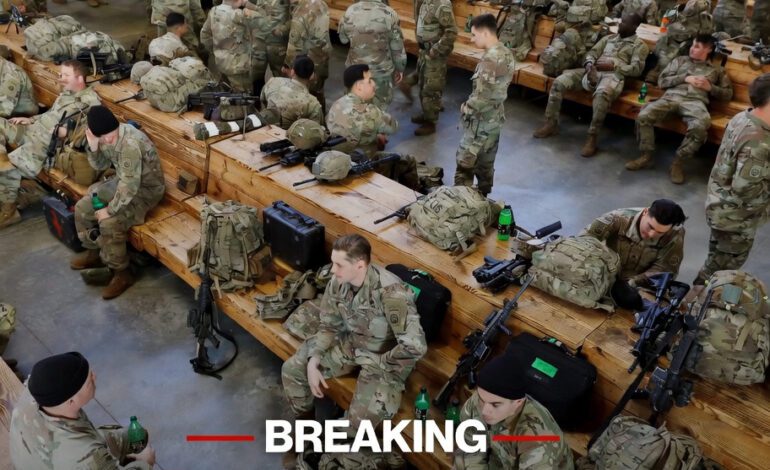

Pentagon Prepares Elite 82nd Airborne Division for Possible Middle East Deployment
The United States military is preparing one of its most elite combat units for possible deployment to the Middle East as tensions with Iran continue to rise. According to reports from defense officials, the Pentagon is planning to move roughly 3,000 soldiers from the Army’s famous 82nd Airborne Division to the region. The unit is known around the world for its ability to respond quickly to major crises.
The possible deployment shows how serious the situation has become. Military planners are trying to make sure American forces are ready if the conflict between Iran, the United States, and its allies grows larger. While officials say no final order has been announced yet, the preparations themselves signal that the Pentagon is planning for many different scenarios.
The 82nd Airborne Division is one of the most well-known combat units in the United States Army. Based at Fort Bragg in North Carolina, the division is trained to deploy faster than almost any other ground force in the military. Soldiers in the unit are parachute-qualified paratroopers who can be dropped into dangerous areas with very little warning.
Because of this rapid response capability, the 82nd Airborne is often the first large combat force sent when crises break out around the world. Its history includes deployments to Iraq, Afghanistan, and other major conflict zones over the last several decades.
Military planners say the brigade combat team being prepared includes about 3,000 troops. A brigade combat team is a large fighting force that includes infantry soldiers, artillery units, intelligence teams, logistics support, and other specialized personnel. Together, these elements allow the brigade to operate as a self-contained combat force capable of fighting independently if necessary.
The soldiers being prepared for deployment have been trained for rapid operations. In many cases, the 82nd Airborne can send a battalion of troops anywhere in the world within about 18 hours after receiving an order. A larger brigade-sized force can usually be deployed within about 72 hours.
This ability makes the division one of the most valuable tools available to American military leaders. When sudden emergencies happen, such as conflicts, terrorist threats, or regional instability, the 82nd Airborne can move quickly to secure key locations or protect U.S. interests.
The Pentagon has not yet released full details about the possible deployment. Officials say the decision will depend on how the situation in the Middle East continues to develop over the coming days and weeks.
The possible deployment comes during a period of rising tension between Iran and several Western allies. Military activity in the region has increased in recent weeks as both sides send signals of strength.
The United States has already moved additional naval forces into the Middle East. Several warships carrying thousands of Marines have been sent toward the region as part of what officials describe as a defensive buildup.
One of the ships involved is an amphibious assault ship capable of carrying aircraft, helicopters, and hundreds of Marines. These ships are designed to support military operations near coastlines and can quickly launch troops, aircraft, and vehicles if necessary.
Officials say the goal of these deployments is to protect important shipping lanes and reassure allies in the region. However, the presence of more military forces also raises concerns about the possibility of a wider conflict if tensions continue to rise.
One of the most sensitive areas involved in the current situation is the Strait of Hormuz. This narrow waterway sits between Iran and several Gulf nations. It is one of the most important oil shipping routes in the world.
Roughly one-fifth of the global oil supply passes through the Strait of Hormuz every day. Tankers carrying oil from countries such as Saudi Arabia, Iraq, Kuwait, and the United Arab Emirates travel through this route on their way to markets in Asia, Europe, and North America.
Because of its importance to the global economy, any threat to shipping in the strait can quickly affect energy prices and financial markets around the world. Even small disruptions can send oil prices higher and create uncertainty for businesses and governments.
In recent weeks, there have been growing concerns about the safety of ships traveling through the area. Military forces from several countries have increased patrols to protect commercial vessels.
The 82nd Airborne Division has long played a key role in the U.S. military’s ability to respond quickly to global crises. The division was first formed during World War I and later became famous during World War II for its parachute assaults in Europe.
Paratroopers from the 82nd Airborne were among the first soldiers to land behind enemy lines during the D-Day invasion of Normandy in 1944. Their mission was to secure roads, bridges, and key positions before the main Allied forces arrived.
Since then, the division has taken part in many important military operations. During the Gulf War in 1991, 82nd Airborne troops were deployed to the Middle East as part of the coalition response to Iraq’s invasion of Kuwait.
The division was also heavily involved in operations in Iraq and Afghanistan after the terrorist attacks of September 11, 2001. Over the years, thousands of soldiers from the unit have served in combat zones around the world.
The soldiers currently preparing for potential deployment are part of a brigade that trains constantly for rapid-response missions. Their equipment and training are designed to allow them to operate in many different environments.
Paratroopers are trained to jump from aircraft using parachutes and quickly assemble on the ground after landing. They must be able to carry heavy gear and move quickly through difficult terrain.
In addition to parachute training, soldiers in the brigade practice urban combat, night operations, and coordination with air support. Many exercises simulate real battlefield conditions so that troops are ready for complex missions if they are called upon.
Military leaders say the division’s readiness is one of the reasons it is often chosen for early deployment when crises occur.
If the deployment moves forward, the 82nd Airborne troops could be assigned several different missions. One possible role would be protecting American personnel and military bases in the region.
The United States has many military facilities and thousands of personnel stationed across the Middle East. These bases support operations such as intelligence gathering, training with allied forces, and maintaining regional stability.
Another possible mission could involve strengthening defensive positions near key shipping routes. Protecting maritime traffic has become a major priority because disruptions to global energy supply can affect economies around the world.
The troops could also serve as a deterrent force. In military strategy, deterrence means showing enough strength to discourage an opponent from taking aggressive actions. The presence of elite troops can sometimes help prevent conflicts from escalating further.
Government officials have been careful about discussing specific military plans publicly. Leaders often avoid giving too many details about potential deployments in order to protect operational security.
During recent interviews, officials said that while no immediate decision has been made about sending ground troops into active combat zones, the military must always be ready for changing conditions.
Military planners often prepare several different options so that leaders can respond quickly if events unfold rapidly. These plans may include defensive deployments, peacekeeping missions, or other operations depending on the situation.
Preparing forces in advance helps reduce response time if leaders decide to move forward with military action.
The buildup of forces near Iran has also drawn attention from international observers. Many analysts are watching closely to see whether diplomatic efforts can reduce tensions.
Some experts believe that strong military positioning can sometimes support negotiations by increasing pressure on opposing sides. Others worry that too many military movements could increase the risk of accidental conflict.
Global leaders have often tried to balance military readiness with diplomatic efforts to prevent wars. Talks between countries can sometimes help avoid direct confrontation even during tense situations.
For now, officials say the deployments are meant to protect interests and maintain stability rather than signal immediate military action.
The situation continues to develop quickly. Defense officials say they will continue monitoring events in the region and adjusting plans as needed.
For the soldiers of the 82nd Airborne Division, readiness remains their top priority. Training exercises, equipment checks, and mission planning continue as they prepare for any orders they may receive.
Whether the brigade is ultimately deployed or not, the preparations highlight the role that rapid-response forces play in modern military strategy. In a world where crises can develop quickly, the ability to move thousands of trained troops within days is considered essential.
As tensions in the Middle East evolve, the decisions made in Washington and other world capitals could shape the next chapter of this developing situation.